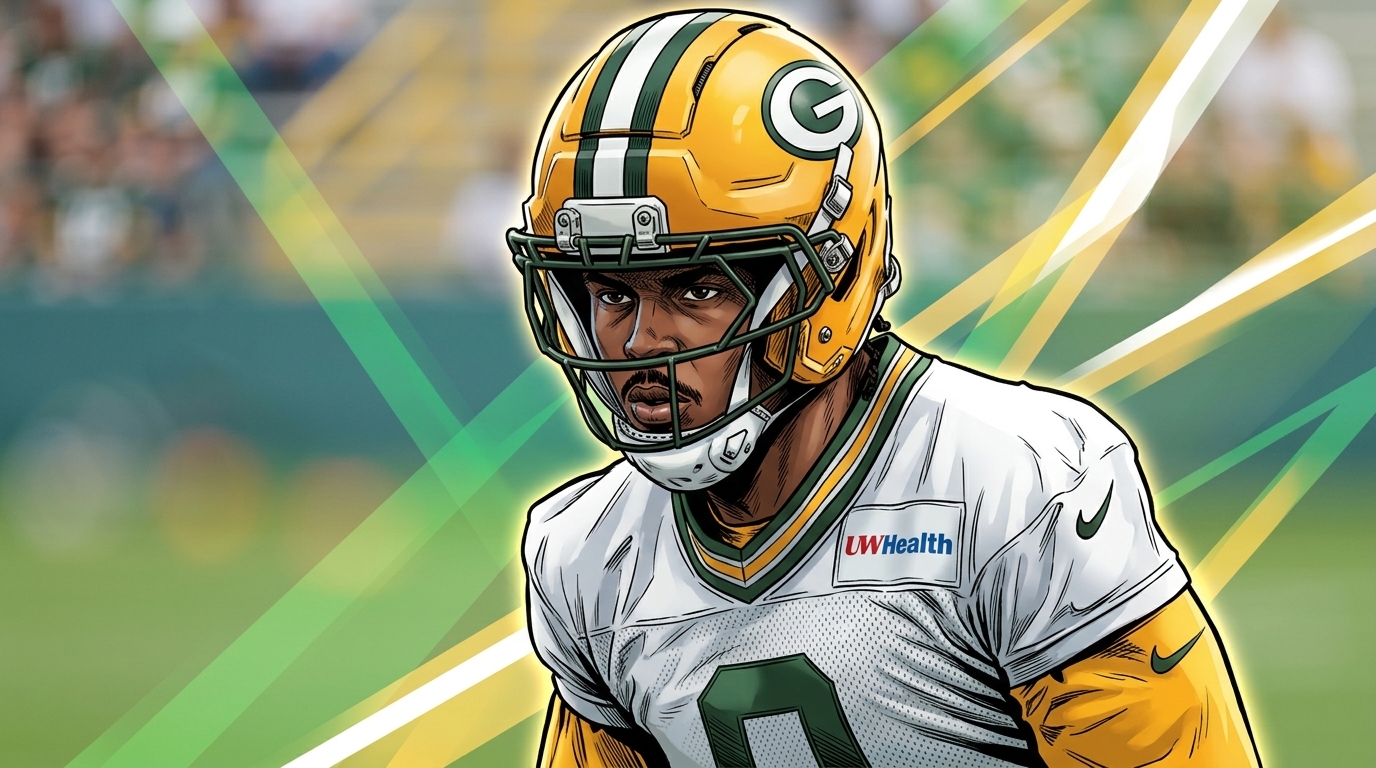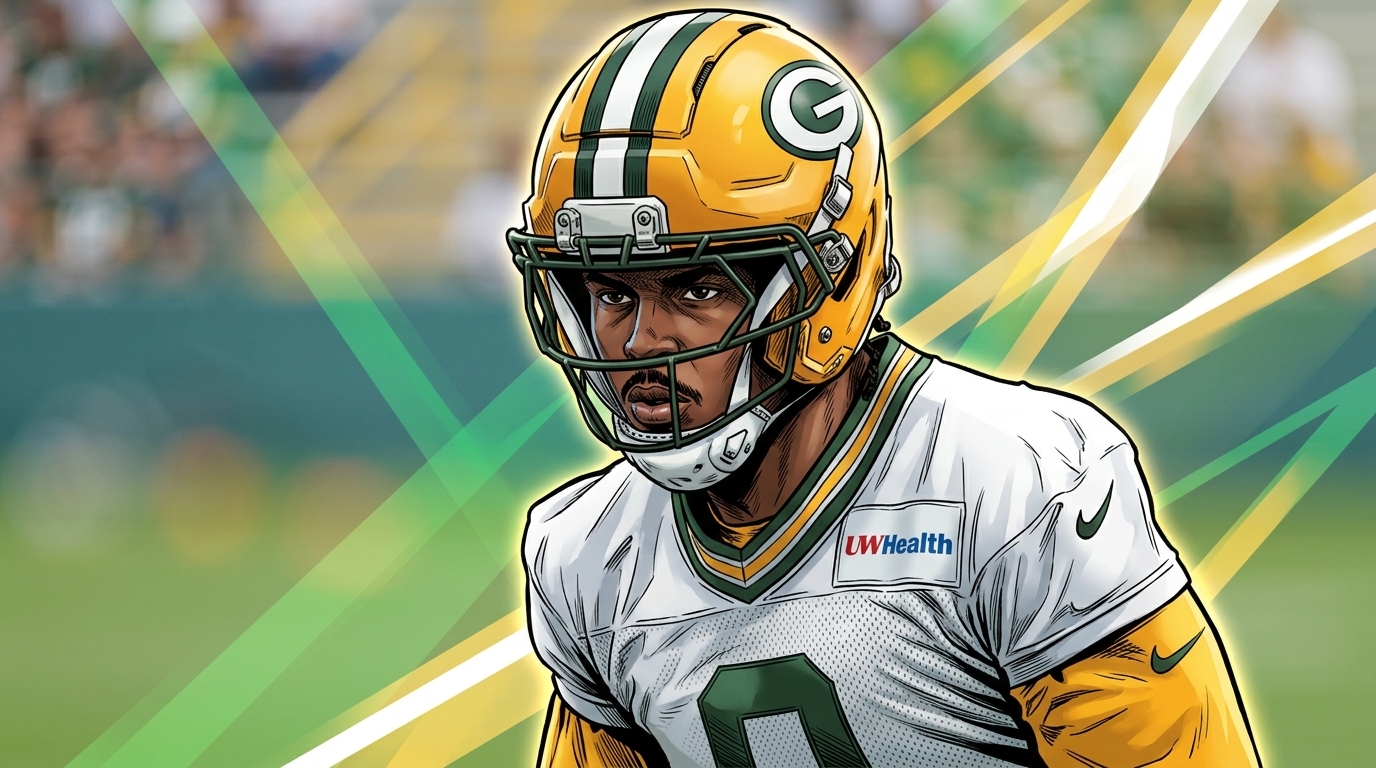

We spent six weeks watching Green Bay audition running backs without fully clocking that it was an audition. MarShawn Lloyd got touches. Kaleb Johnson got touches. Both looked like exactly what you’d expect from two guys filling in for an All-Pro: occasionally useful, never decisive. Then Tom Pelissero reported Thursday that Josh Jacobs is coming off the Commissioner’s Exempt List as of Monday, eligible for Week 7 at Detroit, and starting immediately. No committee. No reduced workload. The team that spent a month and a half easing two young backs into bigger roles is handing the job straight back to a guy who hasn’t practiced with it since spring.
https://x.com/TomPelissero/status/2111441823432348054
That’s not a vote of confidence in his conditioning. It’s an admission about what they had.
The timeline matters here, and it isn’t subtle. Jacobs was arrested in the Village of Hobart, Wisconsin, in late May after police responded to a reported domestic incident involving his girlfriend. The original complaint carried five charges, including a felony strangulation count, along with four misdemeanor domestic abuse counts. Brown County’s district attorney charged him in late August with two Class A misdemeanors, battery and criminal damage to property, no felony attached. Jacobs pleaded no contest to both in September: a $1,000 fine, a no-contact order, mandated counseling, and a property charge set to disappear after a year of compliance. The NFL placed him on the exempt list within days of the charges being filed, and even now, the league has pleaded no contest and still got no ruling out of its own Personal Conduct Policy review. That investigation stays open independent of Monday’s roster move. More discipline is still possible.
Why Is Green Bay Skipping the Ramp-Up Period?
Yes. Per Pelissero, Jacobs starts at Detroit in Week 7 with no reduced workload and no phased reintegration reported. He’ll have missed six games, including a Sunday-night home loss to Dallas, but the Packers aren’t treating his conditioning as a variable worth managing slowly.
That’s the part worth sitting with. Teams don’t usually skip the easing-in period for a back who’s been out of the building for five months. A three-time Pro Bowler returning from a legal situation this serious would normally get a snap-count plan, at minimum a few series of load management in Week 7 before expanding the role in Week 8 or 9. Green Bay apparently decided none of that was necessary, and I think that decision tells you less about Jacobs’ fitness than about what the depth chart behind him looked like without him.
This isn’t a new pattern around the league, either. A running back committee is patience without conviction — useful right up until the staff has watched enough snaps to know the ceiling. Most of the time that realization arrives quietly, buried in a depth chart memo nobody outside the building ever sees. Green Bay’s version just happens to be unusually visible, because the alternative to the committee was sitting on a reserve list with an open personal-conduct file attached to his name.
How Bad Has the Packers’ Run Game Been Without Him?
Bad enough that “audition” undersells it. Green Bay’s rushing offense has averaged 60.4 yards a game since Jacobs went on the list, worst mark in the league. Lloyd carried 40 times for 112 yards, a 2.8-yard average, with two touchdowns in a win that probably flattered the per-carry number more than it earned. Johnson got 27 carries for 106 yards. Those are replacement-level numbers out of replacement-level roles, and Green Bay’s staff watched that line hold steady for six weeks before deciding the math had changed.
(If either back had looked like a long-term answer, we wouldn’t be talking about Jacobs starting Week 7 at all.)
Jacobs, for comparison, ran for 1,329 yards and 15 touchdowns in 2024, his first year in Green Bay, then 929 yards and 13 scores last season. That’s a different weight class entirely. The Packers know it. They also know he’s walking into Detroit without having practiced in pads with this roster since the spring.
What Does This Mean for the Rest of the Season?
This is where the conditioning question gets smaller than the roster-management one. A team doesn’t skip the easing-in period because it’s reckless. It skips it because every alternative got worse the longer it sat on the board. Lloyd and Johnson didn’t collapse as backs — they just never separated from replacement level, and a 60-yards-a-game floor forces a decision no matter how clean you’d prefer the Jacobs reintegration to look.
I believe the Packers made the correct football call, even though it’s an uncomfortable one to sit with given everything that preceded it. Handing the full workload to a back who’s legally compromised and out of football shape by necessity isn’t a gamble if the other options have already told you what they are. It’s closer to arithmetic than conviction.
(I’ll admit, watching two backs grind out 2.8 yards a carry for a month is a specific flavor of fan-base stress — the Wisconsin variety, where you refresh the box score during a FaceTime call with your dad and neither of you says what you’re both thinking.)
Separately, Green Bay is also without Micah Parsons, who tore his ACL in a game unrelated to any of this, and who now isn’t expected back before November 8 against New England, later than his own original target. Two returns, two completely different clocks. (Green Bay’s two best reasons to feel urgent about November are rehabbing on entirely different timelines, which is its own problem for a coaching staff already thin on that side of the ball.)
What happens next isn’t really about workload management. It’s about whether Jacobs looks anything like himself by Sunday, and whether a Detroit defense that’s spent six weeks preparing for backs averaging under three yards a carry suddenly has to respect gap integrity again. Brian Gutekunst said back in August that the front office had been “preparing for that in case that happens,” referring to a suspension that, as of Monday, still hasn’t landed. Now he’s got a different problem on his hands: an All-Pro-caliber back with no snap count, no tune-up, and a run game that needed saving three weeks before anyone admitted it.