Green Bay Packers
The Green Bay Packers are the NFL's most-titled franchise, a community-owned Wisconsin club with 13 championships across a century of pro football.
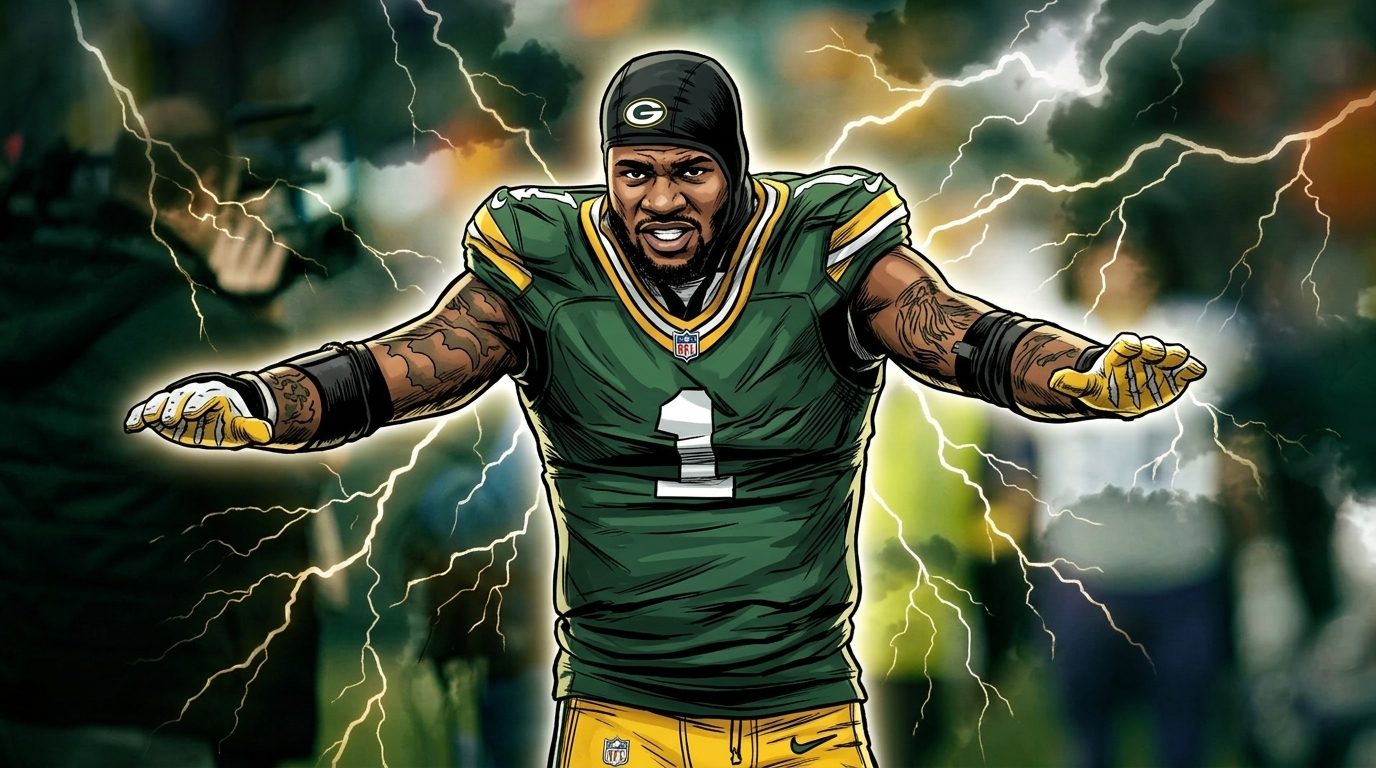
The Green Bay Packers are the oldest NFL franchise still operating in its original city, and by the one measure the sport keeps as scripture — championships — its most successful. Organized in a Wisconsin mill town in 1919 and owned not by a billionaire but by hundreds of thousands of their own fans, the Packers have won 13 league championships, more than any other club, a total that earned Green Bay its nickname: Titletown. They are at once the NFL’s great anomaly and its most durable institution — a small-market, publicly held team that has outlasted strikes, relocations and generations of richer rivals.
| Vitals | |
|---|---|
| Founded | 1919 (joined the NFL in 1921) |
| League / conference / division | NFL — NFC North |
| Stadium | Lambeau Field, Green Bay, Wis. (capacity 81,441) |
| Owner | Green Bay Packers, Inc. — publicly owned (538,967 shareholders) |
| Head coach | Matt LaFleur (since January 2019; as of Oct. 21, 2026) |
| Titles | 13 NFL championships — 1929, 1930, 1931, 1936, 1939, 1944, 1961, 1962, 1965, 1966, 1967, 1996, 2010 (incl. the first two Super Bowls, plus XXXI and XLV) |
Origins: a packing-company team (1919–1928)
A team named for a meatpacker. The Packers were organized on August 11, 1919, in the second-floor editorial rooms of the Green Bay Press-Gazette building by Earl “Curly” Lambeau and sportswriter George Whitney Calhoun. The name came from the Indian Packing Company, which put up roughly $500 for jerseys and equipment on the condition the squad carry its sponsor’s name.
Into the national league. Green Bay received a franchise in the American Professional Football Association — renamed the NFL in 1922 — on August 27, 1921, and remains the smallest city ever to sustain a major-league football team. Lambeau served as player, coach and chief organizer at once, and by the late 1920s had built a genuine contender out of a town of fewer than 40,000 people.
The Lambeau dynasty and Don Hutson (1929–1944)
The first three-peat in league history. Green Bay won three consecutive NFL championships in 1929, 1930 and 1931, the titles awarded by final standings in an era before a championship game existed. The 1929 team went 12-0-1, and no franchise had ever strung three straight titles together before Lambeau’s Packers did.
Don Hutson reinvents the position. From 1935 to 1945, end Don Hutson effectively invented modern pass receiving. He retired holding 18 NFL records, including 99 receiving touchdowns that stood as the league record for more than 40 years, and was named NFL Most Valuable Player in 1941 and 1942.
Three more finals, three more titles. With a title game now decided on the field, Green Bay beat the Boston Redskins 21-6 in 1936, lost the 1938 final, then routed the New York Giants 27-0 in 1939 and 14-7 in 1944. Lambeau left Green Bay with a 209-104-21 record and six NFL championships as coach.
Collapse and the search for a coach (1945–1958)
A generation of losing. Lambeau departed after the 1949 season, and the Packers fell into the worst stretch in their history. Across the 1950s the franchise went 39-79-2 and never reached the postseason.
Rock bottom. The nadir came in 1958, when a team coached by Ray “Scooter” McLean finished 1-10-1 — still the worst record the franchise has ever posted. McLean resigned that December, and the Packers’ executive committee went looking for a coach with full control of football operations.
The Lombardi dynasty (1959–1967)
Vince Lombardi takes command. Hired as head coach and general manager in late January 1959, Vince Lombardi turned a one-win team into a 7-5 winner in a single season and built the defining dynasty of the NFL’s pre-merger era.
The 1960s machine. Green Bay won NFL championships in 1961 (37-0 over the Giants), 1962 (16-7 over the Giants) and 1965 (23-12 over Cleveland) behind quarterback Bart Starr, backs Paul Hornung and Jim Taylor, linebacker Ray Nitschke, and linemen Willie Davis, Herb Adderley and Forrest Gregg — seven future Hall of Famers.
The first two Super Bowls. Green Bay won the inaugural Super Bowl, beating the Kansas City Chiefs 35-10 on January 15, 1967, then defended the title against the Oakland Raiders 33-14 on January 14, 1968 in Super Bowl II.
The Ice Bowl. Between those Super Bowls came the most famous game in franchise lore: the 1967 NFL Championship Game at Lambeau Field on December 31, 1967, played in roughly minus-13-degree cold. Starr scored on a one-yard quarterback sneak in the final seconds to beat Dallas 21-17. Lombardi went 89-29-4 in the regular season in Green Bay with a 9-1 playoff mark and five titles in seven years; the Super Bowl trophy now bears his name.
The thirty-year drought (1968–1991)
After Lombardi, the wilderness. Lombardi stepped down as coach after Super Bowl II, and the Packers spent more than two decades in the league’s middle and lower reaches. They went 57-82-5 across the 1970s and 65-84-3 across the 1980s.
The rare bright spots. A 10-4 team in 1972 under Dan Devine won the NFC Central before losing a divisional playoff 16-3. In the strike-shortened 1982 season, quarterback Lynn Dickey and receivers James Lofton and John Jefferson led Green Bay past the St. Louis Cardinals 41-16 — the franchise’s only playoff win between 1968 and 1992 — before a 37-26 loss at Dallas.
Legends behind the headset. The franchise turned to its own past, hiring Hall of Famers as head coaches: Bart Starr went 52-76-3 from 1975 to 1983, and Forrest Gregg went 25-37-1 from 1984 to 1987. Neither could rebuild a winner.
Ron Wolf, Brett Favre and the return to glory (1992–2007)
The trade that changed everything. General manager Ron Wolf, hired in November 1991, sent a first-round pick to the Atlanta Falcons for a little-used backup quarterback named Brett Favre on February 10, 1992, and hired Mike Holmgren as head coach.
A defensive cornerstone. In April 1993, Green Bay landed defensive end Reggie White on a four-year, $17 million deal — a landmark free-agent signing that signaled the Packers were serious contenders again.
Back on top. Favre won three straight NFL MVP awards from 1995 to 1997, the only player ever to do so. The Packers won Super Bowl XXXI on January 26, 1997, beating New England 35-21 with return man Desmond Howard named MVP, then lost Super Bowl XXXII to Denver, 31-24, the following January.
The Iron Man years. Favre set an NFL record with 297 consecutive regular-season starts, a run of durability that defined the era alongside painful playoff exits such as the 4th-and-26 loss to Philadelphia on January 11, 2004. His Packers tenure ended when he was traded to the New York Jets on August 7, 2008.
The Aaron Rodgers era (2008–2022)
A seamless succession. Green Bay had drafted Aaron Rodgers 24th overall in 2005 and let him sit three seasons behind Favre before handing him the job in 2008 — the second time the franchise groomed a future star behind an incumbent, extending a quarterback lineage that ran Starr to Favre to Rodgers across half a century.
Title No. 13. As a No. 6 seed, the Packers won Super Bowl XLV on February 6, 2011, beating the Pittsburgh Steelers 31-25, with Rodgers named MVP after throwing for 304 yards and three touchdowns.
Dominance without a second ring. Rodgers won four NFL MVP awards — 2011, 2014, 2020 and 2021 — and quarterbacked a 15-1 team in 2011, yet the Packers never returned to a Super Bowl. The 2014 NFC Championship Game at Seattle, a 28-22 overtime loss after leading 16-0, became the signature heartbreak; in 2016 Rodgers declared the 4-6 team could “run the table” and promptly did. Head coach Mike McCarthy went 125-77-2 before being fired on December 2, 2018.
Handing off. Matt LaFleur, hired in 2019, won 13-plus games in each of his first three seasons. Rodgers was traded to the Jets on April 24, 2023, closing an 18-year chapter.
The Jordan Love transition (2020–2026)
Drafting the next one. Green Bay drafted Jordan Love 26th overall in 2020 and sat him behind Rodgers for three years — the third time in a generation the Packers developed a quarterback behind a sitting star rather than chasing one in free agency.
An immediate payoff. Love took over in 2023, led a 9-8 team into the playoffs, and routed Dallas 48-32 in the wild-card round on January 14, 2024. That July he signed a four-year, $220 million extension.
Steady, if short of a title. The Packers went 11-6 in 2024 and lost a wild-card game to Philadelphia, 22-10, on January 12, 2025. In 2025 they finished 9-7-1 and lost 31-27 at the Chicago Bears on January 10, 2026 after leading 21-3 — a third straight playoff berth and, per the club, the 38th postseason appearance in franchise history, most in the NFL. LaFleur and general manager Brian Gutekunst both signed extensions in January 2026, and both remained in their roles as of October 21, 2026.
Ownership: the only publicly owned team
Owned by its fans. The Packers are the only publicly owned, non-profit franchise in major North American professional sports, a structure grandfathered when the NFL later barred such arrangements. The club reports 538,967 shareholders holding 5,204,625 shares; the stock pays no dividend, cannot appreciate or be resold for profit, confers no perks beyond a vote, and is capped at 200,000 shares per holder.
Six stock sales. Green Bay Packers, Inc. has raised money from its fans in 1923, 1935, 1950, 1997, 2011 and 2021, the later offerings funding stadium work. A board of directors and a seven-member executive committee run the team, with a president who represents the club as an owner at league meetings. Mark Murphy retired in July 2025 under the club’s age-70 rule, and Ed Policy succeeded him as president and CEO.
The Frozen Tundra. The Packers’ home, Lambeau Field, opened in 1957 as City Stadium and was renamed in 1965 after Curly Lambeau’s death. It seats 81,441, has sold out every home game since 1960, and gave the sport the “Lambeau Leap,” first performed by safety LeRoy Butler in December 1993.
Retired numbers
Green Bay has retired six numbers, spanning every championship era from Don Hutson’s 1930s to Brett Favre’s modern run; Reggie White’s No. 92 was retired posthumously in 2005, less than a year after his death.
| No. | Player | Pos. | Team tenure | Retired |
|---|---|---|---|---|
| 14 | Don Hutson | End | 1935–1945 | 1951 |
| 3 | Tony Canadeo | HB | 1941–1944, 1946–1952 | 1952 |
| 15 | Bart Starr | QB | 1956–1971 | 1973 |
| 66 | Ray Nitschke | LB | 1958–1972 | 1983 |
| 92 | Reggie White | DE | 1993–1998 | 2005 |
| 4 | Brett Favre | QB | 1992–2007 | July 18, 2015 |
Season by season
The full franchise record, 1921 through 2025, folded by decade with newest first.
The 2020s 63–37–1 · 5 playoff berths · 0 titles (through 2025)
| Season | W–L | Finish | Playoffs |
|---|---|---|---|
| 2020 | 13-3 | 1st (NFC North) | Lost NFC Championship (26-31) |
| 2021 | 13-4 | 1st (NFC North) | Lost Divisional (10-13) |
| 2022 | 8-9 | 3rd (NFC North) | — |
| 2023 | 9-8 | 2nd (NFC North) | Lost Divisional (21-24) |
| 2024 | 11-6 | 3rd (NFC North) | Lost Wild Card (10-22) |
| 2025 | 9-7-1 | 2nd (NFC North) | Lost Wild Card (27-31) |
The 2010s 102–56–2 · 8 playoff berths · 1 Super Bowl (XLV)
| Season | W–L | Finish | Playoffs |
|---|---|---|---|
| 2010 | 10-6 | 2nd (NFC North) | Won Super Bowl XLV (31-25) |
| 2011 | 15-1 | 1st (NFC North) | Lost Divisional (20-37) |
| 2012 | 11-5 | 1st (NFC North) | Lost Divisional (31-45) |
| 2013 | 8-7-1 | 1st (NFC North) | Lost Wild Card (20-23) |
| 2014 | 12-4 | 1st (NFC North) | Lost NFC Championship (22-28 OT) |
| 2015 | 10-6 | 2nd (NFC North) | Lost Divisional (20-26 OT) |
| 2016 | 10-6 | 1st (NFC North) | Lost NFC Championship (21-44) |
| 2017 | 7-9 | 3rd (NFC North) | — |
| 2018 | 6-9-1 | 3rd (NFC North) | — |
| 2019 | 13-3 | 1st (NFC North) | Lost NFC Championship (20-37) |
The 2000s 95–65 · 6 playoff berths · 0 titles
| Season | W–L | Finish | Playoffs |
|---|---|---|---|
| 2000 | 9-7 | 3rd (NFC Central) | — |
| 2001 | 12-4 | 2nd (NFC Central) | Lost Divisional (17-45) |
| 2002 | 12-4 | 1st (NFC North) | Lost Wild Card (7-27) |
| 2003 | 10-6 | 1st (NFC North) | Lost Divisional (17-20 OT) |
| 2004 | 10-6 | 1st (NFC North) | Lost Wild Card (17-31) |
| 2005 | 4-12 | 4th (NFC North) | — |
| 2006 | 8-8 | 2nd (NFC North) | — |
| 2007 | 13-3 | 1st (NFC North) | Lost NFC Championship (20-23 OT) |
| 2008 | 6-10 | 3rd (NFC North) | — |
| 2009 | 11-5 | 2nd (NFC North) | Lost Wild Card (45-51 OT) |
The 1990s 93–67 · 6 playoff berths · 1 Super Bowl (XXXI)
| Season | W–L | Finish | Playoffs |
|---|---|---|---|
| 1990 | 6-10 | 4th (NFC Central) | — |
| 1991 | 4-12 | 4th (NFC Central) | — |
| 1992 | 9-7 | 2nd (NFC Central) | — |
| 1993 | 9-7 | 3rd (NFC Central) | Lost Divisional (17-27) |
| 1994 | 9-7 | 2nd (NFC Central) | Lost Divisional (9-35) |
| 1995 | 11-5 | 1st (NFC Central) | Lost NFC Championship (27-38) |
| 1996 | 13-3 | 1st (NFC Central) | Won Super Bowl XXXI (35-21) |
| 1997 | 13-3 | 1st (NFC Central) | Lost Super Bowl XXXII (24-31) |
| 1998 | 11-5 | 2nd (NFC Central) | Lost Wild Card (27-30) |
| 1999 | 8-8 | 4th (NFC Central) | — |
The 1980s 65–84–3 · 1 playoff berth · 0 titles
| Season | W–L | Finish | Playoffs |
|---|---|---|---|
| 1980 | 5-10-1 | 4th (NFC Central) | — |
| 1981 | 8-8 | 2nd (NFC Central) | — |
| 1982 | 5-3-1 | 3rd (NFC)* | Won First Round, Lost Second Round |
| 1983 | 8-8 | 2nd (NFC Central) | — |
| 1984 | 8-8 | 2nd (NFC Central) | — |
| 1985 | 8-8 | 2nd (NFC Central) | — |
| 1986 | 4-12 | 4th (NFC Central) | — |
| 1987 | 5-9-1 | 3rd (NFC Central) | — |
| 1988 | 4-12 | 5th (NFC Central) | — |
| 1989 | 10-6 | 2nd (NFC Central) | — |
The 1970s 57–82–5 · 1 playoff berth · 0 titles
| Season | W–L | Finish | Playoffs |
|---|---|---|---|
| 1970 | 6-8 | 3rd (NFC Central) | — |
| 1971 | 4-8-2 | 4th (NFC Central) | — |
| 1972 | 10-4 | 1st (NFC Central) | Lost Divisional (3-16) |
| 1973 | 5-7-2 | 3rd (NFC Central) | — |
| 1974 | 6-8 | 3rd (NFC Central) | — |
| 1975 | 4-10 | 3rd (NFC Central) | — |
| 1976 | 5-9 | 4th (NFC Central) | — |
| 1977 | 4-10 | 4th (NFC Central) | — |
| 1978 | 8-7-1 | 2nd (NFC Central) | — |
| 1979 | 5-11 | 4th (NFC Central) | — |
The 1960s 96–37–5 · 6 playoff berths · 5 NFL titles, 2 Super Bowls
| Season | W–L | Finish | Playoffs |
|---|---|---|---|
| 1960 | 8-4 | 1st (Western) | Lost NFL Championship (13-17) |
| 1961 | 11-3 | 1st (Western) | Won NFL Championship (37-0) |
| 1962 | 13-1 | 1st (Western) | Won NFL Championship (16-7) |
| 1963 | 11-2-1 | 2nd (Western) | — |
| 1964 | 8-5-1 | 2nd (Western) | — |
| 1965 | 10-3-1 | 1st (Western) | Won NFL Championship (23-12) |
| 1966 | 12-2 | 1st (Western) | Won the first Super Bowl (35-10) |
| 1967 | 9-4-1 | 1st (Central) | Won Super Bowl II (33-14) |
| 1968 | 6-7-1 | 3rd (Central) | — |
| 1969 | 8-6 | 3rd (Central) | — |
The 1950s 39–79–2 · 0 playoff berths · 0 titles
| Season | W–L | Finish | Playoffs |
|---|---|---|---|
| 1950 | 3-9 | 5th (National) | — |
| 1951 | 3-9 | 5th (National) | — |
| 1952 | 6-6 | 4th (National) | — |
| 1953 | 2-9-1 | 6th (Western) | — |
| 1954 | 4-8 | 5th (Western) | — |
| 1955 | 6-6 | 3rd (Western) | — |
| 1956 | 4-8 | 5th (Western) | — |
| 1957 | 3-9 | 6th (Western) | — |
| 1958 | 1-10-1 | 6th (Western) | — |
| 1959 | 7-5 | 3rd (Western) | — |
The 1940s 62–44–4 · 2 playoff berths · 1 title (1944)
| Season | W–L | Finish | Playoffs |
|---|---|---|---|
| 1940 | 6-4-1 | 2nd (Western) | — |
| 1941 | 10-1 | 1st (Western) | Lost Divisional Playoff (14-33) |
| 1942 | 8-2-1 | 2nd (Western) | — |
| 1943 | 7-2-1 | 2nd (Western) | — |
| 1944 | 8-2 | 1st (Western) | Won NFL Championship (14-7) |
| 1945 | 6-4 | 3rd (Western) | — |
| 1946 | 6-5 | 3rd (Western) | — |
| 1947 | 6-5-1 | 3rd (Western) | — |
| 1948 | 3-9 | 4th (Western) | — |
| 1949 | 2-10 | 5th (Western) | — |
The 1930s 86–35–4 · 3 title-game appearances · 4 titles (1930, 1931, 1936, 1939)
| Season | W–L | Finish | Playoffs |
|---|---|---|---|
| 1930 | 10-3-1 | 1st (NFL) | NFL Champions (by standings) |
| 1931 | 12-2 | 1st (NFL) | NFL Champions (by standings) |
| 1932 | 10-3-1 | 2nd (NFL) | — |
| 1933 | 5-7-1 | 3rd (Western) | — |
| 1934 | 7-6 | 3rd (Western) | — |
| 1935 | 8-4 | 2nd (Western) | — |
| 1936 | 10-1-1 | 1st (Western) | Won NFL Championship (21-6) |
| 1937 | 7-4 | 2nd (Western) | — |
| 1938 | 8-3 | 1st (Western) | Lost NFL Championship (17-23) |
| 1939 | 9-2 | 1st (Western) | Won NFL Championship (27-0) |
The 1920s 61–25–13 · 1 title (1929)
| Season | W–L | Finish | Playoffs |
|---|---|---|---|
| 1921 | 3-2-1 | 6th (APFA) | — |
| 1922 | 4-3-3 | 7th (NFL) | — |
| 1923 | 7-2-1 | 3rd (NFL) | — |
| 1924 | 7-4 | 6th (NFL) | — |
| 1925 | 8-5 | 9th (NFL) | — |
| 1926 | 7-3-3 | 5th (NFL) | — |
| 1927 | 7-2-1 | 2nd (NFL) | — |
| 1928 | 6-4-3 | 4th (NFL) | — |
| 1929 | 12-0-1 | 1st (NFL) | NFL Champions (by standings) |
By the numbers
Franchise marks
Per Wikipedia's all-time NFL records and StatMuse, through the 2025 season.
Ranks
- 1st NFL championships, all-time (13)
- 1st Regular-season win percentage, all-time (.572)
- 1st Regular-season wins, all-time (823)
- 20th Franchise valuation, 2026 ($8.6 billion, down from 15th a year earlier)
Per Wikipedia and the Forbes NFL valuations released September 2026.
Honors
- 13× NFL champion ("Titletown")
- 4× Super Bowl champion (the first two, XXXI and XLV)
- Winners of the first two Super Bowls
- Vince Lombardi: 5 NFL titles, 1961–1967
- Bart Starr: MVP of the first two Super Bowls
- Aaron Rodgers: 4× NFL MVP (2011, 2014, 2020, 2021)
- Brett Favre: 3× NFL MVP (1995–1997)
- Don Hutson: 2× NFL MVP (1941, 1942)
Per the Pro Football Hall of Fame and Packers.com.
The arguments
The greatest Packers quarterback. Few franchises can stage this debate with three legitimate candidates. Supporters of Bart Starr point to five NFL titles and two Super Bowl MVPs; Favre’s backers cite his three straight MVPs and the toughness of 297 straight starts; Rodgers’ camp notes four MVPs and the best efficiency numbers of the three. The ring count favors Starr; the individual hardware favors Rodgers.
The underachievement of the Rodgers era. Green Bay won only one championship in Rodgers’ 15 years as starter despite four MVPs and repeated top seeds. Some observers blame Mike McCarthy’s game management and the 2014 collapse at Seattle; others fault the front office’s reluctance to spend big on surrounding talent; others argue the league’s single-elimination format simply punished a team that kept running into healthier or hotter opponents. The front office and coaching staff have, at various points, each been assigned the responsibility.
Whether community ownership helps or hurts. Admirers argue the Packers’ fan-owned structure is why a town of 100,000 still has a team at all, insulating it from relocation and absentee owners. Skeptics counter that a non-profit with a committee in place of a decisive owner, and without an owner’s private capital, operates at a structural disadvantage against franchises in far larger markets. Both points describe the same unusual arrangement.
Why it matters
The Green Bay Packers are the sport’s proof that its mythology and its record book can line up. No franchise has won more, no city is smaller, and no ownership model is stranger — yet the result is the most-titled team in NFL history, still playing in the stadium named for its founder, still answerable to the fans who literally hold its stock. From Lambeau to Lombardi to the long drought to the uninterrupted line of Starr, Favre, Rodgers and Love, Green Bay is where professional football keeps its oldest continuous story, and the one it tells about itself when it wants to explain what the game used to be and still, in one place, is.