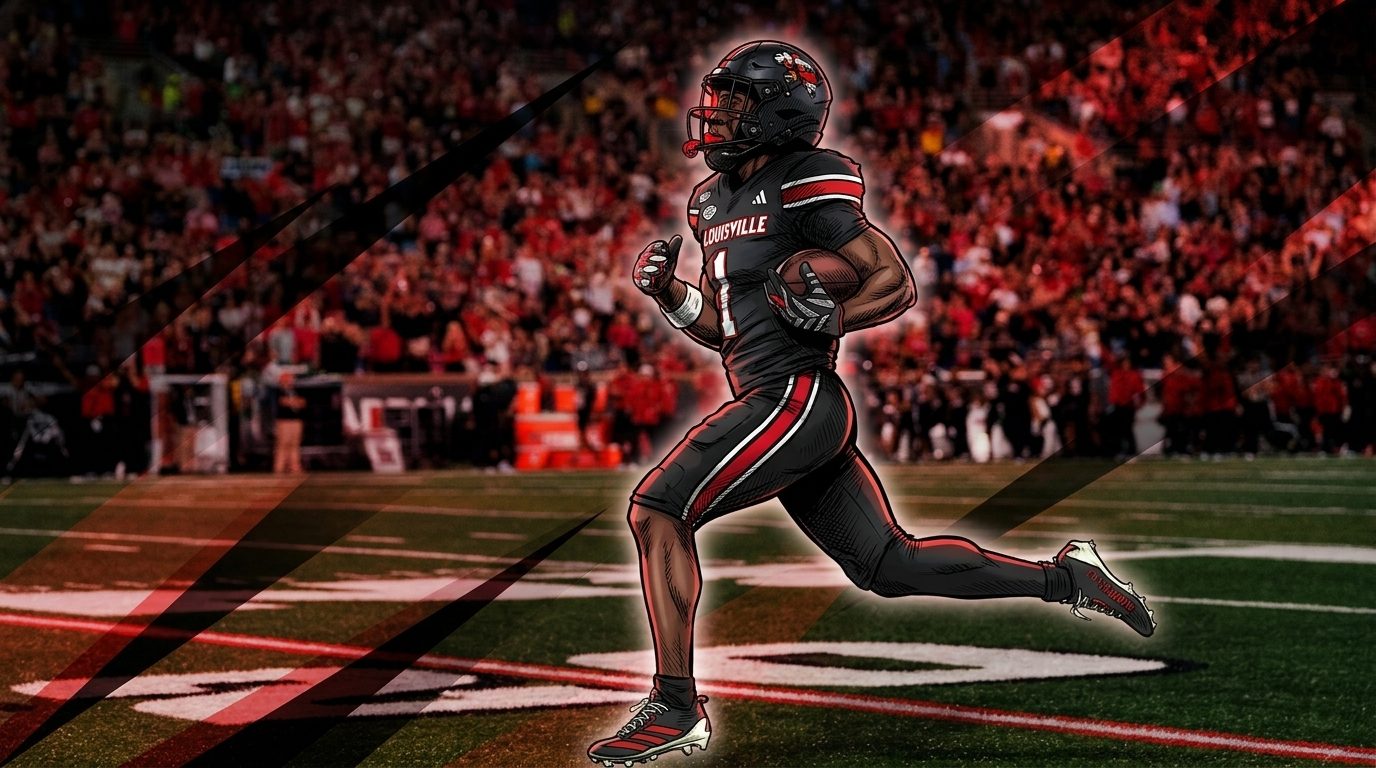

Keyjuan Brown carried the ball ten times against a ranked SMU defense on Saturday and averaged 16.3 yards every time he touched it. That number would be a big deal from a team’s starting running back. Brown isn’t the starter. Isaac Brown holds that job on Louisville’s 2026 depth chart, and the gap between what actually happened on the field and what the final score wants you to remember is the real story behind No. 23 Louisville’s 41-31 win over No. 16 SMU.
How Did No. 23 Louisville Beat No. 16 SMU 41-31?
Backup running back Keyjuan Brown carried ten times for a career-high 163 yards and two touchdowns, a 16.3-yard average, capped by go-ahead runs of 58 and 53 yards. Louisville won despite finishing with fewer total yards than SMU, 442 to 479, in the Cardinals’ first ACC game of the season.
Both teams walked into Saturday ranked, which matters for how you read the result. This isn’t a story about an unranked team shocking a ranked one. Louisville came in at No. 23, a preseason afterthought by ACC media vote, and it still needed a backup’s career day to get past a team ranked seven spots higher nationally. That’s a different signal than a standard upset, and it’s a more useful one for figuring out what Louisville actually is.
Why Louisville’s Backup Outran the Box Score
Isaac Brown is RB1 on Louisville’s 2026 running back depth chart, not Keyjuan, and that context is part of what makes Saturday’s number so loud. Keyjuan Brown isn’t new to games like this, either. He ran for 704 yards and six touchdowns across ten games in 2025, and in the outings where he got more than ten carries, he cleared 100 yards, including breakout performances against Cal and Clemson. Through three games in 2026, he’s carrying 18 times for 231 yards. Saturday’s 163-yard, 16.3-yard-per-carry line is the biggest single game of that stretch, and it happened behind the starter, not instead of him.
The touchdowns did the actual damage. Brown’s first covered 58 yards and put Louisville ahead 21-17 to open the third quarter. SMU answered. Running back Kendrick Raphael, who finished with 197 yards and three touchdowns on the day, put the Mustangs back ahead 31-28 on a 12-yard score. Brown’s second touchdown, a 53-yard run with 10:02 left, put Louisville ahead for good at 35-31. Isaac Brown added his own 27-yard touchdown with 5:32 remaining. Quarterback Lincoln Kienholz opened the scoring earlier with a 1-yard rushing touchdown and finished 14-of-23 for 177 yards through the air. Louisville needed every one of those plays.
The ACC Network account caught the second Brown touchdown live:
https://twitter.com/accnetwork/status/2101442706866069505
Two touchdowns of 50-plus yards from the guy who isn’t the first name on the depth chart are exactly the production that gets buried under a final score. It’s also the stat that decided the game.
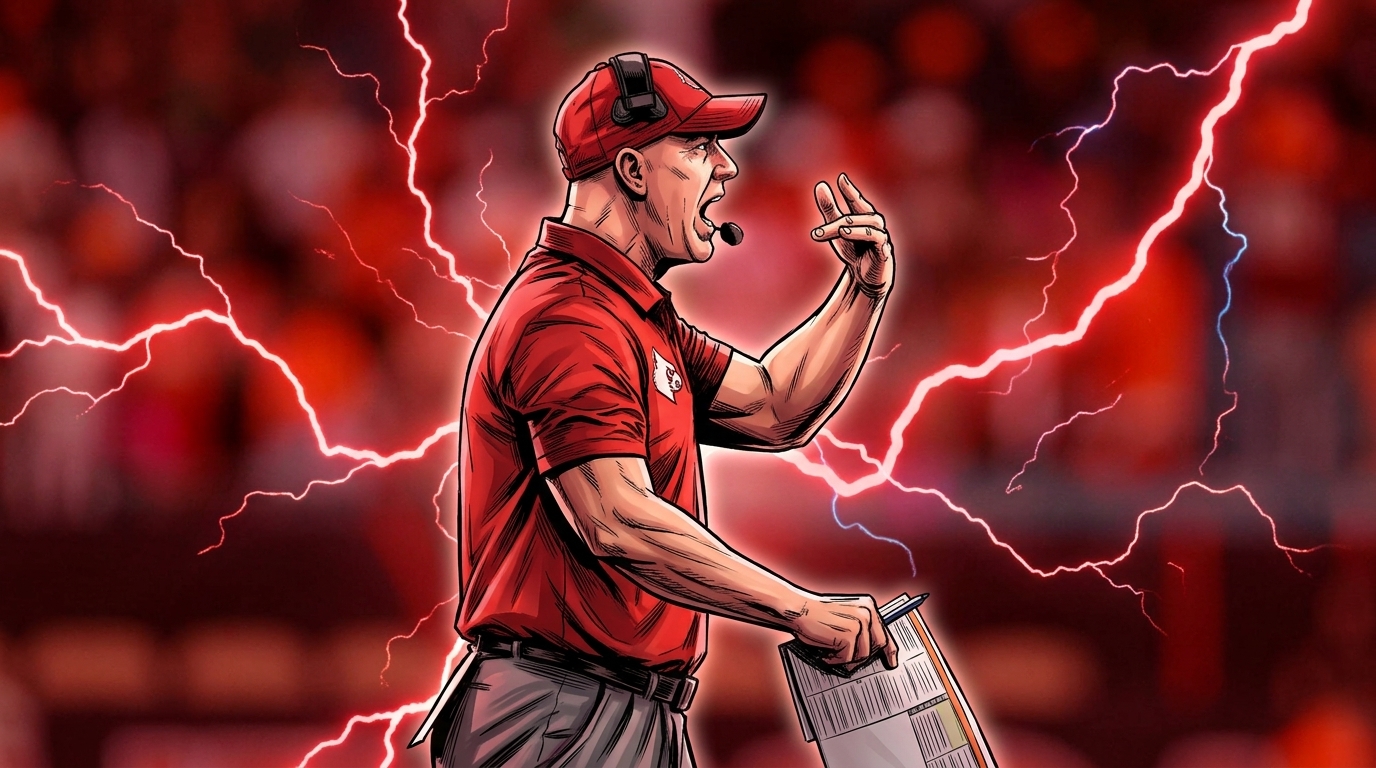
Louisville forced a fumble on SMU quarterback Kevin Jennings near the goal line with 2:43 left and stopped the Mustangs on two separate fourth-down attempts in the fourth quarter, scoring a touchdown after each stop. Head coach Jeff Brohm credited the finish afterward: “We scrapped, and we played hard to the end and found a way to make more plays than them. That shows the toughness and the makeup of the team.” He wasn’t talking specifically about Brown’s runs. He could have been.
What 16.3 Yards per Carry Actually Means Against a Ranked Defense
Yards per carry gets treated as a throwaway stat, something you glance at on the way to the score. Treat it more like a single blistering qualifying lap in a race that’s mostly decided by tire management instead. My roommate builds pace-comparison models for F1 now, and the lesson that transfers here is that a small sample of extreme plays tells you something total volume can’t. Louisville ran the ball 37 times for 265 yards Saturday, an unremarkable 7.2-yard average on its own. Strip out the eight runs that gained 12 yards or more and the rest of the ground game barely moved the chains. Eight explosive runs out of 37 carries is a hit rate above one in five, and that rate, not a steady diet of four- and five-yard gains, produced the 265 yards. Louisville’s ground game lived on finding grass in the exact moments it needed to, and that’s a harder skill to defend against than simply running the ball well on schedule downs.
Saturday was also Louisville’s first real measuring-stick game of the season, the first time the schedule put the Cardinals across from a team ACC media had rated ahead of them. A win built on chunk plays instead of sustained, clock-eating drives is different evidence than a wire-to-wire blowout, but it still counts, and it tends to be evidence that repeats. A team that finds one explosive-play performance against a good defense is usually a team capable of finding another.
That’s also why the preseason numbers undersold both teams walking in. ACC media picked SMU second and Louisville third in the conference before the season started, and the preseason models already disagreed about who was actually good well before Saturday complicated the picture further. Explosive-play rate is one of the more reliable indicators of a team playing above its expected level, closer to what actually flips college football’s upset column than raw yardage ever is. Louisville’s number Saturday belongs in that category, even though this particular result was two ranked teams settling a real argument rather than a ranked team getting ambushed.
None of that guarantees Louisville keeps producing 16-yard carries out of its backfield every week. Outlier games are outliers for a reason. But a team that can get a 163-yard, two-touchdown outing from its RB2 against a ranked defense has more offensive range than a No. 23 ranking suggests, and that gap between what Louisville actually is and what its résumé says it is fits squarely into college football’s parity problem this season. Louisville hosts Wake Forest next Saturday at noon. Give me the team with the higher ceiling, not the lower name recognition.