
Somewhere right now a person is typing “real fans don’t do that” under a photo of another fan doing exactly that, and neither of them has ever met the other. That person interests me a lot more than Taylor Swift does, which is the point of this whole mess.
Here is the mess. On Thursday, Knicks guards Tyler Kolek and Miles “Deuce” McBride were asked on an NBA 2K League livestream who the fakest celebrity courtside fan is. Kolek said Swift. McBride agreed. Kolek’s reasoning was that celebrity fans are “very performative because like they just want to be seen at the game,” and that Swift “can’t come all the time.” He also predicted he was “going to get some hate from the Swifties.”
https://x.com/BleacherReport/status/2118730794940465607
The clip did what clips do. And then the Knicks answered on Friday, which is the part I can’t stop turning over.
What does “performative” actually mean at a game?
Performative fan means someone whose attendance is for the audience, not the team. That’s the charge. It lands on celebrities, but nearly everyone can be accused of it once a phone is out and the seat is photographed.
Notice what the word needs to work. It needs a crowd watching the person, and a crowd that gets to rule on the sincerity of what it sees. I’d argue the accusation says less about Swift than about us. We built a culture where being seen at a game is half the point of going, then got mad at the person who is seen the most. The debate over her seat is a debate over our own screens.
Why did the Knicks overrule their own player?
A team spokesperson said Swift “has been a Knicks fan for many years” and has “a long history with Madison Square Garden,” and that the club is “incredibly appreciative of her support of the organization.” That is a franchise correcting a player in public within a day.
Think about how rare that is. Teams usually let a guard’s loose comment die on its own and trust the news cycle to eat it. Here the front office picked a side, and the side wasn’t the roster’s. ESPN’s story had no comment from Swift and no apology from Kolek, and the team didn’t wait around for either.
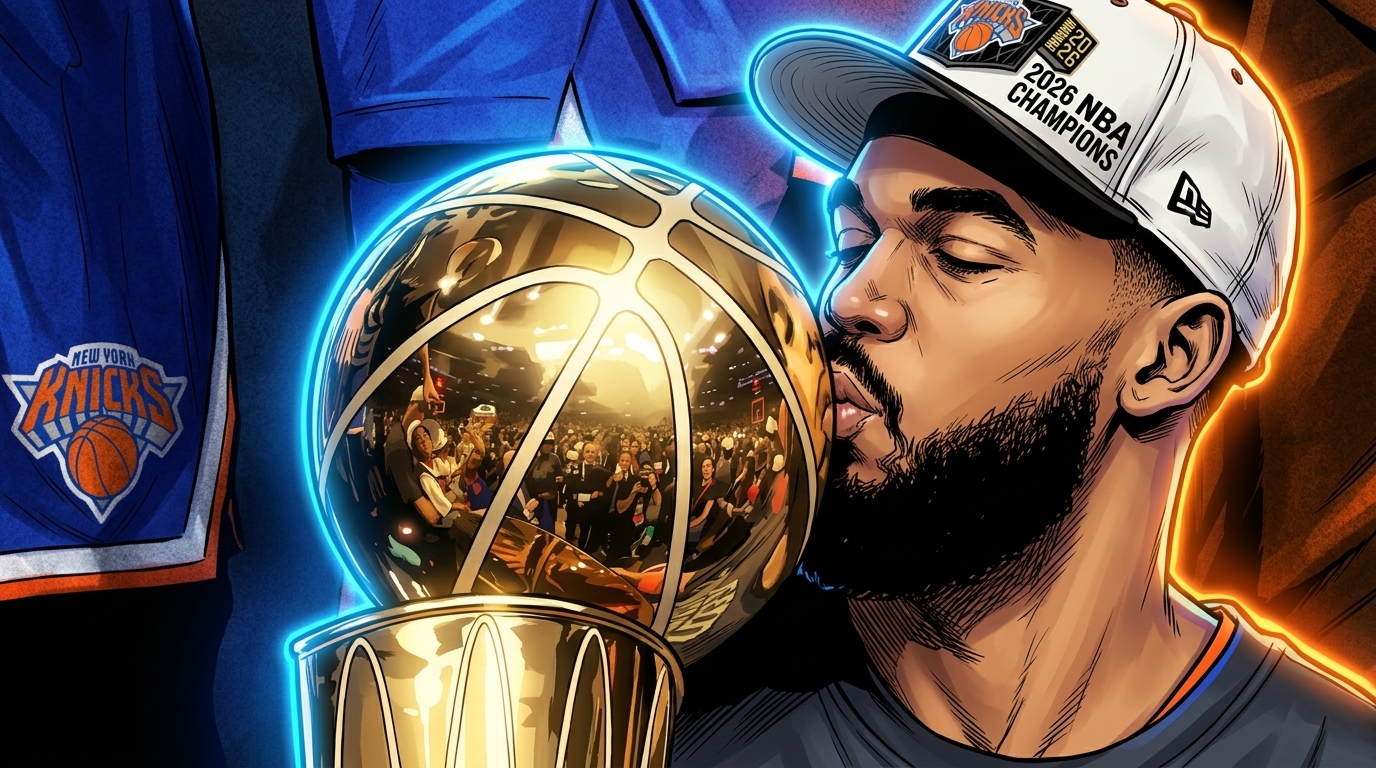
A franchise that sells its own championship celebration as a shared spectacle understands what a famous face in the front row is worth.
McBride, notably, drew a line of his own. He called other celebrity Knicks fans “solid,” naming Ben Stiller and Tracy Morgan. So the gripe had a target, and the target was one celebrity’s claim to the seat.
Who owns fandom when attendance is content?
Here’s my read. Fandom in 2026 has two owners who barely speak to each other. One is the supporter who pays for the nosebleeds and decides who is faking. The other is the franchise, which sells proximity to fame as part of the product and defends it like inventory.
The Knicks’ statement shows which owner wins when they collide. Celebrity row is an asset, and the organization will protect it even from its own players. Read “incredibly appreciative of her support” as a business statement and it sounds exactly like that.
We have seen this dynamic before in a smaller key, when the Knicks parade turned one player’s family into the story. Same machinery. Somebody’s presence becomes content, and then everyone has opinions about whether it was earned.
I don’t think Kolek is a villain here. He said a lukewarm thing on a livestream, the way most of us would say it to a friend, and a microphone made it a headline. But the suggestion that someone’s love for the Knicks is fake because it’s visible is a rule none of us would survive. We all want to be seen at the game. We just pretend the other guy wants it more.