
There’s a question buried inside three separate Week 1 betting slips that has nothing to do with whether the Raiders, Lions, or Eagles actually win their games. It’s about whether the money agrees with itself. Detroit, Las Vegas, and Philadelphia are each pulling 90%-plus of the money on at least one market for their Week 1 favorite, which on the surface reads like three unrelated “obvious” picks. Run the same check on all three at once, though, and only one of them fails it.
Three different Week 1 favorites pulling that type of number on the same Sunday isn’t three coincidences stacked on top of each other. It’s the same recreational-bettor instinct pricing three separate games at once: take the star-studded team, take the big number, move on to the parlay. The interesting part isn’t who the public likes. It’s whether the lines actually move against that public before kickoff, because that gap is the real story here, not the picks themselves.
Pull the NFL Week 1 public betting favorites data from cleatz.com’s live tracker and the shape gets clearer fast, but only once you stop treating ticket count and dollar volume as the same question. One caveat before any of the numbers: everything below is a snapshot of where the money sits right now, not a locked line. These percentages will keep moving before Sunday, the same way one of them already has once this week.
How Lopsided Is Week 1, Really?
That’s how lopsided this Week 1 slate is right now: the Lions’ moneyline money sits at 92% on one side, and the Raiders and Eagles are both clearing 90% of the spread money on their favorites, the Raiders all the way up to 96%. That’s the headline number. The details are where it gets useful.
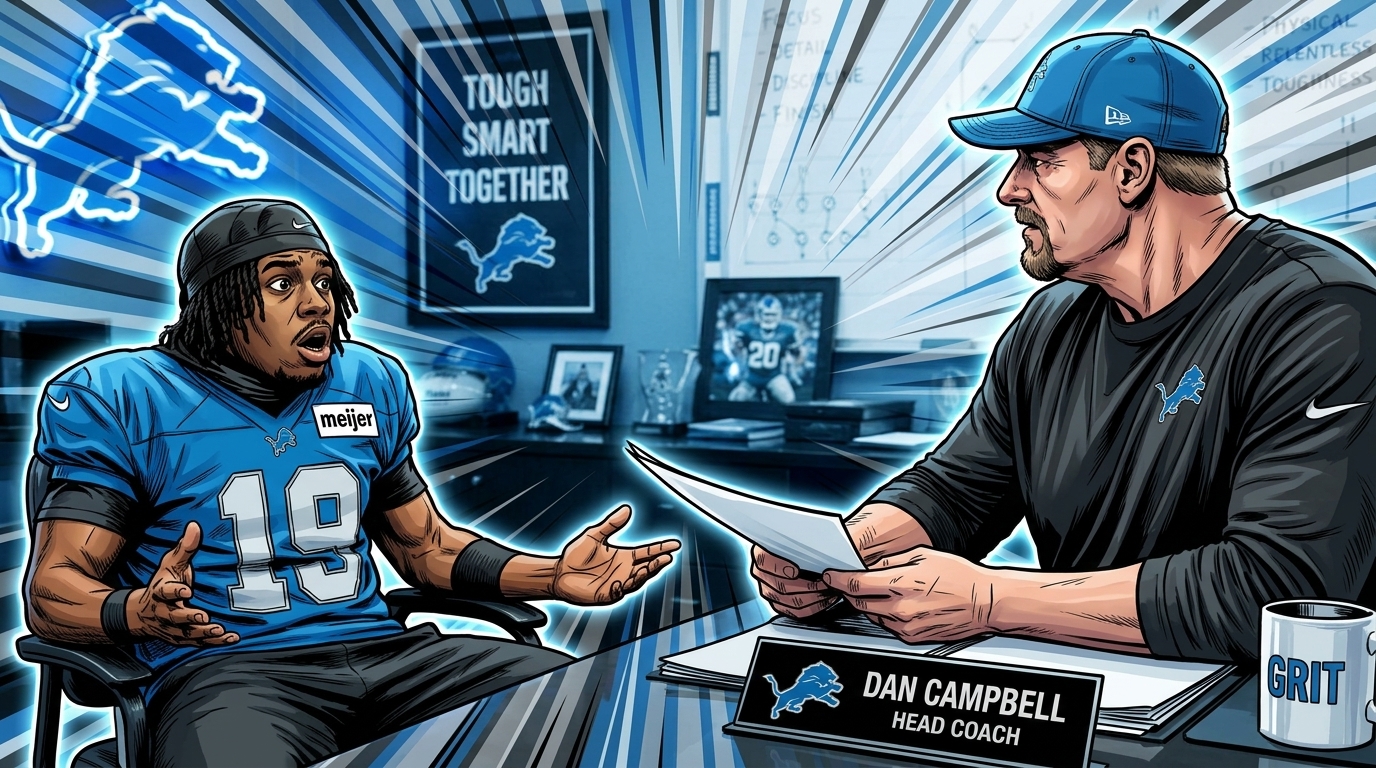
Start with the Lions-Saints spread for Week 1 2026, the cleanest of the three. The Detroit Lions are -7 at home, and the money splits 71% of bets and 77% of the handle toward Detroit, a gap, but a small one. The moneyline is the number that jumps: 92% of bets and 92% of the handle, both on the Lions at -305, no daylight between tickets and money. Kalshi’s prediction market has Detroit at 74% to win, which tracks with a roster that has Amon-Ra St. Brown, Jameson Williams, and Jahmyr Gibbs around Jared Goff, plus Sam LaPorta back after his back injury. New Orleans, meanwhile, is breaking in real questions at running back and along the offensive line.
The Raiders-Dolphins line and Eagles-Commanders public betting split look similar on the surface, per cleatz’s splits. Las Vegas is drawing 68% of spread bets against the Miami Dolphins, the Eagles are drawing 62% against Washington, and both favorites are buried even deeper on the handle: 96% for the Raiders, 91% for Philadelphia. Whether the public is “right” at those numbers is worth asking on its own. But the one game that behaves differently than its bet count suggests comes down to a moneyline market that doesn’t agree with its own spread market. That’s coming up.
Is the Public Actually Wrong to Load Up on Chalk?
Not automatically. A heavy ticket count doesn’t make a bet bad on its own, or every home underdog would be a free play. But there’s a real track record of overbought favorites, and it’s worth knowing before assuming size alone means the public got it right this time.
@CoversJLo tracks Covers Consensus data across sports, and the same shape showed up this spring, not just in football:
https://x.com/CoversJLo/status/2047285158311494040
That’s the NBA playoffs, not the NFL, and it says nothing about these three specific games; line direction changes sport to sport and week to week. But it’s why heavy public support on a favorite deserves a second look, not an automatic nod, and it isn’t limited to football. The same betting math showed up in Week 0 on a Group of Five upset, and outside the NFL, a spread so lopsided it looked like a mercy rule built around Caitlin Clark and the Fever. Lopsided favorites are a recurring shape, not a Week 1 quirk.
Why the Raiders Game Is Different From the Other Two
Because the money argues with itself. On the Lions and the Eagles, the same call, take the favorite, draws both the ticket-heavy square bettors and the bigger spread dollars. On the Raiders-Dolphins line, those two pools of money point in opposite directions, and that’s the one spot on the board actually worth watching.
Call it the handshake test: does the moneyline money, per cleatz’s live numbers, agree with the spread money on the same side of the same game? For Detroit, yes, 92% and 92%. For Philadelphia, yes, a 91% spread handle and an 89% moneyline handle, both Eagles. For Las Vegas, no. The Raiders draw 68% of spread bets but 96% of the spread handle, the type of gap that usually means fewer, bigger bets are stacking on top of the square money. Run the same test on the moneyline and it flips: 83% of moneyline bets are on the Raiders, but only 36% of the moneyline handle is. That means 64 cents of every moneyline dollar in this Raiders-Dolphins betting matchup for Week 1 is sitting on Miami at +164, not Las Vegas.
Kalshi’s contract on this game has the Raiders at 64% to win, which roughly matches the -198 sportsbook price, so both markets agree on who’s actually favored; the split is narrower than that, specifically which betting market, spread or moneyline, the bigger money is using to make its point. The total dropping from 41.5 to 40.5 since the line opened fits the same story: money working against the popular side without disagreeing on who the favorite is.
That’s the one number on this whole slate that made me double-check the timestamps. I run a version of this test every week on my fantasy baseball waiver wire (does the bid volume actually match the guy worth owning), and the Raiders spread and the Raiders moneyline are failing it against each other, not just against Miami.
So Which of These Favorites Should You Actually Worry About?
None of these three Week 1 favorites are automatically bad numbers just because the public’s tickets are lopsided, and none of this is a signal to back or fade a side. But of the three, the Raiders-Dolphins line is the one where the market hasn’t finished arguing with itself, and that argument is worth watching resolve by kickoff.
The Lions and Eagles splits are what real consensus looks like: big bets and small bets, tickets and dollars, moneyline and spread, all rowing the same direction. If those numbers move at all before Sunday, it’ll be roster-news noise, not disagreement. The Eagles spread handle already proved how fast that type of number can move — it sat at 11% when the line opened and sits at 91% now, the single biggest swing on the board, and it moved toward consensus, not away from it.
Check the Raiders-Dolphins split again on Thursday. If the moneyline handle on Miami keeps growing while Las Vegas still owns 68% of the spread tickets, one of those two markets is going to have to fold, and it probably won’t be the one carrying the bigger dollars.