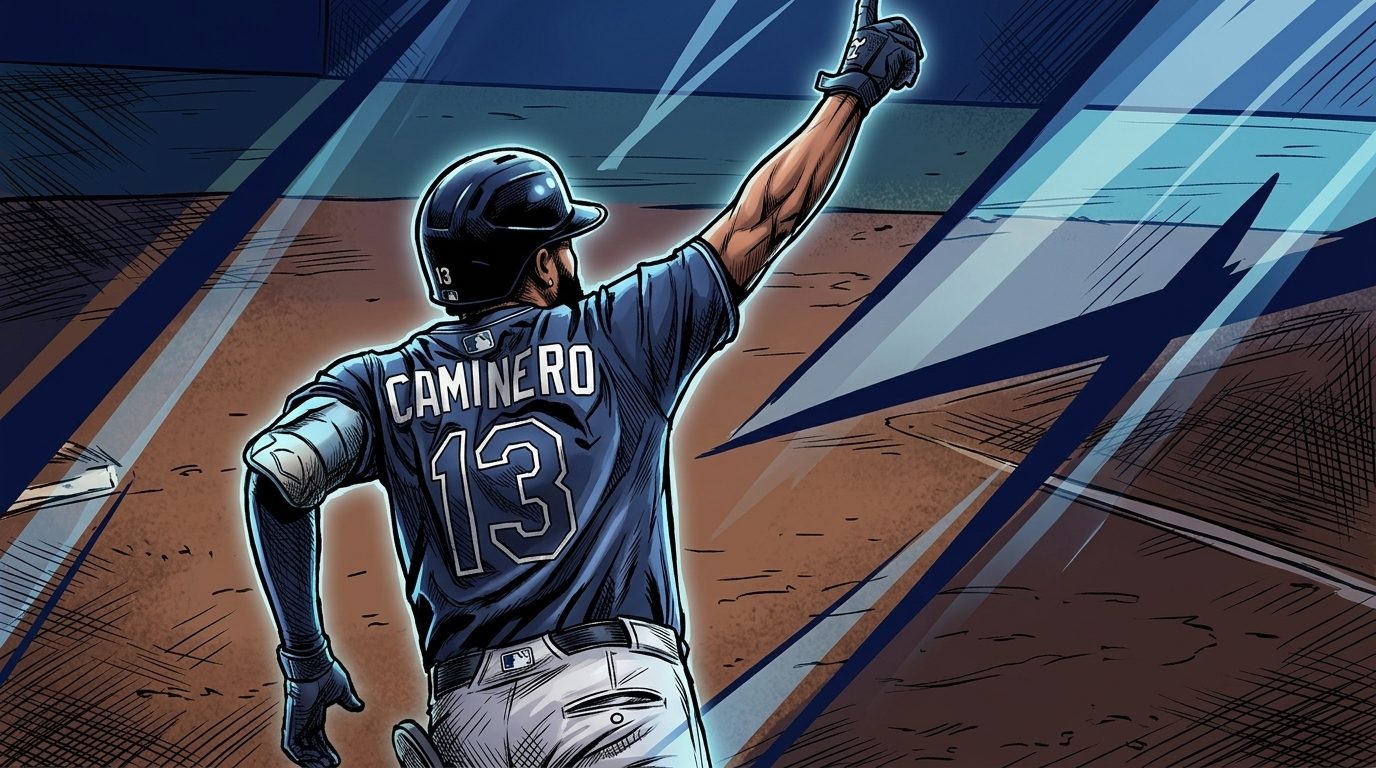
Somebody had to clinch a playoff spot first, and this year it wasn’t the team you’d bet on. The Tampa Bay Rays locked up the first postseason berth secured by anybody in baseball on Thursday night, and they did it on a walk-off, two-run home run from Junior Caminero, a player on one of the league’s smallest payrolls, in a division race against the Yankees, who spend many times what Tampa Bay does. If the sport’s economics worked the way the standings table usually implies they should, this is the part where the big spender wins the race. It didn’t.
The final was 3-1, at home against the Astros, and it came down to one swing. Caminero turned on a pitch from reliever Bryan Abreu in the bottom of the ninth and broke a tie game for good, his 40th home run of the season and the American League home run lead at the time. The win pushed Tampa Bay to 88-59 and made it the first team in the sport to clinch a 2026 playoff spot.
How Did the Rays Clinch a Playoff Spot First in 2026?
Tampa Bay beat Houston 3-1 at home on September 11 when Caminero hit a walk-off, two-run homer off Bryan Abreu in the ninth inning. It was his 40th of the year and the American League lead at the time, and the win made Tampa Bay the first team in baseball to clinch a 2026 postseason spot.
That clinch didn’t just happen to land early. According to TSN, it’s the earliest any team has clinched a playoff spot since the Atlanta Braves did it back in 2023. Three years of front offices spending harder and stacking bigger rosters, and the team that got there first still runs one of the sport’s smaller payrolls. That’s not a footnote. That’s the story.
The finish is worth watching on its own, bat flip included.
https://x.com/BleacherReport/status/2098587501082378376
What Does Junior Caminero’s 40th Home Run Mean for Tampa Bay?
Forty home runs put Caminero among the most dangerous hitters in the sport this year, not just for one swing. It means opposing managers had to plan around him in the middle of Tampa Bay’s lineup all summer, and it means the Rays’ run to October has a foundation under it, not a hot week propping it up.
A raw home run total doesn’t mean much by itself. Translated: 40 homers is a total that changes how a pitching staff approaches an entire lineup, not just one at-bat. Managers start avoiding the strike zone with runners on. Relievers get used an inning earlier than the matchup chart says they should. That’s the value Caminero adds even in the at-bats that don’t end in a home run, and it’s why one swing in the ninth inning of a September game felt less like luck and more like an outcome that had been building for months.
The part that should bother anyone still treating payroll as destiny: Tampa Bay built this with a bottom-third payroll, developing hitters like Caminero from within rather than buying a middle of the order off the open market the way the Yankees do. Call it the payroll-to-postseason gap, the growing distance between what a team spends and where it actually finishes, and right now the AL East is Exhibit A.
Is Payroll Still Predicting Playoff Position in the AL East?
Not this year. The Rays hold a three-game lead over the Yankees in the AL East, despite carrying one of the league’s smaller payrolls against a division rival that spends several times more on salaries. One division race doesn’t repeal the sport’s economics everywhere, but developed talent is outperforming purchased talent in the AL East right now.
Aaron Judge, still the sport’s most feared right-handed bat, sits in the middle of that Yankees lineup and hasn’t been enough to close the gap on his own. The conversation around Aaron Judge and the Yankees’ trade deadline approach treated more spending as the fix for whatever New York was missing, and three games back in September, the fix hasn’t shown up in the standings yet. Judge is doing exactly what he’s paid to do this season. The theory taking the hit is the one that says stacking enough of him around a lineup guarantees anything against a team that spent the offseason developing its own answer instead of shopping for one.
Formula 1 dealt with the same imbalance a few years ago by imposing a hard budget cap, forcing teams to win on setup and strategy instead of outspending the grid into submission. Baseball has no such rule, and MLB owners aren’t voting one in anytime soon. But the AL East is behaving like a budget-capped division this season anyway: the two teams playing the tightest race are on opposite ends of the payroll spectrum, and the smaller one is currently in first place.
Tampa Bay isn’t the league’s only case study for this, either. The White Sox’s own low-payroll turnaround is telling a similar story in the AL Central this season, even if the ceiling on that roster looks different than Tampa Bay’s. Two divisions, two rosters built without the benefit of a top-five payroll, both ahead of where the spending charts say they should be.
None of this means payroll stops mattering everywhere, and it would be dishonest to pretend a lineup built on the sport’s biggest checkbook can’t just buy its way to October in a different year, with different injuries, against a different opponent. But that’s the counterargument for a different season. This one belongs to the team that spent the least to get there first, and Caminero’s homer is the receipt.
The Rays still have to win in October, and a bottom-third payroll has never once helped a team hit in a playoff series it hasn’t played yet. But the argument that got questioned all summer, whether Tampa Bay’s approach could actually out-produce a division rival with a real checkbook, is over. Caminero’s homer settled it before the Yankees even had the chance to make the argument themselves.