New York Yankees
The New York Yankees are Major League Baseball's most-decorated franchise, with a record 27 World Series titles from the Babe Ruth era through Aaron Judge.
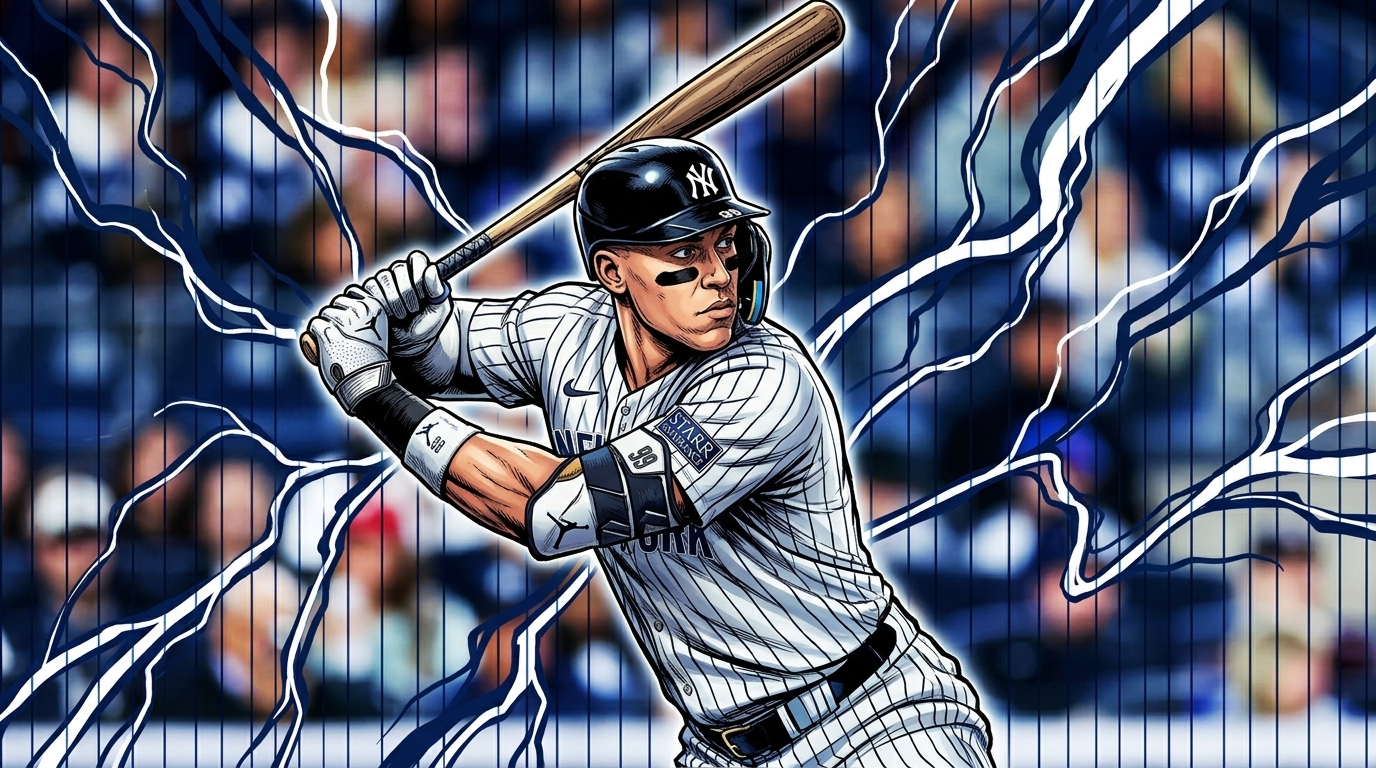
The New York Yankees are the most decorated franchise in North American professional sports and the defining institution of Major League Baseball. From a Bronx ballpark that opened in 1923, they have won a record 27 World Series championships and 41 American League pennants, a run of dominance stretching from Babe Ruth and Lou Gehrig through Joe DiMaggio, Mickey Mantle, the Core Four and, in the present day, captain Aaron Judge. No team has won more titles, carried more weight in its sport, or drawn more devotion and resentment. The pinstripes, the interlocking “NY,” and Monument Park are the visual grammar of baseball itself.
| Vitals | |
|---|---|
| Founded | 1901 (as the Baltimore Orioles); moved to New York as the Highlanders in 1903; renamed Yankees in 1913 |
| League / division | MLB — American League East |
| Stadium | Yankee Stadium, the Bronx, N.Y. (opened 2009; capacity 46,537) |
| Owner | Yankee Global Enterprises (Steinbrenner family); Hal Steinbrenner, chairman |
| Manager | Aaron Boone (as of Oct. 1, 2026) |
| Titles | 27 World Series (1923, 1927, 1928, 1932, 1936–1939, 1941, 1943, 1947, 1949–1953, 1956, 1958, 1961, 1962, 1977, 1978, 1996, 1998–2000, 2009) |
Origins: the Highlanders (1903–1919)
The franchise began in Baltimore. The original Baltimore Orioles played the American League’s first two seasons (1901–1902) before the club relocated to Manhattan in 1903, bought by Frank Farrell and Bill Devery and installed as the New York Highlanders at Hilltop Park. They went 72–62 in that first New York season and chased the pennant in 1904 and 1906 without winning it.
The name “Yankees” became official in 1913. By then the club had moved into the Polo Grounds as tenants of the New York Giants. These were lean years — a 50–102 collapse in 1912, a seventh-place finish in 1913 — and the Highlanders/Yankees reached no postseason in their first seventeen seasons. The franchise that would come to define winning spent its youth as an also-ran, waiting on a single transaction that would change everything.
The Ruth era and Murderers’ Row (1920–1935)
Everything turned on the purchase of Babe Ruth. Acquired from the Boston Red Sox before the 1920 season, Ruth rewrote the sport’s physics, hitting 60 home runs in 1927 as the Yankees went a then-staggering 110–44. With Lou Gehrig anchoring the lineup, that 1927 club — “Murderers’ Row” — is still argued to be the best team ever assembled.
The titles came in a torrent. The Yankees won their first World Series in 1923, the same year Yankee Stadium opened across the Harlem River, beating the Giants 4–2 after losing to them the two prior Octobers. They swept the Pirates in 1927 and the Cardinals in 1928, then hammered the Cubs in a 1932 sweep punctuated by Ruth’s disputed “called shot.” Ruth departed after 1934; the dynasty he built did not pause for long.
The DiMaggio dynasty (1936–1951)
Joe DiMaggio arrived in 1936 and the winning resumed immediately. The Yankees won four consecutive World Series from 1936 through 1939, including a 106–45 juggernaut in 1939. DiMaggio’s 56-game hitting streak in 1941 remains among the most unbreakable records in the game.
The era was bracketed by two of baseball’s most human moments. On July 4, 1939, a dying Gehrig told a packed stadium he was “the luckiest man on the face of the earth,” and the Yankees retired his No. 4 — the first number ever retired in the major leagues. Through the war years and after, the titles kept coming: 1941, 1943, 1947, and 1949. DiMaggio’s final championships overlapped with the arrival of a switch-hitting rookie from Oklahoma who would carry the next decade.
The Stengel dynasty (1949–1960)
Casey Stengel turned sustained excellence into routine. Under Stengel the Yankees won an unmatched five straight World Series from 1949 through 1953, the longest championship streak in MLB history, and ten pennants in his twelve seasons. Yogi Berra, Whitey Ford, Phil Rizzuto and the young Mickey Mantle formed the spine of the operation.
The decade produced perfection. In Game 5 of the 1956 World Series, Don Larsen threw the only perfect game in postseason history against the Brooklyn Dodgers, a franchise the Yankees beat in the Series in 1947, 1949, 1952, 1953 and 1956. Stengel’s run ended only when the Pirates’ Bill Mazeroski beat the Yankees with a walk-off home run in Game 7 of the 1960 World Series — and the organization responded by firing the 70-year-old manager.
The M&M Boys and the fall to CBS (1961–1975)
The 1961 team may be the most famous Yankees club of all. Mantle and Roger Maris chased Ruth’s single-season home run record all summer; Maris finished with 61, and the Yankees went 109–53 and won the World Series over Cincinnati. They repeated in 1962 and won pennants in 1963 and 1964.
Then the floor gave way. The aging core declined, the farm system thinned, and CBS bought the club in 1964. The Yankees cratered to a 10th-place, 70–89 finish in 1966 — unthinkable a few years earlier — and spent a decade in the wilderness. For the first time since before Ruth, the most storied name in the sport was ordinary, a slumbering giant waiting for an owner willing to spend his way back.
The Bronx Zoo (1976–1981)
George Steinbrenner bought the team in 1973 for $10 million and rebuilt it loudly. With the stadium freshly renovated, the Yankees won the pennant in 1976, then signed Reggie Jackson and won back-to-back World Series in 1977 and 1978, beating the Dodgers both times. The clubhouse — Jackson, manager Billy Martin, catcher-captain Thurman Munson, Steinbrenner’s constant interventions — was so combustible it earned the nickname “the Bronx Zoo.”
The signature moments were operatic. Jackson hit three home runs on three pitches in the clinching Game 6 in 1977, earning “Mr. October.” In 1978 the Yankees erased a 14-game deficit to Boston and won a one-game playoff at Fenway on Bucky Dent’s home run. Munson, the captain, died in a 1979 plane crash; his locker still stands untouched. The era closed with a World Series loss to the Dodgers in the strike-split 1981 season.
The wilderness years (1982–1995)
For the first time in the Steinbrenner age, the Yankees stopped winning. They did not reach the postseason once between the 1981 World Series and 1995 — the franchise’s longest playoff drought since the Highlanders. Don Mattingly, a beloved captain and batting champion, played his entire career without a single playoff appearance until the very end.
The drought bred the foundation of what came next. Steinbrenner’s suspension from day-to-day control in the early 1990s gave the baseball operation room to develop prospects, and a run of homegrown talent reached the majors in 1995. The Yankees made the playoffs that October as a wild card and lost a five-game Division Series to Seattle, blowing a 2–0 lead. The pieces for a dynasty were already in the room.
The Core Four and the Torre dynasty (1996–2001)
Joe Torre took over in 1996 and won immediately. Behind the homegrown “Core Four” — shortstop Derek Jeter, closer Mariano Rivera, catcher Jorge Posada and pitcher Andy Pettitte, plus center fielder Bernie Williams — the Yankees beat the Atlanta Braves in the 1996 World Series after trailing two games to none.
The 1998 team is a benchmark for the modern game. It went 114–48, then an AL record, and swept the Padres to begin a run of three consecutive championships (1998, 1999, 2000), the last a five-game Subway Series win over the crosstown Mets. The dynasty’s emotional peak and its end came in 2001: after the September 11 attacks, the Yankees won a wrenching pennant before losing Game 7 of the World Series to Arizona on a Luis Gonzalez blooper off Rivera.
The near-miss contenders (2002–2007)
The Yankees spent and contended and could not finish. Payrolls soared, 100-win seasons became common — 103 wins in 2002, 101 in 2003 and 2004 — but October kept ending in heartbreak. Aaron Boone’s pennant-winning home run off Boston’s Tim Wakefield in Game 7 of the 2003 ALCS gave way to a World Series loss to the Florida Marlins.
The 2004 collapse defined the stretch. Up three games to none on the Red Sox in the ALCS, the Yankees lost four straight — the only such collapse in MLB postseason history — and watched their ancient rival break an 86-year title drought. Early Division Series exits followed in 2005, 2006 and 2007, and Torre departed after twelve seasons, four titles and six pennants.
No. 27 and the new Stadium (2008–2017)
The Yankees opened a new ballpark and won a title in it the same year. The new Yankee Stadium opened in 2009 beside the original at a cost near $2.3 billion, and a reloaded roster — CC Sabathia, Mark Teixeira, A.J. Burnett joining Jeter, Rivera and Alex Rodriguez — beat the Phillies 4–2 for the franchise’s 27th and most recent championship.
The decade after was a managed transition. Under Joe Girardi the Yankees stayed competitive but could not get back to the Series, bowing out of the ALCS in 2010 and 2012. Jeter retired in 2014 with his No. 2 later the last single digit retired by the team. By 2017 a new homegrown core had emerged, led by a rookie right fielder who hit 52 home runs and pushed the Yankees to within a game of the pennant.
The Judge era (2018–2026)
Aaron Boone was hired as manager in 2018, and Aaron Judge became the face of the franchise. Judge hit an AL-record 62 home runs in 2022, won the AL MVP, and was named the 16th captain in team history — the first since Jeter. He won a second MVP, unanimously, in 2024 with 58 home runs.
2024 ended the title drought’s longest chapter with a return to the Series — and another loss. The Yankees won the pennant but fell to the Dodgers in five games, Judge struggling at the plate as Freddie Freeman took Series MVP. In 2025 the Yankees went 94–68, took the Wild Card Series from Boston, then lost the Division Series to Toronto in four games. That February the club had relaxed George Steinbrenner’s 1973 facial-hair policy to allow well-groomed beards, closing one of its oldest symbols of tradition.
In 2026 the Yankees returned to the postseason as a wild card. They clinched on Sept. 14, finished 93–68, and opened October by sweeping the Red Sox in the Wild Card Series (9–0, 9–2) to advance to a Division Series against the AL East champion Tampa Bay Rays. As of Oct. 1, 2026, the franchise’s championship drought stood at 16 seasons, its longest since the 1982–1995 stretch.
Retired numbers
The Yankees have retired more numbers than any team in baseball, and all ten single digits are out of circulation — No. 4 for Gehrig was the first number ever retired in the major leagues (July 4, 1939). No. 8 is shared by two Hall of Fame catchers, No. 42 honors both the league-wide Jackie Robinson tribute and Mariano Rivera, the last player to wear it, and the honor roll runs from the 1920s through CC Sabathia in 2026.
| No. | Player | Pos. | Team tenure | Retired |
|---|---|---|---|---|
| 1 | Billy Martin | 2B / Manager | 1950–1957 (player) | Aug. 10, 1986 |
| 2 | Derek Jeter | SS | 1995–2014 | May 14, 2017 |
| 3 | Babe Ruth | RF | 1920–1934 | June 13, 1948 |
| 4 | Lou Gehrig | 1B | 1923–1939 | July 4, 1939 |
| 5 | Joe DiMaggio | CF | 1936–1951 | Apr. 18, 1952 |
| 6 | Joe Torre | Manager | 1996–2007 | Aug. 23, 2014 |
| 7 | Mickey Mantle | CF | 1951–1968 | June 8, 1969 |
| 8 | Bill Dickey | C | 1928–1946 | July 22, 1972 |
| 8 | Yogi Berra | C | 1946–1963 | July 22, 1972 |
| 9 | Roger Maris | RF | 1960–1966 | July 21, 1984 |
| 10 | Phil Rizzuto | SS | 1941–1956 | Aug. 4, 1985 |
| 15 | Thurman Munson | C | 1969–1979 | Aug. 2, 1979 |
| 16 | Whitey Ford | P | 1950–1967 | Aug. 3, 1974 |
| 20 | Jorge Posada | C | 1995–2011 | Aug. 22, 2015 |
| 21 | Paul O’Neill | RF | 1993–2001 | Aug. 21, 2022 |
| 23 | Don Mattingly | 1B | 1982–1995 | Aug. 31, 1997 |
| 32 | Elston Howard | C | 1955–1967 | July 21, 1984 |
| 37 | Casey Stengel | Manager | 1949–1960 | Aug. 8, 1970 |
| 42 | Jackie Robinson (league-wide) | 2B | — | Apr. 15, 1997 |
| 42 | Mariano Rivera | P | 1995–2013 | Sept. 22, 2013 |
| 44 | Reggie Jackson | RF | 1977–1981 | Aug. 14, 1993 |
| 46 | Andy Pettitte | P | 1995–2013 | Aug. 23, 2015 |
| 49 | Ron Guidry | P | 1975–1988 | Aug. 23, 2003 |
| 51 | Bernie Williams | CF | 1991–2006 | May 24, 2015 |
| 52 | CC Sabathia | P | 2009–2019 | Sept. 25, 2026 |
Season by season
Every season since the franchise’s 1903 arrival in New York, folded by decade, newest first. Full records per Baseball-Reference.
The 2020s 587–444 · 6 playoff berths · 1 AL pennant (2024)
| Season | W–L | Finish | Playoffs |
|---|---|---|---|
| 2026 | 93–68 | 2nd (East) | Won WC (BOS 2–0); ALDS vs. TB |
| 2025 | 94–68 | 2nd (East) | Lost ALDS (TOR 1–3) |
| 2024 | 94–68 | 1st (East) | Lost WS (LAD 1–4) |
| 2023 | 82–80 | 4th (East) | — |
| 2022 | 99–63 | 1st (East) | Lost ALCS (HOU 0–4) |
| 2021 | 92–70 | 3rd (East) | Lost WC (BOS) |
| 2020 | 33–27 | 2nd (East) | Lost ALDS (TB 2–3) |
The 2010s 921–699 · 7 playoff berths · no pennants
| Season | W–L | Finish | Playoffs |
|---|---|---|---|
| 2019 | 103–59 | 1st (East) | Lost ALCS (HOU 2–4) |
| 2018 | 100–62 | 2nd (East) | Lost ALDS (BOS 1–3) |
| 2017 | 91–71 | 2nd (East) | Lost ALCS (HOU 3–4) |
| 2016 | 84–78 | 4th (East) | — |
| 2015 | 87–75 | 2nd (East) | Lost WC (HOU) |
| 2014 | 84–78 | 2nd (East) | — |
| 2013 | 85–77 | 3rd (East) | — |
| 2012 | 95–67 | 1st (East) | Lost ALCS (DET 0–4) |
| 2011 | 97–65 | 1st (East) | Lost ALDS (DET 2–3) |
| 2010 | 95–67 | 2nd (East) | Lost ALCS (TEX 2–4) |
The 2000s 965–651 · 9 playoff berths · 2 World Series (2000, 2009)
| Season | W–L | Finish | Playoffs |
|---|---|---|---|
| 2009 | 103–59 | 1st (East) | Won WS (PHI 4–2) |
| 2008 | 89–73 | 3rd (East) | — |
| 2007 | 94–68 | 2nd (East) | Lost ALDS (CLE 1–3) |
| 2006 | 97–65 | 1st (East) | Lost ALDS (DET 1–3) |
| 2005 | 95–67 | 1st (East) | Lost ALDS (LAA 2–3) |
| 2004 | 101–61 | 1st (East) | Lost ALCS (BOS 3–4) |
| 2003 | 101–61 | 1st (East) | Lost WS (FLA 2–4) |
| 2002 | 103–58 | 1st (East) | Lost ALDS (LAA 1–3) |
| 2001 | 95–65 | 1st (East) | Lost WS (ARI 3–4) |
| 2000 | 87–74 | 1st (East) | Won WS (NYM 4–1) |
The 1990s 851–702 · 5 playoff berths · 3 World Series (1996, 1998, 1999)
| Season | W–L | Finish | Playoffs |
|---|---|---|---|
| 1999 | 98–64 | 1st (East) | Won WS (ATL 4–0) |
| 1998 | 114–48 | 1st (East) | Won WS (SD 4–0) |
| 1997 | 96–66 | 2nd (East) | Lost ALDS (CLE 2–3) |
| 1996 | 92–70 | 1st (East) | Won WS (ATL 4–2) |
| 1995 | 79–65 | 2nd (East) | Lost ALDS (SEA 2–3) |
| 1994 | 70–43 | 1st (East) | — (strike) |
| 1993 | 88–74 | 2nd (East) | — |
| 1992 | 76–86 | 4th (East) | — |
| 1991 | 71–91 | 5th (East) | — |
| 1990 | 67–95 | 7th (East) | — |
The 1980s 829–682 · 2 playoff berths · 1 AL pennant (1981)
| Season | W–L | Finish | Playoffs |
|---|---|---|---|
| 1989 | 74–87 | 5th (East) | — |
| 1988 | 85–76 | 5th (East) | — |
| 1987 | 89–73 | 4th (East) | — |
| 1986 | 90–72 | 2nd (East) | — |
| 1985 | 97–64 | 2nd (East) | — |
| 1984 | 87–75 | 3rd (East) | — |
| 1983 | 91–71 | 3rd (East) | — |
| 1982 | 79–83 | 5th (East) | — |
| 1981 | 34–22 | 1st (East) | Lost WS (LAD 2–4) |
| 1980 | 103–59 | 1st (East) | Lost ALCS (KC 0–3) |
The 1970s 892–715 · 3 playoff berths · 2 World Series (1977, 1978)
| Season | W–L | Finish | Playoffs |
|---|---|---|---|
| 1979 | 89–71 | 4th (East) | — |
| 1978 | 100–63 | 1st (East) | Won WS (LAD 4–2) |
| 1977 | 100–62 | 1st (East) | Won WS (LAD 4–2) |
| 1976 | 97–62 | 1st (East) | Lost WS (CIN 0–4) |
| 1975 | 83–77 | 3rd (East) | — |
| 1974 | 89–73 | 2nd (East) | — |
| 1973 | 80–82 | 4th (East) | — |
| 1972 | 79–76 | 4th (East) | — |
| 1971 | 82–80 | 4th (East) | — |
| 1970 | 93–69 | 2nd (East) | — |
The 1960s 887–720 · 5 AL pennants · 2 World Series (1961, 1962)
| Season | W–L | Finish | Playoffs |
|---|---|---|---|
| 1969 | 80–81 | 5th (East) | — |
| 1968 | 83–79 | 5th (AL) | — |
| 1967 | 72–90 | 9th (AL) | — |
| 1966 | 70–89 | 10th (AL) | — |
| 1965 | 77–85 | 6th (AL) | — |
| 1964 | 99–63 | 1st (AL) | Lost WS (STL 3–4) |
| 1963 | 104–57 | 1st (AL) | Lost WS (LAD 0–4) |
| 1962 | 96–66 | 1st (AL) | Won WS (SF 4–3) |
| 1961 | 109–53 | 1st (AL) | Won WS (CIN 4–1) |
| 1960 | 97–57 | 1st (AL) | Lost WS (PIT 3–4) |
The 1950s 955–582 · 8 AL pennants · 6 World Series
| Season | W–L | Finish | Playoffs |
|---|---|---|---|
| 1959 | 79–75 | 3rd (AL) | — |
| 1958 | 92–62 | 1st (AL) | Won WS (MLN 4–3) |
| 1957 | 98–56 | 1st (AL) | Lost WS (MLN 3–4) |
| 1956 | 97–57 | 1st (AL) | Won WS (BRO 4–3) |
| 1955 | 96–58 | 1st (AL) | Lost WS (BRO 3–4) |
| 1954 | 103–51 | 2nd (AL) | — |
| 1953 | 99–52 | 1st (AL) | Won WS (BRO 4–2) |
| 1952 | 95–59 | 1st (AL) | Won WS (BRO 4–3) |
| 1951 | 98–56 | 1st (AL) | Won WS (NYG 4–2) |
| 1950 | 98–56 | 1st (AL) | Won WS (PHI 4–0) |
The 1940s 929–609 · 5 AL pennants · 4 World Series
| Season | W–L | Finish | Playoffs |
|---|---|---|---|
| 1949 | 97–57 | 1st (AL) | Won WS (BRO 4–1) |
| 1948 | 94–60 | 3rd (AL) | — |
| 1947 | 97–57 | 1st (AL) | Won WS (BRO 4–3) |
| 1946 | 87–67 | 3rd (AL) | — |
| 1945 | 81–71 | 4th (AL) | — |
| 1944 | 83–71 | 3rd (AL) | — |
| 1943 | 98–56 | 1st (AL) | Won WS (STL 4–1) |
| 1942 | 103–51 | 1st (AL) | Lost WS (STL 1–4) |
| 1941 | 101–53 | 1st (AL) | Won WS (BRO 4–1) |
| 1940 | 88–66 | 3rd (AL) | — |
The 1930s 970–554 · 5 World Series (1932, 1936–1939)
| Season | W–L | Finish | Playoffs |
|---|---|---|---|
| 1939 | 106–45 | 1st (AL) | Won WS (CIN 4–0) |
| 1938 | 99–53 | 1st (AL) | Won WS (CHC 4–0) |
| 1937 | 102–52 | 1st (AL) | Won WS (NYG 4–1) |
| 1936 | 102–51 | 1st (AL) | Won WS (NYG 4–2) |
| 1935 | 89–60 | 2nd (AL) | — |
| 1934 | 94–60 | 2nd (AL) | — |
| 1933 | 91–59 | 2nd (AL) | — |
| 1932 | 107–47 | 1st (AL) | Won WS (CHC 4–0) |
| 1931 | 94–59 | 2nd (AL) | — |
| 1930 | 86–68 | 3rd (AL) | — |
The 1920s 933–602 · 6 AL pennants · 3 World Series (1923, 1927, 1928)
| Season | W–L | Finish | Playoffs |
|---|---|---|---|
| 1929 | 88–66 | 2nd (AL) | — |
| 1928 | 101–53 | 1st (AL) | Won WS (STL 4–0) |
| 1927 | 110–44 | 1st (AL) | Won WS (PIT 4–0) |
| 1926 | 91–63 | 1st (AL) | Lost WS (STL 3–4) |
| 1925 | 69–85 | 7th (AL) | — |
| 1924 | 89–63 | 2nd (AL) | — |
| 1923 | 98–54 | 1st (AL) | Won WS (NYG 4–2) |
| 1922 | 94–60 | 1st (AL) | Lost WS (NYG 0–4–1) |
| 1921 | 98–55 | 1st (AL) | Lost WS (NYG 3–5) |
| 1920 | 95–59 | 3rd (AL) | — |
The 1910s 701–780 · no postseason berths
| Season | W–L | Finish | Playoffs |
|---|---|---|---|
| 1919 | 80–59 | 3rd (AL) | — |
| 1918 | 60–63 | 4th (AL) | — |
| 1917 | 71–82 | 6th (AL) | — |
| 1916 | 80–74 | 4th (AL) | — |
| 1915 | 69–83 | 5th (AL) | — |
| 1914 | 70–84 | 6th (AL) | — |
| 1913 | 57–94 | 7th (AL) | — |
| 1912 | 50–102 | 8th (AL) | — |
| 1911 | 76–76 | 6th (AL) | — |
| 1910 | 88–63 | 2nd (AL) | — |
The 1900s 520–518 · no postseason berths (as the Highlanders)
| Season | W–L | Finish | Playoffs |
|---|---|---|---|
| 1909 | 74–77 | 5th (AL) | — |
| 1908 | 51–103 | 8th (AL) | — |
| 1907 | 70–78 | 5th (AL) | — |
| 1906 | 90–61 | 2nd (AL) | — |
| 1905 | 71–78 | 6th (AL) | — |
| 1904 | 92–59 | 2nd (AL) | — |
| 1903 | 72–62 | 4th (AL) | — |
By the numbers
Franchise marks
Per Baseball-Reference, through the 2026 regular season.
Ranks
- 1st World Series titles, MLB history (27)
- 1st AL pennants (41)
- 1st All-time winning percentage, MLB (.570)
- 1st Franchise valuation, MLB — $8.5B
- 3rd Home attendance, MLB (2025, 42,408 avg.)
Titles, pennants and win pct. per Baseball-Reference; valuation per Forbes (March 2026); attendance per the 2025 season record.
Honors
- 27× World Series champions (1923–2009)
- 41× American League pennant
- Record 5 straight World Series (1949–1953)
- Aaron Judge — 2× AL MVP (2022, 2024)
- Aaron Judge — AL-record 62 home runs (2022)
- 1998 — 114 regular-season wins
Per Baseball-Reference and MLB.com.
The arguments
Are the Yankees bought or built? The franchise’s spending has made it the sport’s lightning rod; Red Sox executive Larry Lucchino branded it “the Evil Empire” in 2002, and critics argue the record payroll purchases championships. Defenders counter that the two most celebrated title cores — the Core Four of the late 1990s and the Judge-era roster — were homegrown through the draft and player development, not free agency.
Has the 2009-to-present stretch been a failure? By any ordinary standard a team reaching the playoffs in most seasons is a success, and the Yankees won the 2024 pennant. But measured against the franchise’s own history and resources, a championship gap of 16 seasons as of Oct. 1, 2026 — the longest since 1982–1995 — is read by some supporters as underachievement. The counterargument holds that the modern balanced-schedule, expanded-playoff era makes any team’s title far less repeatable than in the DiMaggio or Stengel years.
Which Yankees team was the greatest? The 1927 Murderers’ Row (110–44), the 1939 club (106–45) and the 1998 team (114–48) are the usual finalists; the debate turns on whether era-adjusted dominance or raw win totals should decide it, and it has never been settled.
Why it matters
The New York Yankees are the standard against which every other franchise in American team sports measures itself. Their 27 titles, their roll call of inner-circle Hall of Famers, and a stadium that functions as a civic monument have made the pinstripes shorthand for winning itself — and, just as durably, a target for everyone who roots against them. To understand baseball’s history is to understand the Yankees, because for a century the two have been difficult to tell apart.