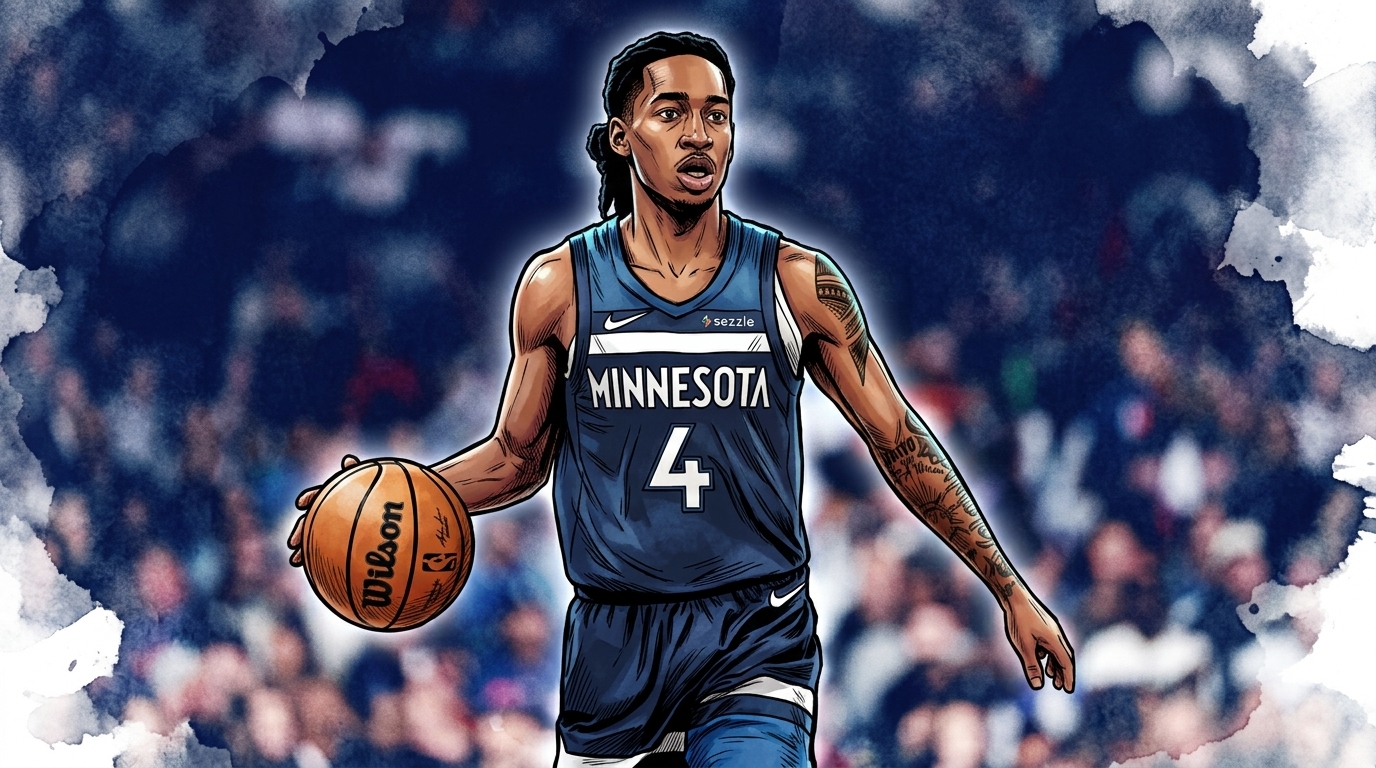

There’s a genre of internet fame that has nothing to do with being good at your job: wrong tweet, wrong time, a video someone else decided to post. I’ve watched strangers get flattened into thirty humiliating seconds for years. Rob Dillingham joined that club this week, and he actually had a basketball reason to go viral. NBA Twitter picked the other one.
The Charlotte Hornets waived Dillingham on Monday, a day after acquiring him from Chicago in the trade that sent Buddy Hield out the door. That’s the news: a 21-year-old guard cut less than a day into his third organization in two years. It was the waiver that didn’t move the needle. What spread instead was a post claiming he’d messaged Miami creator Tatiana Chanell and gotten blocked on camera, and that’s the version everyone had an opinion about.
That gap says something about who’s actually reading the replies. Nobody’s out here citing a transaction log. The DM rejection became the real headline instead of the trade that determines his career because the rejection needs no context. The transaction needs you to already know who Dillingham is in the first place, which, full disclosure, I only do because I burn too many nights on League Pass tracking bench guys nobody else bothers with.
The joke skips over what actually happened to him. Dillingham was the No. 8 pick in the 2024 draft. San Antonio took him and flipped him to Minnesota before the night was even over, which tells you how much value even his own draft-night team assigned to keeping him. Two years and three organizations later, the production reads like a deep-bench footnote: 114 combined games, something like five and a half points and two assists in thirteen minutes a night. Clear waivers and he’s an unrestricted free agent within days, carrying a resume that fits on an index card. Nobody outside the League Pass die-hards could have picked him out of a lineup a month ago.
None of that mattered to the timeline. The post that actually traveled came from FearedBuck, describing a video credited to creator Summyah that showed Chanell’s reaction to Dillingham’s message: she blocked him, captioned along the lines of “ewww, blocked.”
https://twitter.com/FearedBuck/status/2104909420111016213
Chanell is a Miami-based creator and model with no connection to the Hornets, the league, or Dillingham’s career. She’s a stranger who became the internet’s proof of concept that this guy is, in fact, a person capable of being rejected, and NBA Twitter treated that proof like breaking news.
https://twitter.com/kyriecenter/status/2104945163286044893
Compare that energy to the same audience that turned Travis Kelce’s offseason into a running commentary. Kelce is a future Hall of Famer whose private life became public property because of stakes that actually exist — endorsement money, a famous partner, a Sunday audience of tens of millions. Dillingham has none of that leverage. He’s not famous enough to have earned the scrutiny and not obscure enough to avoid it, which might be the least comfortable position in professional sports, and it’s the same reflex that turned a Knicks star’s joke into a week of headlines: the bar for a sports-culture pile-on has never been lower, and the person on the other end rarely gets a say in how low it goes.
That’s the part worth sitting with longer than the joke deserves. NBA Twitter likes to say it only holds its biggest names accountable — the superstars, the max contracts, the guys with actual power to abuse. But accountability implies consequences that matter to somebody besides the target, and nothing about a fringe guard getting blocked has consequences for anyone but his own ego. The pile-on didn’t need real stakes. It needed a target low-status enough that piling on felt free, and a guy nobody could place in a lineup a month ago is about as free a target as exists. That’s a long way from the stars-only accountability the same replies claim to practice.
I don’t know what happens to Dillingham once he clears waivers. Probably a camp invite somewhere, maybe a G League assignment, the ordinary afterlife of a lottery pick who hasn’t stuck anywhere yet. Whichever team signs him, the DMs will follow him there faster than the box score does, and that says less about him than it does about how cheap main-character status has gotten around here. Check out the rest of our NBA coverage if you want the version of this story that involves an actual basketball game — I’m still stuck on how little any of this needed to be true before people decided it was the funniest thing all week.