
The most honest account of LSU’s eligibility loophole this week wasn’t written by anyone with a press pass. It was posted by a parody account, and it involved a fake student ID.
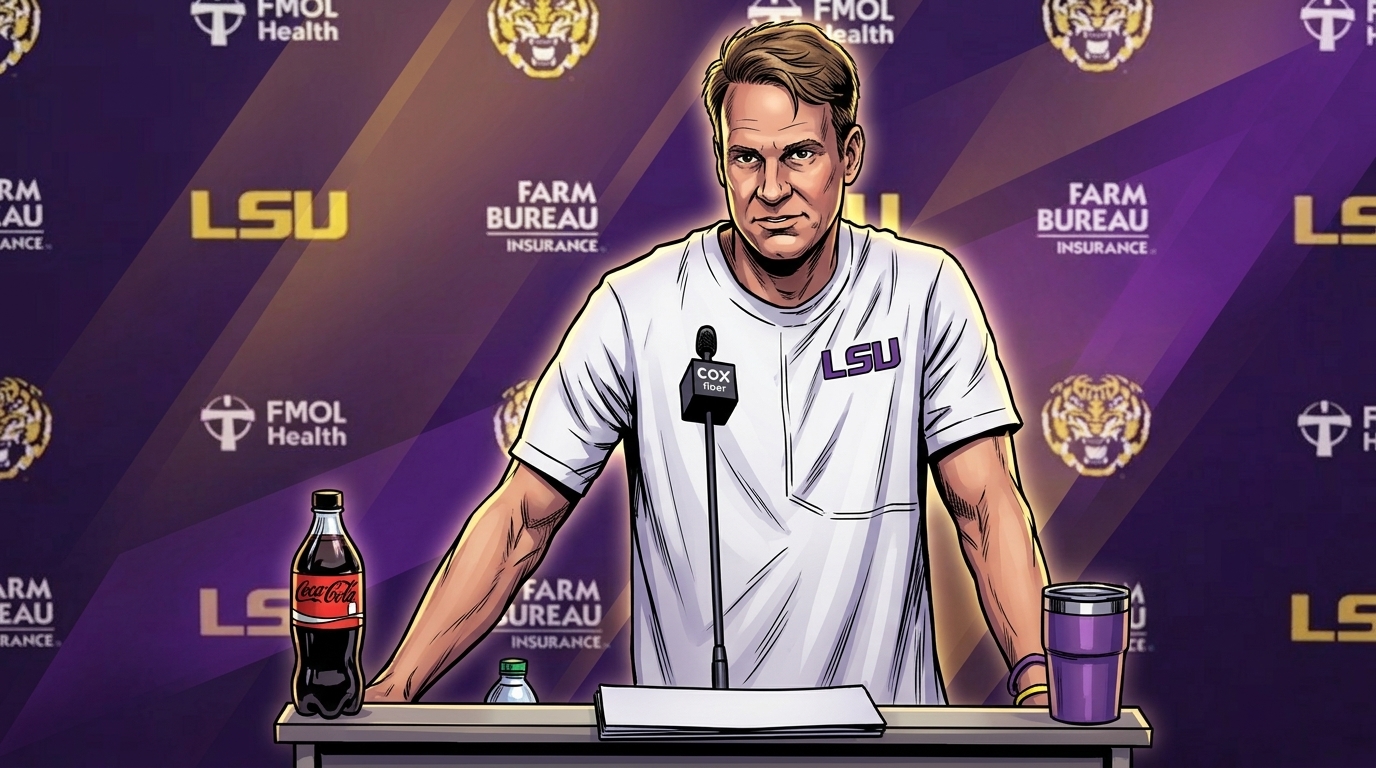
SEC Shorts spent the week imagining LSU football as freshman orientation for men who’d just received NFL termination paperwork: a mock Tiger Card, a table for “agent commission repayment,” jokes about bail bondsmen and state trooper stops that only land if you’ve spent time in Louisiana. The video is a joke; the eligibility loophole underneath it is not. A Louisiana state court, not the NCAA and not the SEC, ruled that a group of players could return to college football for 2026, and the SEC, LSU’s own conference, has since broken publicly with its own member school over a rule a judge wrote, not one the conference had any hand in writing. Satire gets to say this is insane out loud. The actual news coverage, and the conference’s own statement, only get to hedge.
https://x.com/SECShorts/status/2094409881919148358
The mechanism is the NCAA’s shift to a five-year eligibility model, applied retroactively. Players from the high school class of 2022 who locked in a fifth year can return to college even after signing, and losing, professional contracts, for one season, before the window closes for good. Dae’Quan Wright found it first, via lawsuit: one of sixteen players who sued the NCAA in Louisiana state court for additional eligibility, and won. An Ole Miss tight end who caught 39 passes for 635 yards and five touchdowns last season, Wright went undrafted, signed with the Eagles, got waived, signed with the Browns, dressed for Cleveland’s Aug. 22 preseason game against Buffalo without playing, got waived again, and now has a deal in place to join Lane Kiffin at LSU pending waivers. He may be the most-waived man in college football, and he’s about to be a Tiger for it.
He won’t be alone. Zxavian Harris started all 15 games at defensive tackle for Ole Miss last season under Kiffin (58 tackles, nine for loss, three sacks), went undrafted, signed with the Saints, and was waived Aug. 8; he’s expected to join the LSU Tigers roster next. Jack Pyburn, an LSU defensive end who led the entire NFL in preseason sacks for Tampa Bay this summer, was waived by the Buccaneers and has said publicly he wants back in; a temporary restraining order has him on track to rejoin LSU pending waivers, which would make him the third former pro to land in Baton Rouge this cycle. LSU’s NFL pipeline is a court order, not a loophole LSU wrote. The program’s only real innovation has been reading it out loud and acting on it, in public, three times.
Three is a pattern, and the SEC’s presidents and chancellors reacted to it with a statement built to sound aggrieved without naming names: “College athletes, not former professional athletes, have been at the heart of the Southeastern Conference. Individuals who choose to leave college athletics, sign professional playing contracts, and compete professionally should not then be permitted to return to college competition.” The conference warned the arrangement would “blur the line between college and professional sports, create significant competitive equity concerns, and reduce opportunities for high school and current college athletes.”
What the statement doesn’t do is discipline LSU. Instead, the SEC is lobbying Congress for the Protect College Sports Act, asking the federal government to write the uniform rule the conference won’t enforce against its own member. Kiffin’s defense has been that a court, not LSU’s compliance office, made these players eligible, and that some other program would have signed them if LSU hadn’t, which is true, and also the specific flavor of true a defense attorney reaches for when the real argument is “we got here first.”
That’s the joke SEC Shorts is actually telling, and it lands harder than the statement or the coverage because a parody account has no obligation to be neutral about it. The SEC wrote a stern paragraph about a loophole it is simultaneously asking Congress to close rather than a rule it’s willing to enforce on the school actually using it, because enforcing it means punishing LSU for reading the same court order every other program read and chose not to act on. That’s a conference issuing a verdict it has no intention of backing with a penalty, the institutional equivalent of yelling “this is unacceptable” from another room and then going back to the television.
None of this makes Wright, Harris, or Pyburn cheaters, and it doesn’t make Kiffin a con man; a rule that permits something isn’t a scheme, and the sport’s failure to close the window in advance belongs to whoever writes the rules, not the coach who read them correctly. It does mean LSU keeps doing this until the SEC enforces its own statement or Congress hands it a law with actual teeth, and given that the NIL system already broke one teenager this year, nobody should bet on Congress beating next season’s Tiger Card orientation to the punch. There’s more of the rest of the college chaos where this came from, and increasingly, it’s the parody accounts getting there first.