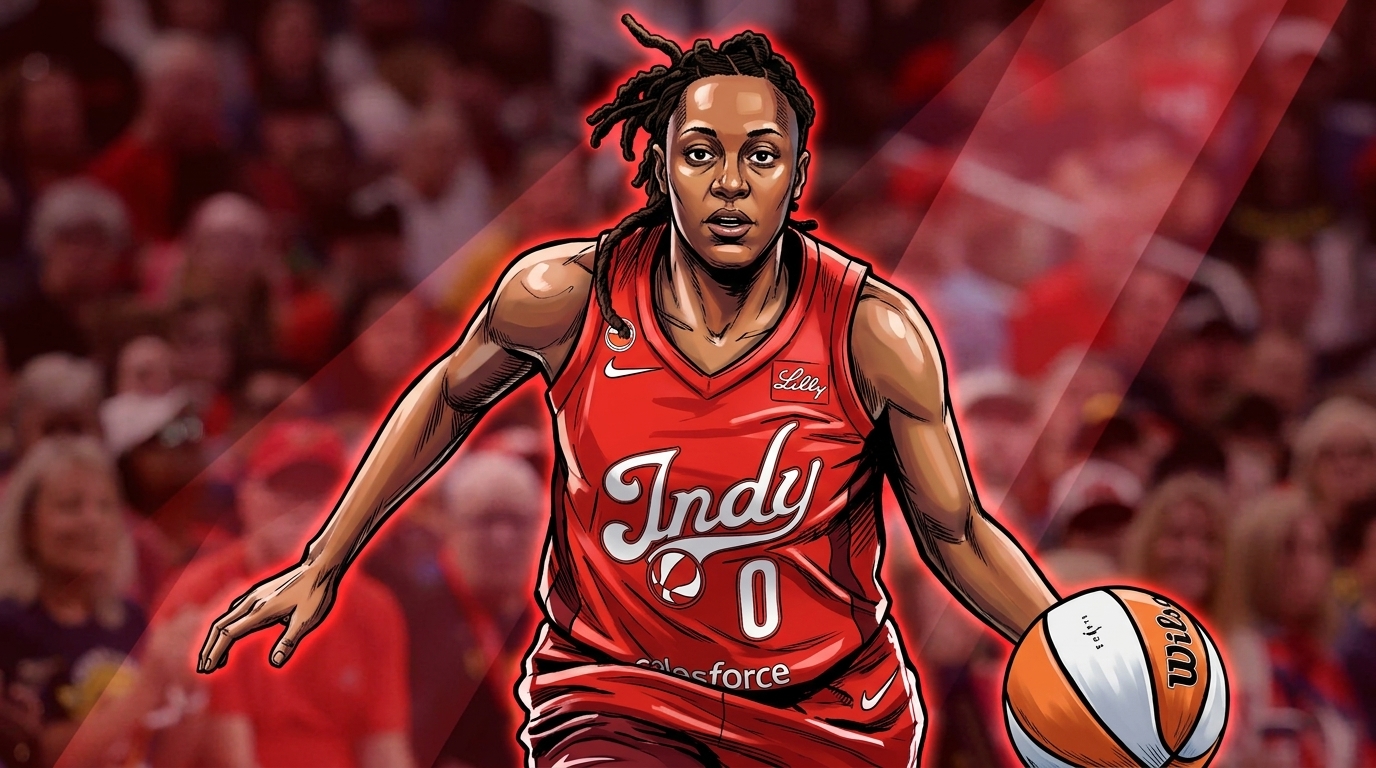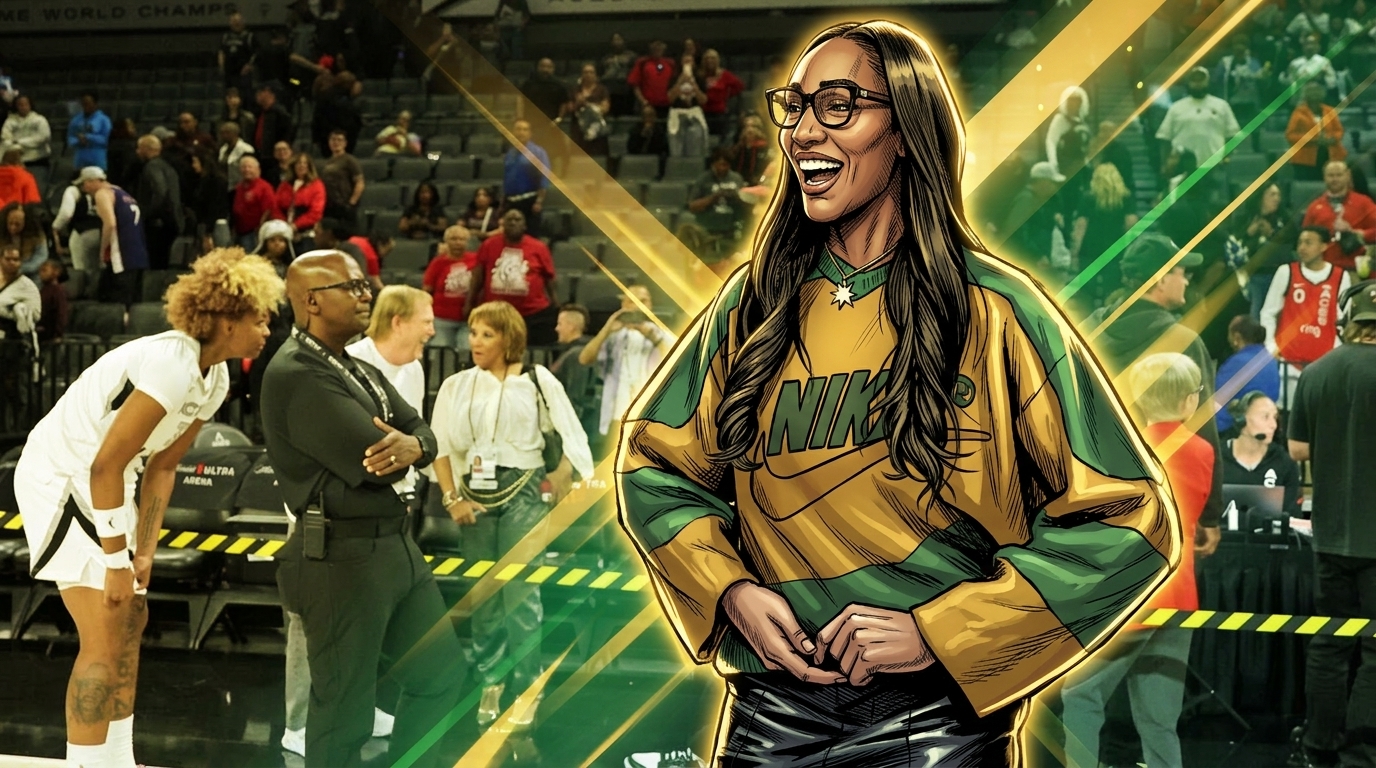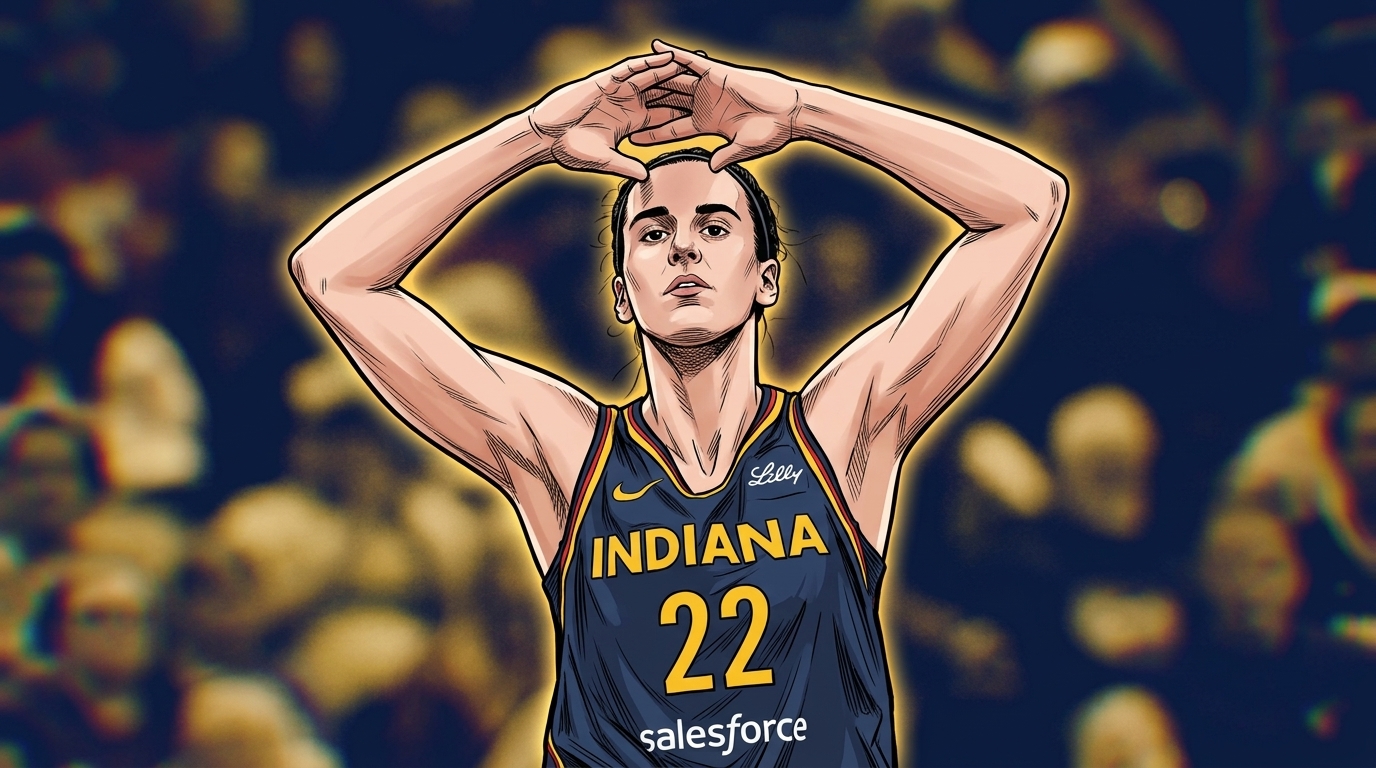

Sophie Cunningham hasn’t scored 20 points in a single game this season. Last month, she passed Caitlin Clark, her own teammate on the Indiana Fever and the WNBA’s biggest commercial engine, on a leaderboard that has nothing to do with baskets.
Cunningham now sits at roughly 4.1 million Instagram followers. She’s gained 1.4 million of them in the past 30 days alone, enough to pull her past Clark’s roughly 4.0 million by late August. That puts Cunningham second in the league behind Angel Reese’s roughly 5.2 million, and none of it traces back to anything that happened on the court. The swap is real. The explanation for it is the actual story.
The Numbers Behind the Pass
Start with how fast this moved. Cunningham picked up about 1.4 million new followers in 30 days. On her slowest single day in that stretch, she still added more than 14,000 followers, a number that would count as a career month for most players in the league. Clark, over that same 30-day window, added roughly 134,000.
Run the math and Cunningham out-grew Clark by more than 10 to 1 in a sport where Clark is, by most measures, the bigger commercial draw. That’s not a knock on Clark’s popularity. It’s a signal that whatever built Cunningham’s spike in August operates on a different axis than the one that made Clark famous in the first place.
https://twitter.com/ES_sportsnews/status/2093446957176144118
Five months earlier, Cunningham had about 1.3 million Instagram followers. That figure comes from a different snapshot than the 30-day numbers above, so treat it as a rough before-picture rather than a clean data point on the same chart. Even loosely, the shape is obvious: a WNBA role player tripled her following in less than half a year, and almost all of that growth landed in a single month.
Why Isn’t This About Basketball?
Cunningham’s box score gives you no reason for any of this. She’s averaging 8.4 points, 2.3 rebounds and 1.3 assists a game this season, shooting 47.6% from the field. Her 44.1% mark from three-point range ranks fourth in the WNBA, a genuinely elite number for a bench-caliber scoring role. None of it moved during the window she gained 1.4 million followers, because none of it was the cause.
The cause was an ESPN interview published July 21, in which Cunningham addressed the debate over trans athletes in women’s sports. The remarks set off rallies at Fever games from supporters and critics alike and kept her name in national coverage for weeks afterward. This isn’t even the first time a comment outpaced her production this season — how outlets covered her last flashpoint followed a similar shape, just smaller in scale. Whether her position was right, wrong, or somewhere in between isn’t the relevant question for a follower count. What’s relevant is that the interview, not anything that happened on a basketball court, is the entire explanation for the graph.
What Follower Counts Used to Measure
Follower totals are usually the slowest-moving number in sports media. They accumulate over years of highlight reels, All-Star appearances and brand deals, which is why they tend to track fame instead of any single week’s headlines. Clark’s own follower base built that way: a Final Four run, a Rookie of the Year season, a sneaker deal, added a few thousand at a time.
Cunningham’s spike breaks that pattern completely. She didn’t accumulate an audience over years. She rented the WNBA’s entire attention span for a single news cycle and kept a large chunk of it. It’s a faster, messier version of something Cunningham has flirted with before: a meme that went viral for doing basically nothing moved her numbers a little earlier this year. This moved them by orders of magnitude.
Call it discourse velocity — how fast a single moment converts into measurable audience, independent of whether that audience sticks around or ever buys a ticket. It’s not a stat the league tracks, but it may be a more honest read of where WNBA attention actually goes than anything on a stat sheet.
Is Discourse Velocity a Real Metric?
Sophie Cunningham’s Instagram spike shows that attention in the WNBA can now move faster than production, generated by a single interview rather than a full season of games. It matters because it’s a live measurement of where fans are actually looking right now, even if it says nothing about who’s the better player.
The counterargument writes itself, and one fan on social media made it well: followers are a vanity metric, the kind of number that only matters to people who don’t watch actual games. Attendance, jersey sales, All-Star voting and viewership are the totals that describe who’s driving the league, and by those, Clark isn’t close to being caught.
That’s fair, and mostly true. It’s also missing what the follower count is actually measuring. Nobody is claiming 4.1 million people suddenly think Cunningham is a better basketball player than Clark. The number tracks something narrower: how far one moment can travel, how many people it can pull in, and how fast. That kind of reach used to take a career to build. Now it takes one interview cycle, and whoever produces the league’s next viral moment will find out it travels just as quickly.
This is the shift worth tracking for the rest of the season: not who leads a follower count on any given Tuesday, but how fast a single moment can now rewrite it. Cunningham won’t hold the No. 2 spot forever — someone else’s clip, comment, or flashpoint will eventually out-pace her, the same way she just out-paced Clark. It’s already happening across the rest of our WNBA coverage, and it will keep happening faster than any roster can keep up with.