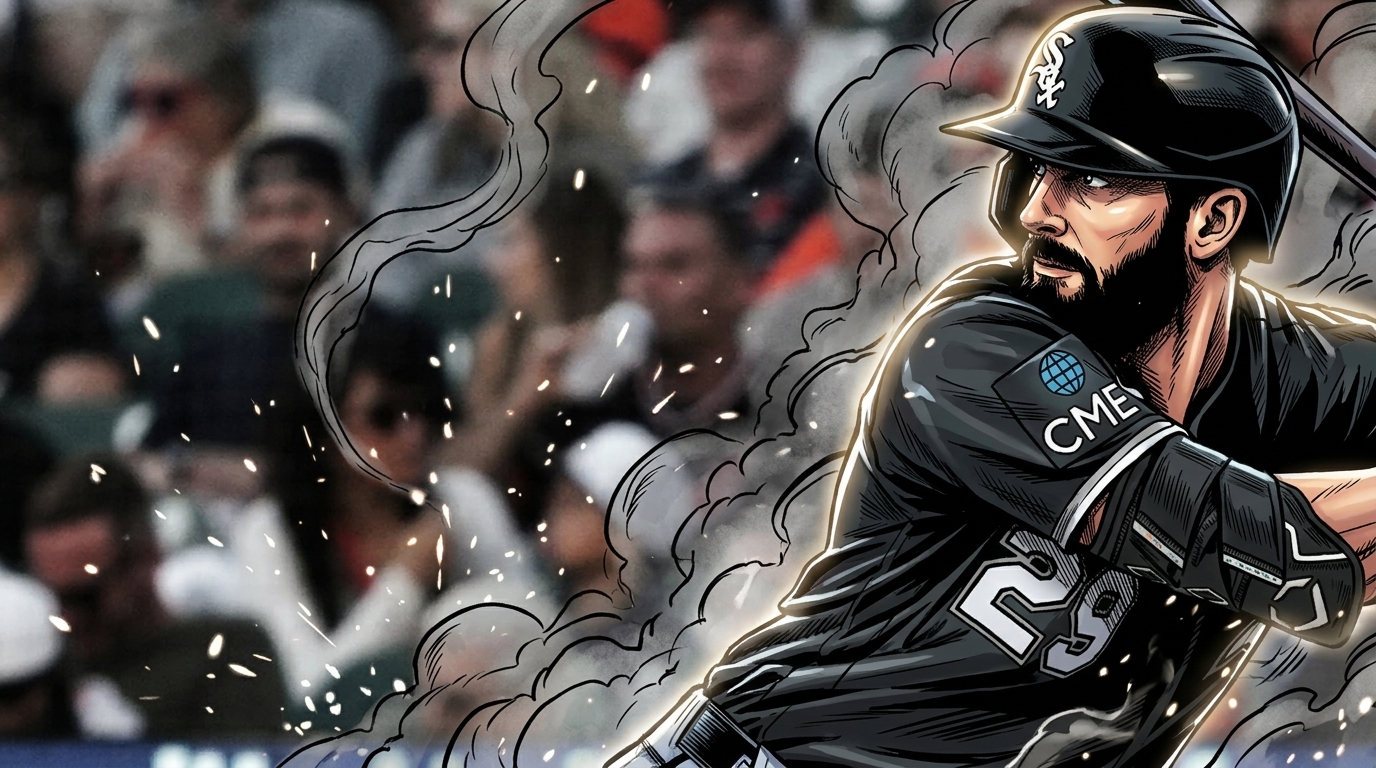

There’s a stage every historically bad baseball team is supposed to pass through on the way back to relevance, and it usually eats up the better part of a decade. Call it purgatory: competitive enough to avoid embarrassment, not competitive enough to sniff first place. The Chicago White Sox lost 101 games in 2023, then 121 in 2024, then 102 more in 2025. Three years later, the White Sox magic number in the AL Central sits at 17 with 19 games left to play. The purgatory stage never happened.
That’s the real story, and it has nothing to do with the win total or the 17 by itself. A franchise that bad is supposed to spend years hovering near .500, showing up in wild-card fringe conversations before it’s ever within shouting distance of first place in the AL Central. Skipping that step entirely is rarer than the turnaround itself, and figuring out how Chicago did it says more about this team than the standings do.
Why Is Skipping the Purgatory Stage Rarer Than the Turnaround Itself?
Because rebuilds are supposed to be gradual by design. Front offices tank for high picks, develop them slowly, and treat 75 wins as the reward before 85 wins becomes realistic. The White Sox went from three straight 100-loss seasons directly into a division race with no bridge year in between, which is a different and harder trick than just getting good again.
Look at the shape of the last three years. The 101 losses in 2023 were bad. The 121 in 2024 were the worst mark of the modern era, a number large enough to usually buy a front office two or three more years of losing while it figures out what it’s doing. The 102 in 2025 looked like more of the same story. Then the bridge year just didn’t show up. No 78-84 season. No “progress” measured in moral victories. The magic number sits at 17 with the Guardians still lurking, and the White Sox are chasing something no team has ever done: making the playoffs after even two straight 100-loss seasons, let alone three.
I checked the historical comps on this the way I’d check any claim that sounds too clean. It holds up. Teams this bad don’t leap. They crawl. This one didn’t crawl.
What Actually Changed in the White Sox Front Office?
GM Chris Getz rebuilt the acquisition process around projections first and traditional scouting second, a small-sounding ordering change that ended up restructuring who gets final say on every roster decision the team makes. Assistant GM Josh Barfield and special assistant David Keller pushed departments that used to work in isolation to actually talk to each other.
That’s the part the Sun-Times detailed this month, and it’s the piece about the 121-loss season everyone already knows about never got into. Getz has put it plainly: it starts with the projection system. Keller runs international evaluation on a checklist built around body, athlete, tools, and makeup, scouting language that used to live only in front-office job postings and now explains why a fifth-round pick out of Coastal Carolina is starting for a first-place team in September. A new department of acquisition under Matt Grabowski folds projections, pro scouting, biomechanics, player development, and bat-speed training into one unit instead of four groups competing for the GM’s attention.
I run three fantasy baseball leagues off my own projection model, so “it starts with the projection system” is a sentence I’d frame if I had the wall space. Most front offices already believe that in theory. Fewer of them rebuild the org chart to actually match it.
How Many All-Stars Can One 100-Loss Roster Produce?
Three, as it turns out. Miguel Vargas, Tristan Peters, and Murakami all made the 2026 All-Star team, an absurd number of honors for a roster that was 100-loss property three years running.
Vargas is the headline. He’s hitting .252 with 30 home runs and 79 RBI, and his All-Star selection made him the first White Sox third baseman to make the team since Joe Crede in 2008. Peters is the stranger story. He got the call as an injury replacement just four days after hitting for the cycle, capping off a summer that had already made him a recurring subject around here: Tristan Peters, who was already rewriting the franchise record book in August. An unheralded roster piece turning into a mid-season All-Star through a bat-speed program is the front-office remodel showing up in a box score, not a press release.
Sam Antonacci is the third data point, even without an All-Star nod attached to his name. He debuted April 15 as a fifth-round pick out of Coastal Carolina and is hitting .265 with 8 home runs and 41 RBI since. None of these three were supposed to be foundational pieces on a first-place team in year one. That’s not scouting luck landing three times in a row. It’s what a working system looks like when several of its bets hit in the same season.
https://twitter.com/SlangsOnSports/status/2093539346427064486
Sarah Langs isn’t a White Sox reporter chasing a feel-good angle. She’s MLB’s stat-tracking arm, and she’s telling you this team just posted the most wins ever by a club coming off three straight 100-loss seasons, ahead of the 2014 Astros and the 1925 Braves. No team in the sport’s history has made the playoffs after even two.
Does the Magic Number Tell the Real Story?
No. The magic number measures what’s left, not what already happened, and what already happened is the part worth remembering. The White Sox opened 0-3, then 1-5, then 6-13, a start bad enough to look like a fourth straight lost season taking shape in real time.
Since an extra-innings loss on April 18, they’ve gone 29-17, tied for the best record in the American League over that stretch. A hot April carrying a mediocre team into a soft cushion is a familiar story around the league. This is a different shape entirely: three genuinely rough weeks followed by five genuinely excellent months, which is a much harder thing to sustain than one good stretch.
A front office that reorganized itself around projections and player development landed three All-Star seasons, a rookie who forced his way into the lineup by May, and a division race, all in the same year it was supposed to still be paying down 2024. The front office bought instead of standing pat at the deadline, which isn’t what a rebuilding team does with a 17-game cushion still forming underneath it.
The Chicago White Sox skipped a step teams aren’t supposed to be able to skip, and everything about how this roster got built says the skip was on purpose. Give me the White Sox to close this out, and give me the front office that built it to keep doing this past 2026.