
Ten teams in major-league postseason history have fallen behind 0-2 in a best-of-five series and still won it. The Cleveland Guardians need to become the eleventh, and after a 9-5 win over the White Sox in Game 4, they’re one victory away from doing it.
That number carries extra weight this October. A piece on this site published earlier today argued that the White Sox, Guardians, and Rays are the three rosters currently undercutting MLB’s case for a salary cap, modest payrolls outplaying what the sport’s economics are supposedly built to prevent. A Game 5 in Cleveland, forced by a team that looked finished five days ago, is what that argument looks like when it’s actually being played out on a field instead of argued over in a labor memo.
What Actually Happened in Game 4
Start with how Cleveland got here. When the White Sox looked like the team one win from the ALCS, it’s because they’d taken both games at Progressive Field to open the series behind a lineup built to punish mistakes early. The Guardians answered by winning Game 3 in Chicago, cutting the deficit to 2-1 and buying themselves a Thursday game at Rate Field that, win or lose, was going to define the series.
They nearly lost that one too. Cleveland trailed 2-0 through four innings before scoring three in the fifth, a rally capped by a two-run homer off a 99.9 mph sinker from Jordan Hicks, about as hard as any pitch gets thrown in October. The White Sox answered immediately to retake a 4-3 lead, and for an inning, the game looked like it was sliding back toward Chicago.
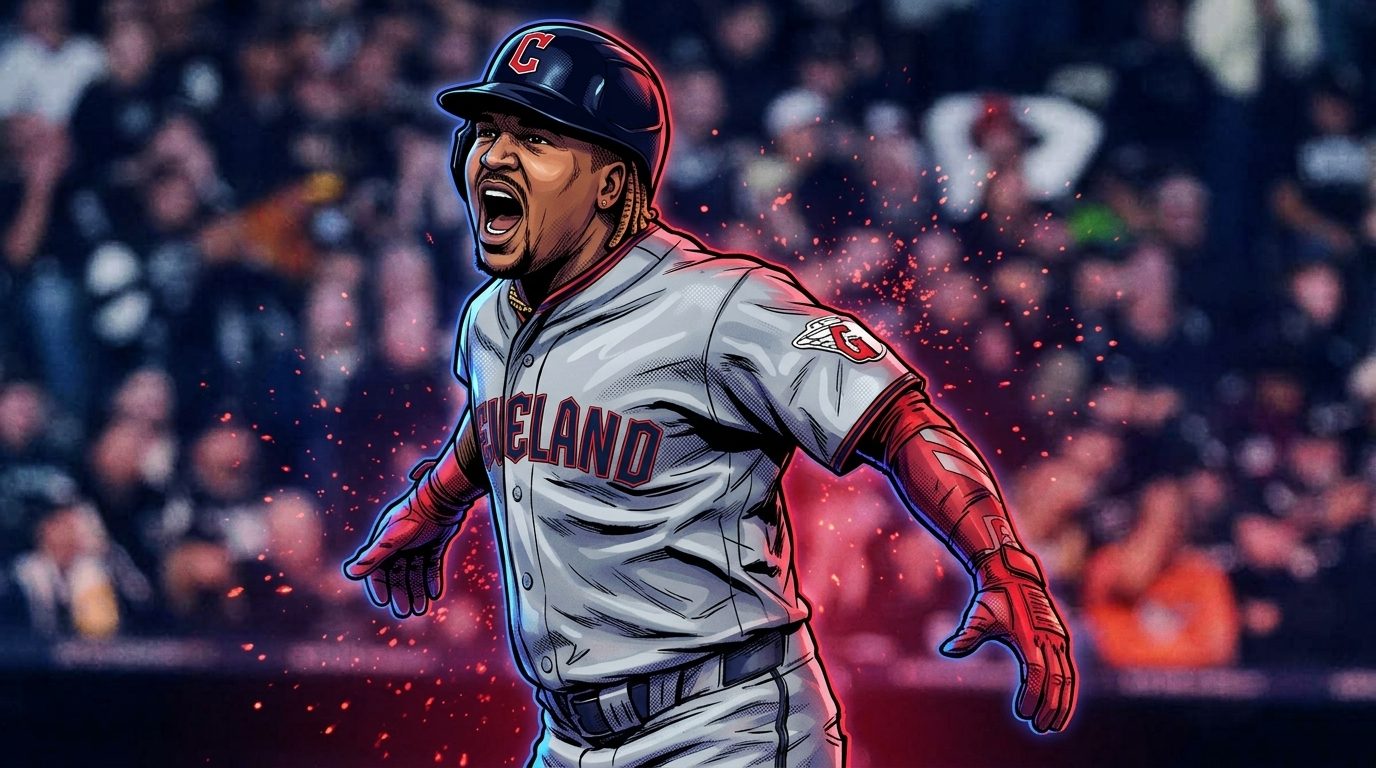
Then the sixth happened. Cleveland sent ten batters to the plate and scored six runs, tied for the third-most in a single inning in franchise history, turning a one-run deficit into a laugher. Patrick Bailey added a homer off the bench. White Sox reliever Grant Taylor, who’d logged a four-out save in Game 1, took the loss without recording a single out in the sixth, charged with four of those six runs. Ramirez finished 2-for-5 with a single to go with his homer, driving in three runs total in a 9-5 win that tied the series 2-2 and sent it to a decisive Game 5 Saturday at Progressive Field.
https://twitter.com/CleGuardians/status/2108404197800419415
How Rare Is a 0-2 Comeback, Really?
Only ten teams in MLB postseason history have come back from 0-2 down in a best-of-five series. Just two, the 2001 Yankees and the 2015 Blue Jays, lost both of those games at home, exactly like Cleveland, before finishing the job. That’s the shape of the comeback the Guardians are now chasing.
I ran this three different ways, filtering by round and by era, and got the same answer every time: ten. Teams climb out of 0-2 holes more often than postseason folklore suggests, but winning back the two games you already lost at home is a different problem. It means doing it without the crowd, without the bullpen you’re used to protecting a lead with, and without a single rep of actually beating this opponent on your own field.
The fantasy-baseball nerd in me finds this part more interesting than the series itself. I run three leagues off my own projection model, and not one of them had Cleveland alive in October past Game 2. The data here is unambiguous: this bracket of the field was supposed to already be closed.
Why Losing Both Home Games Makes This Different
Eight of the ten previous 0-2 comeback teams lost their first two games on the road, then returned home with a cushion: friendly fans, a pitching staff on regular rest, a mathematical path that didn’t require beating someone twice in their own ballpark. Cleveland did it backward. The two losses that put the Guardians in this hole came with home-field advantage already spent, not banked for later.
That matters more in October than casual fans tend to account for. Playoff crowds swing with the smallest shift in leverage, and a team that’s never had the stadium on its side in this series is relying on momentum it built somewhere else entirely. None of that stopped Cleveland from winning Game 3 in Chicago or scoring nine runs in Game 4, also in Chicago. The version of this comeback the Guardians are attempting has almost no precedent to borrow confidence from. It has exactly two: a Yankees team from a quarter-century ago and a Toronto team from eleven Octobers ago, neither of which gets brought up unless a situation this specific forces the comparison.
There’s a scheme-level piece to it as well. Cleveland’s path through Games 3 and 4 required winning low-leverage innings that turned into high-leverage ones, the kind of sixth-inning snowball that happens when a bullpen gets stretched before it wants to be. Grant Taylor going from four-out hero in Game 1 to zero-out culprit in Game 4 isn’t just one bad outing. It’s what a shorter leash late in a series looks like against a lineup that’s finally seeing pitches it recognizes.
What Game 5 Looks Like for Cleveland
Home teams in winner-take-all Division Series games have gone 19-22 historically, close enough to a coin flip that Progressive Field by itself won’t decide Saturday. What should matter more is which dugout believes it still belongs here. The White Sox spent five games as the favorite and watched a two-game cushion vanish twice. The Guardians have already cleared the harder bar, twice, this week, including once on the road with their season on the line.
That edge alone guarantees nothing, and a decisive Game 5 is still a coin that hasn’t landed. But a team built on a payroll nobody envies just authored the rarest version of this specific comeback in MLB postseason history, and it did so by playing better baseball than a team that outspent it, not by catching a break. That’s the case cheap rosters like this one are already making against a salary cap, and Saturday is the chance to put an exclamation point on it instead of an asterisk.
Cleveland wins Game 5. The deciding factor isn’t the ballpark. It’s that the team which scored six runs in one inning to survive elimination this week is playing with more conviction than the team now explaining how a 2-0 series lead got away from it twice.