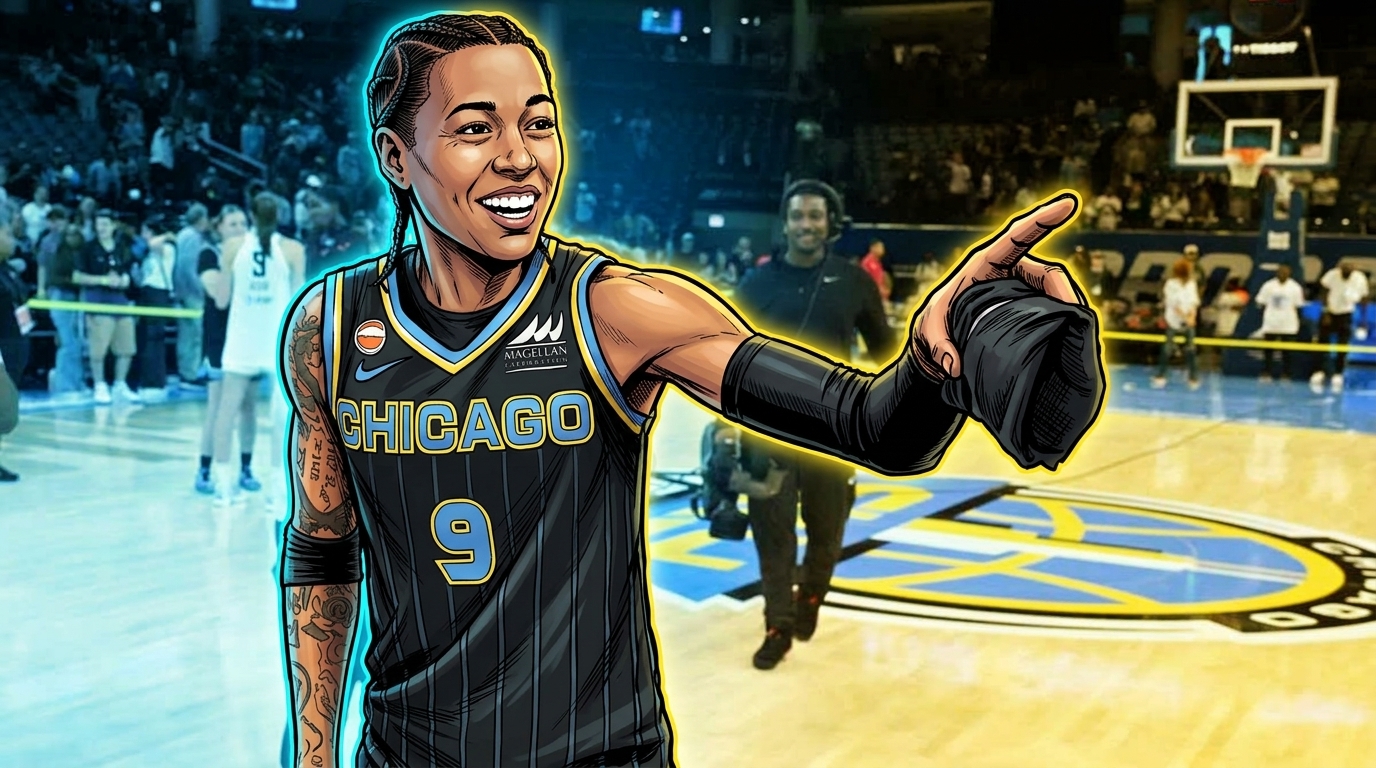

Angel Reese shot 10-for-16 from the floor in Game 2 of the WNBA Finals, a game Atlanta could not afford to lose. For two years the book on her has read “elite rebounder, limited scorer,” and Monday night she put up 30 points and 16 rebounds to tie the series at one game apiece. The “she can’t score” label was never about her ceiling.
The box score alone is historic. Reese is just the third player in WNBA Finals history to record 30 points and 15 or more rebounds in the same game, and it came with the Atlanta Dream chasing a Finals nobody saw coming and their first Finals win in franchise history. But the stat line isn’t actually the interesting part. The interesting part, according to CBS Sports, is how she got there.
Atlanta didn’t find her shots by running its offense through her. She went and got the ball herself. After a blocked shot and a stretch where the Golden State Valkyries defense had mostly taken her out of the game, Reese told her teammates what she needed. “At one point she was like, ‘I need the ball, I need the ball,’” Jordin Canada said. Reese told them she needed the ball, so they gave it to her.
https://twitter.com/GAFollowers/status/2112506618852110412
Atlanta fed her on the next possession. She drew an and-one. The Dream closed the quarter on an 18-4 run that put Game 2 away against a Golden State defense that came into the series ranked at the top of the league. Karl Smesko called it a “superior performance” afterward, which is the kind of understatement a coach reaches for when a player just took a Finals game away from the other team by force of will.
I watched that third-quarter stretch twice, and it plays less like a hot streak and more like a decision. Here’s where the “limited scorer” label actually falls apart: a player doesn’t get a 34-minute, 16-shot workload handed to her in a win-or-go-home Finals game unless the coaching staff already believed she could carry it. Teams don’t gamble a season on hope.
If Atlanta trusted Reese with that much offense when the alternative was elimination, the staff already knew something the “she can’t score” crowd never figured out. The limitation was never hers. It was imposed.
Compare it to Game 1 of this series: she scored 11 points in the first quarter, then watched Atlanta’s offense drift away from her for three quarters, according to Yahoo Sports.
Same player, same opponent, three days apart.
Golden State still has a roster built to make this hard again, and the Dream still have to win on the road to close this out, starting Wednesday back in Atlanta. None of that changes what Game 2 proved.
Nobody gets to call her a limited scorer again. Not out loud.