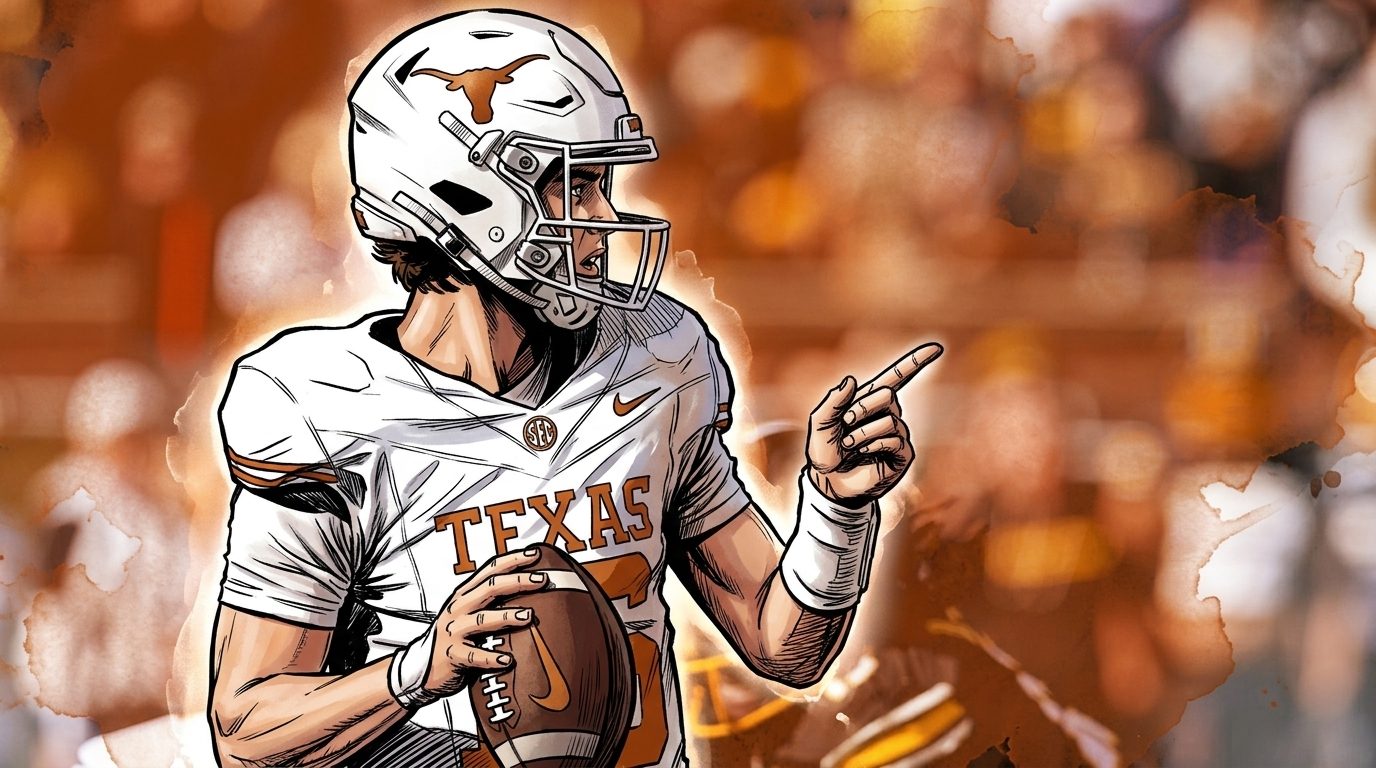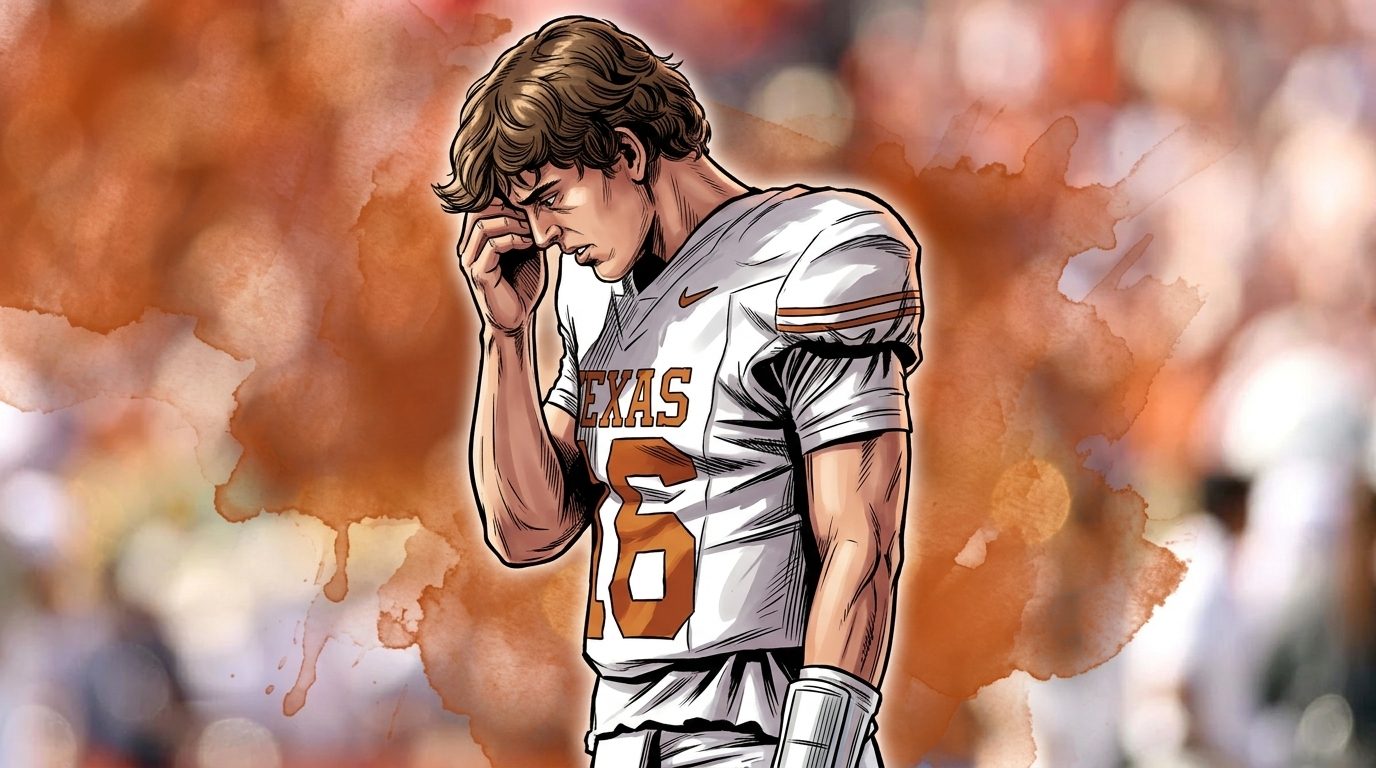

Every quarterback who has a bad day and still wins deserves the same two-question check, and Arch Manning just supplied the cleanest sample I can remember. Call it the Passenger Seat Test. Who was driving, and how long can the car run on someone else’s engine? At Kyle Field, the Texas defense drove. Manning rode along, and the Longhorns beat Texas A&M 16-6 anyway. The question for Atlanta is whether that works against a different opponent.
Where did Texas hide Arch Manning’s worst day?
Texas hid him behind its defense. ESPN’s recap has Manning at 18-of-34 for 143 yards, one touchdown and one interception, a career-low 4.2 yards per attempt, while A&M’s offense was held to 234 total yards. The Aggies scored only six points, so Texas never needed more than a manageable passing day.
That is the first half of the test. A quarterback can be inefficient and harmless at the same time if the other offense can’t punish him. A&M finished with six points and no way to make Manning pay for a stalled drive.
Look at how little that scoreboard asked of him. Texas needed one touchdown pass from its quarterback, and 4.2 yards per attempt was enough. Steve Sarkisian’s postgame message, as ESPN relayed it, matched the numbers: “We were not perfect.” Manning was blunter about where the credit belonged. “The defense has been bailing us out all year,” he said, per ESPN’s account.
What does 1-of-9 on deep throws actually mean?
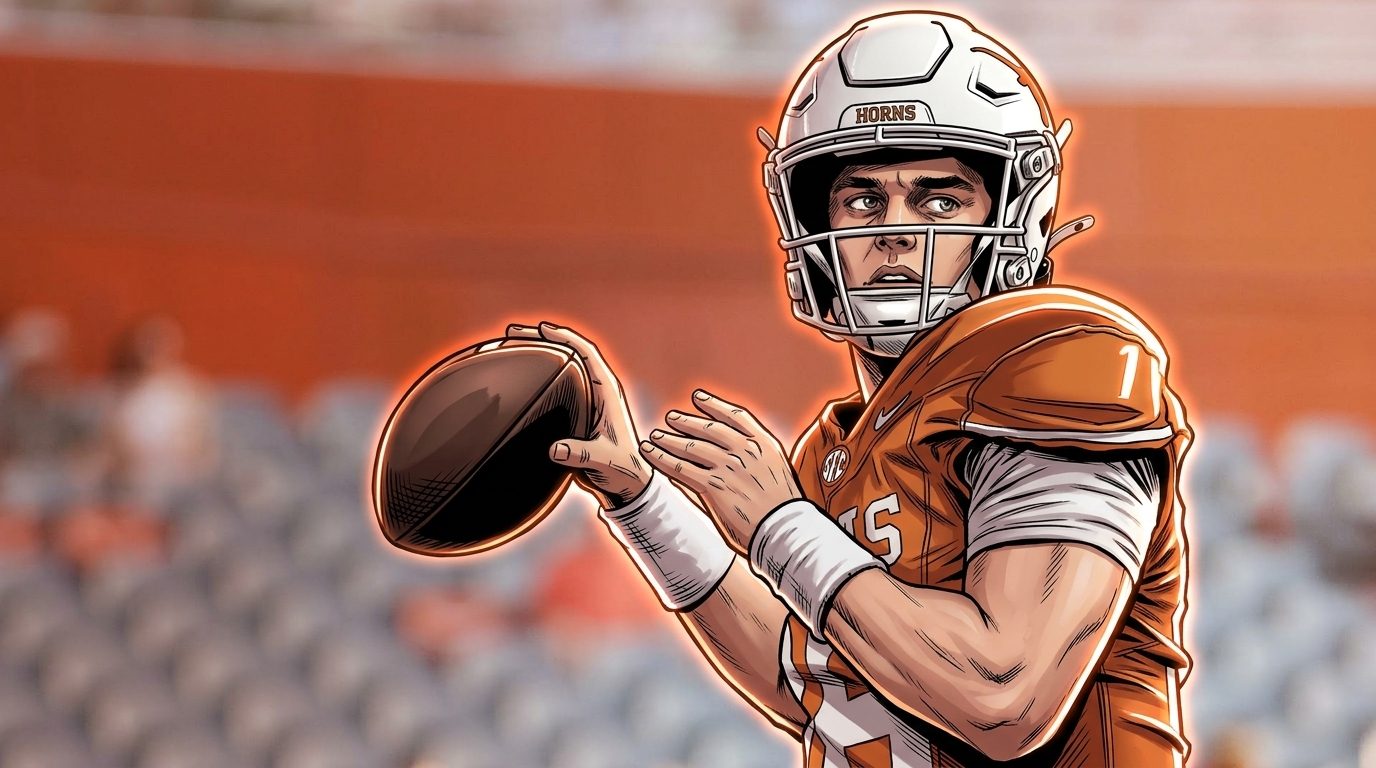
It means the passing game stopped at the short and intermediate zone. ESPN reports Manning went 1-of-9 for 19 yards on throws of 10 or more yards. Subtract those from his totals and the other 25 throws gained 124 yards, which is about 5.0 per attempt, derived from ESPN’s figures.
Here is the part that surprised me. Those nine deep attempts averaged roughly 2.1 yards each, again derived from ESPN’s totals. A throw that travels ten yards or more and averages two yards is mostly incompletions with the occasional catch. The longer routes did almost nothing for Texas, and the shorter ones were barely better.
Plain-language version: a typical drive on short throws is a series of small bites, and the deep shot is supposed to be the reset button when the bites stall. Texas didn’t have the reset button on Friday night. It had a defense that made sure nobody needed one.
The road résumé backs up the defense-first picture. ESPN Research notes the Longhorns are the first team in the AP poll era, which starts in 1936, to win at Neyland Stadium, Death Valley and Kyle Field in the same season. That is a stack of hard road trips, and the Kyle Field stop came in front of 109,570 people with a quarterback who couldn’t connect downfield.
https://x.com/CFBReport/status/2126528070425231581
The tweet lists the last three meetings with the Aggies at 17-7, 27-17 and now 16-6. All three are low-scoring enough for a defense to matter. The Passenger Seat Test works best against an opponent that can’t punish the passenger.
Does the formula survive Georgia?
The formula gets a much harder exam in Atlanta. Texas plays No. 1 Georgia in the SEC title game, and ESPN notes the Longhorns lost the 2024 meeting 22-19 in overtime. Nobody can say how it ends. What the A&M numbers can say is where the burden sat.
My test has three checks. First, does the defense still set the pace? Holding a team to 234 yards is a repeatable goal only if the opponent’s offense is as limited as A&M’s was. Second, can Manning’s 1-of-9 on deep throws move even a little? One more completion changes the shape of a defense’s afternoon, because a defense has to respect it. Third, does Texas keep the 16-6 style of game, where one touchdown pass and some field goals are enough?
That last check is the one I’d watch. A low-scoring game helps the team with the better defense and hurts the team that has to catch up. If Georgia scores early, the formula changes from “survive” to “chase,” and chasing with a 2.1-yards-per-attempt deep game is a different assignment entirely. The reset button would matter most in that game.
Think of it as a ledger. On one side sits a 16-6 win, a 234-yard defensive night and a road résumé nobody in the AP poll era has matched. On the other sits 4.2 yards per attempt and a deep game that barely registered. A ledger like that can balance against A&M. Against the team ESPN lists at No. 1, it asks for more on both sides.
Sarkisian’s line in ESPN’s recap that “these guys didn’t blink” tells you about the defense more than the offense. Manning’s own line about the defense bailing the team out all year is the same message from the other side. Both men described the engine without naming the passenger.
Manning has had better days, including the comeback against Ohio State, and the Heisman gap with Ohio State is worth a second look in that light. Friday gave a different data point, and Georgia will test which one travels.
The number to track in Atlanta is the deep-throw yards per attempt. If it stays near 2.1, Texas is asking its defense to carry the offense again. If it climbs, the Passenger Seat Test flips, and Manning starts driving again.