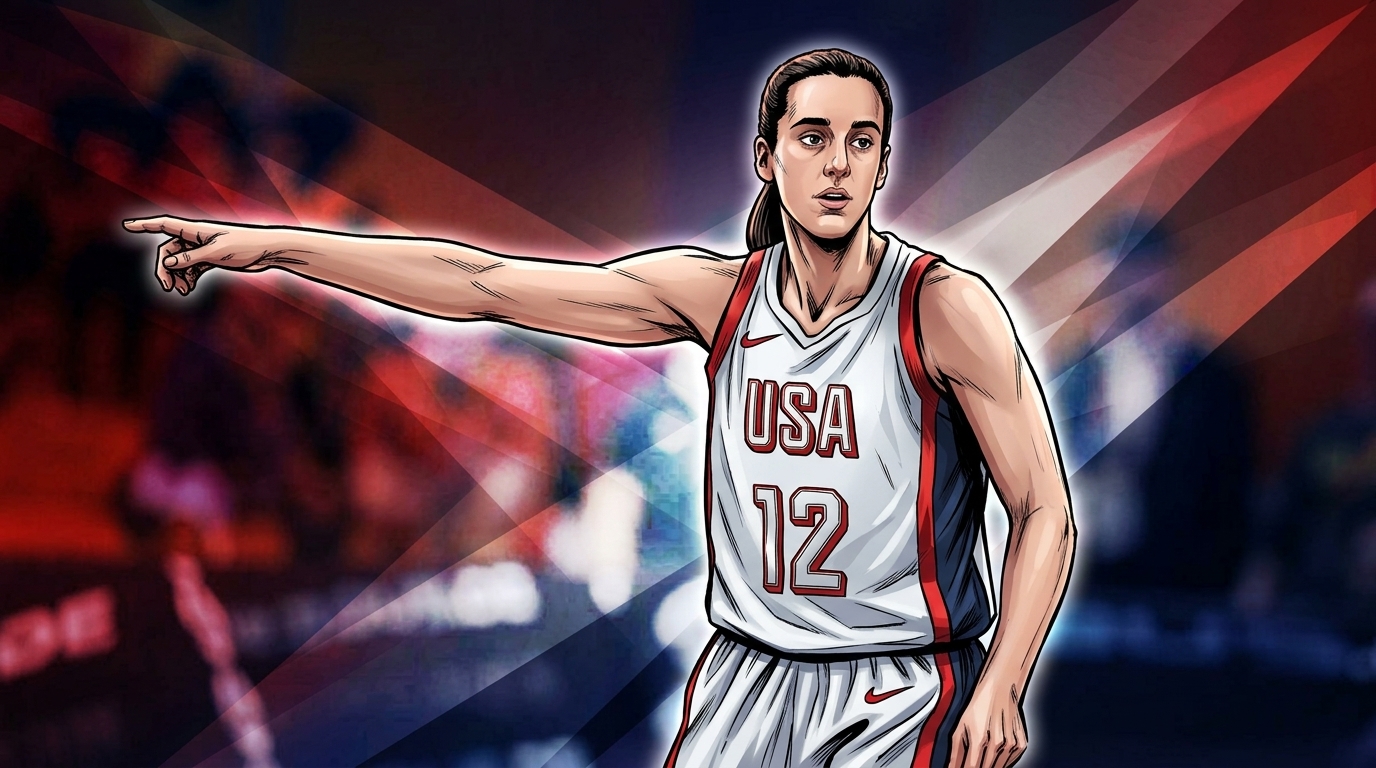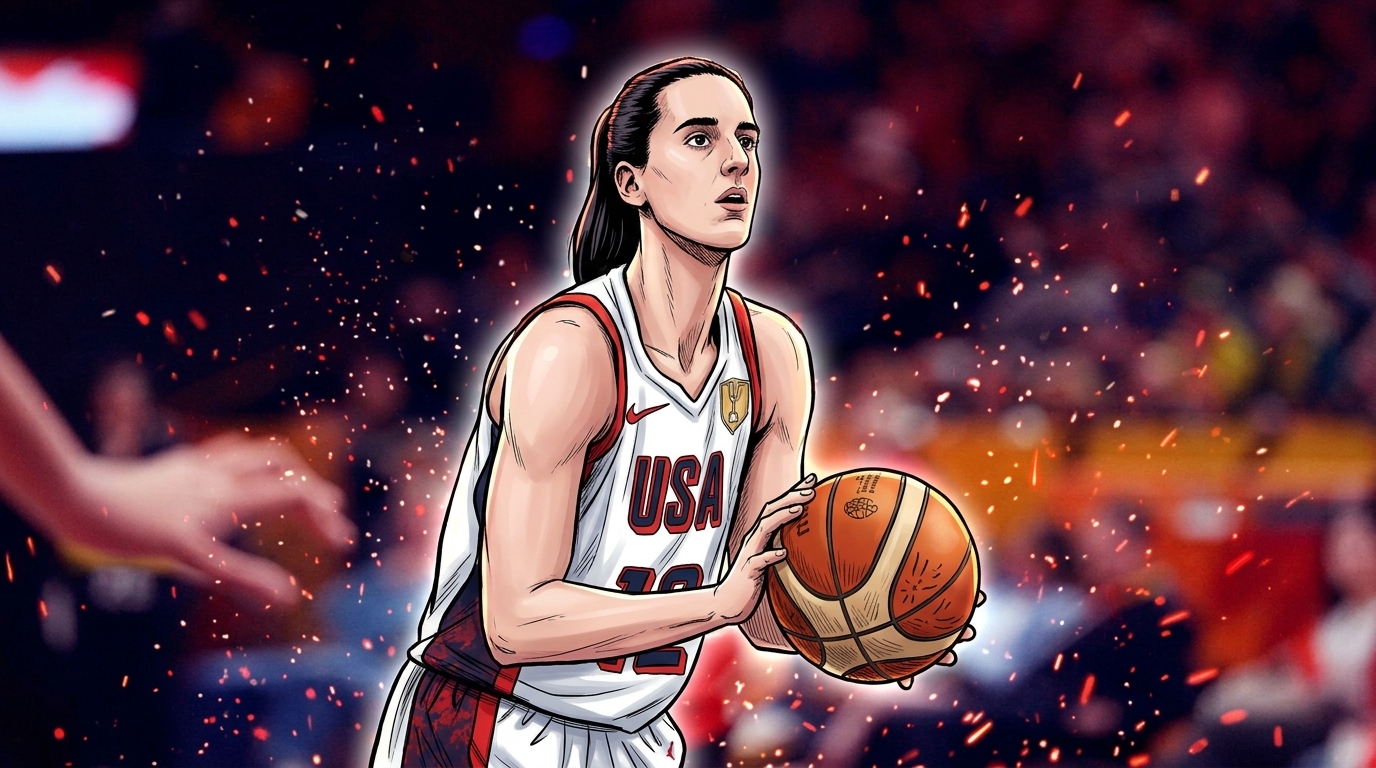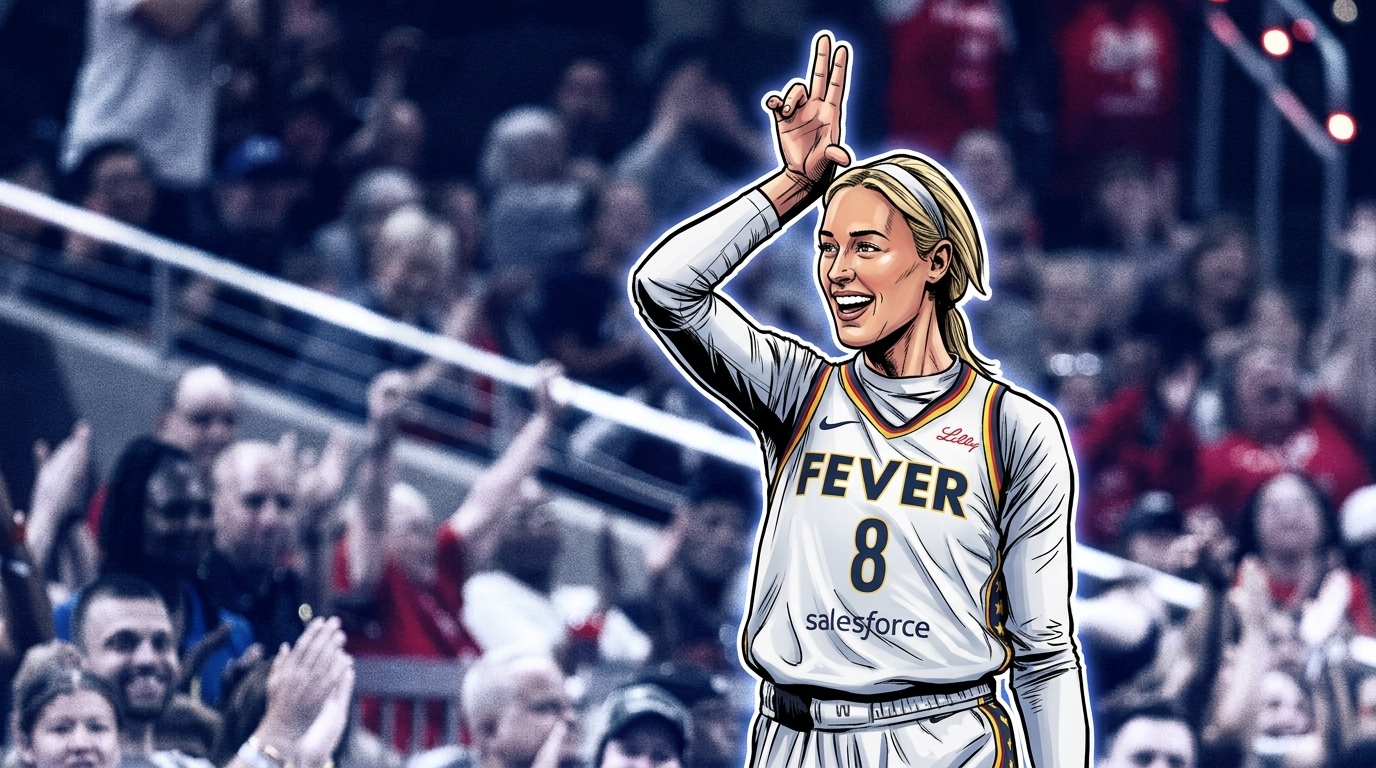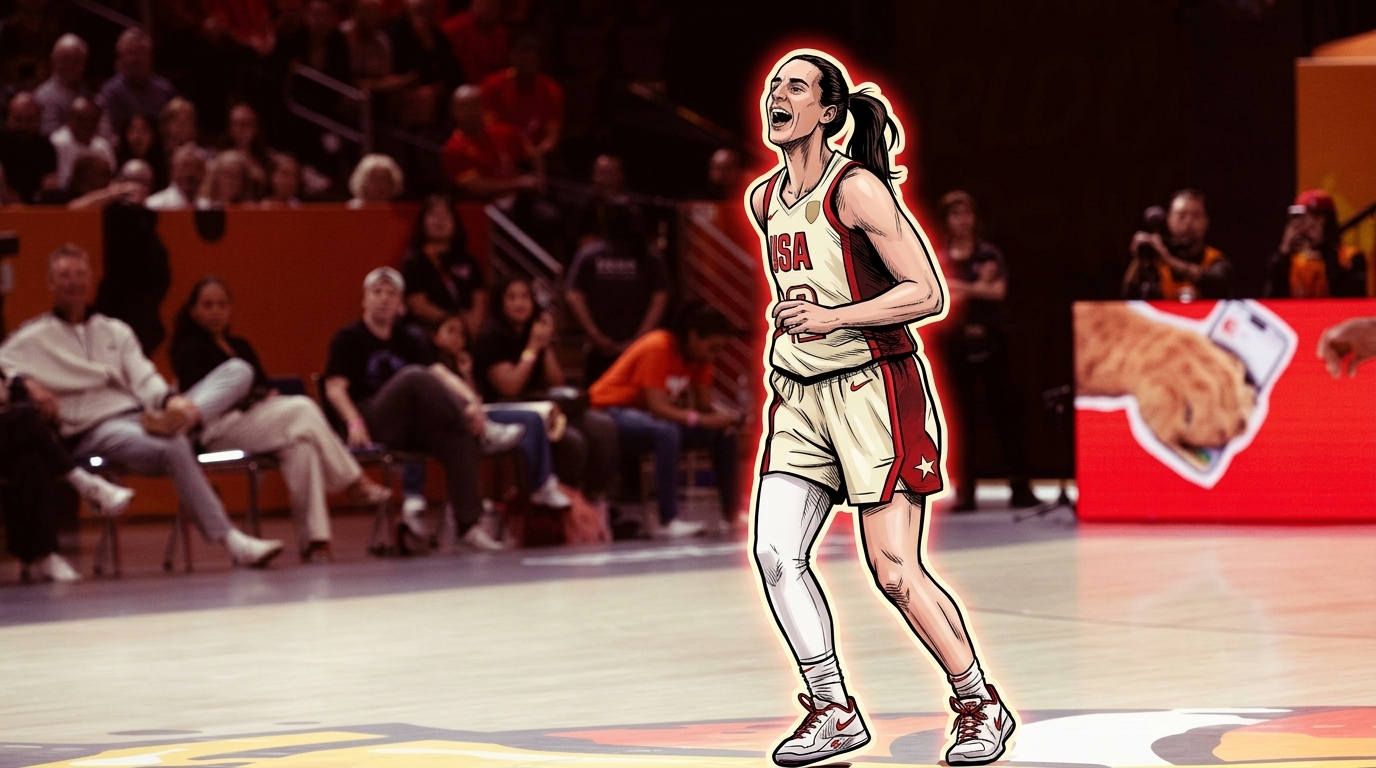

With about four seconds left in the first half of the FIBA Women’s World Cup final, a player who never got introduced with the starters caught an inbound pass and buried a three. That shot turned a five-point deficit into a two-point game. Her name is Caitlin Clark, and she’d finish the game with 13 minutes on the clock, total.
Team USA beat France 97-79 for a fifth consecutive world title, the first team to ever run that streak, and its 12th championship overall, per Olympics.com. Breanna Stewart took home MVP off a 22-point double-double, and nobody should argue with it. But Clark didn’t crack a starting five that already had Chelsea Gray, Jackie Young, Kahleah Copper, Napheesa Collier, and Stewart on it, and the sequence that decided whether the final ever got away from Team USA belonged to the one player logging bench minutes. That’s the whole case for what Clark’s game actually is at this level. She doesn’t have to run the engine to be the part that keeps it from stalling.
Twelve points in 13 minutes doesn’t read like a signature performance.
France had pushed the lead to as many as 14 points earlier in the game, according to SI.com’s account of how the half unraveled and then got un-unraveled. By the closing seconds, Team USA had clawed that down to five, and Angel Reese forced a turnover on defense with about seven seconds showing. The inbound went to Clark. She caught it, squared up, and made the shot that sent both teams to the locker room separated by two points instead of a halftime that would have felt like a warning.
Underdog WNBA caught the exact moment the half turned:
https://twitter.com/UnderdogWNBA/status/2099207633416634597
None of that undersells Stewart’s MVP performance; it just means the trophy and the turning point went to two different players on the same roster. Twelve points and three assists isn’t a stat line anyone frames, and a team this deep can absorb a bench player’s cold start. Clark wasn’t the best player on the floor Sunday, not close.
She didn’t have to be.
That’s the part the usual Clark conversation skips. The discourse around her game is almost always about volume: shots taken, assists piled up, her actual role for the Fever this season measured by how much offense runs through her hands every possession. A gold medal final with the deepest roster USA has ever assembled stripped all of that away and left one variable. What does the sport’s most famous player do when the possession count is close to nothing and the stakes are as high as the sport gets? She got the ball with four seconds showing and made the version of the shot that decides whether a half ends in relief or dread.
USA answered the scare by outscoring France 30-12 in the third quarter, shooting 56 percent for the game to France’s 48, with Jackie Young (18 points) and Chelsea Gray (14 points, 5 assists) doing most of the actual arithmetic. That stretch is the blowout everyone will remember from this FIBA World Cup. Clark’s three is the reason there was a game left to blow open.
I’ve watched enough Mercury basketball to know what a stacked roster usually does to a specialist: bury her on the bench for stretches and ask her to be efficient in scraps of time. Sunday didn’t need Clark efficient in scraps. It needed her decisive in four seconds, which is a different skill, and a much rarer one.
Stewart’s case for MVP predates Sunday by years:
https://twitter.com/UnderdogWNBA/status/2099229625486614755
Volume is what you ask of a No. 1 option. Gravity is what a coach gets from a player she can send in for four seconds and trust with the season. Clark’s FIBA World Cup finished with somebody else’s trophy and her fingerprints on the only moment that mattered before it was decided.
Stewart won the trophy. Clark won the argument.