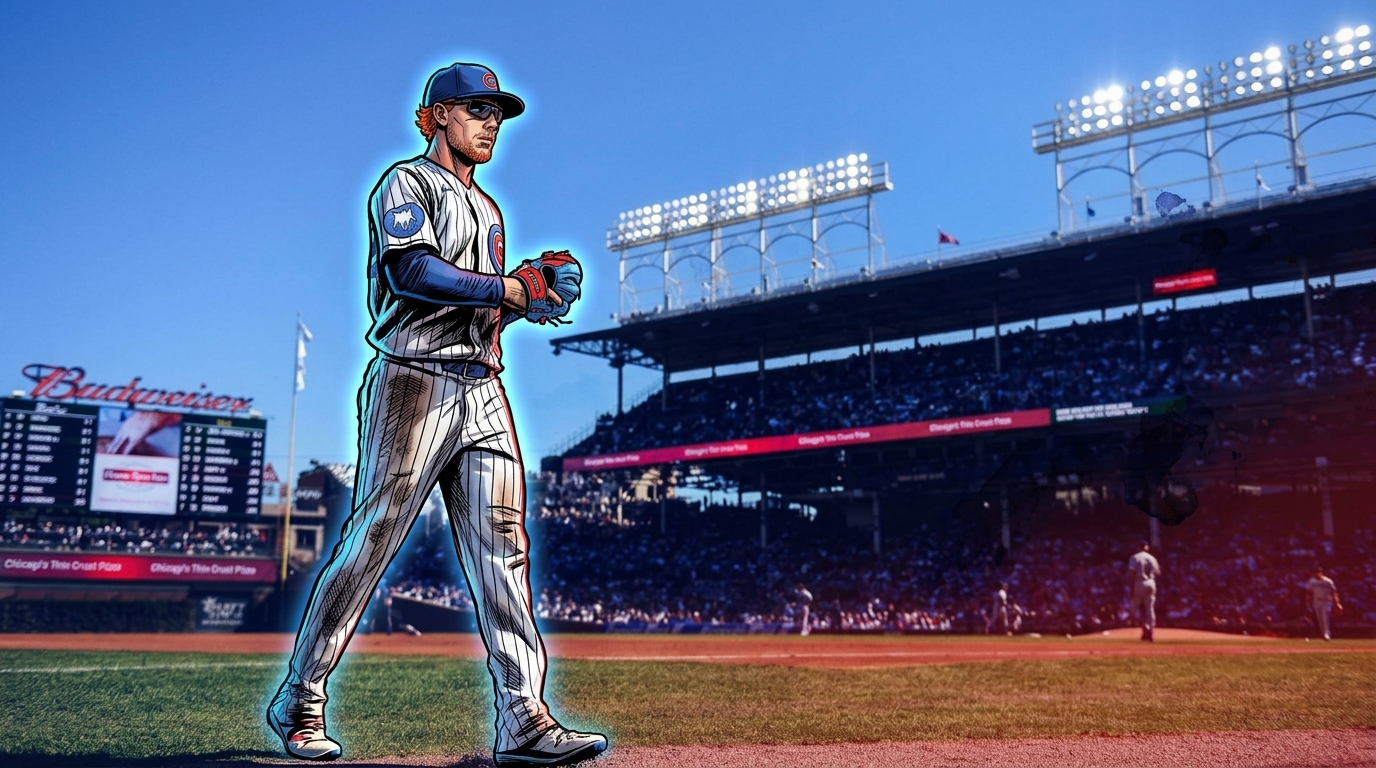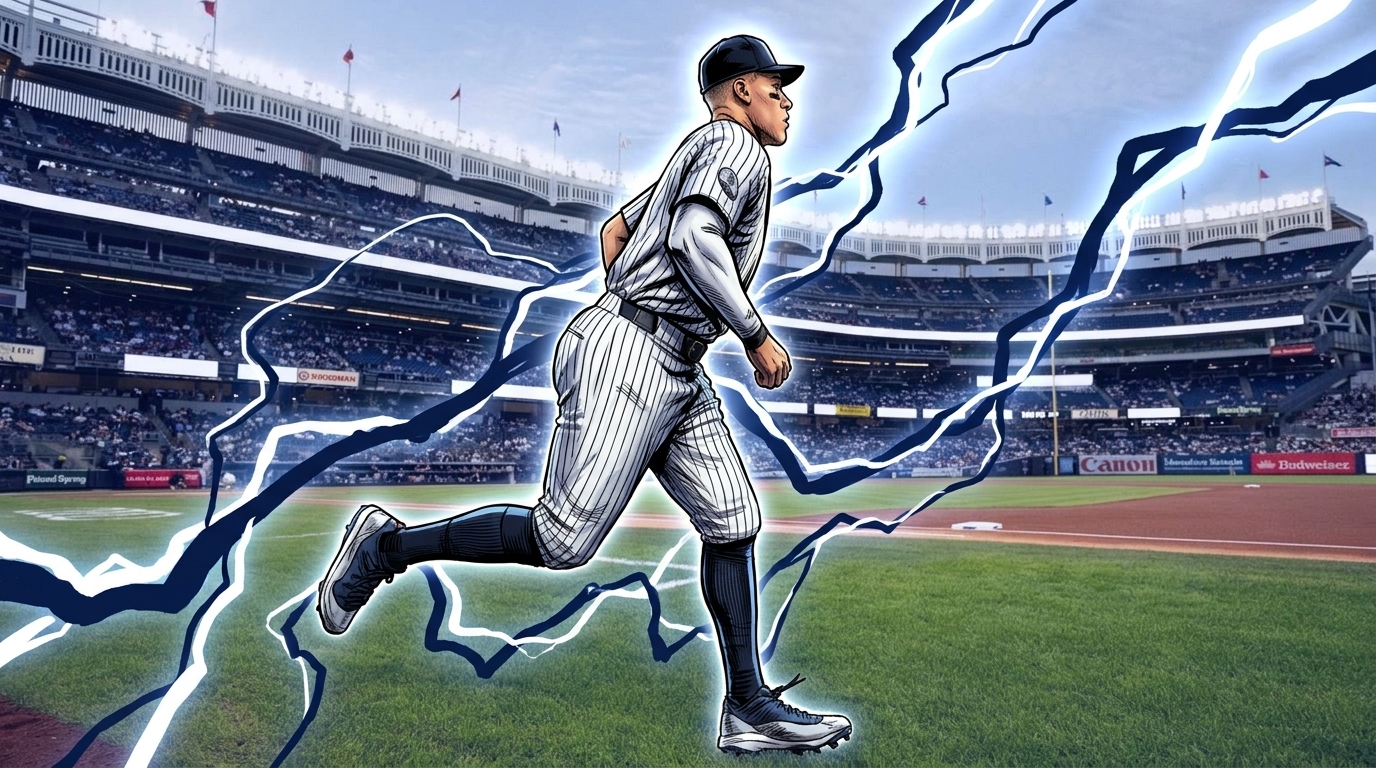

Thirty first-place votes, thirty voters. That is the full NL MVP ballot for Pete Crow-Armstrong, and Yordan Alvarez matched it in the American League. ESPN’s rundown of the awards puts this at the third season with both MVPs unanimous, after 2023 and 2024.
https://x.com/MLB/status/2121075677290209643
The same ballot result hides two very different seasons. Alvarez’s was built on availability. Crow-Armstrong’s was built on approach. A star can reach a clean sweep by being present or by being patient, and this year gave us one of each. Neither route is the shortcut, and the gap between them says a lot about what voters reward.
How did Crow-Armstrong become a unanimous MVP?
He stopped swinging at everything. Crow-Armstrong drew 83 walks this season, up from 29 the year before, and his results followed.
The turning point came in mid-May, when he moved to leadoff. From there he hit .300 with a .398 on-base percentage, and he finished at .280 for the full year with 45 home runs and 41 steals. His 10.6 fWAR led both leagues. He also won a Gold Glove and a Platinum Glove, so the bat was never the only thing carrying him.
Here is the plain-language version of why that matters. A hitter who waits for his pitch gets better pitches, and a hitter with that kind of speed turns every walk into a threat. Crow-Armstrong is 24, the 13th Cub to win an MVP and the first since Kris Bryant in 2016. Shohei Ohtani finished second on the ballots and Turang third, and neither got a single first-place vote. The Cubs star’s 40-40 chase got the attention, but the number underneath it was the walk total.
What did Alvarez’s healthy season change?
Almost everything, and the calendar did most of the work. Alvarez played 158 games this year after playing only 48 in 2025, when a wrist fracture and a sprained ankle ate the season. He was named AL Comeback Player of the Year, and his own explanation was three words long: “I was healthy.”
The production is what a full season of a great hitter looks like. He won the AL batting title at .316, hit 42 home runs and drove in 106, both second in the league. He also led MLB with 109 walks. The walks piled up because pitchers had no good answer, and his .432 on-base percentage sat 46 points above the next-best hitter in the sport. That gap is a leadoff man’s walk rate attached to a middle-of-the-order bat.
Voters had little to debate on either side. Ohtani’s second-place finish is the clearest sign of it, since a player of his reputation took none of the 30 first-place votes in the NL. Alvarez, 29, became the third Astros MVP after Bagwell in 1994 and Altuve in 2017. He is also the 31st player to win both MVP and Rookie of the Year, with the rookie award coming in 2019. Caminero and Witt Jr. were the closest challengers on the AL ballots.
Put the two walk totals side by side and the contrast sharpens. Alvarez drew 109, Crow-Armstrong 83, a gap of 26. Yet the same stat means something different for each. For Alvarez it is the output of a hitter pitchers feared at full strength. For Crow-Armstrong it is a new habit that turned 41 steals and 45 home runs into one player’s season. The same stat points to two different causes.
The fair pushback is that Alvarez’s walks are a skill too, so calling his year purely about health undersells him. That is true. But the reason 2026 looks so different from 2025 is games played. Skill did not change in one winter. His schedule did.
Why does the playoff 0-for-7 still matter?
Because Crow-Armstrong said it himself. After going 0-for-7 in the 2026 playoffs, following 5-for-27 in 2025, he said: “I’m capable but haven’t gotten to the point of impacting games when it really matters.”
That sentence is the one real hole in a unanimous résumé. A walk-driven approach is the kind that should travel to October, because patience does not need a hot streak. His postseason results have stayed small while the regular season exploded. The sample is only seven at-bats this year, so I would not call it a verdict on him, but a player who names his own gap has at least located it.
Alvarez’s profile carries a different risk. His engine only runs when he is on the field, and his 2025 showed how quickly that can be taken away. A 158-game season is a big number to hold up as a baseline, and a wrist or an ankle can end the case before spring training does. That is the cost of the availability route: nobody controls it.
There is one more detail worth knowing. This is also the first season in which both MVPs and both Cy Young winners were elected unanimously, with Misiorowski in the NL and the unanimous AL Cy Young winner Cam Schlittler in the AL. Voters agreed on four players at once.
My bet for next year runs through one number each. Crow-Armstrong gets a real October at-bat count, and if the walks travel with him, the playoff gap closes fast. Alvarez gets 140 games or more, and if he does, he lands in the MVP conversation again without needing a single new skill.