Carolina Hurricanes
The Carolina Hurricanes, relocated from the Hartford Whalers in 1997, won the Stanley Cup in 2006 and again in 2026 under head coach Rod Brind'Amour.
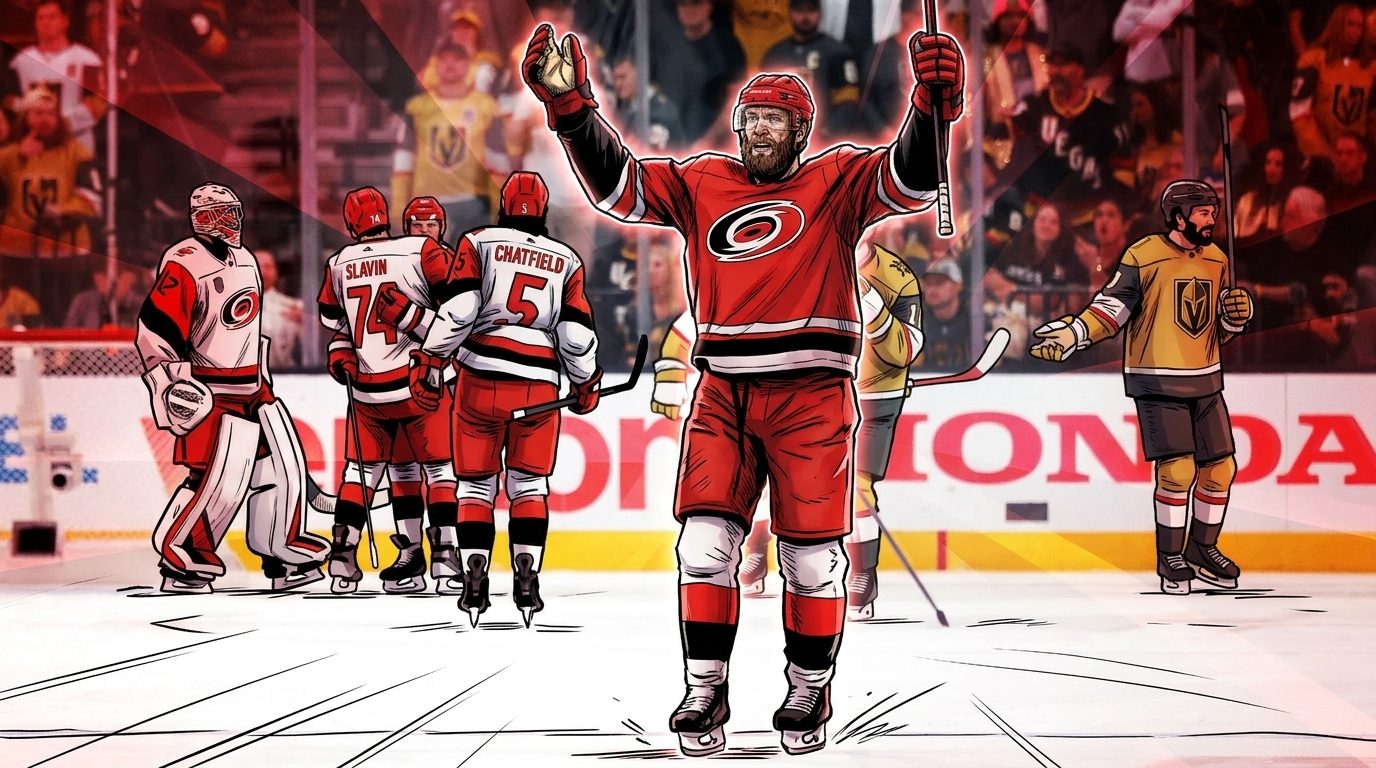
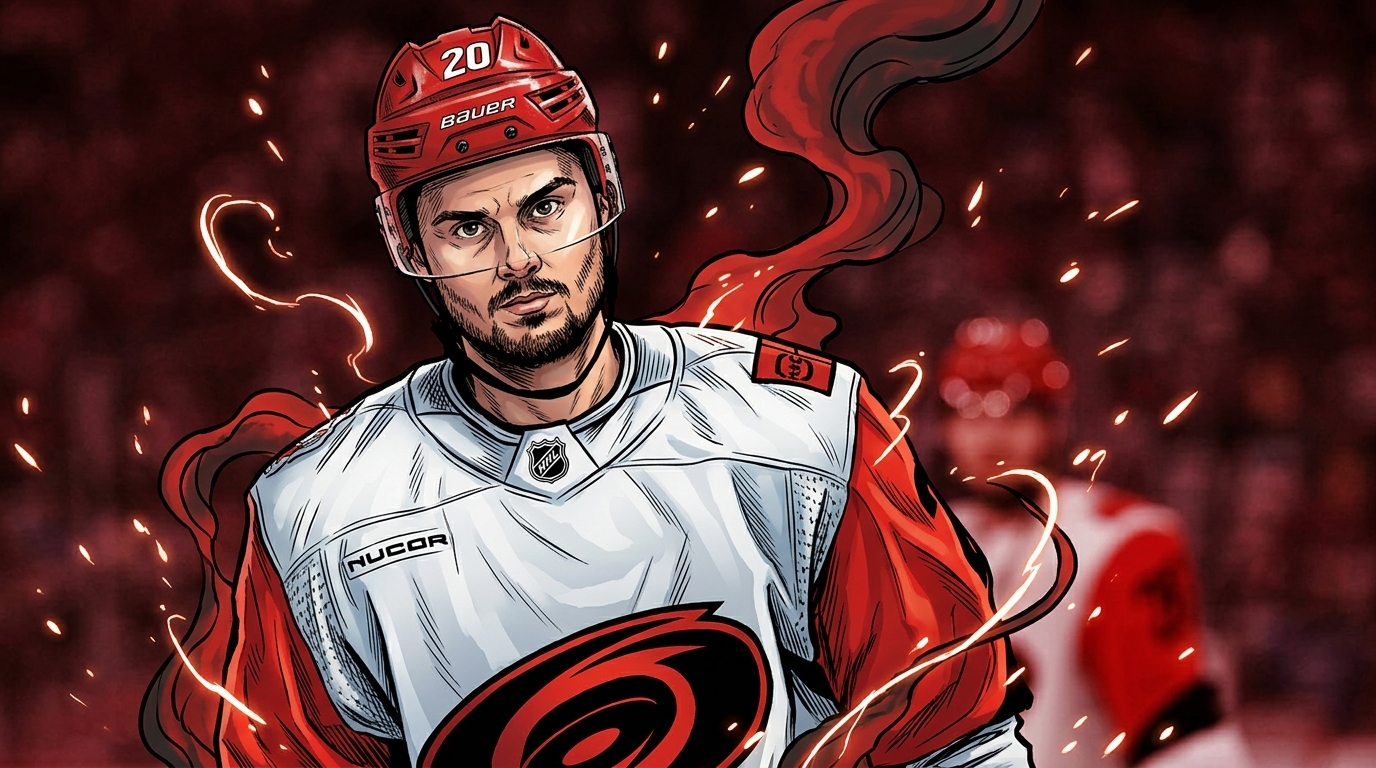
The Carolina Hurricanes are a professional hockey team in Raleigh, North Carolina, competing in the Metropolitan Division of the NHL’s Eastern Conference. The franchise is one of the sport’s great transplants: it began in 1972 as the New England Whalers of the World Hockey Association, spent eighteen seasons as the beloved-but-struggling Hartford Whalers, and became the Hurricanes when owner Peter Karmanos moved it south in 1997. In Carolina it has twice climbed to the top of the sport — a first Stanley Cup in 2006 and a second, two decades later, in a dominant 2026 run — while reinventing hockey fan culture along the way with the Storm Surge and the “Bunch of Jerks” identity it wore as a badge of honor. For a region with no deep hockey roots, the Hurricanes built one of the NHL’s most consistent modern contenders.
| Vitals | |
|---|---|
| Founded | 1972 (as the New England Whalers, WHA); joined the NHL in 1979; relocated to North Carolina in 1997 |
| League / conference / division | NHL — Eastern Conference, Metropolitan Division |
| Arena | Lenovo Center, Raleigh, North Carolina |
| Owner | Tom Dundon (majority owner since Jan. 11, 2018) |
| Head coach | Rod Brind’Amour (as of Oct. 20, 2026) |
| Stanley Cups | 2 (2006, 2026) |
The Whalers: New England and Hartford (1972–1997)
The franchise was an original success story of the rival WHA. Founded as the New England Whalers in 1972 and coached by Jack Kelley, the team won the inaugural Avco World Trophy in 1973, defeating the Winnipeg Jets to claim the first championship in league history. The Whalers moved from the Boston area to Hartford, Connecticut, and when the WHA folded, they were one of four clubs absorbed into the NHL in the 1979 merger, becoming the Hartford Whalers.
Gordie Howe suited up for Hartford in its NHL debut. “Mr. Hockey,” then in his fifties and playing alongside his sons Mark and Marty, skated the 1979-80 season for the Whalers before retiring — a touch of legend for a young franchise. The Whalers became fixtures of the Adams Division, their green-and-blue sweaters and the “Brass Bonanza” goal song part of the NHL’s 1980s texture, but the wins came slowly.
Ron Francis defined the Hartford era. Drafted fourth overall in 1981, Francis grew into a franchise cornerstone and remains the all-time leader in team history with 382 goals and 1,175 points. The team’s high-water mark came in 1985-86, a 40-win season that produced Hartford’s only NHL playoff series victory; the Whalers then lost a Game 7 in overtime to the Montreal Canadiens in the Adams Division Final. A first-place finish in 1986-87 followed, but Hartford never advanced past the second round in the NHL. The March 1991 trade that sent Francis to Pittsburgh — where he won two Cups — still rankles Whalers loyalists.
Karmanos announced the move in 1997. Frustrated with attendance and the failure to secure a new arena, owner Peter Karmanos revealed on May 6, 1997 that the franchise would relocate to North Carolina’s Research Triangle. The Whalers played their final Hartford game that spring, closing a quarter-century of hockey in Connecticut.
Greensboro and the move to Raleigh (1997–2003)
The first two Carolina seasons were played in the wrong city. With their permanent Raleigh arena still under construction, the renamed Hurricanes played home games roughly 80 miles away at the Greensboro Coliseum for 1997-98 and 1998-99. Attendance was sparse — an image of empty seats that dogged the early franchise — even as the 1998-99 club won the Southeast Division. The team finally opened its Raleigh building (then the Entertainment and Sports Arena, later the RBC Center, now Lenovo Center) for the 1999-2000 season.
The 2002 team reached the Stanley Cup Final. Under coach Paul Maurice, with Ron Francis back as captain, Rod Brind’Amour newly arrived, and Arturs Irbe in goal, Carolina won the Southeast Division and ran to the franchise’s first Final. There they met the Detroit Red Wings and lost four games to one; the series’ signature moment was Igor Larionov’s goal at 14:47 of the third overtime in Game 3, one of the longest games in Final history. It was a breakthrough that announced the Hurricanes as a real NHL team — and set the stage for what came four years later.
2006: The first Stanley Cup
Carolina’s 2005-06 season was the best in franchise history to that point. Emerging from the 2004-05 lockout under head coach Peter Laviolette, the Hurricanes went 52-22-8 for 112 points and won the division behind a 21-year-old Eric Staal, veteran captain Rod Brind’Amour, Ray Whitney, Justin Williams, and Doug Weight. When starting goaltender Martin Gerber faltered in the first round, rookie Cam Ward took the net and never gave it back.
The Hurricanes won the Cup in seven games over Edmonton. After surviving a grueling playoff path, Carolina met the Oilers in the Final and took it to the limit. In the deciding Game 7 on June 19, 2006, the Hurricanes beat Edmonton 3-1 at the RBC Center, Justin Williams sealing it with a late empty-net goal. Cam Ward won the Conn Smythe Trophy as playoff MVP — the first rookie goaltender so honored since Ron Hextall in 1987 — and Brind’Amour hoisted the Cup. It was North Carolina’s first major professional championship.
The hangover was long. The 2006 title did not launch a dynasty. Carolina made one more deep run, losing the 2009 Eastern Conference Final to Pittsburgh, and then missed the playoffs for nine straight seasons from 2010 through 2018 — the longest drought in franchise history and the backdrop against which the next era was built.
The Brind’Amour era and the Storm Surge (2018–2025)
Two changes in 2018 remade the franchise. Tom Dundon bought majority control on January 11, 2018, ending years of uncertainty and ensuring the team would stay in Raleigh, and the club hired its 2006 captain, Rod Brind’Amour, as head coach. Carolina ended its playoff drought in 2018-19 and reached the Conference Final in Brind’Amour’s first season.
The Storm Surge turned Carolina into a cultural phenomenon. During that 2018-19 season the Hurricanes began staging elaborate, choreographed on-ice celebrations after home wins. When broadcaster Don Cherry derided the team as a “bunch of jerks,” Carolina embraced the insult, printing it on merchandise and projecting it onto the ice — a defining piece of modern NHL branding.
Brind’Amour built a perennial contender. Behind a core of Sebastian Aho, Andrei Svechnikov, defenseman Jaccob Slavin, and later Seth Jarvis, the Hurricanes became one of the league’s most reliable regular-season teams, reaching 113 points in 2022-23 and winning multiple division titles. Brind’Amour won the Jack Adams Award as NHL coach of the year in 2021. The frustration was the ceiling: Carolina reached the Eastern Conference Final in 2019, 2023, and 2025 but could not get back to the Stanley Cup Final, a near-miss pattern that defined the era until it broke.
2026: The second Stanley Cup
The 2025-26 Hurricanes were the class of the Eastern Conference. Carolina finished 53-22-7 for 113 points, the top seed in the East, with Jordan Staal as captain and a balanced attack led by Sebastian Aho, Nikolaj Ehlers, Andrei Svechnikov, and Seth Jarvis. Goaltender Brandon Bussi carried the net with 31 regular-season wins.
The playoff run opened with history. Carolina swept the Ottawa Senators and then the Philadelphia Flyers, becoming the first NHL team since the four-round, seven-game format was implemented in 1987 to sweep each of its first two series. The 8-0 start made the Hurricanes just the fifth team in league history to open a postseason with eight consecutive wins, and the first since the 1985 Edmonton Oilers. In the Eastern Conference Final they beat the Montreal Canadiens four games to one, closing it with a 6-1 Game 5.
The Final went six games against Vegas. Facing the Western Conference champion Vegas Golden Knights, Carolina dropped a 5-4 Game 1 at home and lost a double-overtime Game 3, but answered each time. The Hurricanes clinched the Cup on the road on June 14, 2026, with a 3-0 shutout in Game 6, Taylor Hall scoring early and Brandon Bussi finishing the job in net. Captain Jordan Staal won the Conn Smythe Trophy as playoff MVP. It was Carolina’s second championship and its first in 20 years.
The current roster (2026-27)
The Cup core returned largely intact. As of October 20, 2026, Rod Brind’Amour remains head coach and Jordan Staal is captain, with the Hurricanes off to a 7-2-1 start and first place in the Metropolitan Division. The forward group features Sebastian Aho, Seth Jarvis, Andrei Svechnikov, Nikolaj Ehlers, Logan Stankoven, Taylor Hall, Jackson Blake, and Jesperi Kotkaniemi. The blue line is anchored by Jaccob Slavin alongside K’Andre Miller, Shayne Gostisbehere, Sean Walker, and Alexander Nikishin, with Brandon Bussi and Pyotr Kochetkov in goal. Statuses stated here reflect the start of the 2026-27 season and are subject to change.
Retired numbers
The Hurricanes honor both halves of their history. Four numbers have been raised to the rafters in Raleigh — Ron Francis, Glen Wesley, and Rod Brind’Amour from the franchise’s first Carolina decades, and Eric Staal, whose number went up on Jan. 12, 2025. Gordie Howe’s No. 9, honored from the Hartford era, has been kept out of circulation. Hartford’s other retired numbers from the Whalers years — Rick Ley’s No. 2 and John “Pie” McKenzie’s No. 19 — were returned to active use after the relocation. The league-wide retirement of Wayne Gretzky’s No. 99 is observed in Carolina as in every NHL building.
| No. | Player | Pos. | Team tenure | Retired |
|---|---|---|---|---|
| 10 | Ron Francis | C | 1981–1991, 1998–2004 | Jan. 28, 2006 |
| 2 | Glen Wesley | D | 1994–2008 | Feb. 17, 2009 |
| 17 | Rod Brind’Amour | C | 2000–2010 | Feb. 18, 2011 |
| 12 | Eric Staal | C | 2003–2016 | Jan. 12, 2025 |
| 9 | Gordie Howe | RW | 1977–1980 (Whalers) | Honored (Hartford era) |
| 99 | Wayne Gretzky | C | — | League-wide, Feb. 6, 2000 |
Season by season
The NHL record below covers every season since the 1979 merger; the franchise also played seven WHA seasons (1972–1979) as the New England and Hartford Whalers, winning the 1973 Avco World Trophy.
The 2020s 294–128–44 (through 2025-26) · 6 playoff berths · 1 Stanley Cup (2026)
| Season | W–L–OTL | Finish | Playoffs |
|---|---|---|---|
| 2026-27 | 7-2-1 | 1st (Metro) | In progress (as of Oct. 20, 2026) |
| 2025-26 | 53-22-7 | 1st (Metro) | Won Stanley Cup (def. VGK 4-2) |
| 2024-25 | 47-30-5 | 2nd (Metro) | Lost Conference Final |
| 2023-24 | 52-23-7 | 2nd (Metro) | Lost Second Round |
| 2022-23 | 52-21-9 | 1st (Metro) | Lost Conference Final |
| 2021-22 | 54-20-8 | 1st (Metro) | Lost Second Round |
| 2020-21 | 36-12-8 | 1st (Central) | Lost Second Round |
The 2010s 384–353–117 · 2 playoff berths · 1 Conference Final
| Season | W–L–OTL | Finish | Playoffs |
|---|---|---|---|
| 2019-20 | 38-25-5 | 4th (Metro) | Lost First Round |
| 2018-19 | 46-29-7 | 4th (Metro) | Lost Conference Final |
| 2017-18 | 36-35-11 | 6th (Metro) | Missed playoffs |
| 2016-17 | 36-31-15 | 7th (Metro) | Missed playoffs |
| 2015-16 | 35-31-16 | 6th (Metro) | Missed playoffs |
| 2014-15 | 30-41-11 | 8th (Metro) | Missed playoffs |
| 2013-14 | 36-35-11 | 7th (Metro) | Missed playoffs |
| 2012-13 | 19-25-4 | 3rd (Southeast) | Missed playoffs |
| 2011-12 | 33-33-16 | 5th (Southeast) | Missed playoffs |
| 2010-11 | 40-31-11 | 3rd (Southeast) | Missed playoffs |
| 2009-10 | 35-37-10 | 3rd (Southeast) | Missed playoffs |
The 2000s 340–289 · 4 playoff berths · 2 Finals · 1 Stanley Cup (2006)
| Season | W–L–(T/OTL) | Finish | Playoffs |
|---|---|---|---|
| 2008-09 | 45-30-7 | 2nd (Southeast) | Lost Conference Final |
| 2007-08 | 43-33-6 | 2nd (Southeast) | Missed playoffs |
| 2006-07 | 40-34-8 | 3rd (Southeast) | Missed playoffs |
| 2005-06 | 52-22-8 | 1st (Southeast) | Won Stanley Cup (def. EDM 4-3) |
| 2004-05 | — | — | Season cancelled (lockout) |
| 2003-04 | 28-34-14-6 | 3rd (Southeast) | Missed playoffs |
| 2002-03 | 22-43-11-6 | 5th (Southeast) | Missed playoffs |
| 2001-02 | 35-26-16-5 | 1st (Southeast) | Lost Stanley Cup Final (DET 1-4) |
| 2000-01 | 38-32-9-3 | 2nd (Southeast) | Lost Conference Quarterfinal |
| 1999-00 | 37-35-10 | 3rd (Southeast) | Missed playoffs |
The 1990s 262–352 · 3 playoff berths · relocation to Carolina (1997)
| Season | W–L–T | Finish | Playoffs |
|---|---|---|---|
| 1998-99 | 34-30-18 | 1st (Southeast) | Lost Conference Quarterfinal |
| 1997-98 | 33-41-8 | 6th (Northeast) | Missed playoffs |
| 1996-97 | 32-39-11 | 5th (Northeast) | Missed playoffs (final Hartford season) |
| 1995-96 | 34-39-9 | 4th (Northeast) | Missed playoffs |
| 1994-95 | 19-24-5 | 5th (Northeast) | Missed playoffs (lockout) |
| 1993-94 | 27-48-9 | 6th (Northeast) | Missed playoffs |
| 1992-93 | 26-52-6 | 5th (Adams) | Missed playoffs |
| 1991-92 | 26-41-13 | 4th (Adams) | Lost Division Semifinal |
| 1990-91 | 31-38-11 | 4th (Adams) | Lost Division Semifinal |
The 1980s 339–428 · 6 playoff berths · 1 division title (1987)
| Season | W–L–T | Finish | Playoffs |
|---|---|---|---|
| 1989-90 | 38-33-9 | 4th (Adams) | Lost Division Semifinal |
| 1988-89 | 37-38-5 | 4th (Adams) | Lost Division Semifinal |
| 1987-88 | 35-38-7 | 4th (Adams) | Lost Division Semifinal |
| 1986-87 | 43-30-7 | 1st (Adams) | Lost Division Semifinal |
| 1985-86 | 40-36-4 | 4th (Adams) | Lost Division Final |
| 1984-85 | 30-41-9 | 5th (Adams) | Missed playoffs |
| 1983-84 | 28-42-10 | 5th (Adams) | Missed playoffs |
| 1982-83 | 19-54-7 | 5th (Adams) | Missed playoffs |
| 1981-82 | 21-41-18 | 5th (Adams) | Missed playoffs |
| 1980-81 | 21-41-18 | 4th (Adams) | Missed playoffs |
| 1979-80 | 27-34-19 | 4th (Adams) | Lost Preliminary Round (NHL debut) |
By the numbers
Franchise marks
Ranks
- 1st Eastern Conference, 2025-26 regular season (113 points)
- 1st Metropolitan Division, 2025-26
- 5th Team to open a playoff year 8-0, NHL history (2026)
Honors
- 2026 Stanley Cup champion
- 2006 Stanley Cup champion
- 3× Eastern Conference champion (2002, 2006, 2026)
- 2× Conn Smythe winner (Cam Ward, 2006; Jordan Staal, 2026)
- Jack Adams Award (Rod Brind'Amour, 2021)
- 1973 Avco World Trophy (New England Whalers, WHA)
Per Hockey-Reference and Wikipedia, through the 2025-26 season.
The arguments
Whose team is this — Carolina’s or Hartford’s? The relocation left a wound that never fully healed. Hartford fans, who kept the “Brass Bonanza” alive long after the Whalers left, argue the franchise’s identity and its 1973 WHA title belong to Connecticut and that Carolina should have started fresh. Hurricanes supporters counter that two Stanley Cups, a quarter-century in Raleigh, and the honoring of numbers like Gordie Howe’s and Ron Francis’s bind the eras together. Under Tom Dundon the club has leaned into Whalers nostalgia with throwback nights, which some read as reconciliation and others as appropriation of a city’s grief.
Did the Brind’Amour teams underachieve or overachieve? Before 2026, Carolina reached three Conference Finals (2019, 2023, 2025) without returning to the Stanley Cup Final, fueling a debate over whether a consistently excellent regular-season team repeatedly fell short in the biggest moments or simply ran into deeper rosters. The 2026 championship recast the argument — proof, supporters say, that the model worked and merely needed time.
Why it matters
The Carolina Hurricanes are the rare franchise to have lived two full lives: a WHA original and NHL Hartford institution, then a Sun Belt success story that won championships in a market once told hockey could not survive there. Between the 2006 and 2026 Cups, the Storm Surge era, and a core built and coached by the same man who captained the first title team, the Hurricanes turned a contentious move into one of the modern NHL’s most distinctive and successful organizations — a team that argues, every spring, that it belongs among the sport’s best.