Florida Panthers
The Florida Panthers, an NHL franchise founded in 1993, won back-to-back Stanley Cups in 2024 and 2025 under Paul Maurice after decades chasing their 1996 run.
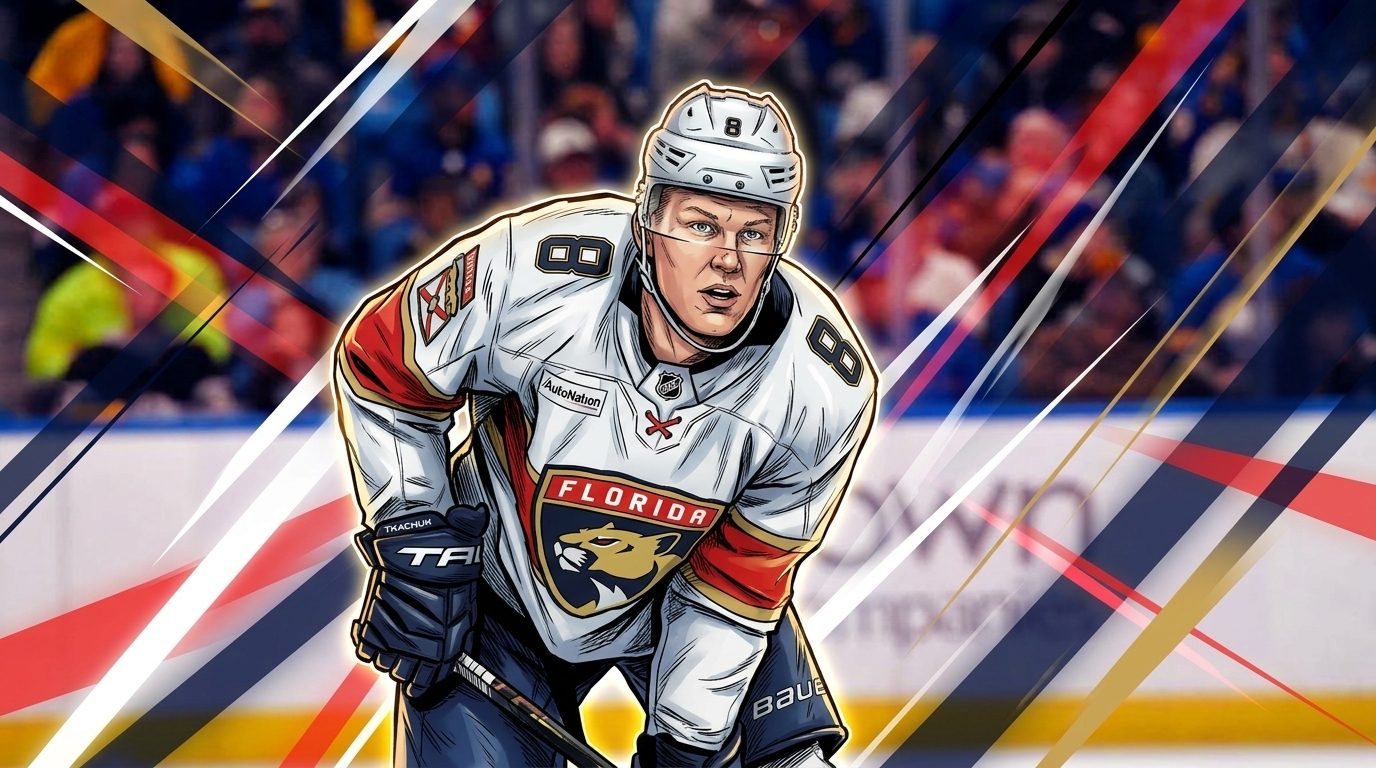
The Florida Panthers are a National Hockey League franchise based in Sunrise, Florida, and one of the signature success stories of the league’s Sun Belt era. Born as a 1993 expansion club that spent most of its first three decades as a punchline — one storybook Finals run in 1996, then a playoff drought that stretched across the 2000s — the Panthers reinvented themselves into the dominant team of the mid-2020s, winning back-to-back Stanley Cups in 2024 and 2025. Through 33-plus seasons the franchise owns an all-time regular-season record of 1,137–1,018–142–238 for 2,654 points, with 11 playoff appearances and 4 trips to the Stanley Cup Final.
| Vitals | |
|---|---|
| Founded | 1993 (first season 1993–94) |
| League / conference / division | NHL — Eastern Conference, Atlantic Division |
| Arena | Amerant Bank Arena, Sunrise, Florida |
| Owner | Vincent Viola |
| Head coach | Paul Maurice (as of Nov. 5, 2026) |
| Stanley Cups | 2 (2024, 2025) |
Expansion and the inaugural surprise (1993–1995)
The franchise was awarded to Blockbuster Video magnate H. Wayne Huizenga in December 1992 and began play in the 1993–94 season, one of two expansion teams that year alongside the Mighty Ducks of Anaheim. Hall of Fame executive Bill Torrey, architect of the New York Islanders dynasty, ran hockey operations as president, and Bob Clarke served as the first general manager. The team played its early seasons at the cramped Miami Arena.
Florida was not supposed to be competitive, and promptly was. Coached by the defense-obsessed Roger Neilson and backstopped by former New York Rangers goaltender John Vanbiesbrouck, the Panthers went 33–34–17 for 83 points — finishing one game under .500 and missing the playoffs by two points. Their 33 wins tied Anaheim for the best record ever by a first-year NHL club at the time.
The identity was grinding, low-event hockey. Scott Mellanby scored 30 goals, rookie Rob Niedermayer centered the attack, and Vanbiesbrouck established himself as a franchise cornerstone. The 1994–95 lockout-shortened season (20–22–6) was a step back, but the roster that would stun the league was nearly in place.
The Year of the Rat and the 1996 Cup run (1995–1997)
The 1995–96 Panthers authored one of the great expansion-era runs in NHL history. Under new coach Doug MacLean, Florida went 41–31–10 for 92 points and reached the playoffs for the first time. The season’s folklore began before the home opener: Mellanby killed a rat in the locker room with his stick, then scored twice in the game with that same stick, prompting Vanbiesbrouck to coin the “rat trick.” Fans responded by raining plastic rats onto the ice after Panthers goals, a tradition that endures to this day.
The playoff path was a march through hockey’s establishment. Florida eliminated the Boston Bruins in five games, the Philadelphia Flyers in six, and the Pittsburgh Penguins in seven to win the Eastern Conference and reach the Stanley Cup Final in just the franchise’s third season.
The dream ended against a juggernaut. The Colorado Avalanche — in their first season after relocating from Quebec — swept the Panthers in four games. The clincher on June 10, 1996, was a 1–0 defeat decided when Uwe Krupp scored 4:31 into the third overtime, one of the longest games in Final history. Vanbiesbrouck was brilliant throughout; Florida simply could not solve Patrick Roy.
The Bure years and the slide (1997–2002)
The franchise relocated to the suburbs in 1998, opening the arena in Sunrise now known as Amerant Bank Arena. On the ice, the post-1996 team faded; a first-round exit in the 1999–2000 playoffs would be the only postseason reward of this stretch.
The brightest light was Pavel Bure. Acquired from Vancouver in January 1999, the “Russian Rocket” gave South Florida its most electric offensive player, leading the NHL in goals in back-to-back seasons and setting the franchise single-season record with 59 goals in 2000–01. The team around him, however, could not keep pace, and Bure was traded to the Rangers in March 2002.
Ownership changed and the losing deepened. Huizenga sold the club to a group led by Alan Cohen after the 2000–01 season, and the Panthers slid into the bottom of the Southeast Division, bottoming out at 60 points in 2001–02.
The long drought (2002–2013)
For more than a decade, the Panthers were the NHL’s forgotten team. From the 2000–01 season through 2010–11, Florida did not make the playoffs once — the longest active postseason drought in the four major North American leagues for much of that run. The 2004–05 season was lost entirely to the league-wide lockout.
A young Roberto Luongo kept the franchise watchable during the mid-2000s before being traded to Vancouver in 2006, a deal that would sting for years. Coaching and management churned through names including Rick Dudley, Jacques Martin and Mike Keenan without stability.
The hiring of Dale Tallon as general manager on May 17, 2010, began the rebuild. The division title that followed in 2011–12 — Florida’s first Southeast crown and first playoff berth since 1996 — proved a false dawn, ending in a double-overtime Game 7 loss to New Jersey in the first round. But Tallon’s draft work mattered more than the standings: Jonathan Huberdeau went third overall in 2011, and Aleksander Barkov second overall in 2013.
Building a contender: Barkov, Jagr and the Presidents’ Trophy (2013–2022)
Aleksander Barkov became the spine of everything that followed. The Finnish center, named captain in 2018, grew into the finest two-way forward in franchise history and its all-time leader in both goals (286) and points (782). Tallon added defenseman Aaron Ekblad with the first overall pick in 2014; Ekblad won the Calder Trophy as rookie of the year in 2015.
The 2015–16 season signaled arrival. With a 40-something Jaromir Jagr mentoring Barkov and Huberdeau, Florida won the Atlantic Division and set a franchise record with 103 points, though the Islanders bounced them in the first round. Consistency remained elusive until Bill Zito took over as GM on Sept. 2, 2020, and began assembling a deeper, faster roster.
The 2021–22 team was the best regular-season club in the sport. Florida went 58–18–6 for 122 points, both franchise records, and won the Presidents’ Trophy as the NHL’s top team. The season was shadowed by the offseason departure of coach Joel Quenneville, who resigned in October 2021 after the release of an investigation into the Chicago Blackhawks’ handling of 2010 sexual-assault allegations; interim coach Andrew Brunette guided the record-setting campaign before the Panthers were swept by Tampa Bay in the second round.
The Tkachuk trade and the 2023 Cinderella Final (2022–2023)
Two franchise-altering decisions reshaped the roster in the summer of 2022. Florida hired Paul Maurice, one of the winningest coaches in NHL history, on June 22, and on July 22 pulled off a blockbuster, sending Huberdeau, MacKenzie Weegar, prospect Cole Schwindt and a conditional 2025 first-round pick to Calgary for Matthew Tkachuk and a conditional 2025 fourth-round pick; Tkachuk signed an eight-year extension. Zito had already added Sam Reinhart, Sam Bennett, Carter Verhaeghe and goaltender Sergei Bobrovsky.
The 2023 playoffs made the Panthers the NHL’s ultimate underdog story. Sneaking in as the Eastern Conference’s final seed, Florida upset the Presidents’ Trophy-winning Boston Bruins in a seven-game first round, then dispatched Toronto in five and swept Carolina in the Eastern Conference Final.
The run ended in Las Vegas. The expansion-born Vegas Golden Knights, playing in only their sixth season, beat the Panthers in five games, closing the series with a 9–3 rout in Game 5 while Tkachuk played hurt. Florida had reached a second Final but again left empty-handed.
2024: the first Stanley Cup
The 2023–24 Panthers were built to finish the job. Florida posted a 52–24–6 record, won the Atlantic Division, and ground through the East behind Maurice’s suffocating structure and Bobrovsky’s goaltending. They returned to the Final to face Connor McDavid’s Edmonton Oilers.
Florida raced to a 3–0 series lead, then survived a historic scare. The Oilers won three straight to force a Game 7 in Sunrise on June 24, 2024. There, Carter Verhaeghe and Sam Reinhart scored and Bobrovsky made 23 saves in a 2–1 victory that delivered the first championship in franchise history. Barkov became the first Finnish captain to lift the Stanley Cup. McDavid, pointless in the clincher, was named Conn Smythe Trophy winner as playoff MVP despite playing for the losing side — only the sixth player ever to do so.
2025: the repeat
The 2024–25 Panthers answered the hardest question in hockey: could they do it again? Florida went 47–31–4 and returned to the Final for a third consecutive year, meeting Edmonton once more in a rematch of 2024.
This time there was no Game 7 drama. The Panthers won the series four games to two, clinching with a 5–1 Game 6 win on June 17, 2025, in which Reinhart scored four goals. Sam Bennett, who led the playoffs with 15 goals, won the Conn Smythe Trophy. The repeat made Florida the NHL’s first back-to-back champion since Tampa Bay in 2020 and 2021 — a dynasty built on the exact mix of skill, depth and relentless forecheck that had once eliminated them.
The reign interrupted — core and future (2025–present)
The dynasty’s grip loosened in 2025–26. Battered by a franchise-record 540 man-games lost to injury — with Barkov, Tkachuk, Seth Jones and Brad Marchand all missing long stretches — the Panthers went 40–38–4 for 84 points, finished seventh in the Atlantic, and missed the playoffs for the first time since 2019. The Carolina Hurricanes went on to win the 2026 Stanley Cup in June 2026, ending Florida’s two-year reign.
The championship core remains intact as the franchise opens the 2026–27 season. Barkov, Tkachuk, Reinhart, Bennett and Bobrovsky all returned under Maurice, with the club looking to climb back into contention after the injury-marred interruption. For a franchise that spent most of its existence as an afterthought, the baseline expectation is now a Stanley Cup.
Retired numbers
The Panthers have formally retired three numbers — one player and two architects of the franchise — and, like every NHL club, hang Wayne Gretzky’s league-wide No. 99 in their building. Goaltender Roberto Luongo, whose two tours in Florida bracketed the lean years, is the only player so honored.
| No. | Player / figure | Pos. / role | Team tenure | Retired |
|---|---|---|---|---|
| 1 | Roberto Luongo | G | 2000–2006, 2014–2019 | Mar. 7, 2020 |
| 37 | H. Wayne Huizenga | Founder / owner | 1993–2001 | Jan. 19, 2018 |
| 93 | Bill Torrey | President / executive | 1993–1998 | Oct. 23, 2010 |
| 99 | Wayne Gretzky | — | NHL-wide honor | Feb. 6, 2000 |
Season by season
The full franchise record, folded by decade, newest first.
The 2020s 5 playoff berths · 3 straight Finals · 2 Stanley Cups
| Season | W–L | Finish | Playoffs |
|---|---|---|---|
| 2026-27 | 9–5–2 | 5th, Atlantic | In progress (as of Nov. 5, 2026) |
| 2025-26 | 40–38–4 | 7th, Atlantic | Missed playoffs |
| 2024-25 | 47–31–4 | 3rd, Atlantic | Won Stanley Cup |
| 2023-24 | 52–24–6 | 1st, Atlantic | Won Stanley Cup |
| 2022-23 | 42–32–8 | 4th, Atlantic | Lost Stanley Cup Final |
| 2021-22 | 58–18–6 | 1st, Atlantic | Lost 2nd round |
| 2020-21 | 37–14–5 | 2nd, Central | Lost 1st round |
The 2010s 3 playoff berths · 2 division titles (2012, 2016) · no Finals
| Season | W–L | Finish | Playoffs |
|---|---|---|---|
| 2019-20 | 35–26–8 | 4th, Atlantic | Lost qualifying round |
| 2018-19 | 36–32–14 | 5th, Atlantic | Missed playoffs |
| 2017-18 | 44–30–8 | 4th, Atlantic | Missed playoffs |
| 2016-17 | 35–36–11 | 6th, Atlantic | Missed playoffs |
| 2015-16 | 47–26–9 | 1st, Atlantic | Lost 1st round |
| 2014-15 | 38–29–15 | 6th, Atlantic | Missed playoffs |
| 2013-14 | 29–45–8 | 7th, Atlantic | Missed playoffs |
| 2012-13 | 15–27–6 | 5th, Southeast | Missed playoffs |
| 2011-12 | 38–26–18 | 1st, Southeast | Lost 1st round |
| 2010-11 | 30–40–12 | 5th, Southeast | Missed playoffs |
The 2000s 0 playoff berths · 2004-05 lost to lockout
| Season | W–L | Finish | Playoffs |
|---|---|---|---|
| 2009-10 | 32–37–13 | 5th, Southeast | Missed playoffs |
| 2008-09 | 41–30–11 | 3rd, Southeast | Missed playoffs |
| 2007-08 | 38–35–9 | 3rd, Southeast | Missed playoffs |
| 2006-07 | 35–31–16 | 4th, Southeast | Missed playoffs |
| 2005-06 | 37–34–11 | 4th, Southeast | Missed playoffs |
| 2004-05 | — | — | Season cancelled (lockout) |
| 2003-04 | 28–35–15–4 | 4th, Southeast | Missed playoffs |
| 2002-03 | 24–36–13–9 | 4th, Southeast | Missed playoffs |
| 2001-02 | 22–44–10–6 | 4th, Southeast | Missed playoffs |
| 2000-01 | 22–38–13–9 | 3rd, Southeast | Missed playoffs |
The 1990s 3 playoff berths · 1 Stanley Cup Final (1996)
| Season | W–L | Finish | Playoffs |
|---|---|---|---|
| 1999-00 | 43–27–6–6 | 2nd, Southeast | Lost 1st round |
| 1998-99 | 30–34–18 | 2nd, Southeast | Missed playoffs |
| 1997-98 | 24–43–15 | 6th, Atlantic | Missed playoffs |
| 1996-97 | 35–28–19 | 3rd, Atlantic | Lost 1st round |
| 1995-96 | 41–31–10 | 3rd, Atlantic | Lost Stanley Cup Final |
| 1994-95 | 20–22–6 | 5th, Atlantic | Missed playoffs |
| 1993-94 | 33–34–17 | 5th, Atlantic | Missed playoffs |
By the numbers
Franchise marks
Per Hockey-Reference, through Nov. 5, 2026.
Ranks
- 1st NHL overall, 2021–22 regular season (122 points, Presidents' Trophy)
- 1st Atlantic Division — 2015–16, 2021–22 and 2023–24
- 2× Stanley Cup champion (2024, 2025) — back-to-back
Per Hockey-Reference, through Nov. 5, 2026.
Honors
- 2024 Stanley Cup champion
- 2025 Stanley Cup champion
- 2021–22 Presidents' Trophy
- 4× Eastern Conference champion (1996, 2023, 2024, 2025)
- 2025 Conn Smythe Trophy — Sam Bennett
Per Hockey-Reference and the NHL, through Nov. 5, 2026.
The arguments
Was the Tkachuk trade a fleecing? Florida sent a franchise scoring leader in Jonathan Huberdeau and a top-pair defenseman in MacKenzie Weegar to Calgary and won two Cups with Matthew Tkachuk as the centerpiece; Huberdeau’s production fell off sharply in Calgary. Panthers supporters call it one of the most lopsided deals of the salary-cap era. Others note the Flames had little choice once Tkachuk declined to re-sign, and that trading away Weegar’s two-way value carried a cost Florida absorbed only because the surrounding roster was elite.
Are the Panthers champions or agitators? Opponents through the title runs repeatedly accused Florida of crossing the line physically, pointing to Tkachuk, Sam Bennett and Brad Marchand as players who play to the edge of the rulebook. The Panthers and their coaches counter that this is simply how playoff hockey is won and that the criticism intensified only once they started winning. Both framings describe the same style; they disagree on whether it is dirty or disciplined.
Does Quenneville’s tenure belong in the success story? Joel Quenneville coached the foundation of the contender before resigning in October 2021 over the Chicago Blackhawks investigation. Some argue his structure set the table for the Presidents’ Trophy and everything after; others hold that his departure, and the circumstances behind it, are a chapter the franchise’s championship narrative cannot simply fold in.
Why it matters
For most of its history the Florida Panthers were cited as evidence that hockey could not work in the Sun Belt — a 1996 Cinderella run followed by a decade-plus in the wilderness. The back-to-back titles of 2024 and 2025 rewrote that story completely, turning a long-dormant franchise into the model other clubs study and the rats-on-the-ice tradition into a championship signature. Even with the 2025–26 reign interrupted by injuries, the Panthers stand as proof that patient drafting, a decisive trade and a defined identity can turn the NHL’s longest-suffering market into its standard-bearer.