Manchester City
Manchester City FC: the complete history of the club, from its 1880 origins through the Guardiola dynasty, the 2023 treble and the Haaland era.
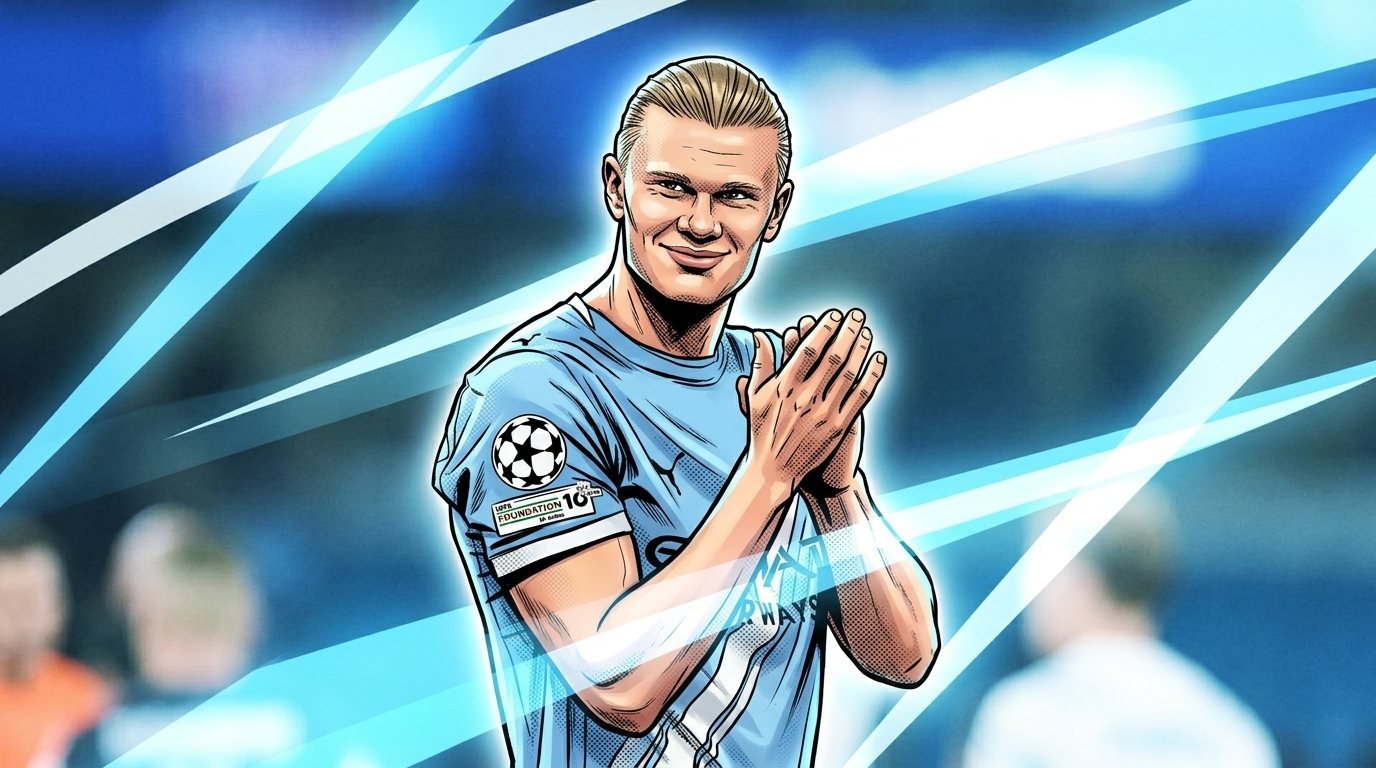
Manchester City Football Club is an English professional club based in east Manchester, founded in 1880 as St. Mark’s (West Gorton) and playing in the Premier League. For more than a century City were the city’s more volatile, more romantic club — capable of a league title or an FA Cup, just as capable of falling to the third tier — before a 2008 takeover by Abu Dhabi ownership turned it into the dominant force of English football. Under Pep Guardiola the club won six Premier League titles in eight seasons, the first four-in-a-row in English top-flight history, and in 2022-23 became only the second English men’s club to win the continental treble. That ascent is inseparable from the financial case that shadows it: in late September 2026 an independent Premier League commission found the club guilty of the overwhelming majority of 115 alleged financial breaches, a verdict City said it would appeal.
| Vitals | |
|---|---|
| Founded | 1880 (as St. Mark’s); Manchester City F.C. from April 16, 1894 |
| League | Premier League (English football, first tier) |
| Stadium | Etihad Stadium (City of Manchester Stadium), Manchester — capacity 61,038 |
| Owner | City Football Group (majority Abu Dhabi United Group / Sheikh Mansour bin Zayed Al Nahyan); chairman Khaldoon Al Mubarak; since August 2008 |
| Head coach | Pep Guardiola (since 2016; under contract to 2027), as of Oct. 13, 2026 |
| Titles | 10 English league titles (1937, 1968, 2012, 2014, 2018, 2019, 2021, 2022, 2023, 2024); 8 FA Cups; 9 League Cups; UEFA Champions League (2023); European Cup Winners’ Cup (1970) |
Origins: St. Mark’s to the Football League (1880–1899)
The club was born in a working-class parish of east Manchester. It was formed in 1880 as St. Mark’s (West Gorton), became Ardwick Association Football Club in 1887, and took the name Manchester City Football Club on April 16, 1894, adopting the sky-blue shirts that have defined it ever since.
City established itself as a Football League club in the 1890s. Elected to the Second Division in 1892, the club won the division in 1898-99 with a 23-6-5 record and 92 goals, earning its first promotion to the First Division. The home then was Hyde Road, the cramped ground the club would occupy until a fire and a lack of space pushed it across the city in the 1920s.
Early trophies and the pre-war peak (1904–1957)
City won its first major honour in 1904. The FA Cup was lifted that year with a 1-0 win over Bolton Wanderers, the goal scored in a side built around the Welsh winger Billy Meredith. A betting-and-payments scandal soon broke the team up, and the club bounced between the divisions for two decades, again winning the Second Division in 1902-03 and 1909-10.
Maine Road became home in 1923, a vast bowl in Moss Side that would host the club for eighty years. A second FA Cup followed in 1934, and in 1936-37 City won its first league championship, a 22-13-7 season in which the club scored 107 goals. In one of football’s strangest sequels the champions were relegated in 1937-38, despite being the division’s top scorers.
The post-war decades produced one of the most famous finals in the club’s history. City returned to the top flight as Second Division champions in 1946-47 and won the FA Cup again in 1956, beating Birmingham City 3-1 in a final remembered for goalkeeper Bert Trautmann, a former German prisoner of war who played the closing minutes with a broken neck.
Mercer and Allison: the first golden age (1965–1976)
The partnership of manager Joe Mercer and coach Malcolm Allison transformed a sleeping club into a trophy machine. Taking over in 1965, the pair led City to the 1967-68 First Division title, a 26-6-10 season decided on the final day, built around Colin Bell, Mike Summerbee and Francis Lee.
The silverware came in a rush. City won the FA Cup in 1969, then in 1970 claimed both the League Cup and the European Cup Winners’ Cup — the club’s first continental trophy — beating Górnik Zabrze in the final. A second League Cup arrived in 1976. For a few seasons the blue half of Manchester, not the red, set the standard in English football.
Decline and the yo-yo years (1977–2001)
What followed was a quarter-century of mostly painful decline. The great side aged, managers came and went, and the club lurched between divisions. The nadir came in the late 1990s: in 1998-99 City played in the third tier for the only time in its history, finishing third and winning promotion through a playoff final it rescued in stoppage time and won on penalties.
The recovery was immediate but unsteady. City went straight up again as 1999-2000 runners-up, were relegated from the Premier League in 2000-01, then won the First Division title in 2001-02 with 31 wins and 108 goals. Maine Road’s final season was 2002-03; in 2003 the club moved to the City of Manchester Stadium, built for the 2002 Commonwealth Games, later renamed the Etihad Stadium.
Takeover and the first trophy in a generation (2007–2011)
The club’s trajectory changed with its ownership. After a short, chaotic spell under former Thai prime minister Thaksin Shinawatra from 2007, City was purchased in August 2008 by the Abu Dhabi United Group, a vehicle of Sheikh Mansour bin Zayed Al Nahyan, with Khaldoon Al Mubarak installed as chairman. The investment that followed, through what became City Football Group, rebuilt the squad and the training infrastructure within a few years.
The reward was the 2011 FA Cup, City’s first major trophy in 35 years, won under Roberto Mancini and powered by the goals of Carlos Tevez and the emerging Argentine Sergio Agüero. It was the platform for everything that followed.
Mancini and Pellegrini: the first Premier League titles (2011–2016)
City won its first Premier League title in the most dramatic finish the competition has produced. On May 13, 2012, needing a win against Queens Park Rangers on the final day, City trailed 2-1 deep into stoppage time before Edin Džeko equalised and Agüero struck the winner at 93:20, snatching the title from Manchester United on goal difference. A statue outside the Etihad now marks the moment.
Manuel Pellegrini delivered the second title in 2013-14, a 102-goal league campaign that also brought the League Cup. Around Agüero, the era was defined by the midfield artistry of David Silva and Yaya Touré and the leadership of captain Vincent Kompany, whose long-range strikes repeatedly arrived at decisive moments.
The Guardiola dynasty (2016–present)
Pep Guardiola arrived in July 2016 and built the most dominant team in English football history. After a trophyless first season he reshaped the squad and, in 2017-18, produced the “Centurions”: 100 points, 32 wins and 106 goals, all Premier League records that still stand. The following season City became the first English men’s team to win the domestic treble, adding the League Cup and a 6-0 FA Cup final rout of Watford on May 18, 2019 to a second straight title.
The defining achievement came in 2022-23: the continental treble. City won the Premier League, beat Manchester United 2-1 in the FA Cup final on June 3, 2023, and then captured its first European Cup by beating Inter Milan 1-0 in Istanbul on June 10, 2023, Rodri scoring the only goal. Only Manchester United (1999) had done it before among English men’s clubs. City completed an unprecedented set of five trophies with the 2023 UEFA Super Cup and FIFA Club World Cup.
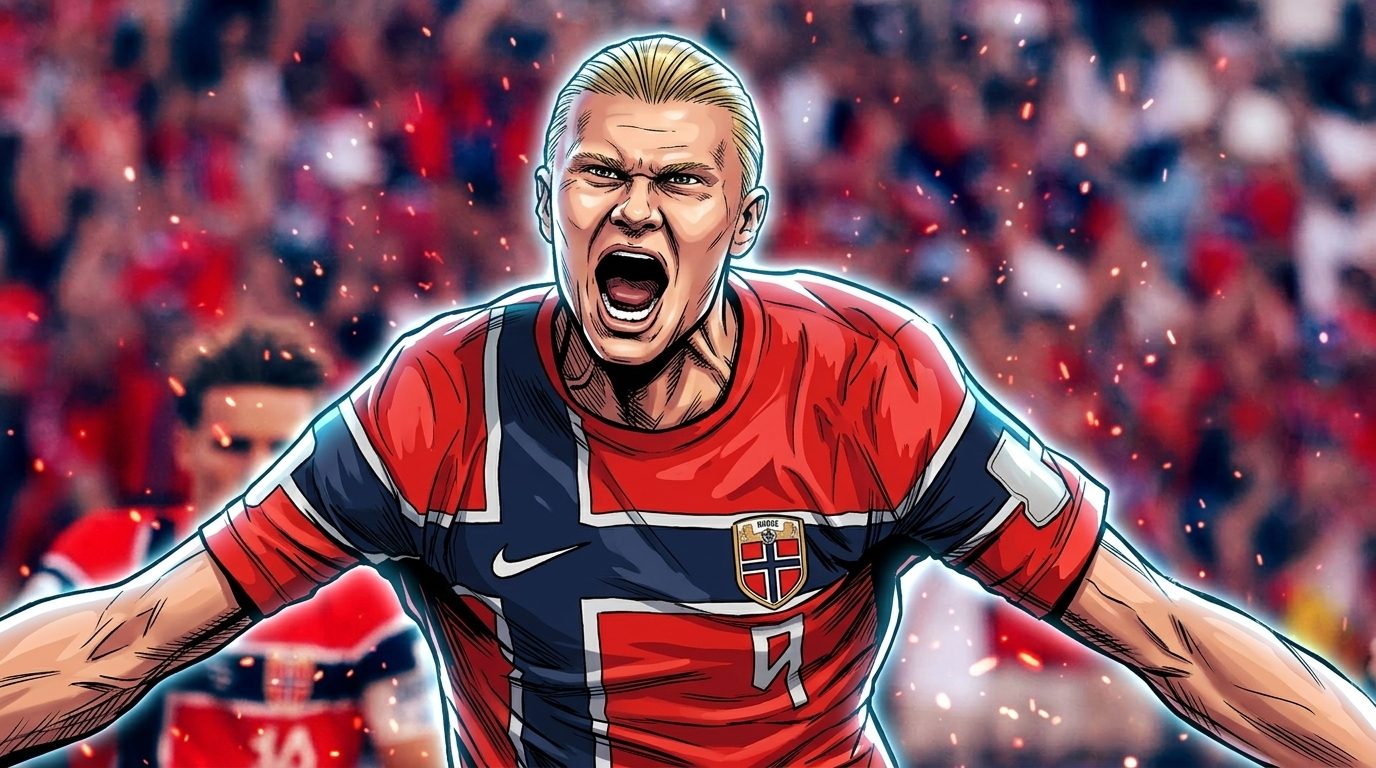
Erling Haaland’s arrival made an already-great team relentless. Signed from Borussia Dortmund in June 2022 for a reported release clause of around £51m, the Norwegian striker scored 36 Premier League goals in his debut 2022-23 season, a single-season competition record. He reached 150 goals for City in 2026 and won three Premier League Golden Boots (2022-23, 2023-24 and 2025-26), matching Alan Shearer and Harry Kane.
The dynasty’s peak was four consecutive titles. City won the league in 2020-21, 2021-22, 2022-23 and 2023-24, the last clinched with a final-day win over West Ham on May 19, 2024 — the first time any club had won four straight English top-flight championships, and the club’s 10th league title overall. In October 2024 Rodri became the first Manchester City player to win the Ballon d’Or.
The run cooled after 2024 even as the trophies kept coming. City finished 3rd in 2024-25 and 2nd in 2025-26, the title passing to rivals, and the team was knocked out of the expanded 2025 FIFA Club World Cup in the round of 16, losing 4-3 after extra time to Al-Hilal on June 30, 2025. Kevin De Bruyne, the midfield fulcrum of the whole era, left for Napoli on a free transfer in the summer of 2025 after ten years. City answered in 2025-26 with a domestic cup double, beating Arsenal 2-0 in the League Cup final on March 22, 2026 and Chelsea 1-0 in the FA Cup final on May 16, 2026 for a ninth League Cup and eighth FA Cup.
Retired numbers
Unlike North American franchises, English football clubs rarely retire shirt numbers, and City honours only one. The number 23 was retired in memory of Marc-Vivien Foé, the Cameroon midfielder on loan at the club who collapsed and died during an international match on June 26, 2003. No City player has worn it since.
| No. | Player | Pos. | Club tenure | Retired |
|---|---|---|---|---|
| 23 | Marc-Vivien Foé | MF | 2002–2003 | 2003 |
Season by season
The full league record, folded by decade, newest first.
The 2020s 4 Premier League titles · 2023 Champions League & continental treble · 2025-26 domestic cup double
| Season | W–L | Finish | Result |
|---|---|---|---|
| 2025-26 | 23-9-6 | 2nd (PL) | FA Cup & League Cup winners |
| 2024-25 | 21-8-9 | 3rd (PL) | — |
| 2023-24 | 28-7-3 | 1st (PL) | Champions (4th in a row) |
| 2022-23 | 28-5-5 | 1st (PL) | Continental treble (PL, FA Cup, UCL) |
| 2021-22 | 29-6-3 | 1st (PL) | Champions |
| 2020-21 | 27-5-6 | 1st (PL) | Champions; League Cup; UCL runners-up |
The 2010s 4 Premier League titles · Centurions (100 pts, 2017-18) · 2019 domestic treble
| Season | W–L | Finish | Result |
|---|---|---|---|
| 2019-20 | 26-3-9 | 2nd (PL) | League Cup winners |
| 2018-19 | 32-2-4 | 1st (PL) | Domestic treble (PL, FA Cup, League Cup) |
| 2017-18 | 32-4-2 | 1st (PL) | Champions, 100 points, League Cup |
| 2016-17 | 23-9-6 | 3rd (PL) | — |
| 2015-16 | 19-9-10 | 4th (PL) | League Cup; UCL semi-finals |
| 2014-15 | 24-7-7 | 2nd (PL) | — |
| 2013-14 | 27-5-6 | 1st (PL) | Champions; League Cup |
| 2012-13 | 23-9-6 | 2nd (PL) | — |
| 2011-12 | 28-5-5 | 1st (PL) | Champions (first PL title) |
| 2010-11 | 21-8-9 | 3rd (PL) | FA Cup winners |
The 2000s Relegated 2001, promoted 2002 · Abu Dhabi takeover 2008 · 5th in 2009-10
| Season | W–L | Finish | Result |
|---|---|---|---|
| 2009-10 | 18-13-7 | 5th (PL) | — |
| 2008-09 | 15-5-18 | 10th (PL) | — |
| 2007-08 | 15-10-13 | 9th (PL) | — |
| 2006-07 | 11-9-18 | 14th (PL) | — |
| 2005-06 | 13-4-21 | 15th (PL) | — |
| 2004-05 | 13-13-12 | 8th (PL) | — |
| 2003-04 | 9-14-15 | 16th (PL) | — |
| 2002-03 | 15-6-17 | 9th (PL) | Final season at Maine Road |
| 2001-02 | 31-6-9 | 1st (Div 1) | Champions, promoted |
| 2000-01 | 8-10-20 | 18th (PL) | Relegated |
The 1990s Fell to the third tier in 1998 · promoted via the 1999 playoff · promoted again in 2000
| Season | W–L | Finish | Result |
|---|---|---|---|
| 1999-00 | 26-11-9 | 2nd (Div 1) | Promoted |
| 1998-99 | 22-16-8 | 3rd (Div 2, tier 3) | Promoted (playoff) |
The 1960s Relegated in 1963 · First Division champions in 1967-68
| Season | W–L | Finish | Result |
|---|---|---|---|
| 1967-68 | 26-6-10 | 1st (Div 1) | League champions |
| 1963-64 | 18-10-14 | 6th (Div 2) | — |
| 1962-63 | 10-11-21 | 21st (Div 1) | Relegated |
The 1940s–1950s Promoted as Second Division champions in 1947 · FA Cup winners 1956
| Season | W–L | Finish | Result |
|---|---|---|---|
| 1949-50 | 8-13-21 | 21st (Div 1) | Relegated |
| 1946-47 | 26-10-6 | 1st (Div 2) | Champions, promoted |
The 1930s First league title in 1936-37 · relegated as top scorers in 1937-38
| Season | W–L | Finish | Result |
|---|---|---|---|
| 1937-38 | 14-8-20 | 21st (Div 1) | Relegated |
| 1936-37 | 22-13-7 | 1st (Div 1) | League champions |
The 1920s Runners-up in 1920-21 · relegated 1926 · promoted 1928 · move to Maine Road (1923)
| Season | W–L | Finish | Result |
|---|---|---|---|
| 1927-28 | 25-9-8 | 1st (Div 2) | Champions, promoted |
| 1925-26 | 12-11-19 | 21st (Div 1) | Relegated |
| 1920-21 | 24-6-12 | 2nd (Div 1) | Runners-up |
The 1890s–1900s Second Division champions 1899, 1903, 1910 · first FA Cup 1904
| Season | W–L | Finish | Result |
|---|---|---|---|
| 1909-10 | 23-8-7 | 1st (Div 2) | Champions, promoted |
| 1902-03 | 25-4-5 | 1st (Div 2) | Champions, promoted |
| 1899-00 | 13-8-13 | 7th (Div 1) | First top-flight season |
| 1898-99 | 23-6-5 | 1st (Div 2) | Champions, promoted |
| 1892-93 | 9-3-10 | 5th (Div 2) | First Football League season |
| 1891-92 | 6-6-10 | 8th (Alliance) | — |
By the numbers
Franchise marks
Ranks
- 1st Consecutive English top-flight titles (4, 2021–2024)
- 1st Points in a Premier League season (100, 2017-18)
- 1st Goals in a Premier League season (106, 2017-18)
- 2nd Premier League titles all-time (8, behind Manchester United)
Honors
- 2023 UEFA Champions League
- 2022-23 continental treble
- 10× English champions (1937–2024)
- 8× FA Cup
- 9× League Cup
- 2023 FIFA Club World Cup & UEFA Super Cup
- 1970 European Cup Winners' Cup
Per Wikipedia and the Premier League, through Oct. 13, 2026.
The arguments
The central argument around Manchester City is whether its modern dominance was bought lawfully. In February 2023 the Premier League charged the club with 115 alleged breaches of its financial rules spanning the seasons from 2009-10 to 2017-18, covering the provision of accurate financial information, manager and player remuneration, UEFA’s financial rules, the league’s profitability rules and cooperation with the investigation. After a hearing that ran from September to December 2024, an independent commission’s verdict was announced in late September 2026: the club was found guilty of the overwhelming majority of the charges, including all of those relating to serious financial breaches. Any sanction was to be decided separately and had not been issued as of Oct. 13, 2026.
City has maintained throughout that it did nothing wrong. The club said it was “disappointed and surprised” by the ruling, restated that it believes itself “innocent of the accusations,” and said it would pursue every avenue of appeal, arguing the opinion contained “clear material errors.” Supporters note that an earlier case ended in the club’s favour: after UEFA banned City from the Champions League for two years in February 2020, the Court of Arbitration for Sport overturned the ban in July 2020, finding the most serious allegations unproven or time-barred and cutting the fine to €10m. In a separate dispute over the league’s associated-party-transaction rules, City and the Premier League reached a settlement in September 2025, with the club accepting the current rules as valid.
Beyond the courtroom, critics frame the project as “sportswashing” — the argument that a nation-state used a football club to launder its global image — while the club and its backers describe a long-term investment that transformed a declining team, its stadium district and its community programmes. Both characterisations are contested, and the sanction phase of the financial case remained unresolved as this entry was written.
Why it matters
Manchester City is the clearest case study in how money, modern coaching and sustained planning reshaped a sport. On the pitch, Guardiola’s teams set records — 100 points, four straight titles, the treble — that redefined what dominance in English football looks like. Off it, the club sits at the centre of the game’s hardest questions about ownership, regulation and fairness, questions a Premier League commission has now ruled on and that City is fighting. However the appeals end, the period from 2008 to the present will be remembered as the era that rebuilt one of English football’s oldest clubs into its most successful, and its most argued-over.