Real Madrid
Real Madrid, Spain's most decorated club, holds record 36 La Liga and 15 European Cup titles, from the Di Stéfano dynasty to the Mbappé and Mourinho era.
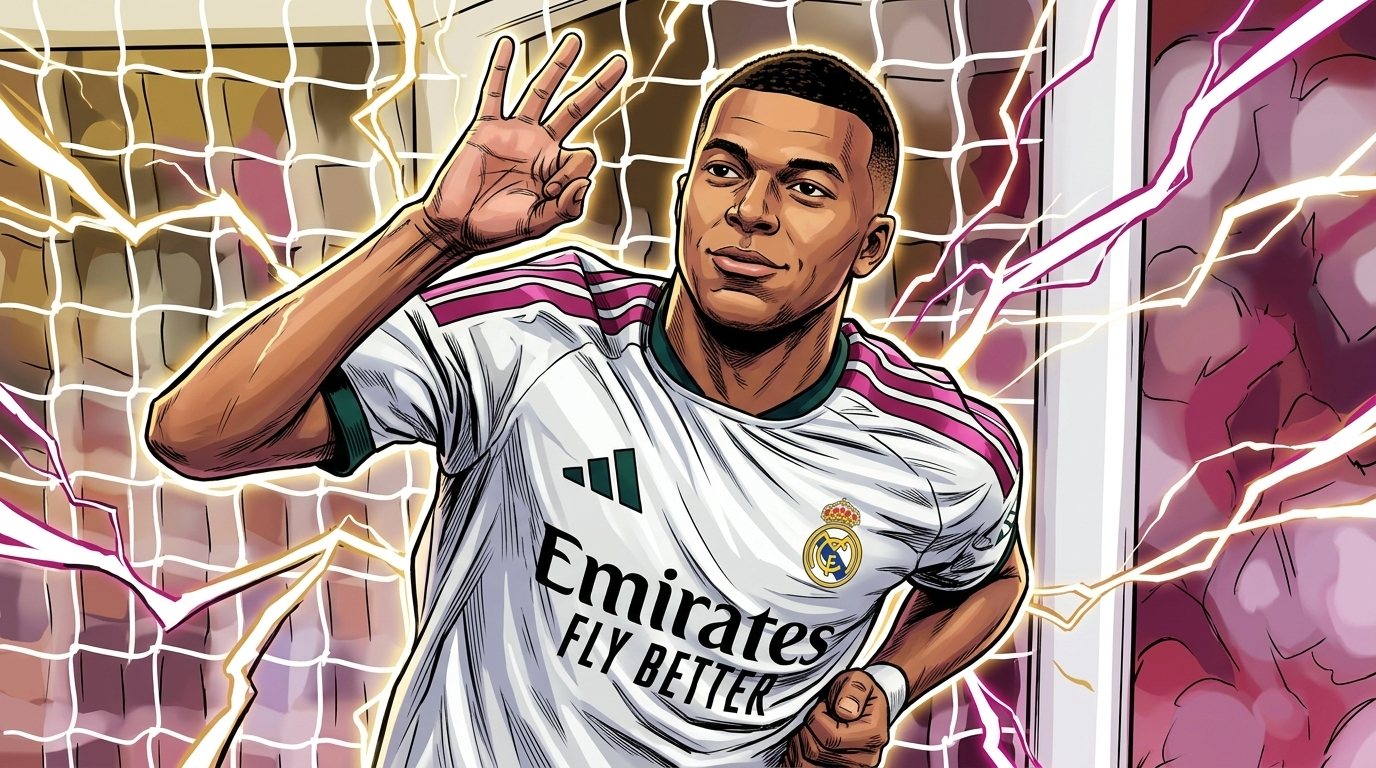
Real Madrid Club de Fútbol is the most decorated club in the history of Spanish football and, by the two measures that matter most, the most successful club in Europe. Founded in Madrid in 1902 and granted its royal title in 1920, the club has never been relegated from the Spanish top flight, has won a record 36 La Liga championships and a record 15 European Cups, and has set the ceiling for club football across seven decades — from Alfredo Di Stéfano’s five-in-a-row dynasty of the late 1950s to the Galácticos, the Zinedine Zidane three-peat, and the current era of Kylian Mbappé under a returning José Mourinho. It plays in white at the Santiago Bernabéu, is owned by its members rather than an individual, and is routinely valued as the richest football club in the world.
| Vitals | |
|---|---|
| Founded | March 6, 1902 (as Madrid Football Club) |
| League | La Liga (Primera División), Spain |
| Stadium | Santiago Bernabéu, Madrid (capacity 83,186) |
| Ownership | Member-owned (socios); president Florentino Pérez |
| Head coach | José Mourinho (since July 13, 2026) |
| La Liga titles | 36 (most recent 2023–24) |
| European Cups | 15 (most recent 2024) |
Origins and the first titles (1902–1943)
A club born in a café. Real Madrid was founded on March 6, 1902 as Madrid Football Club, and its first honours came in the national cup: it won four straight editions of the Copa del Rey between 1905 and 1908. King Alfonso XIII granted the club the royal “Real” title and crown-topped crest in 1920.
A founding power of La Liga. When the Spanish league launched in 1929, Madrid was a founding member. It claimed its first La Liga title in 1931–32, going unbeaten at 10–8–0, then retained the crown in 1932–33. The club also lifted the cup in 1934 and 1936 before the Spanish Civil War suspended league play for three seasons (1936–37 through 1938–39).
The Bernabéu era and the European dynasty (1943–1960)
The president who built the cathedral. Santiago Bernabéu became president in 1943 and set about transforming a mid-table club into a global institution. The stadium that bears his name opened in 1947, and in 1953 he engineered the signing of Argentine-born forward Alfredo Di Stéfano, the player around whom the dynasty was built.
Five European Cups in a row. When UEFA launched the European Cup in 1955, Real Madrid won the first five editions: Reims (4–3, 1956), Fiorentina (2–0, 1957), AC Milan (3–2 after extra time, 1958), Reims again (2–0, 1959) and, most famously, Eintracht Frankfurt 7–3 at Hampden Park, Glasgow, in 1960 — still regarded as one of the greatest matches ever played. Di Stéfano, Ferenc Puskás, Francisco Gento and Raymond Kopa formed the spine of that side, which also won the 1960 Intercontinental Cup against Peñarol.
The Yé-yé years (1960–1969)
A homegrown golden age. The 1960s belonged to Madrid domestically: the club won eight La Liga titles in the decade, including five in a row from 1960–61 to 1964–65. In 1966 a largely Spanish side nicknamed the “Yé-yé” team — anchored by the evergreen Gento — won the club’s sixth European Cup, beating Partizan Belgrade 2–1 in Brussels, the first continental crown won by a team of (mostly) national players rather than imports.
Domestic kings, European frustration (1969–1980)
Masters of Spain, strangers to the final. Through the 1970s Madrid remained Spain’s dominant force, winning five La Liga titles (1971–72, 1974–75, 1975–76, 1977–78 and 1978–79) and several Copas behind figures such as Pirri, Amancio, Santillana and, briefly, German imports Günter Netzer and Paul Breitner. Continental success, however, dried up; the club reached European Cup semifinals in 1972–73, 1975–76 and 1979–80 without reaching a final, a drought that would stretch on for decades.
La Quinta del Buitre (1980–1992)
The vulture’s cohort. The defining team of the 1980s grew out of the academy: La Quinta del Buitre — Emilio “El Buitre” Butragueño, Manolo Sanchís, Rafael Martín Vázquez, Míchel and Miguel Pardeza — paired with Mexican goal machine Hugo Sánchez. The side won back-to-back UEFA Cups in 1985 and 1986 and then five straight La Liga titles from 1985–86 through 1989–90.
So close in Europe. For all its domestic command, the group could not crack the European Cup, losing the 1981 final 1–0 to Liverpool in Paris and falling in three consecutive semifinals from 1986–87 to 1988–89. The continental wait would eventually reach 32 years.
The wilderness and La Séptima (1992–2000)
Ending the drought. After title-less stretches and the brilliant one-off of the 1996–97 league campaign (92 points under Fabio Capello), Madrid finally returned to the European summit. On May 20, 1998 a Predrag Mijatović goal beat Juventus 1–0 in Amsterdam for La Séptima — the long-awaited seventh European Cup.
A new generation. Two years later the club won its eighth, thrashing Valencia 3–0 in an all-Spanish 2000 final in Paris, with homegrown captain Raúl, Fernando Hierro, Fernando Redondo and Roberto Carlos leading a side that bridged the eras.
The Galácticos (2000–2007)
A policy of signing the best player in the world, every summer. Florentino Pérez won the presidency in July 2000 and launched the Galácticos project, bringing in Luís Figo from Barcelona (2000), Zinedine Zidane for a then-world-record €77.5 million (2001), Brazilian Ronaldo (2002) and David Beckham (2003).
La Novena. The project’s masterpiece came on May 15, 2002, when Zidane’s left-foot volley sealed a 2–1 win over Bayer Leverkusen at Hampden Park for the club’s ninth European Cup. League titles followed in 2000–01 and 2002–03, but the galaxy of stars then went three years without a major trophy before a final-day surge delivered the 2006–07 La Liga title.
Rebuild and the Mourinho years (2007–2013)
Reloading. Madrid won consecutive leagues in 2006–07 and 2007–08, and in 2009 Pérez’s second project brought Cristiano Ronaldo for a world-record £80 million. José Mourinho arrived as coach in 2010 to confront Pep Guardiola’s great Barcelona.
Records and a Clásico war. Mourinho’s Madrid won the 2011 Copa del Rey, beating Barcelona 1–0 after extra time on a Ronaldo header, the club’s first cup in 18 years. In 2011–12 the team took the La Liga title with a record 100 points and 121 goals, ending Barça’s run, amid one of the most combustible rivalries the game has seen.
La Décima and the Zidane three-peat (2013–2018)
The tenth, at last. After a 12-year European wait, Carlo Ancelotti’s side won La Décima on May 24, 2014, beating city rival Atlético Madrid 4–1 in extra time in Lisbon after Sergio Ramos equalised in the 93rd minute — the goal that rescued the season. The 2013 world-record signing of Gareth Bale (around €100 million) had helped make it possible.
Three in a row. Zidane took over as coach in January 2016 and did what no manager had done in the Champions League era: he won it three straight times. Madrid beat Atlético on penalties (5–3, after 1–1) in Milan in 2016, Juventus 4–1 in Cardiff in 2017 and Liverpool 3–1 in Kyiv in 2018, with the 2016–17 La Liga title sandwiched in between. Ronaldo, Luka Modrić, Toni Kroos, Karim Benzema, Marcelo and Ramos formed the core of the most dominant European side of the modern age.
The fourteenth, the fifteenth (2018–2024)
Life after Ronaldo. Ronaldo’s 2018 departure began a reset, but the trophies kept coming. Madrid won La Liga in 2019–20 and again in 2021–22, when a run of improbable knockout comebacks — against Paris Saint-Germain, Chelsea and Manchester City — carried the club to La Decimocuarta, a 1–0 win over Liverpool in Paris. Benzema’s form that year earned the 2022 Ballon d’Or.
Fifteen. In the summer of 2023 Madrid signed Jude Bellingham from Borussia Dortmund for around €103 million, and he and Vinícius Júnior drove a double: a record-extending 36th La Liga title in 2023–24 and, on June 1, 2024, a 2–0 win over Borussia Dortmund at Wembley for the fifteenth European Cup, with Vinícius and Dani Carvajal scoring.
The Mbappé era and Mourinho’s return (2024–present)
A superstar on a free transfer. In the summer of 2024 Madrid finally signed Kylian Mbappé on a free transfer from PSG, the marquee arrival of the post-Ancelotti transition. The club added the 2024 UEFA Super Cup and the inaugural FIFA Intercontinental Cup in December 2024, but lost the Champions League quarterfinal to Arsenal and the Copa del Rey final to Barcelona across 2024–25. Carlo Ancelotti left in May 2025 to coach Brazil.
A turbulent interregnum. Xabi Alonso took charge for 2025–26 but departed by mutual consent on January 12, 2026 — a move several outlets framed as a dismissal — one day after a 2–3 Supercopa de España final loss to Barcelona. Álvaro Arbeloa stepped up from the Castilla reserve team for the rest of the campaign, which ended trophyless: a Supercopa defeat, a Copa del Rey round-of-16 upset by second-tier Albacete, a Champions League quarterfinal exit to Bayern Munich (6–4 on aggregate), and a runners-up finish to Barcelona in La Liga with 86 points.
Mourinho, thirteen years on. On July 13, 2026 José Mourinho returned to Real Madrid as head coach on a three-year contract, 13 years after his first spell ended, following another re-election of Florentino Pérez. As of October 13, 2026, with signings including Bernardo Silva, Ibrahima Konaté and Marc Cucurella, Madrid sat fourth in La Liga after eight matches (six wins, two losses).
Retired numbers
Real Madrid has never retired a squad number, and by rule it effectively cannot. La Liga requires that senior first-team players be registered with shirt numbers 1 through 25, with a maximum of 25 senior players; withdrawing a number from circulation would mean fielding a smaller squad. For that reason the club has declined to retire numbers even for its greatest figures — Raúl’s No. 7 passed to Cristiano Ronaldo, and Ronaldo’s to a succession of forwards after him. The table below is therefore empty by design: the honour does not exist in this club’s tradition.
| No. | Player | Pos. | Tenure | Retired |
|---|---|---|---|---|
| — | None — Real Madrid has retired no squad number | — | — | — |
Season by season
The full league record, folded by decade (newest first). ★ marks a La Liga title. EC = European Cup, CL = Champions League, CWC = Cup Winners’ Cup; W/RU/SF/QF/R32/R16 = round reached; “(nth)” marks each European Cup won.
The 2020s 183–51–32 · 3 La Liga titles · 2 Champions Leagues
| Season | W–D–L | Pts | Finish | Cups & Europe |
|---|---|---|---|---|
| 2025–26 | 27–5–6 | 86 | 2nd | Supercopa RU; CL QF |
| 2024–25 | 26–6–6 | 84 | 2nd | Copa RU; CL QF |
| 2023–24 | 29–8–1 | 95 | 1st ★ | CL W (15th) |
| 2022–23 | 24–6–8 | 78 | 2nd | Copa W; CL SF |
| 2021–22 | 26–8–4 | 86 | 1st ★ | CL W (14th) |
| 2020–21 | 25–9–4 | 84 | 2nd | CL SF |
| 2019–20 | 26–9–3 | 87 | 1st ★ | CL R16 |
The 2010s 275–54–51 · 2 La Liga titles · 4 Champions Leagues
| Season | W–D–L | Pts | Finish | Cups & Europe |
|---|---|---|---|---|
| 2018–19 | 21–5–12 | 68 | 3rd | CL R16 |
| 2017–18 | 22–10–6 | 76 | 3rd | CL W (13th) |
| 2016–17 | 29–6–3 | 93 | 1st ★ | CL W (12th) |
| 2015–16 | 28–6–4 | 90 | 2nd | CL W (11th) |
| 2014–15 | 30–2–6 | 92 | 2nd | CL SF |
| 2013–14 | 27–6–5 | 87 | 3rd | Copa W; CL W (10th) |
| 2012–13 | 26–7–5 | 85 | 2nd | Copa RU; CL SF |
| 2011–12 | 32–4–2 | 100 | 1st ★ | CL SF |
| 2010–11 | 29–5–4 | 92 | 2nd | Copa W; CL SF |
| 2009–10 | 31–3–4 | 96 | 2nd | CL R16 |
The 2000s 222–79–79 · 4 La Liga titles · 2 Champions Leagues
| Season | W–D–L | Pts | Finish | Cups & Europe |
|---|---|---|---|---|
| 2008–09 | 25–3–10 | 78 | 2nd | CL R16 |
| 2007–08 | 27–4–7 | 85 | 1st ★ | CL R16 |
| 2006–07 | 23–7–8 | 76 | 1st ★ | CL R16 |
| 2005–06 | 20–10–8 | 70 | 2nd | CL R16 |
| 2004–05 | 25–5–8 | 80 | 2nd | CL R16 |
| 2003–04 | 21–7–10 | 70 | 4th | Copa RU; CL QF |
| 2002–03 | 22–12–4 | 78 | 1st ★ | CL SF |
| 2001–02 | 19–9–10 | 66 | 3rd | Copa RU; CL W (9th) |
| 2000–01 | 24–8–6 | 80 | 1st ★ | CL SF |
| 1999–2000 | 16–14–8 | 62 | 5th | CL W (8th) |
The 1990s 220–87–81 · 3 La Liga titles · 1 European Cup
| Season | W–D–L | Pts | Finish | Cups & Europe |
|---|---|---|---|---|
| 1998–99 | 21–5–12 | 68 | 2nd | CL QF |
| 1997–98 | 17–12–9 | 63 | 4th | CL W (7th) |
| 1996–97 | 27–11–4 | 92 | 1st ★ | — |
| 1995–96 | 20–10–12 | 70 | 6th | CL QF |
| 1994–95 | 23–9–6 | 55 | 1st ★ | UEFA Cup R16 |
| 1993–94 | 19–7–12 | 45 | 4th | CWC QF |
| 1992–93 | 24–9–5 | 57 | 2nd | Copa W; UEFA Cup QF |
| 1991–92 | 23–8–7 | 54 | 2nd | UEFA Cup SF |
| 1990–91 | 20–6–12 | 46 | 3rd | EC QF |
| 1989–90 | 26–10–2 | 62 | 1st ★ | EC R16 |
The 1980s 221–80–57 · 4 La Liga titles · 2 UEFA Cups
| Season | W–D–L | Pts | Finish | Cups & Europe |
|---|---|---|---|---|
| 1988–89 | 25–12–1 | 62 | 1st ★ | Copa W; EC SF |
| 1987–88 | 28–6–4 | 62 | 1st ★ | EC SF |
| 1986–87 | 27–12–5 | 66 | 1st ★ | EC SF |
| 1985–86 | 26–4–4 | 56 | 1st ★ | UEFA Cup W |
| 1984–85 | 13–10–11 | 36 | 5th | UEFA Cup W |
| 1983–84 | 22–5–7 | 49 | 2nd | — |
| 1982–83 | 20–9–5 | 49 | 2nd | Copa RU; CWC RU |
| 1981–82 | 18–8–8 | 44 | 3rd | Copa W |
| 1980–81 | 20–5–9 | 45 | 2nd | EC RU |
| 1979–80 | 22–9–3 | 53 | 1st ★ | Copa W; EC SF |
The 1970s 169–88–75 · 5 La Liga titles · 3 Copas
| Season | W–D–L | Pts | Finish | Cups & Europe |
|---|---|---|---|---|
| 1978–79 | 16–15–3 | 47 | 1st ★ | Copa RU; EC R16 |
| 1977–78 | 22–3–9 | 47 | 1st ★ | — |
| 1976–77 | 12–10–12 | 34 | 9th | — |
| 1975–76 | 20–8–6 | 48 | 1st ★ | EC SF |
| 1974–75 | 20–10–4 | 50 | 1st ★ | Copa W |
| 1973–74 | 13–8–13 | 34 | 8th | Copa W |
| 1972–73 | 17–9–8 | 43 | 4th | EC SF |
| 1971–72 | 19–9–6 | 47 | 1st ★ | — |
| 1970–71 | 17–7–6 | 41 | 4th | CWC RU |
| 1969–70 | 13–9–8 | 35 | 5th | Copa W; EC R16 |
The 1960s 202–58–40 · 8 La Liga titles · 2 European Cups
| Season | W–D–L | Pts | Finish | Cups & Europe |
|---|---|---|---|---|
| 1968–69 | 18–11–1 | 47 | 1st ★ | EC R16 |
| 1967–68 | 16–10–4 | 42 | 1st ★ | EC SF |
| 1966–67 | 19–9–2 | 47 | 1st ★ | EC QF |
| 1965–66 | 19–5–6 | 43 | 2nd | EC W (6th) |
| 1964–65 | 21–5–4 | 47 | 1st ★ | EC QF |
| 1963–64 | 22–2–6 | 46 | 1st ★ | EC RU |
| 1962–63 | 23–3–4 | 49 | 1st ★ | EC R32 |
| 1961–62 | 19–5–6 | 43 | 1st ★ | Copa W; EC RU |
| 1960–61 | 24–4–2 | 52 | 1st ★ | EC R16 |
| 1959–60 | 21–4–5 | 46 | 2nd | EC W (5th) |
The 1950s 174–51–71 · 4 La Liga titles · 4 European Cups
| Season | W–D–L | Pts | Finish | Cups & Europe |
|---|---|---|---|---|
| 1958–59 | 21–5–4 | 47 | 2nd | EC W (4th) |
| 1957–58 | 20–5–5 | 45 | 1st ★ | EC W (3rd) |
| 1956–57 | 20–4–6 | 44 | 1st ★ | EC W (2nd) |
| 1955–56 | 18–2–10 | 38 | 3rd | EC W (1st) |
| 1954–55 | 20–6–4 | 46 | 1st ★ | — |
| 1953–54 | 17–6–7 | 40 | 1st ★ | — |
| 1952–53 | 18–3–9 | 39 | 3rd | — |
| 1951–52 | 16–6–8 | 38 | 3rd | — |
| 1950–51 | 13–5–12 | 31 | 9th | — |
| 1949–50 | 11–9–6 | 31 | 4th | — |
The 1940s 119–46–83 · best finish 2nd · 2 Copas
| Season | W–D–L | Pts | Finish | Cups & Europe |
|---|---|---|---|---|
| 1948–49 | 15–4–7 | 34 | 3rd | — |
| 1947–48 | 7–7–12 | 21 | 11th | — |
| 1946–47 | 11–5–10 | 27 | 7th | Copa W |
| 1945–46 | 11–9–6 | 31 | 4th | Copa W |
| 1944–45 | 18–2–6 | 38 | 2nd | — |
| 1943–44 | 11–6–9 | 28 | 7th | — |
| 1942–43 | 10–5–11 | 25 | 10th | Copa RU |
| 1941–42 | 14–5–7 | 33 | 2nd | — |
| 1940–41 | 11–2–9 | 24 | 6th | — |
| 1939–40 | 11–1–6 | 23 | 4th | Copa RU |
The 1930s 80–30–24 · 2 La Liga titles · 2 Copas
| Season | W–D–L | Pts | Finish | Cups & Europe |
|---|---|---|---|---|
| 1935–36 | 13–6–3 | 32 | 2nd | Copa W |
| 1934–35 | 16–1–5 | 33 | 2nd | — |
| 1933–34 | 10–6–2 | 26 | 2nd | Copa W |
| 1932–33 | 13–2–3 | 28 | 1st ★ | Copa RU |
| 1931–32 | 10–8–0 | 28 | 1st ★ | — |
| 1930–31 | 10–4–4 | 24 | 6th | — |
| 1929–30 | 8–3–7 | 19 | 5th | Copa RU |
By the numbers
Franchise marks
Ranks
- 1st Champions League / European Cup titles, all-time (15)
- 1st La Liga titles, all-time (36)
- 1st All-time La Liga table, by points and wins
- 1st Most valuable football club in the world
- 2nd Copa del Rey titles, all-time (20, behind Barcelona)
Honors
- 15× European Cup / Champions League
- 36× La Liga
- 20× Copa del Rey
- 13× Supercopa de España
- 6× UEFA Super Cup
- 2× UEFA Cup
- 9× Intercontinental / FIFA Club World Cup
Per Wikipedia and the official La Liga club page, through Oct. 13, 2026.
The arguments
Franco’s club, or the establishment’s convenient myth? Real Madrid’s postwar European dominance coincided with Francisco Franco’s dictatorship, and critics — especially from Catalonia and the Basque Country — have long cast the club as a symbol of centralist, regime-friendly Spain. Defenders counter that Franco initially favoured other clubs, that Madrid’s success was built on Bernabéu’s administration and Di Stéfano’s genius rather than political patronage, and that the “regime team” label is a rival’s rhetorical weapon. The 1953 tug-of-war over Di Stéfano, in which both Madrid and Barcelona claimed to have signed him before the Spanish federation ruled in Madrid’s favour, remains the flashpoint each side reads differently.
Galácticos versus the cantera. The club’s identity has oscillated between buying the world’s best — Figo, Zidane, Ronaldo, Beckham, Bale, Bellingham, Mbappé — and promoting from its academy, as it did with the Quinta del Buitre and Raúl. Supporters of the spending model point to the trophies it has bought; critics argue it has periodically hollowed out the squad’s balance and sidelined homegrown talent.
The Super League. President Florentino Pérez was the most prominent architect and public face of the 2021 breakaway European Super League. To supporters, he was defending the finances of elite clubs against an unsustainable system; to opponents across European football, he was leading an attack on open competition and promotion-based merit. The dispute, and the litigation around it, kept Madrid at the centre of the sport’s governance fights into the mid-2020s.
Why it matters
No club has shaped football’s imagination of what winning looks like more than Real Madrid. It invented the European dynasty in the 1950s, reinvented the celebrity-transfer era in the 2000s, and then turned the Champions League into something close to private property in the 2010s. Its 15 European Cups and 36 La Liga titles are both records that no rival has approached, and its history runs unbroken from Di Stéfano to Mbappé without a single season outside Spain’s top flight. To understand Real Madrid is to understand the ceiling the rest of the sport measures itself against.