Super Bowl LVIII
The Kansas City Chiefs beat the San Francisco 49ers 25-22 in overtime on February 11, 2024 to win Super Bowl LVIII, their second straight NFL title.
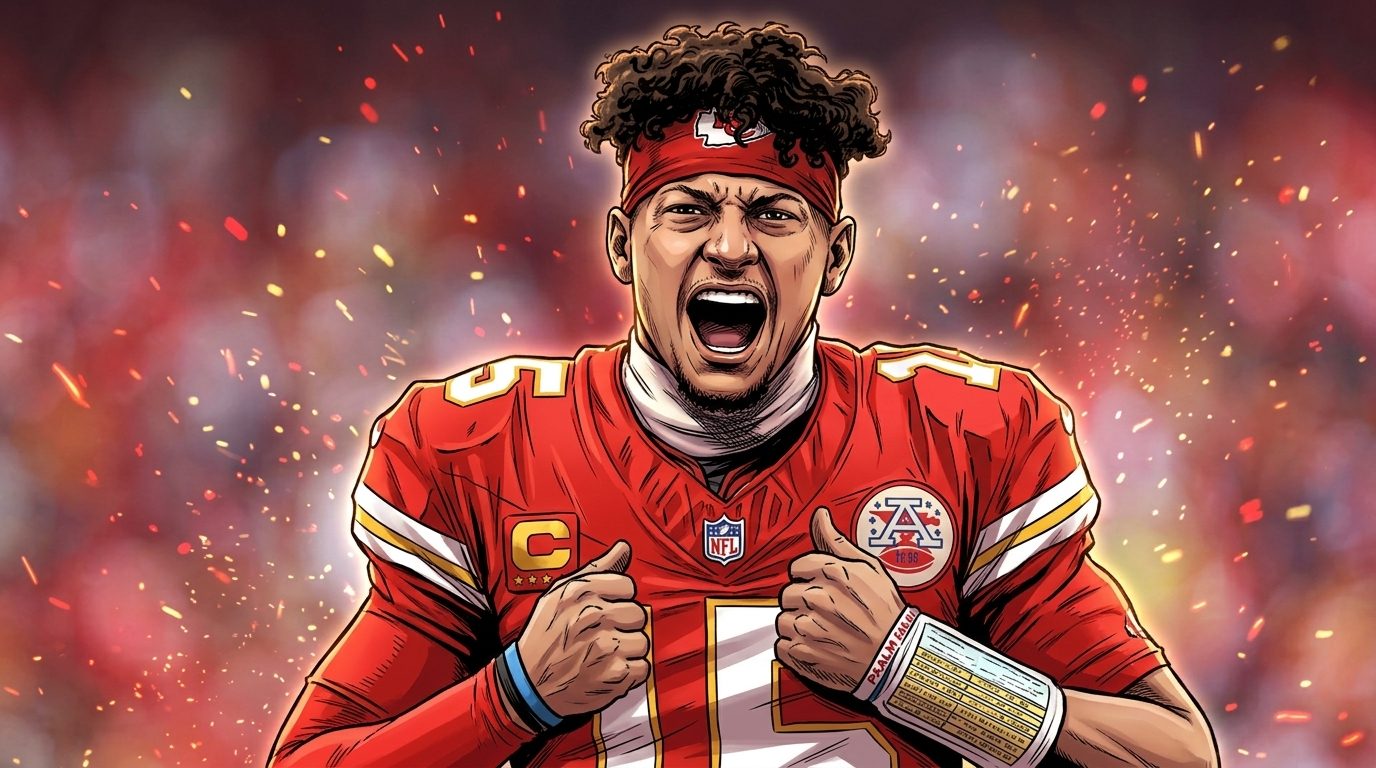
The Kansas City Chiefs won Super Bowl LVIII, beating the San Francisco 49ers 25–22 in overtime at Allegiant Stadium in Las Vegas on February 11, 2024. It was only the second Super Bowl ever to reach overtime, and the first played under the postseason overtime rules adopted for the 2022 season, which guarantee each team a possession. Quarterback Patrick Mahomes, named the game’s Most Valuable Player, ended a long overtime drive with a three-yard touchdown pass to Mecole Hardman on the final snap. The win gave Kansas City back-to-back championships — the first NFL repeat since the 2003–04 New England Patriots — and a third title in five seasons.
| Fast facts | |
|---|---|
| Champion | Kansas City Chiefs (AFC) |
| Runner-up | San Francisco 49ers (NFC) |
| Date | February 11, 2024 |
| Venue | Allegiant Stadium, Paradise (Las Vegas), Nevada |
| Result | Chiefs 25, 49ers 22 (overtime) |
| Super Bowl MVP | Patrick Mahomes (QB, Kansas City) |
| Audience | 123.4 million average U.S. viewers (CBS) |
The setup
Both teams reached Las Vegas as the top of their conferences, and the matchup was a rematch of Super Bowl LIV, which Kansas City had won 31–20 four seasons earlier. San Francisco finished the 2023 regular season 12–5 and claimed the NFC’s No. 1 seed and a first-round bye. The roster that head coach Kyle Shanahan built around quarterback Brock Purdy was anchored by running back Christian McCaffrey — acquired in a midseason trade from Carolina during the 2022 season — along with tight end George Kittle, receivers Deebo Samuel and Brandon Aiyuk, and a defense fronted by Nick Bosa. The 49ers advanced by beating the Green Bay Packers 24–21 in the Divisional Round and the Detroit Lions 34–31 in the NFC Championship Game, erasing a 17-point second-half deficit against Detroit.
Kansas City finished 11–6 and entered the postseason as the AFC’s No. 3 seed, a lower perch than the Chiefs had grown used to during the Mahomes era. The team was still built around the core of Mahomes, tight end Travis Kelce, head coach Andy Reid, and a defense led by tackle Chris Jones and coordinator Steve Spagnuolo. Kansas City won three straight playoff games, two of them on the road: 26–7 over the Miami Dolphins in a frigid Wild Card game at Arrowhead Stadium, 27–24 at the Buffalo Bills in the Divisional Round, and 17–10 at the Baltimore Ravens — the AFC’s top seed — in the conference championship.
How it happened
San Francisco controlled the early portion of the game. The 49ers moved the ball on their opening possession before a McCaffrey fumble stalled the drive, and the scoring opened in the second quarter with a 55-yard Jake Moody field goal that briefly set a Super Bowl record for distance. San Francisco then stretched the lead on a trick play: Purdy pitched to receiver Jauan Jennings, who threw across the field to McCaffrey for a 21-yard touchdown. A 28-yard Harrison Butker field goal cut the margin to 10–3 at halftime.
Kansas City turned the game in the third quarter. Butker broke Moody’s hours-old mark with a 57-yard field goal — a new Super Bowl record — and Mahomes then found Marquez Valdes-Scantling on a 16-yard touchdown for the Chiefs’ first lead at 13–10. Early in the fourth quarter Purdy connected with Jennings for a touchdown, but Leo Chenal blocked the extra point, leaving San Francisco ahead 16–13. Butker tied it with a 24-yard field goal, Moody answered with a 53-yarder to put the 49ers up 19–16 with 1:54 to play, and Mahomes drove Kansas City into range for Butker’s 29-yard field goal, which tied the game at 19 with three seconds left and forced overtime.
San Francisco won the overtime coin toss and elected to receive, kicking a 27-yard Moody field goal for a 22–19 edge. Because of the new rules, Kansas City was guaranteed the ball, and Mahomes answered with the decisive possession — converting a fourth-and-one with his legs along the way — before the three-yard strike to Hardman ended it. Mahomes finished 34 of 46 for 333 yards with two touchdowns and an interception, and added a team-high 66 rushing yards on nine carries. Purdy completed 23 of 38 for 255 yards and a touchdown.
By the numbers
| Round | Date | Score | Note |
|---|---|---|---|
| Wild Card | Jan 13, 2024 | Chiefs 26, Dolphins 7 | One of the coldest games in NFL history, at Arrowhead |
| Divisional | Jan 21, 2024 | Chiefs 27, Bills 24 | Road win at Buffalo |
| AFC Championship | Jan 28, 2024 | Chiefs 17, Ravens 10 | Road win over the AFC’s top seed, Baltimore |
| Super Bowl LVIII | Feb 11, 2024 | Chiefs 25, 49ers 22 (OT) | Allegiant Stadium, Las Vegas |
The record
- 1st Most-watched U.S. telecast in history (123.4M average viewers)
- 1st Longest Super Bowl ever played by game time (74 min, 57 sec)
- 2nd Super Bowl to reach overtime (after Super Bowl LI)
- T-2nd Most Super Bowl MVP awards, all-time — Mahomes (3, tied with Joe Montana)
Per Wikipedia and CBS Sports, through February 11, 2024.
Honors
- Super Bowl LVIII champions — Kansas City Chiefs
- Super Bowl LVIII MVP — Patrick Mahomes
- Back-to-back NFL champions (2022 and 2023 seasons)
- Third title in five seasons (2019, 2022, 2023)
- Mahomes' third Super Bowl MVP, tying Joe Montana
- Andy Reid's third Super Bowl title as Chiefs head coach
Per the NFL, February 11, 2024.
The arguments
The game left two debates that have outlasted it. The first is tactical: San Francisco’s decision to take the ball first in overtime. Under the rules used for the first time in a Super Bowl that night, scoring a touchdown on the opening possession no longer ends the game, so a team that receives first and settles for a field goal hands its opponent a chance to win with a touchdown — which is exactly how it played out. Shanahan said afterward his staff had studied the format and wanted the ball with the option to answer, while a number of analysts and former players argued the sharper play was to kick off and let the defense dictate. The counterpoint is that San Francisco’s defense simply did not get the stop it needed, regardless of order.
The second debate is about legacy. Supporters point to three championships in five seasons, the first repeat in nearly two decades, and a quarterback with three Super Bowl MVPs before turning 30 as evidence of a bona fide dynasty. Skeptics note the narrow margins — a seven-point AFC title game and a three-point overtime final against an 11–6 regular-season team — and argue the run looked less dominant than the résumé suggests. Both readings rest on the same set of results.
Why it matters
Super Bowl LVIII confirmed the Chiefs as the defining team of their era. It was Kansas City’s fourth Super Bowl appearance in five seasons and its second straight title, making the Mahomes–Kelce–Reid core the first group to repeat as NFL champions since the Patriots did it following the 2003 and 2004 seasons. For Mahomes, a third Super Bowl MVP placed him alongside Montana and within range of Tom Brady’s record of five. Played before the largest television audience in American history, in a Las Vegas stadium hosting its first Super Bowl, the overtime finish became the signature moment of a dynasty still being measured against the NFL’s best.