Kansas City Chiefs
The Kansas City Chiefs, AFL founders turned NFL dynasty, won four Super Bowls across the Lamar Hunt, Hank Stram and Patrick Mahomes eras since 1960.
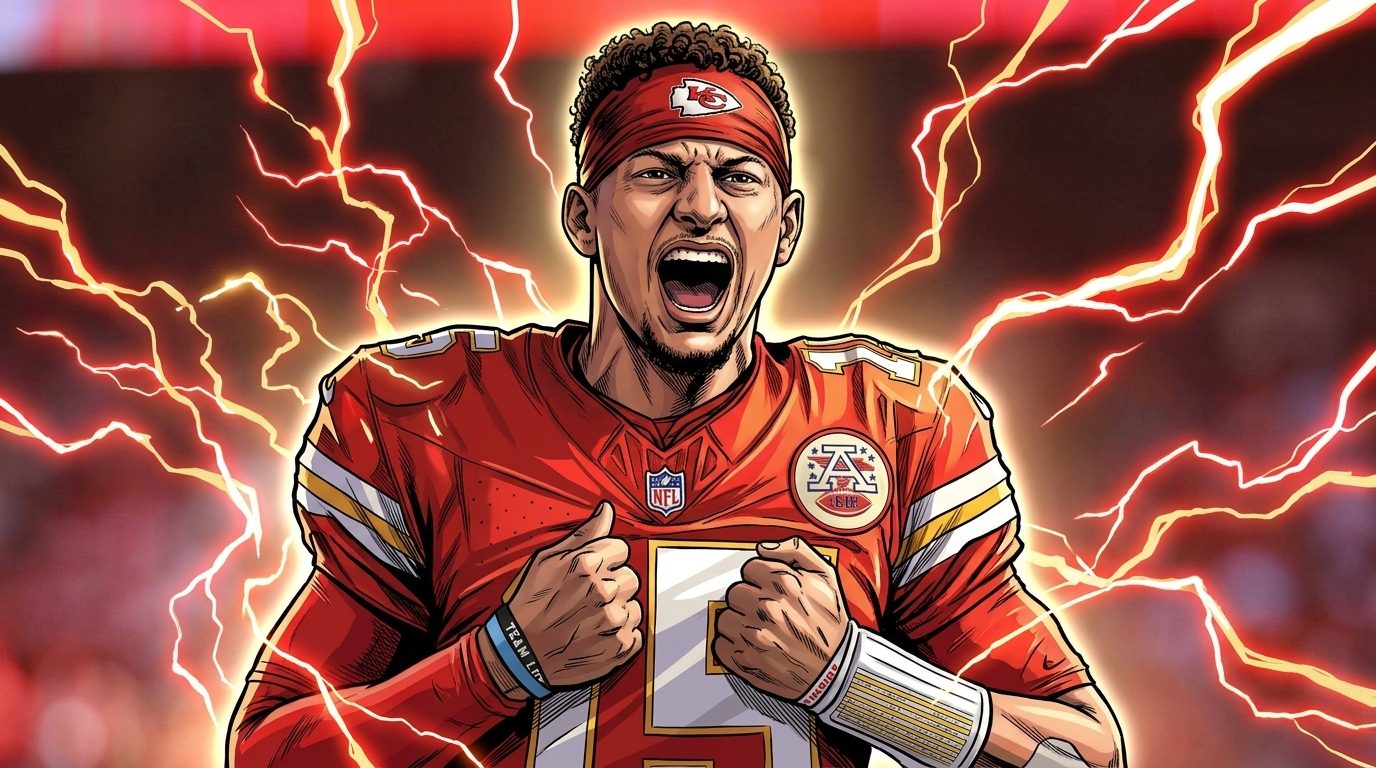
The Kansas City Chiefs are a charter franchise of the American Football League and one of the defining organizations in professional football, founded by the man who named the Super Bowl itself. Born in Dallas in 1960, moved to Kansas City in 1963 and built twice into a champion — first under Hank Stram in the AFL era and again under Andy Reid and Patrick Mahomes six decades later — the Chiefs own four Super Bowl titles and a place among the sport’s most recognizable brands, from the tomahawk chop at Arrowhead Stadium to the Lamar Hunt Trophy that bears their founder’s name. Few franchises hold both a piece of the league’s origin story and its present-day dynasty; the Chiefs hold both.
| Vitals | |
|---|---|
| Founded | 1959 (began play 1960 as the Dallas Texans) |
| League / conference / division | NFL — American Football Conference (AFC), West |
| Stadium | GEHA Field at Arrowhead Stadium, Kansas City, Mo. (opened 1972) |
| Owner | Hunt family; Clark Hunt, chairman & CEO (as of Oct. 10, 2026) |
| Head coach | Andy Reid (since 2013; as of Oct. 10, 2026) |
| Super Bowl titles | 4 — IV (1969), LIV (2019), LVII (2022), LVIII (2023) |
| AFL championships | 3 — 1962, 1966, 1969 |
Origins: the Dallas Texans (1959–1962)
The franchise exists because the NFL told Lamar Hunt no. Denied an expansion team, the young Texas oilman organized a rival league instead, and the American Football League kicked off in 1960 with Hunt’s Dallas Texans as its flagship club. Hunt hired a 37-year-old assistant named Hank Stram as head coach — a hire that would define the next 15 years.
The Texans won quickly. After an 8–6 debut in 1960 and a 6–8 follow-up, Dallas went 11–3 in 1962 and won the AFL Championship, beating the Houston Oilers 20–17 in a double-overtime title game that stood for years as the longest game in pro football history. Running back Abner Haynes was the league’s early star. But competing head-to-head in Dallas with the NFL’s new Cowboys proved financially untenable, and Hunt looked for a new home.
Hank Stram and the move to Kansas City (1963–1971)
Kansas City mayor H. Roe Bartle courted Hunt aggressively, and in 1963 the Texans headed north and became the Chiefs. The early Kansas City years were uneven, but Stram was assembling one of the most talented rosters in football: quarterback Len Dawson, who had joined in 1962, plus defensive cornerstones Buck Buchanan, Bobby Bell and Willie Lanier, receiver Otis Taylor and kicker Jan Stenerud.
The 1966 season put the Chiefs on the national map. Kansas City went 11–2–1, won the AFL title and earned a berth in the first AFL–NFL World Championship Game — the game retroactively designated the inaugural Super Bowl — on Jan. 15, 1967. The Chiefs hung with the Green Bay Packers into the third quarter before falling 35–10, a loss that fed the narrative that the AFL could not match the older league.
Three years later the Chiefs answered it. The 1969 team went 11–3, survived the playoffs on the road and met the heavily favored Minnesota Vikings in Super Bowl IV on Jan. 11, 1970. Stram, miked for NFL Films and narrating his “65 toss power trap” play calls, watched his defense smother Minnesota in a 23–7 win; Dawson was named MVP after a 46-yard touchdown strike to Taylor. Played in the final weeks before the AFL–NFL merger took full effect, it remains one of the most important games in the merger story — the AFL’s second straight Super Bowl victory, legitimizing the league Hunt had built.
The dynasty’s last great day was also its most heartbreaking. On Dec. 25, 1971, Kansas City played the Miami Dolphins in a divisional playoff that ran 82 minutes and 40 seconds — the longest game in NFL history — before Stenerud’s missed field goals helped Miami win 27–24 in double overtime. It was the last game at Municipal Stadium and the end of an era; the roster aged, and a championship-caliber core never returned to the postseason together.
The wilderness years (1972–1988)
The Chiefs moved into Arrowhead Stadium in 1972 and promptly fell off the map. Stram was fired after the 1974 season, and Kansas City endured one of the longest fallow stretches in the league. From 1972 through 1985 the franchise reached the playoffs only once, bottoming out at 2–12 in 1977. Marv Levy coached from 1978 to 1982 before finding his fame in Buffalo, and a 1982 season shortened by a players’ strike produced a 3–6 finish.
John Mackovic finally broke the drought. The 1986 Chiefs went 10–6 and returned to the postseason for the first time in 15 years, powered by a defense and special teams that scored repeatedly, before a wild-card loss. Lamar Hunt hired linebacker-turned-executive Carl Peterson after the 1988 season, setting up the turnaround — but the 1970s and most of the 1980s remain the leanest chapter in franchise history, a 17-year span with a single playoff appearance.
The Schottenheimer revival (1989–1998)
Marty Schottenheimer made Kansas City a perennial contender again. Hired in 1989, he paired a punishing defense with Arrowhead’s growing reputation as the NFL’s loudest building. The defense was built around pass rushers Derrick Thomas — who recorded an NFL-record seven sacks in a single 1990 game — and Neil Smith, with running back Christian Okoye, “the Nigerian Nightmare,” leading the league in rushing in 1989.
The 1993 team came closest. Kansas City traded for 37-year-old quarterback Joe Montana and signed former Raiders running back Marcus Allen, went 11–5, and reached the AFC Championship Game for the first time in 24 years. There Montana suffered a concussion and the Chiefs lost 30–13 at Buffalo — one of several deep playoff disappointments. The 1995 team went 13–3 and earned the AFC’s top seed, only to lose 10–7 at home in the divisional round when kicker Lin Elliott missed three field goals. The 1997 team also went 13–3 and lost at home in the divisional round, 14–10 to Denver. Schottenheimer’s Chiefs won more regular-season games than almost anyone in the decade but could never get over the top, and he resigned after a 1998 collapse.
The Vermeil offense (1999–2006)
After the defensive 1990s, the Chiefs became an offensive juggernaut. Dick Vermeil, hired in 2001, installed a high-powered attack around quarterback Trent Green, running back Priest Holmes and a Hall of Fame interior offensive line anchored by guard Will Shields and tackle Willie Roaf. Holmes rewrote the record book, including a then-NFL-record 27 rushing touchdowns in 2003. Tight end Tony Gonzalez — a 1997 first-round pick who played in Kansas City through 2008 — became the greatest receiving tight end in league history during these years.
The 2003 team was the peak and the frustration in one season. Kansas City started 9–0 and finished 13–3, but its divisional-round playoff game against Indianapolis became infamous as the “no-punt game,” a 38–31 loss in which neither team punted and the Chiefs’ defense had no answer. A 10–6 finish in 2005 was Vermeil’s final season, and a winning record was not enough to reach the postseason; the offense was electric, but the breakthrough never came.
The lean years and the rebuild (2007–2012)
The late 2000s were brutal. Herm Edwards guided one last playoff appearance in 2006, then the roster bottomed out. The 2008 Chiefs went 2–14, matching the worst record in franchise history. A Todd Haley–led 2010 team surprised with a 10–6 AFC West title, but the recovery did not hold: Kansas City cratered again to 2–14 in 2012, a season darkened by tragedy. The front office cleaned house that winter, and Clark Hunt — who had taken over ownership after his father Lamar’s death in December 2006 — hired the coach who would change everything.
Andy Reid and a return to contention (2013–2017)
Andy Reid arrived from Philadelphia in 2013 and turned a 2–14 team into an 11–5 playoff club in one year. With quarterback Alex Smith running a disciplined, efficient offense, the Chiefs made the playoffs in four of five seasons from 2013 to 2017 and won the AFC West in 2016 and 2017. The roster added cornerstones who would anchor the dynasty to come: tight end Travis Kelce, drafted in 2013, and receiver Tyreek Hill. What the Reid–Smith Chiefs lacked was a playoff signature — until the 2017 draft, when Kansas City traded up to No. 10 overall to select a quarterback from Texas Tech named Patrick Mahomes and sat him for a year behind Smith.
The Mahomes dynasty (2018–2024)
Mahomes’s first season as a starter rewrote expectations. In 2018 he threw for more than 5,000 yards and 50 touchdowns and was named NFL MVP, and the Chiefs went 12–4 before losing the AFC Championship Game to New England in overtime at Arrowhead. The near-miss set up the breakthrough.
The 2019 season ended a 50-year title drought. Trailing in all three playoff games, Kansas City came back each time, capping the run in Super Bowl LIV on Feb. 2, 2020, with a 10-point fourth-quarter comeback to beat the San Francisco 49ers 31–20. Mahomes was named MVP, and the franchise won its first championship since Super Bowl IV. A year later the Chiefs returned to the Super Bowl but were overwhelmed by Tampa Bay, 31–9, in Super Bowl LV on Feb. 7, 2021, behind a makeshift offensive line.
Then came back-to-back titles. After reshaping the offense — trading Hill to Miami in 2022 — Kansas City beat the Philadelphia Eagles 38–35 in Super Bowl LVII on Feb. 12, 2023, with Mahomes playing through a high ankle sprain and winning his second MVP. The following season the Chiefs won Super Bowl LVIII over the 49ers 25–22 in overtime on Feb. 11, 2024, when Mahomes led a 13-play game-winning drive capped by a touchdown to Mecole Hardman — a third Super Bowl MVP for Mahomes and the first repeat championship for any team in two decades.
The three-peat bid fell short. Kansas City went 15–2 in 2024 and reached a fifth Super Bowl in six seasons, but Philadelphia routed the Chiefs 40–22 in Super Bowl LIX on Feb. 9, 2025, ending the quest to become the first team to win three straight Super Bowls. Across this era the Chiefs appeared in the AFC Championship Game seven consecutive seasons (2018–2024) — the second-longest such streak in NFL history, behind the New England Patriots’ eight straight (2011–2018) — and in five Super Bowls.
The 2025 collapse
The dynasty’s run of dominance ended abruptly in 2025. Kansas City finished 6–11, third in the AFC West, missing the playoffs for the first time since 2014 and posting its first losing season since 2012. The team recovered from an 0–2 start to reach 5–3 at midseason, then lost eight of its final nine, a slide that turned terminal when Mahomes suffered a season-ending knee injury in a Week 15 home loss to the Los Angeles Chargers. Reid remained head coach, and the questions entering 2026 centered on health and reload rather than rebuild.
Retired numbers
The Chiefs have retired 10 numbers, honoring the AFL-era champions who built the franchise and the modern great who became its soul; seven of the honorees are enshrined in the Pro Football Hall of Fame. Founder Lamar Hunt and coach Hank Stram are likewise permanent fixtures of the franchise’s history, their legacies carried by the Lamar Hunt Trophy and Stram’s place in Canton.
| No. | Player | Pos. | Chiefs tenure | Retired |
|---|---|---|---|---|
| 3 | Jan Stenerud | K | 1967–1979 | 1992 |
| 16 | Len Dawson | QB | 1962–1975 | 1987 |
| 18 | Emmitt Thomas | CB | 1966–1978 | 2008 |
| 28 | Abner Haynes | HB | 1960–1964 | 1988 |
| 33 | Stone Johnson | HB | 1963 | 1963 |
| 36 | Mack Lee Hill | FB | 1964–1965 | 1965 |
| 58 | Derrick Thomas | LB | 1989–1999 | 2009 |
| 63 | Willie Lanier | LB | 1967–1977 | 1992 |
| 78 | Bobby Bell | LB | 1963–1974 | 1984 |
| 86 | Buck Buchanan | DT | 1963–1975 | 1992 |
Per Wikipedia and Pro-Football-Reference.
Season by season
Every season the franchise has played, as the Dallas Texans and Kansas City Chiefs, folded by decade with the newest first.
The 2020s 72–29 · 5 playoff berths · 2 Super Bowl titles (LVII, LVIII)
| Season | W–L | Finish | Playoffs |
|---|---|---|---|
| 2020 | 14-2 | 1st (AFC West) | Lost Super Bowl LV (TB 9-31) |
| 2021 | 12-5 | 1st (AFC West) | Lost AFC Championship |
| 2022 | 14-3 | 1st (AFC West) | Won Super Bowl LVII (PHI 38-35) |
| 2023 | 11-6 | 1st (AFC West) | Won Super Bowl LVIII (SF 25-22 OT) |
| 2024 | 15-2 | 1st (AFC West) | Lost Super Bowl LIX (PHI 22-40) |
| 2025 | 6-11 | 3rd (AFC West) | Did not qualify |
The 2010s 96–64 · 7 playoff berths · Super Bowl LIV champ
| Season | W–L | Finish | Playoffs |
|---|---|---|---|
| 2010 | 10-6 | 1st (AFC West) | Lost Wild Card |
| 2011 | 7-9 | 4th (AFC West) | Did not qualify |
| 2012 | 2-14 | 4th (AFC West) | Did not qualify |
| 2013 | 11-5 | 2nd (AFC West) | Lost Wild Card |
| 2014 | 9-7 | 2nd (AFC West) | Did not qualify |
| 2015 | 11-5 | 2nd (AFC West) | Won Wild Card; Lost Divisional |
| 2016 | 12-4 | 1st (AFC West) | Lost Divisional |
| 2017 | 10-6 | 1st (AFC West) | Lost Wild Card |
| 2018 | 12-4 | 1st (AFC West) | Won Divisional; Lost AFC Championship |
| 2019 | 12-4 | 1st (AFC West) | Won Super Bowl LIV (SF 31-20) |
The 2000s 70–90 · 2 playoff berths
| Season | W–L | Finish | Playoffs |
|---|---|---|---|
| 2000 | 7-9 | 3rd (AFC West) | Did not qualify |
| 2001 | 6-10 | 4th (AFC West) | Did not qualify |
| 2002 | 8-8 | 4th (AFC West) | Did not qualify |
| 2003 | 13-3 | 1st (AFC West) | Lost Divisional |
| 2004 | 7-9 | 3rd (AFC West) | Did not qualify |
| 2005 | 10-6 | 2nd (AFC West) | Did not qualify |
| 2006 | 9-7 | 2nd (AFC West) | Lost Wild Card |
| 2007 | 4-12 | 3rd (AFC West) | Did not qualify |
| 2008 | 2-14 | 4th (AFC West) | Did not qualify |
| 2009 | 4-12 | 4th (AFC West) | Did not qualify |
The 1990s 102–58 · 7 playoff berths · 1 AFC title game
| Season | W–L | Finish | Playoffs |
|---|---|---|---|
| 1990 | 11-5 | 2nd (AFC West) | Lost Wild Card |
| 1991 | 10-6 | 2nd (AFC West) | Won Wild Card; Lost Divisional |
| 1992 | 10-6 | 2nd (AFC West) | Lost Wild Card |
| 1993 | 11-5 | 1st (AFC West) | Won Wild Card & Divisional; Lost AFC Championship |
| 1994 | 9-7 | 2nd (AFC West) | Lost Wild Card |
| 1995 | 13-3 | 1st (AFC West) | Lost Divisional |
| 1996 | 9-7 | 2nd (AFC West) | Did not qualify |
| 1997 | 13-3 | 1st (AFC West) | Lost Divisional |
| 1998 | 7-9 | 4th (AFC West) | Did not qualify |
| 1999 | 9-7 | 2nd (AFC West) | Did not qualify |
The 1980s 66–84–2 · 1 playoff berth
| Season | W–L | Finish | Playoffs |
|---|---|---|---|
| 1980 | 8-8 | 3rd (AFC West) | Did not qualify |
| 1981 | 9-7 | 3rd (AFC West) | Did not qualify |
| 1982 | 3-6 | — (strike year) | Did not qualify |
| 1983 | 6-10 | 5th (AFC West) | Did not qualify |
| 1984 | 8-8 | 4th (AFC West) | Did not qualify |
| 1985 | 6-10 | 5th (AFC West) | Did not qualify |
| 1986 | 10-6 | 2nd (AFC West) | Lost Wild Card |
| 1987 | 4-11 | 5th (AFC West) | Did not qualify |
| 1988 | 4-11-1 | 5th (AFC West) | Did not qualify |
| 1989 | 8-7-1 | 2nd (AFC West) | Did not qualify |
The 1970s 60–79–5 · 1 playoff berth
| Season | W–L | Finish | Playoffs |
|---|---|---|---|
| 1970 | 7-5-2 | 2nd (AFC West) | Did not qualify |
| 1971 | 10-3-1 | 1st (AFC West) | Lost Divisional |
| 1972 | 8-6 | 2nd (AFC West) | Did not qualify |
| 1973 | 7-5-2 | 2nd (AFC West) | Did not qualify |
| 1974 | 5-9 | 3rd (AFC West) | Did not qualify |
| 1975 | 5-9 | 3rd (AFC West) | Did not qualify |
| 1976 | 5-9 | 4th (AFC West) | Did not qualify |
| 1977 | 2-12 | 5th (AFC West) | Did not qualify |
| 1978 | 4-12 | 5th (AFC West) | Did not qualify |
| 1979 | 7-9 | 5th (AFC West) | Did not qualify |
The 1960s 87–48–5 · 4 postseason berths · 3 AFL titles · Super Bowl IV champ
| Season | W–L | Finish | Playoffs |
|---|---|---|---|
| 1960 | 8-6 | 2nd (AFL West) | Did not qualify |
| 1961 | 6-8 | 2nd (AFL West) | Did not qualify |
| 1962 | 11-3 | 1st (AFL West) | Won AFL Championship |
| 1963 | 5-7-2 | 3rd (AFL West) | Did not qualify |
| 1964 | 7-7 | 2nd (AFL West) | Did not qualify |
| 1965 | 7-5-2 | 3rd (AFL West) | Did not qualify |
| 1966 | 11-2-1 | 1st (AFL West) | Won AFL Championship; Lost inaugural Super Bowl |
| 1967 | 9-5 | 2nd (AFL West) | Did not qualify |
| 1968 | 12-2 | 2nd (AFL West) | Lost Divisional playoff |
| 1969 | 11-3 | 2nd (AFL West) | Won Super Bowl IV |
By the numbers
Franchise marks
Per Wikipedia and Pro-Football-Reference, through the 2025 season.
Ranks
- 2nd Consecutive conference championship game appearances — seven (2018–2024), behind the Patriots' NFL-record eight (2011–2018)
- 1st Consecutive division titles entering 2025 — nine AFC West crowns (2016–2024)
- T-2nd Longest run of straight Super Bowl appearances — three (2022–2024 seasons)
Per Pro-Football-Reference and NFL.com, through the 2025 season.
Honors
- Super Bowl IV champion (1969)
- Super Bowl LIV champion (2019)
- Super Bowl LVII champion (2022)
- Super Bowl LVIII champion (2023)
- 3× AFL champion (1962, 1966, 1969)
- 5× AFC champion (2019, 2020, 2022, 2023, 2024)
- Patrick Mahomes — 3× Super Bowl MVP (LIV, LVII, LVIII)
- Len Dawson — Super Bowl IV MVP
Per Wikipedia and Pro-Football-Reference, through the 2025 season.
The arguments
Are the Reid–Mahomes Chiefs the greatest dynasty in NFL history? Supporters point to four Super Bowl appearances in six seasons, back-to-back titles in 2022 and 2023, and seven straight conference championship games — the second-longest such streak in league history, trailing only the Patriots’ eight — a sustained peak that rivals the 1960s Packers, 1970s Steelers and 2000s Patriots. Skeptics counter that the dynasty’s three Super Bowl wins trail the six each won by the Patriots and Steelers, that several victories were decided by a single possession, and that the 40–22 loss in Super Bowl LIX and the 6–11 collapse in 2025 complicate the comparison. The debate is live and, by design here, unsettled.
Where does Hank Stram’s AFL dynasty rank against the modern one? Stram’s Chiefs won three AFL championships and Super Bowl IV, and helped prove the AFL belonged — history that fans of the franchise argue is undervalued because it predates the merger. Others treat the AFL titles as a lesser tier than Super Bowl championships. Both camps agree the 1969 team is among the best defensive units of its era.
Should the officiating narratives around the Chiefs’ title run be taken seriously? Rival fan bases have argued the Chiefs benefited from favorable calls during their championship years, a complaint amplified on social media; Chiefs supporters dismiss it as sour grapes and note that penalty data does not bear out a consistent advantage. The claim is widely made and widely disputed, and no league finding has substantiated it.
Why it matters
The Kansas City Chiefs are woven into both the origin and the modern peak of professional football: a franchise that existed because Lamar Hunt built a league from scratch, that won the game that validated the merger, and that — after a half-century wait — became the dynasty every other team measures itself against. A fan who loves this club can claim Dawson and Mahomes, Stram and Reid, the loudest stadium in the sport and a founder whose name is stamped on the trophy that sends a team to the Super Bowl. That is a rare inheritance, and it is why the Chiefs matter.