
What does it cost to sign the actual Super Bowl MVP running back in March, before three other teams remind the league what running backs are worth? For the Kansas City Chiefs, the answer turned out to be $14.35 million a year. Six months later, that number looks less like a market rate and more like a discount code nobody else found in time.
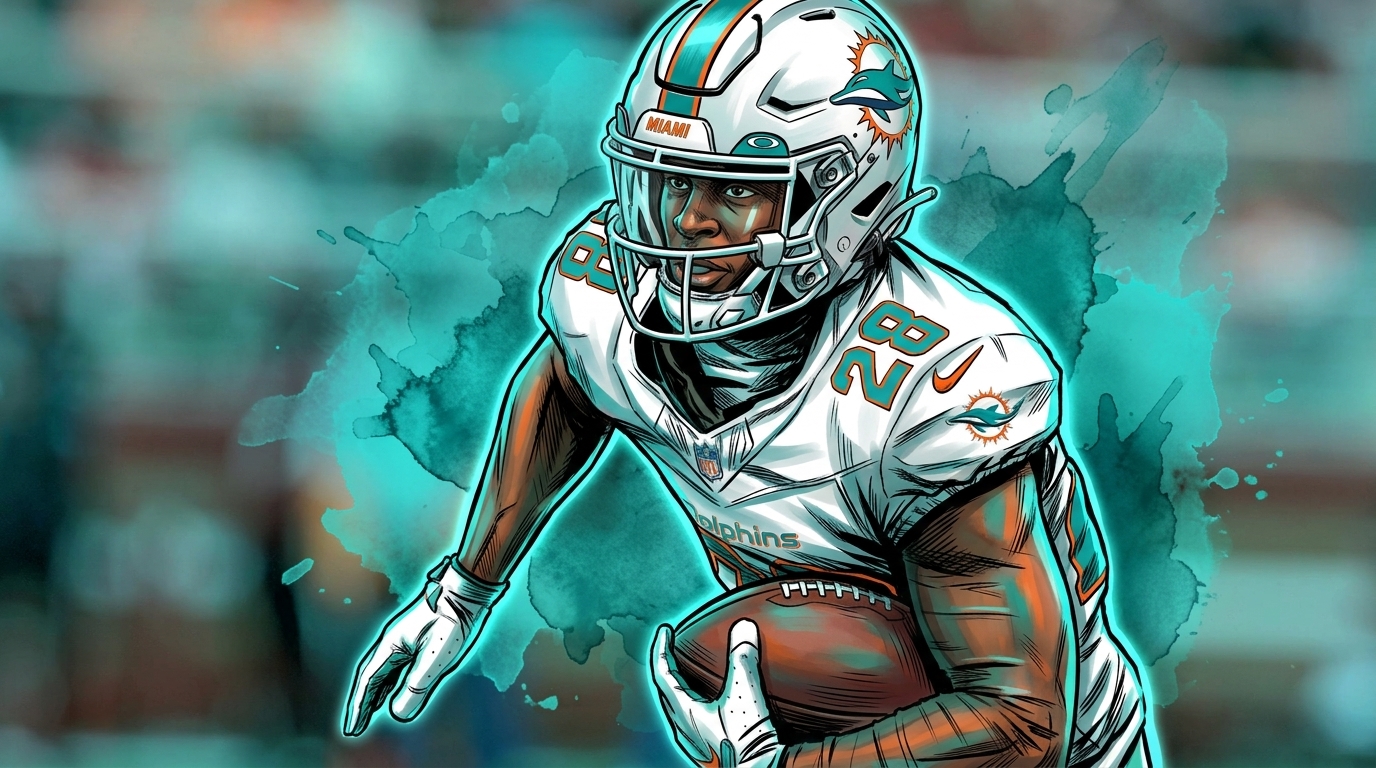
Kenneth Walker III won Super Bowl LX MVP in February, the first running back to take home that award since Terrell Davis in 1998. He got there by running through Seattle’s playoff bracket for 313 yards and four touchdowns on the ground, adding 104 receiving yards across three games. Then he left the Seahawks for Kansas City, signing a three-year, $43.05 million deal worth up to $45 million with incentives, with $28.7 million fully guaranteed over the first two years. It priced Walker just behind Derrick Henry and just ahead of Jonathan Taylor’s then-rate, solidly among the league’s better-paid backs at signing.
That part didn’t hold. Not because Walker got worse. Because everyone else got paid.
How did the running back market explode so fast?
Three backs signed deals worth $20 million or more a year during 2026 training camp, months after Walker’s contract was already done. Bijan Robinson got $22.25 million from Atlanta. Jahmyr Gibbs got $22.5 million from Detroit two days later. Jonathan Taylor added a new-money average of $22 million on an Indianapolis extension. All three moved the position’s ceiling in a single summer.
The wild part is the shape of those deals, not just the size. Robinson’s three-year, $66.75 million contract carries $51 million guaranteed and can max out at $75 million. Gibbs matched him almost dollar for dollar at $67.5 million over three years, $51.5 million guaranteed. Both backs staged hold-ins to get there, sitting out portions of camp until the Falcons and Lions moved. Taylor’s deal is smaller in total dollars, two years and $44 million, but the $22 million new-money APY puts him at the exact same annual rate as Robinson and Gibbs, give or take a rounding error. Three front offices, three negotiations, one number. That’s not noise. That’s a market finding its price.
Here’s the piece that makes Kansas City’s timing matter more than it would in a normal offseason: Saquon Barkley’s $20.6 million deal already existed before any of this. Barkley wasn’t part of the correction, he was the guy the correction was reacting to. Robinson, Gibbs, and Taylor are the actual new class, and none of their signatures were on paper yet when Walker put his on a $14.35 million number in March.
Where does Walker’s deal actually rank now?
Walker currently sits ninth among NFL running backs in average annual salary at $14.35 million, sandwiched between Breece Hall’s $14.5 million and Jeremiyah Love’s $13.26 million. Derrick Henry is two spots up at $15 million. A reigning Super Bowl MVP, by production and moment, is now priced closer to a rookie-scale rotation back than to the three players the league just decided were worth $20 million-plus.
Run the full board and the gap gets uglier. Gibbs at $22.5 million, Robinson at $22.25 million, Taylor at $22 million, then Barkley at $20.6 million and Christian McCaffrey at $19 million. That’s five backs clearing $19 million before you even get to De’Von Achane at $16 million, Henry at $15 million, and then Walker. Nine names deep, and Walker’s the only one on that list who’s actually won the award the position exists to chase.
I ran the same comparison Robinson’s camp probably ran on him before he sat out practices: replace Walker’s 2026 cap number with what the current market says a Super Bowl MVP running back should cost, and Kansas City is getting somewhere between $6 and $8 million a year in surplus value. That’s not a rounding error on a $250-plus-million salary cap. That’s most of a starting cornerback’s salary sitting in Kansas City’s pocket because they moved in March instead of August.
Did the Chiefs actually see this coming?
There’s no reporting on Kansas City’s internal deliberations, and I’m not going to invent a war-room scene where somebody predicts Jahmyr Gibbs to the dollar. What’s verifiable is the sequence: Walker was the top available free-agent back on the market, coming off 1,309 total yards and a Super Bowl MVP trophy, and Kansas City signed him before free agency opened rather than letting the market set a price first.
Maybe that’s just how contract timing works in the NFL, first movers get first pricing, and the Chiefs happened to be the first team that needed a back badly enough to write a check in March. Maybe it’s a front office that does its homework on positional value before everyone else catches up. Either way works for the argument, because the outcome doesn’t change: Kansas City paid its running back in March money, and the position’s market moved to August prices by the time camp ended.
The number that should worry the rest of the league isn’t $14.35 million. It’s $28.7 million guaranteed over two years for the player who just won Super Bowl MVP, locked in before three other teams proved what that production is actually worth. Walker’s cap hit doesn’t move again until this contract’s up, and by the time it does, the RB market that Robinson, Gibbs, and Taylor just reset will have moved again too. Kansas City isn’t just ahead of this correction. They’re set up to be ahead of the next one.
Yahoo Sports had the terms locked down within hours of the deal getting done:
https://twitter.com/YahooSports/status/2031048249709076633
Every number in that post held up. The guaranteed money, the max value, the Super Bowl MVP framing, all of it aged the way the rest of this contract has. Kansas City didn’t just win a bidding war in March. They won a bidding war that hadn’t started yet.