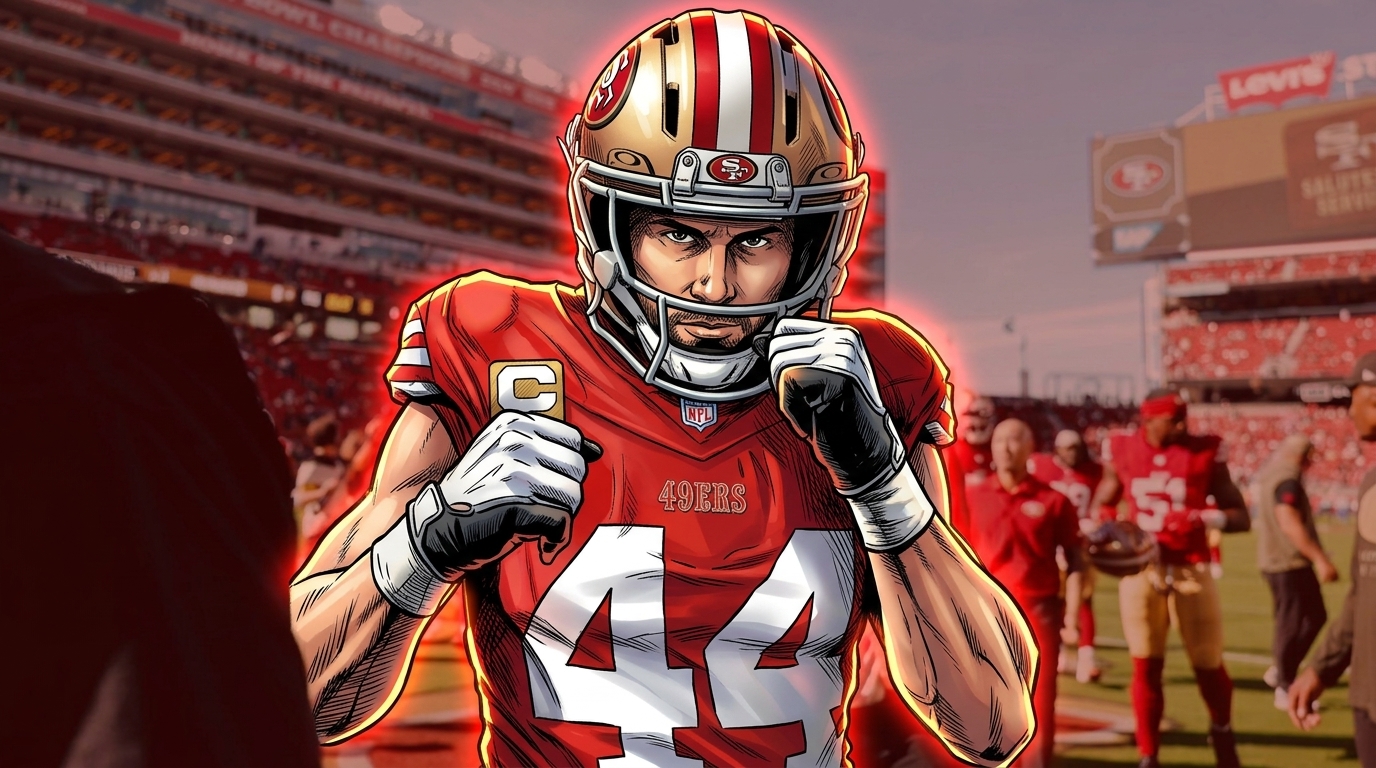

The NFL fined San Francisco 49ers fullback Kyle Juszczyk $14,926 this week for pretending to drink a beer on a football field where an actual beer company’s logo sits on the sideline rent-free; the league did not fine that beer company, because the beer company paid for the right to be there and Juszczyk did not.
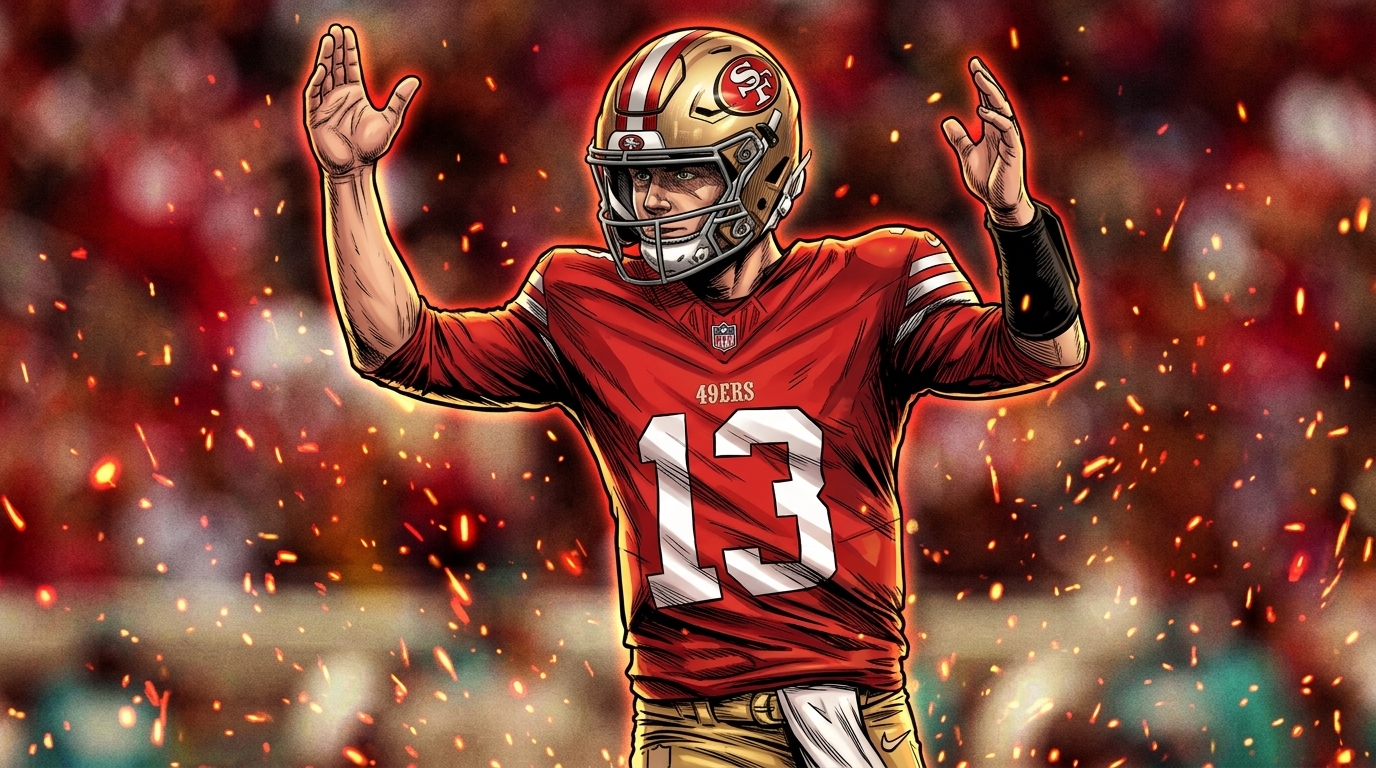
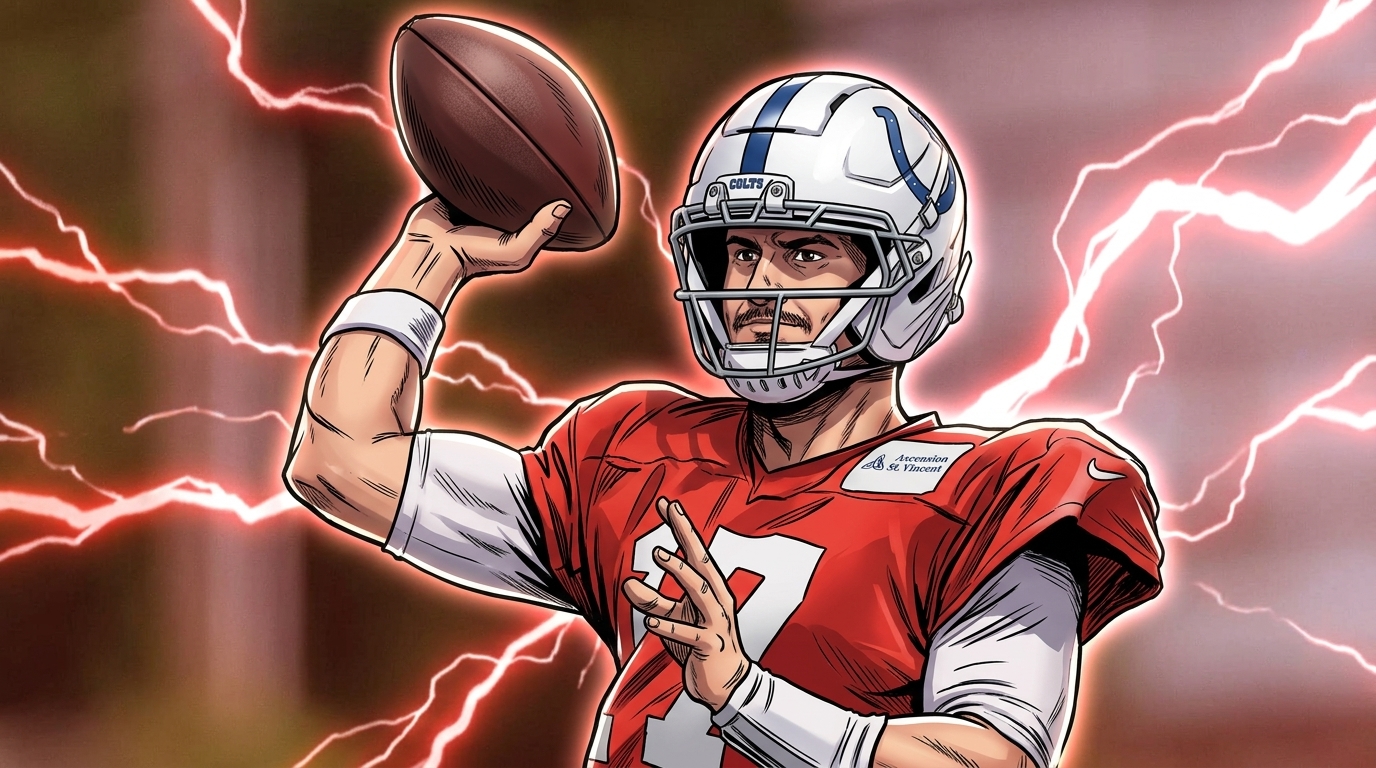
Juszczyk caught a six-yard touchdown pass in the third quarter of San Francisco’s 35-13 win over Miami and did the bit that gave him his nickname: head back, imaginary can, imaginary crowd going nuts. ESPN reported the league fined him $14,926 for it. On the first drive of Sunday Night Football, Colts guard Matt Goncalves ran the same routine after Tyler Warren’s touchdown, popping an invisible top before spiking the ball, and the league fined him too — $8,847. Combined, that’s $23,773 collected this week for a substance neither player actually drank.
The league’s letter to both players used identical language: “Your imitation of chugging a beer constituted an offensive demonstration and could reasonably be construed as being in poor taste.” Read that twice and notice what it isn’t doing. It isn’t citing a rule against simulated drinking, because no such rule exists in specific enough form to quote. It’s citing a feeling — “could reasonably be construed” — dressed in the passive voice of a compliance memo, which is the league’s house style for saying “we didn’t care for that” in a font that resembles law.
What’s actually worth sitting with is the arithmetic. Nobody arrives at $14,926 by feel; that number implies a formula somewhere, a base fine run through escalators for game context or prior conduct, calculated by someone whose job title almost certainly contains the word “compliance.” Leagues love this trick. A round fine invites the question of who decided it and why. An odd one implies math nobody outside the building gets to see, which is a more efficient way of ending the argument before it starts.
That’s the business the discipline office is actually in. Deterrence doesn’t even track here; Juszczyk’s own teammate confirmed there was no beer to deter him from. What the league actually collected was a toll, charged for doing something entertaining with your body on television without cutting the league in first. Bud Light, meanwhile, gets to put its name on that same field for the length of a deal reportedly renewed as the NFL’s official beer sponsor through the 2026-27 season, currently running an ad campaign with Shane Gillis, Peyton Manning, and Post Malone. Nobody sent Bud Light a letter about construing itself in poor taste. It bought that exemption in advance, in a contract, and a contract is the only poor taste this league has ever actually cared to regulate.
This wasn’t an isolated call, either. The league also fined Kenneth Walker for throwing a touchdown ball into the stands this month, and earlier fined Kei’Trel Clark over his eye black while an identical message rode free elsewhere. The league polices taste selectively, not consistently, and selectivity dressed as principle is just enforcement with better letterhead.
Juszczyk texted Adam Schefter after the fine landed: “And I don’t even drink beer!” His teammate George Kittle backed him up on X: “Can confirm he doesn’t really drink beer but is a good guy.” Schefter had the news first:
https://twitter.com/AdamSchefter/status/2103157358264238187
Jason Kelce, who spent over a decade blocking for the Philadelphia Eagles before retiring into what now looks like a second career heckling the league office, had thoughts of his own:
https://twitter.com/JasonKelce/status/2103163696055042475
Kelce and his brother own Garage Beer, an actual beer company, and Garage Beer publicly offered to cover Juszczyk’s fine. That’s a real beer company volunteering to pay a fine for a fake beer gesture, while the league’s actual beer sponsor faces no fine, no letter, and no scrutiny at all, because its arrangement with the NFL was never left up to interpretation in the first place.
Juszczyk is appealing. He’ll probably lose, not because the league has a good argument, but because the fine was never about beer to begin with.
It’s a line item, and line items don’t apologize.