
The NBA spent Monday announcing it had picked a side in the gambling fight, and the side it picked was the house’s. I want that stated plainly before anyone reaches for a softer verb, because softer verbs are how this gets buried: the league designated Kalshi and Polymarket as its “Preferred Prediction Market Exchanges” in the same week a man who used to play for the Milwaukee Bucks is getting ready to stand in federal court and admit he bet on games through the exact financial machinery the NBA just licensed its own name to.
Malik Beasley’s attorney filed a change-of-plea notice in the early hours of Oct. 25, a quiet procedural document that means Beasley is done fighting bribery and wire fraud conspiracy charges tied to underperformance props he allegedly ran during the 2023-24 season, back when he took a trip to Hawaii while the case was still pending like a man who didn’t think any of this would stick. It’s sticking now. Terry Rozier, waived by the Miami Heat back in April and still unsigned, gets his Feb. 8, 2027 trial date for allegedly taking a $100,000 bribe to exit a 2023 game early. Both men are looking at the end of their careers over this. The league prosecuting them just signed a deal with the companies whose entire product is people putting money on whether games go the way they’re supposed to.
Here’s what the NBA actually agreed to, because the press release buries the money under a lot of language like “activation.” According to the league’s own announcement, Kalshi and Polymarket get the NBA’s logos and marks. They get real NBA data piped in through Sportradar so their markets settle on something official instead of a guess. They get marketing muscle, multi-year, terms undisclosed, which in sports business language means a lot of money and not much appetite for anyone counting it. The league expanded its DraftKings deal the same day to cover prediction markets too, just in case anybody missed the theme.
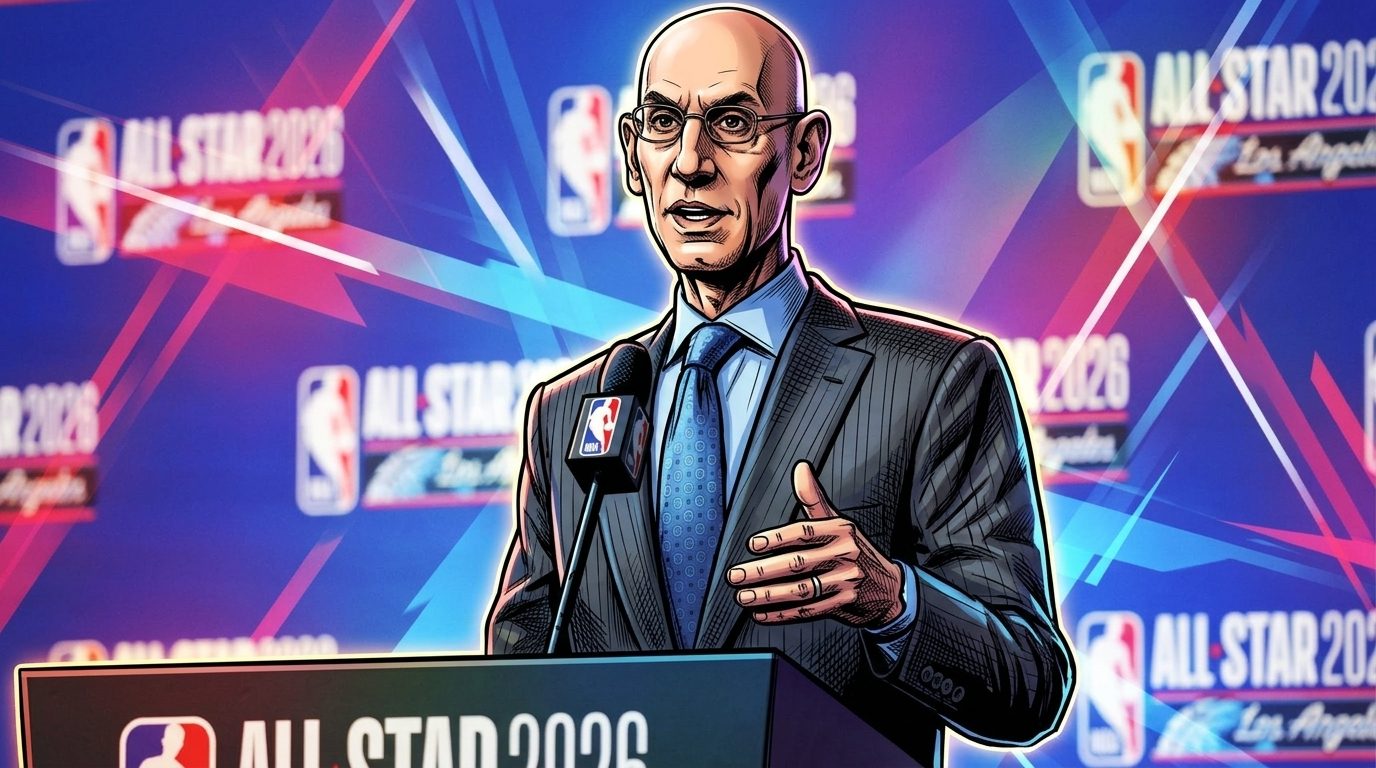
Adam Silver stood in front of reporters and said the quiet part with a straight face: “We want control of our intellectual property to protect the integrity of our competition.” That’s not a sentence about keeping games clean. That’s a licensing pitch wearing an integrity badge, and calling it anything else is bullshit — Silver is describing who gets paid when people bet on these games, and making sure it’s him.
The league isn’t naive about the risk it just signed up for. The same agreement bans team and league personnel from trading NBA event contracts, sets up information-sharing on suspicious betting activity, and comes bundled with a separate memorandum of understanding between the NBA and the CFTC. Silver told reporters he wants that data flowing back to the league specifically so it can “regulate those markets when we see aberrational behavior.” That’s a man who has read the file on what happens when players, point spreads, and real money sit in the same room. He signed the deal anyway. He just made sure the league gets a cut and a dashboard.
Which is the whole arrangement, dressed up as governance. Beasley and Rozier get indicted, dragged through federal court, and functionally ended as professional athletes for finding a way to profit off games being bettable. The NBA finds a way to profit off games being bettable and gets a ribbon-cutting and a Sportradar data pipe. Same mechanism. Different zip code for the consequences. This isn’t hypocrisy by accident. It’s hypocrisy as a business model, and Silver’s own press release is the receipt.
I wasn’t the only one who did that math within an hour of the announcement landing.
https://twitter.com/BULLETlN/status/2114788771552248069
The replies under that tweet aren’t kind, and I don’t blame anybody posting them. Fans can smell a shell game even when it arrives wrapped in a logo-licensing agreement and a CFTC memo.
None of this makes Beasley or Rozier sympathetic. Taking money to tank minutes is its own form of theft, aimed at the people actually putting cash down and the teammates grinding through real minutes next to them. But the league doesn’t get to prosecute that theft as a moral stand while cutting itself a check off the same table. I spent a year and a half out of college working in housing policy, watching institutions explain why the rules that applied to tenants never applied to landlords, and this is the same move in a different building. If you want a clean sport, you don’t sign an IP deal with the casino. For what it’s worth, the league’s gambling coverage isn’t running out of material anytime soon. Silver wanted control of the intellectual property. He got it. Nobody’s asked yet who’s controlling him.