Milwaukee Bucks
The Milwaukee Bucks are a two-time NBA champion, winning the title in 1971 behind Kareem Abdul-Jabbar and in 2021 behind Finals MVP Giannis Antetokounmpo.
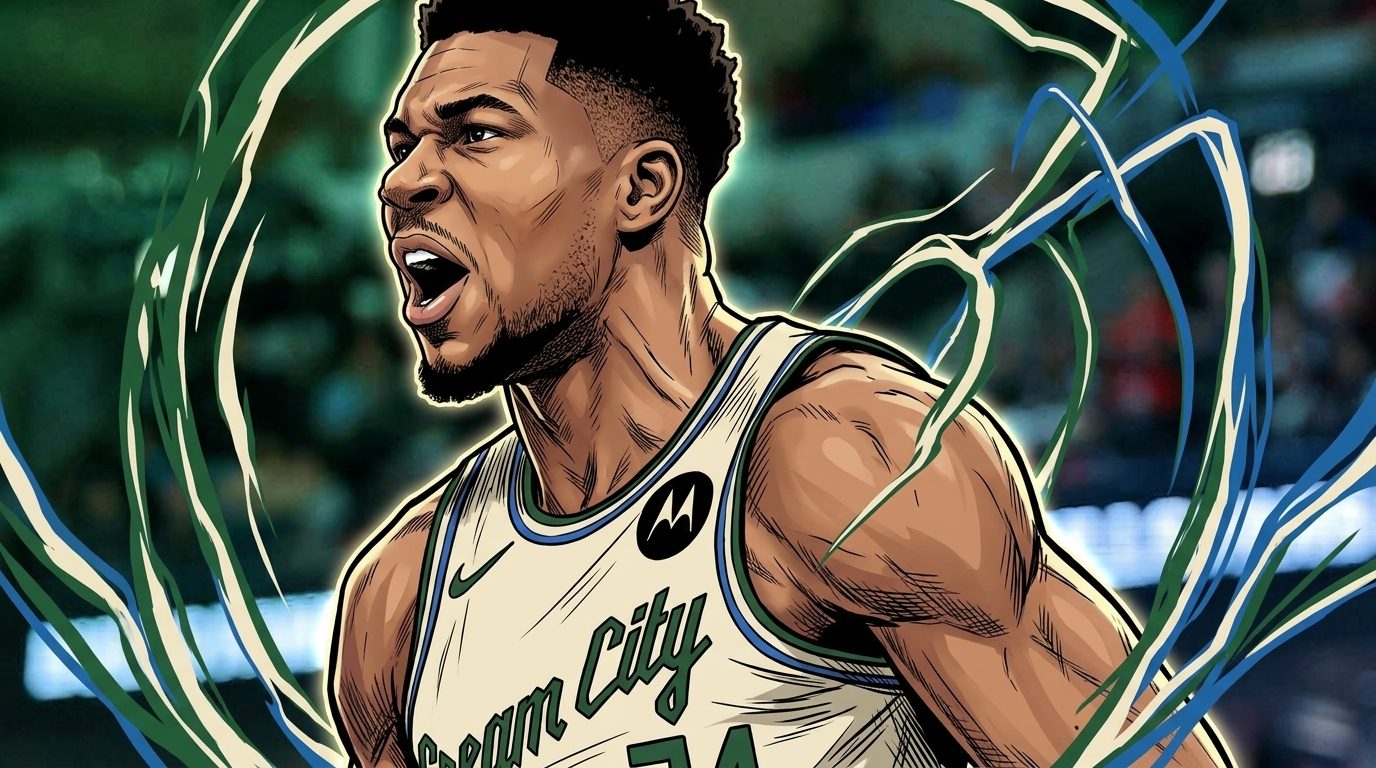
The Milwaukee Bucks are a National Basketball Association franchise that has twice reached the mountaintop from one of the league’s smallest markets, winning the NBA championship in 1970-71 with Lew Alcindor and Oscar Robertson and again in 2020-21 with Giannis Antetokounmpo. Those two banners, won half a century apart, bookend a history defined by a handful of transcendent big men, long stretches of near-misses, and a devotion to home-grown stars that shaped the franchise’s identity until the summer of 2026, when the Giannis era ended in a trade that opened the deepest rebuild the club had faced in a generation.
| Vitals | |
|---|---|
| Founded | 1968 (first season 1968-69) |
| League / conference / division | NBA · Eastern Conference · Central Division |
| Arena | Fiserv Forum (opened 2018) |
| Owner | Wes Edens (governor), with Jimmy & Dee Haslam and Jamie Dinan |
| Head coach | Taylor Jenkins (hired April 30, 2026), as of Oct. 28, 2026 |
| Titles | 2 (1970-71, 2020-21) |
Origins: an expansion team and a coin flip
An instant franchise. Milwaukee was awarded an NBA expansion team in 1968, and the club — named the Bucks through a fan naming contest — opened the 1968-69 season under coach Larry Costello and finished 27-55 while playing at the Milwaukee Arena, long known as the MECCA. The losing record proved a blessing: it put the Bucks into a coin flip for the No. 1 pick.
Winning the flip. Milwaukee won the 1969 coin toss over the Phoenix Suns and drafted UCLA center Lew Alcindor first overall. The impact was immediate. With Alcindor winning Rookie of the Year, the Bucks jumped to 56-26 in 1969-70, reaching the Eastern Division Finals in only their second season — the fastest ascent of any expansion team in league history to that point.
The Alcindor dynasty and the 1971 title
The Big O arrives. In April 1970 Milwaukee acquired veteran point guard Oscar Robertson from the Cincinnati Royals, pairing the game’s most complete guard with its most dominant young center. The result was one of the great seasons in NBA history: a 66-16 record in 1970-71, powered by a 20-game winning streak, and an NBA championship captured on April 30, 1971 with a four-game sweep of the Baltimore Bullets. Alcindor was named both league MVP and Finals MVP in the Bucks’ third year of existence.
A new name, a new standard. Alcindor adopted the name Kareem Abdul-Jabbar in 1971 and remained the sport’s premier force in Milwaukee, winning regular-season MVP awards in 1971, 1972 and 1974. The Bucks won 60-plus games in 1971-72 and 1972-73 and returned to the NBA Finals in 1973-74.
Seven games with Boston. That 1974 Finals against the Boston Celtics went the distance, with Abdul-Jabbar’s buzzer-beating skyhook forcing a Game 7, before Milwaukee lost the decider. The title window closed quickly: Abdul-Jabbar requested a trade, and in June 1975 the Bucks sent him to the Los Angeles Lakers in a deal that returned a package of young players and remade the roster.
The Don Nelson years: seven straight division crowns
Nellie’s rebuild. Don Nelson took over as head coach in November 1976 and, through the draft and shrewd trades, built the most sustained era of regular-season excellence the franchise had known. Milwaukee drafted forward Marques Johnson third overall in 1977, and guard Brian Winters and forward Junior Bridgeman — both arriving in the Abdul-Jabbar trade — anchored the supporting cast.
Moncrief and a run of titles. The 1979 draft brought guard Sidney Moncrief, and the 1980 acquisition of center Bob Lanier completed a two-way contender. The Bucks won seven consecutive division titles from 1979-80 through 1985-86, peaking at 60-22 in 1980-81, while Moncrief claimed the first two Defensive Player of the Year awards in 1983 and 1984.
Always a round short. For all that success, the Nelson Bucks never reached the NBA Finals. They swept the Boston Celtics 4-0 in the 1983 Eastern Conference Semifinals — the first best-of-seven sweep in Celtics playoff history — but repeatedly fell at the next hurdle, losing the Eastern Conference Finals in 1983 to the Philadelphia 76ers and again in 1984 and 1986 to the Celtics. Nelson departed after the 1986-87 season, ending the decade-long run of contention.
Lean years and the “Big Three”
The slide. The post-Nelson years brought a long decline that bottomed out at 20-62 in 1993-94. Milwaukee used the No. 1 pick in 1994 on forward Glenn Robinson, but the franchise missed the playoffs for most of the decade.
Karl and the Big Three. George Karl was hired in 1998 and assembled a high-scoring trio of Ray Allen, Glenn Robinson and Sam Cassell. The group peaked in 2000-01, winning the Central Division at 52-30 and pushing the top-seeded 76ers to a seventh game in the Eastern Conference Finals before falling 108-91 on June 3, 2001.
The breakup. The contender did not hold together. Karl was fined by the league for comments about officiating during the 2001 series, and in February 2003 the Bucks traded Ray Allen to the Seattle SuperSonics, beginning another long competitive drought.
The wilderness and drafting Giannis
A decade adrift. For most of the 2000s and early 2010s the Bucks were a lottery regular, cycling through coaches and rosters built around guard Michael Redd and occasional short playoff cameos. The low point came in 2013-14, when Milwaukee finished a franchise-worst 15-67.
A 15th pick that changed everything. In the 2013 draft the Bucks selected a little-known Greek teenager, Giannis Antetokounmpo, 15th overall. Under coach Jason Kidd the team returned to the playoffs in 2015, and Antetokounmpo’s steady rise from raw project to franchise cornerstone set up the most important stretch in club history.
The Giannis era and the 2020-21 championship
Budenholzer and the leap. Mike Budenholzer was hired in 2018, and the Bucks immediately became the league’s best regular-season team, going 60-22 in 2018-19 as Antetokounmpo won the first of back-to-back MVP awards. He added the 2020 MVP and Defensive Player of the Year, but consecutive conference-round exits — to Toronto in 2019 and to Miami in the 2020 bubble — raised questions about the ceiling.
The 2021 breakthrough. The front office answered by acquiring guard Jrue Holiday in 2020. In 2020-21 Milwaukee beat the Phoenix Suns 4-2 in the Finals, with Antetokounmpo pouring in 50 points in Game 6 on July 20, 2021 and earning Finals MVP. Alongside All-Star Khris Middleton, he delivered the franchise its first championship in 50 years.
Title defense, decline, and the end of an era
Chasing a repeat. The follow-up seasons brought high win totals but postseason heartbreak. Milwaukee lost a seven-game conference semifinal to Boston in 2021-22 with Middleton injured, then posted the NBA’s best record at 58-24 in 2022-23 only to be upset in the first round by the eighth-seeded Heat — a loss that cost Budenholzer his job in May 2023.
A coaching carousel. Adrian Griffin was hired in June 2023 but dismissed that January despite a 30-13 start, and Doc Rivers took over in January 2024. The roster was reshaped around a new star: in September 2023 the Bucks acquired guard Damian Lillard in a three-team deal that sent Holiday out.
Injuries and a final reset. First-round exits to Indiana followed in 2024 and 2025, and after Lillard tore his Achilles in the 2025 playoffs, Milwaukee waived and stretched his contract in July 2025 to sign center Myles Turner. The retooled team sank to 32-50 in 2025-26; Rivers was out as coach and Taylor Jenkins was hired on April 30, 2026.
The 2026 trade and the rebuild
The trade that ended the era. On June 23, 2026 the Bucks traded Antetokounmpo and Bobby Portis to the Miami Heat in exchange for Tyler Herro, Jaime Jaquez Jr., Kel’el Ware, Kasparas Jakučionis and a package of draft picks that included the No. 13 selection in the 2026 draft, unprotected first-rounders in 2031 and 2033, and a 2030 pick swap. Antetokounmpo departed as the franchise’s all-time leader in points (21,531), games played (895) and total rebounds (8,882).
A new chapter. Jenkins inherited a young core built around Turner, the incoming Miami players and a restocked war chest of picks, with the franchise pivoting from a win-now contender to a full rebuild. The 2026-27 season opened 1-3 through Oct. 28, 2026.
Retired numbers
The Bucks have retired nine numbers honoring the figures who defined their championship teams and their 1980s contenders; a tenth banner, No. 6, hangs for Bill Russell as part of the NBA’s leaguewide retirement of his number in 2022. Dates below are from the franchise’s retired-number records.
Retired numbers
| No. | Player | Pos. | Team tenure | Retired |
|---|---|---|---|---|
| 1 | Oscar Robertson | G | 1970–1974 | Oct. 18, 1974 |
| 2 | Junior Bridgeman | G/F | 1975–1984, 1986–1987 | Jan. 17, 1988 |
| 4 | Sidney Moncrief | G | 1979–1989 | Jan. 6, 1990 |
| 6 | Bill Russell (leaguewide) | C | — | Aug. 11, 2022 |
| 8 | Marques Johnson | F | 1977–1984 | Mar. 24, 2019 |
| 10 | Bob Dandridge | F | 1969–1977, 1981 | Mar. 7, 2015 |
| 14 | Jon McGlocklin | G | 1968–1976 | Dec. 10, 1976 |
| 16 | Bob Lanier | C | 1980–1984 | Dec. 4, 1984 |
| 32 | Brian Winters | G | 1975–1983 | Oct. 28, 1983 |
| 33 | Kareem Abdul-Jabbar | C | 1969–1975 | Apr. 24, 1993 |
Season by season
Every season in franchise history, folded by decade with the newest first. All records are per Basketball-Reference.
The 2020s 285–201 · 5 playoff berths · 1 title (through Oct. 28, 2026)
| Season | W–L | Finish | Playoffs |
|---|---|---|---|
| 2026-27 | 1-3 | 4th, Central | In progress |
| 2025-26 | 32-50 | 3rd, Central | — |
| 2024-25 | 48-34 | 3rd, Central | Lost First Round |
| 2023-24 | 49-33 | 1st, Central | Lost First Round |
| 2022-23 | 58-24 | 1st, Central | Lost First Round |
| 2021-22 | 51-31 | 1st, Central | Lost Conf. Semifinals |
| 2020-21 | 46-26 | 1st, Central | Won NBA Finals |
The 2010s 395–400 · 6 playoff berths · 0 Finals
| Season | W–L | Finish | Playoffs |
|---|---|---|---|
| 2019-20 | 56-17 | 1st, Central | Lost Conf. Semifinals |
| 2018-19 | 60-22 | 1st, Central | Lost Conf. Finals |
| 2017-18 | 44-38 | 3rd, Central | Lost First Round |
| 2016-17 | 42-40 | 2nd, Central | Lost First Round |
| 2015-16 | 33-49 | 5th, Central | — |
| 2014-15 | 41-41 | 3rd, Central | Lost First Round |
| 2013-14 | 15-67 | 5th, Central | — |
| 2012-13 | 38-44 | 3rd, Central | Lost First Round |
| 2011-12 | 31-35 | 3rd, Central | — |
| 2010-11 | 35-47 | 3rd, Central | — |
The 2000s 380–440 · 5 playoff berths · 0 Finals
| Season | W–L | Finish | Playoffs |
|---|---|---|---|
| 2009-10 | 46-36 | 2nd, Central | Lost First Round |
| 2008-09 | 34-48 | 5th, Central | — |
| 2007-08 | 26-56 | 5th, Central | — |
| 2006-07 | 28-54 | 5th, Central | — |
| 2005-06 | 40-42 | 5th, Central | Lost First Round |
| 2004-05 | 30-52 | 5th, Central | — |
| 2003-04 | 41-41 | 4th, Central | Lost First Round |
| 2002-03 | 42-40 | 4th, Central | Lost First Round |
| 2001-02 | 41-41 | 5th, Central | — |
| 2000-01 | 52-30 | 1st, Central | Lost Conf. Finals |
The 1990s 325–463 · 3 playoff berths · 0 Finals
| Season | W–L | Finish | Playoffs |
|---|---|---|---|
| 1999-00 | 42-40 | 5th, Central | Lost First Round |
| 1998-99 | 28-22 | 4th, Central | Lost First Round |
| 1997-98 | 36-46 | 7th, Central | — |
| 1996-97 | 33-49 | 7th, Central | — |
| 1995-96 | 25-57 | 7th, Central | — |
| 1994-95 | 34-48 | 6th, Central | — |
| 1993-94 | 20-62 | 6th, Central | — |
| 1992-93 | 28-54 | 7th, Central | — |
| 1991-92 | 31-51 | 6th, Central | — |
| 1990-91 | 48-34 | 3rd, Central | Lost First Round |
The 1980s 517–303 · 10 playoff berths · 3 Conf. Finals
| Season | W–L | Finish | Playoffs |
|---|---|---|---|
| 1989-90 | 44-38 | 3rd, Central | Lost First Round |
| 1988-89 | 49-33 | 4th, Central | Lost Conf. Semifinals |
| 1987-88 | 42-40 | 4th, Central | Lost First Round |
| 1986-87 | 50-32 | 3rd, Central | Lost Conf. Semifinals |
| 1985-86 | 57-25 | 1st, Central | Lost Conf. Finals |
| 1984-85 | 59-23 | 1st, Central | Lost Conf. Semifinals |
| 1983-84 | 50-32 | 1st, Central | Lost Conf. Finals |
| 1982-83 | 51-31 | 1st, Central | Lost Conf. Finals |
| 1981-82 | 55-27 | 1st, Central | Lost Conf. Semifinals |
| 1980-81 | 60-22 | 1st, Central | Lost Conf. Semifinals |
The 1970s 485–335 · 7 playoff berths · 2 Finals (1 title)
| Season | W–L | Finish | Playoffs |
|---|---|---|---|
| 1979-80 | 49-33 | 1st, Midwest | Lost Conf. Semifinals |
| 1978-79 | 38-44 | 3rd, Midwest | — |
| 1977-78 | 44-38 | 2nd, Midwest | Lost Conf. Semifinals |
| 1976-77 | 30-52 | 6th, Midwest | — |
| 1975-76 | 38-44 | 1st, Midwest | Lost First Round |
| 1974-75 | 38-44 | 4th, Midwest | — |
| 1973-74 | 59-23 | 1st, Midwest | Lost NBA Finals |
| 1972-73 | 60-22 | 1st, Midwest | Lost Conf. Semifinals |
| 1971-72 | 63-19 | 1st, Midwest | Lost Conf. Finals |
| 1970-71 | 66-16 | 1st, Midwest | Won NBA Finals |
The 1960s 83–81 · 1 playoff berth · 0 Finals
| Season | W–L | Finish | Playoffs |
|---|---|---|---|
| 1969-70 | 56-26 | 2nd, East | Lost Div. Finals |
| 1968-69 | 27-55 | 7th, East | — |
By the numbers
Franchise marks
Per all-time NBA win–loss records and Basketball-Reference, through the 2025-26 season.
Ranks
- 1st Points, franchise history (Giannis Antetokounmpo, 21,531)
- 1st Games played, franchise history (Giannis Antetokounmpo, 895)
- 1st Total rebounds, franchise history (Giannis Antetokounmpo, 8,882)
- 10th All-time winning percentage among NBA franchises (.526)
Per Basketball-Reference franchise leaders and all-time NBA records, through Oct. 28, 2026.
Honors
- 1970-71 NBA champion
- 2020-21 NBA champion
- 2021 Finals MVP (Giannis Antetokounmpo)
- NBA MVP: Kareem Abdul-Jabbar (1971, 1972, 1974)
- NBA MVP: Giannis Antetokounmpo (2019, 2020)
- Defensive Player of the Year: Moncrief (1983, 1984), Giannis (2020)
- 19 division titles
Per Basketball-Reference, through Oct. 28, 2026.
The arguments
Was the Abdul-Jabbar trade avoidable? One camp holds that Milwaukee had no real choice once its franchise center asked out in 1975 — a player of Abdul-Jabbar’s stature could not be kept against his will, and the Bucks at least recouped useful rotation pieces. Others argue the front office moved a generational talent at his peak and set the franchise back a decade, a debate that resurfaced with every subsequent star departure.
Did the NBA tilt the 2001 series? After the Game 7 loss to Philadelphia, coach George Karl publicly suggested the league preferred a large-market finalist, and he was fined for the remarks. The NBA denied any such influence, and the dispute — fueled by the officiating in that series — remains an article of faith among Bucks supporters and a point the league has consistently rejected.
Should the Bucks have traded Giannis? The June 2026 deal split observers. Supporters of the move pointed to repeated first-round exits, Damian Lillard’s Achilles injury, and an aging, expensive roster, arguing that a haul of young players and unprotected picks was the responsible reset. Critics countered that a franchise rarely recovers from dealing a home-grown, two-time MVP, and that Milwaukee surrendered its identity for assets that may take years to mature.
Why it matters
The Bucks are proof that a small market can win at the sport’s highest level, having twice assembled a champion around a singular big man and the right supporting cast. Their history runs from the Abdul-Jabbar and Robertson title of 1971 through Don Nelson’s seven-division-title run, the Big Three near-miss of 2001, and the Antetokounmpo championship of 2021 — a 58-season arc of contention, collapse and renewal. The 2026 trade of their greatest player closed one of the most loyalty-defined chapters in modern NBA history and reframed the franchise’s central question: whether Milwaukee can, for a third time, build a winner from the ground up.