
We’ve been tracking the transfer portal’s slow takeover of college sports for months, but this is a new tier of chaos: a Louisiana judge has cleared a path for players on active NFL rosters to sue their way back onto a college practice field, two weeks before kickoff.
On Aug. 19, Judge Will Jorden of Louisiana’s 19th Judicial District Court, a state court, not a federal one, despite one early wire report getting that wrong, ordered the NCAA to open the transfer portal “for all plaintiffs for one week from entry of this order.” The underlying suit has more than 30 plaintiffs; 16 are football players, and several were on NFL rosters when the order came down. That’s the headline version of this NCAA transfer portal ruling. The real story is the pattern underneath it: this is the second time in a month a court has told the NCAA its eligibility bylaws don’t actually bind anyone who finds the right courtroom. Two judges, two sports, same result — and every plaintiff’s attorney watching now has case law to point to.
How Zxavian Harris Went From the Saints to the Transfer Portal
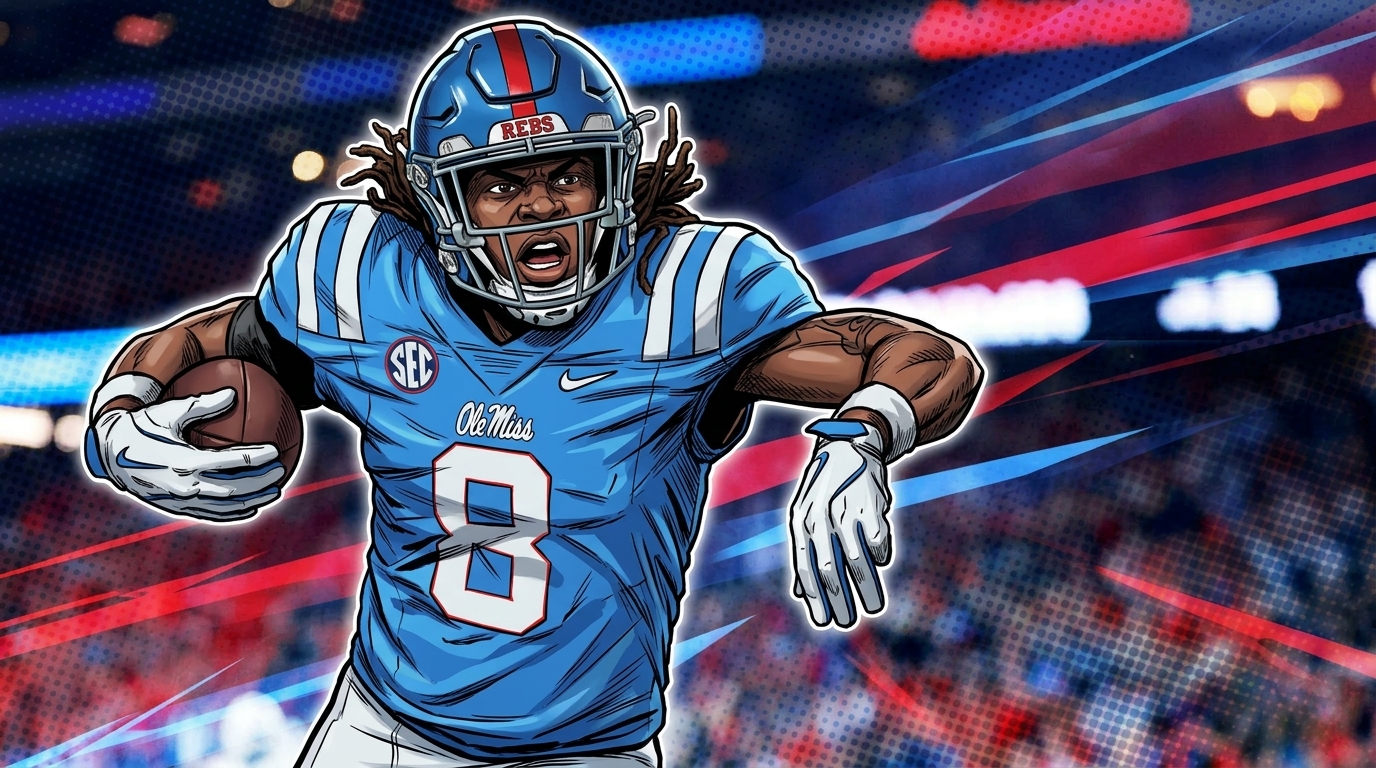
Start with the cleanest example, and the one carrying this story’s featured image. Zxavian Harris signed with the New Orleans Saints as an undrafted free agent out of the Ole Miss Rebels in May, survived spring workouts and camp, and got waived in early August: the unglamorous fate of most UDFAs, nothing unusual about it on its own. What’s unusual is what came next. Harris entered the transfer portal, ruled out a return to Oxford, and is reportedly LSU-bound for 2026, reuniting with head coach Lane Kiffin. (Ole Miss fans would like everyone to know they’ve heard this particular joke before: a guy walks out the door and ends up in Baton Rouge.) None of that path exists without Jorden’s order. Under the NCAA’s old rule, signing a professional contract, even a three-month UDFA deal, permanently burned a player’s college eligibility. Harris is the clean through-line for the whole ruling: good enough to get an NFL look, expendable enough to get cut, and now, thanks to a state court in Louisiana, back in the sport that made him a prospect in the first place.
He’s not the only one. LSU defensive end Jack Pyburn was on the Tampa Bay Buccaneers roster. Ole Miss tight end Dae’Quan Wright, on the Cleveland Browns roster, was reportedly the first named plaintiff to actually enter the portal while still under an active NFL contract. The window mattered on a clock, too: players needed their NFL teams to release them by Sept. 1 to use it. That deadline passed yesterday, which is the entire reason this is a live story and not a stale one.
Can NFL Players Really Return to College Football?
Yes, for now, and only for the plaintiffs covered by this specific Louisiana order. The TRO bars the NCAA from enforcing its rule against athletes who signed pro contracts, giving named plaintiffs like Harris, Pyburn and Wright a one-week window to enter the transfer portal and pursue restored college eligibility for the 2026 season.
That “for now” is doing real work. A temporary restraining order is exactly what it sounds like: temporary, tied to a specific set of plaintiffs, not a rewrite of NCAA bylaws for every college athlete with a pro contract in their past. But it’s the second such order in a month, and that’s the part I think should worry the NCAA more than any individual player’s paperwork does.
Wisne v. NCAA Is the Other Half of This Story
Weeks earlier, a federal judge in Colorado, Charlotte N. Sweeney of the U.S. District Court for the District of Colorado, granted a nationwide, class-wide preliminary injunction in Wisne v. NCAA. The named plaintiff, University of Northern Colorado basketball player Brock Wisne, was one of twelve Division I athletes, men’s and women’s, who had exhausted four seasons of eligibility this spring. Sweeney’s July 31 order restored a fifth season for the whole class of high-school class-of-2022 athletes who fit the criteria; a follow-up clarification on Aug. 2 excluded athletes over 24.
The wrinkle that makes Wisne useful context rather than just a parallel headline: Sweeney restored eligibility but didn’t reopen the transfer portal directly. The NCAA’s response was to threaten coaches with punishment, up to a half-season suspension plus a fine equal to 20% of the program’s annual budget, for rostering a Wisne-class transfer outside the normal window, citing its own “ghost transfer” rule. Athletes had to go back to court with a separate emergency motion just to get portal access. (The NCAA has since filed a notice of appeal — evidence it would like this to be over faster than it expects to actually win it.) A Tennessee chancery court ruled against the NCAA around the same window, with Chancellor I’Ashea Myles writing, per Fox Sports/Outkick’s coverage, that the association “has applied its rules inconsistently and arbitrarily.”
One case is state court, football, contract-based eligibility. The other is federal court, basketball, an exhausted-eligibility class action. Different judges, different legal theories, different sports. The NCAA lost both.
https://twitter.com/PeteThamel/status/2090175243507617965
What the NCAA Does Next
Not much, honestly, at least not quickly. The NCAA can appeal, and it’s already doing exactly that in Wisne, but appeals take months and these plaintiffs needed answers in weeks. The association built its entire eligibility framework on the assumption that nobody would successfully challenge it in open court. That assumption is dead now. (It survived about as long as the old amateurism model did after NIL arrived, which is to say: not very.)
I believe the NCAA’s eligibility bylaws are functionally unenforceable right now against any motivated plaintiff’s attorney willing to find a sympathetic venue, regardless of whether Jorden’s order or Sweeney’s survives appeal. The counterargument is fair: both rulings are narrow, plaintiff-specific TROs and injunctions, not blanket precedent, and either could get reversed or narrowed on appeal, leaving the underlying bylaws technically intact on paper. But narrow doesn’t matter as much once the playbook is public. Every subsequent case doesn’t need to win outright — it just needs one more sympathetic judge, and two examples in five weeks say that’s not hard to find.
What to watch: whether the NCAA’s Wisne appeal produces a ruling other courts start citing, or whether more state-court suits show up chasing Jorden’s model before that happens. Keep an eye on NFL roster news for the next camp cut who decides Saturday afternoons in college sound better than a practice-squad paycheck, and check the rest of our college football coverage as more of these plaintiffs actually show up on 2026 rosters.