
Ohio State ranks 102nd nationally in special teams efficiency, and on Monday it fired special teams coordinator Robby Discher nine months into his first year in Columbus, after he held the same job at Illinois. The number is bad and the unit had multiple gaffes. Nobody should pretend the job was going well.
Still, look at what the firing covers. Oregon beat the Buckeyes 41-28 on Saturday after Ohio State led 14-3. On fourth-and-9 from its own 31, Oregon ran a fake punt, a jump pass from Teitum Tuioti to Matayo Uiagalelei that gained 30 yards, and it scored a touchdown on that drive. That play is easy to point at. It has a replay, a distance and a name attached to the unit that allowed it.
https://x.com/mzenitz/status/2119755784158687417
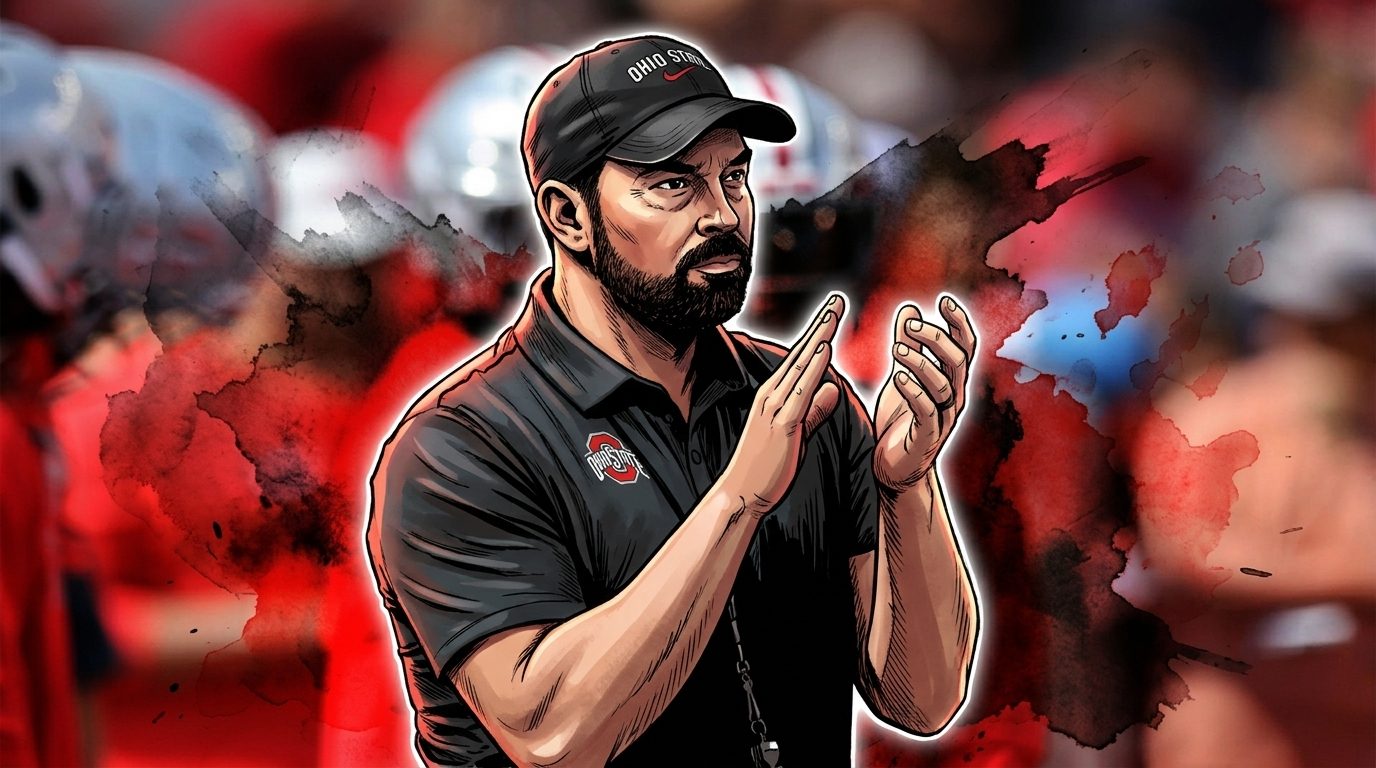
Ryan Day said he would “evaluate everything” and that “the penalties are a killer.” Those are two sentences about an entire program, and the first action they produced touched one coordinator. “Everything” is a large word; a program that means it follows the problem wherever it leads, and a number like 71 points leads somewhere other than the punt team.
Picture a building inspector who walks a failing restaurant, finds a single burned-out bulb over the walk-in cooler, and cites the electrician. The report is accurate; the bulb really was out. It also lets everyone feel the place has been inspected, and the kitchen, the grease trap and the manager’s schedule go unexamined for another week.
That is the economics of a special teams firing. The coordinator coaches a handful of snaps and a handful of specialists, so removing him disturbs almost nothing. His mistakes are also the ones that play on a loop, which makes him a cheap answer to a loud question. A fired coordinator reads as action; it asks nothing of the head coach and nothing of the units that carry most of the snaps.
ESPN’s Week 10 takeaways note that Ohio State’s defense has given up a combined 71 points in its past two defeats, to USC and Oregon. Seventy-one points across two games is not a rounding error on a punt coverage unit. It is the sort of figure that should send a head coach into the film room with the defensive staff and a hard question about what is and is not working.
The Buckeyes lost quarterback Julian Sayin to a throwing-arm injury in a 19-15 win at Indiana on Oct. 17. Ohio State has since fallen to No. 21 in the AP poll. None of that gets fixed by changing who coordinates the punt team.
The strongest defense of the move is simple: special teams units get fired when they fail, and 102nd is failing. A visible correction can also steady a team that just watched a 14-3 lead disappear. If Discher was a problem, removing him early is better than waiting for January.
All of that can be true and the firing can still be a dodge. The test is not whether Discher deserved to go. It is whether he is the last name or the first.
Zenitz’s report said Day had “begun” making changes. The word carries a lot of weight for a program with a defense that allowed 71 points in two games; if the changes stop at the coordinator with the fake punt, Ohio State will have evaluated everything and found exactly one thing.