Ohio State Buckeyes football
Ohio State Buckeyes football history: nine national titles through 2024, seven Heismans, the Woody Hayes and Ryan Day eras, and The Game against Michigan.
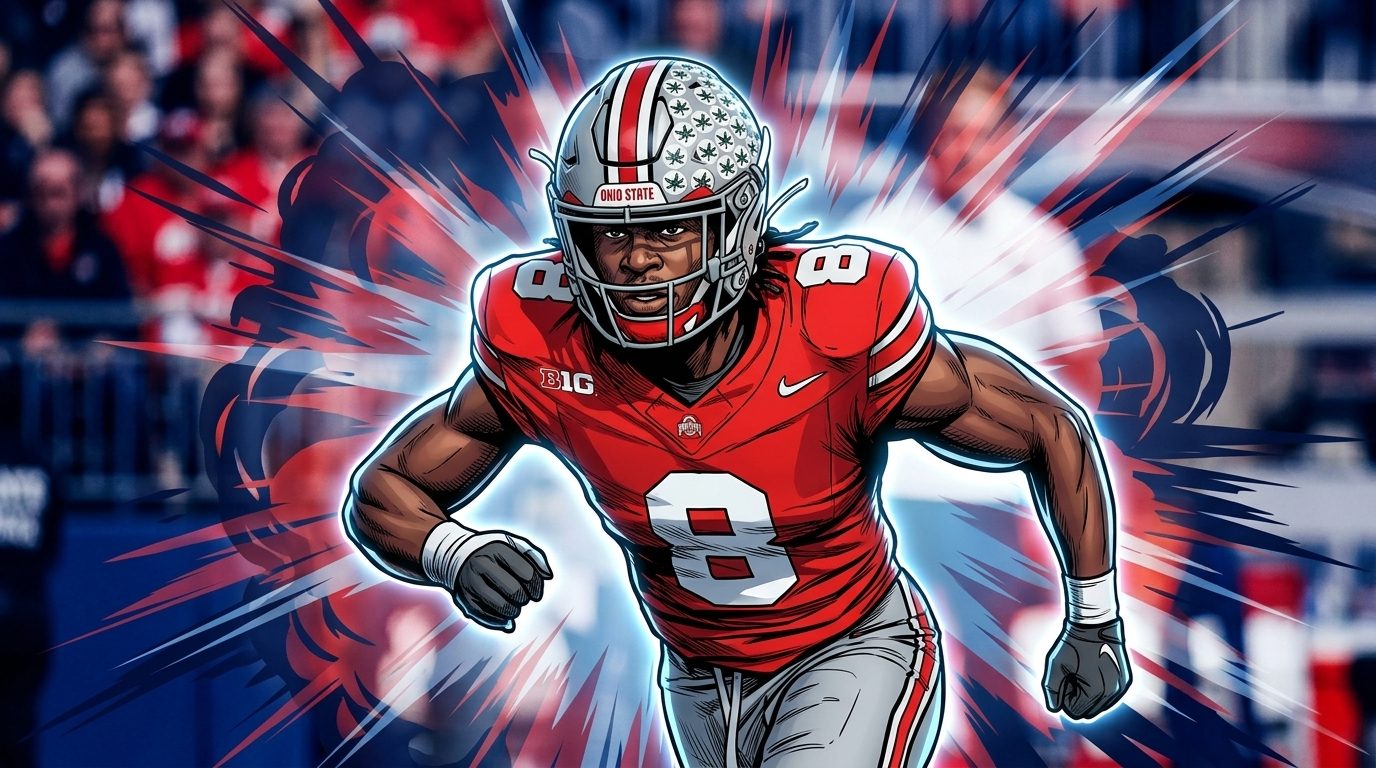
The Ohio State Buckeyes are the football program of Ohio State University in Columbus, one of the two or three richest brands in the American college game and, by the numbers, the second-winningest program in major-college history. Founded in 1890, the Buckeyes claim nine national championships across eight decades — from Paul Brown’s 1942 team to Ryan Day’s 2024 squad — and hold an all-time record of 995–339–53 (.736), the highest winning percentage of any program with 900-plus wins. They have produced seven Heisman Trophies, play the sport’s most storied rivalry against Michigan on the last Saturday of November, and fill the 102,780-seat Ohio Stadium — “The Horseshoe” — more reliably than almost anyone in the country. Four head coaches define the modern program: Woody Hayes, Jim Tressel, Urban Meyer, and Ryan Day. The entry below is the whole history, not just the trophies.
| Vitals | |
|---|---|
| Founded | 1890 |
| Conference | Big Ten (Western/OAC roots; East Division 2014–2023; no divisions from 2024) |
| Stadium | Ohio Stadium (“The Horseshoe”), 102,780 |
| University | Ohio State University, Columbus, Ohio |
| Head coach | Ryan Day (since 2019; as of Oct. 17, 2026) |
| National titles | 9 (1942, 1954, 1957, 1961, 1968, 1970, 2002, 2014, 2024) |
Origins and the Chic Harley years (1890–1933)
Ohio State played its first football in 1890, a 1–3 independent season, and spent its first two decades as a regional program — a member of the Ohio Athletic Conference it won in 1906 and 1912 — before joining the Western Conference (the future Big Ten) in 1913.
The program’s first great player made it a power. Chic Harley, a halfback who played in 1916, 1917, and 1919 (he missed 1918 flying for the Army in World War I), was a three-time consensus All-American, the first in school history. In 1916 he led Ohio State to a 7–0 record and its first Western Conference title, kicking the winning extra point in a 7–6 win over Illinois. Harley’s popularity was so great that it powered the public fundraising for the stadium that opened in 1922; Ohio Stadium is still called “The House That Harley Built.”
The first bowl trip came the hard way. The 1920 team went 7–1 and won the conference, earning Ohio State’s first Rose Bowl berth, played on Jan. 1, 1921 — a 28–0 loss to California. The 1920s that followed were the program’s leanest stretch of the century, with losing-ish seasons and no titles until Francis Schmidt arrived.
Francis Schmidt and the Gold Pants (1934–1940)
Schmidt brought offense and a tradition that outlived him. Over seven seasons he went 39–16–1 with Western Conference titles in 1935 and 1939, running a “razzle-dazzle” attack of laterals and trick plays that earned him the nickname “Close the Gates of Mercy.” Asked before his first Michigan game how he would handle the rival, Schmidt said Michigan’s players “put their pants on one leg at a time, the same as everyone else.” His teams then beat Michigan four straight years, and the program began awarding a small gold-pants charm to every Buckeye who beats Michigan — a tradition that endures.
Paul Brown and the 1942 title (1941–1946)
Ohio State won its first national championship under Paul Brown. The Massillon high-school coaching legend took over in 1941 and in 1942 led a 9–1 team to the Western Conference title and the top of the final AP poll — the program’s first national championship. Brown left for Navy service during the war; his legacy at Ohio State is brief but foundational, and he would go on to build the Cleveland Browns and the Cincinnati Bengals. With Brown away, acting coach Carroll Widdoes went 9–0 in 1944, the season halfback Les Horvath won Ohio State’s first Heisman Trophy.
Wes Fesler and the Snow Bowl (1947–1950)
A short era ended in a blizzard. Wes Fesler went 21–13–3 from 1947 to 1950, with a 1949 team that shared the conference and won the Rose Bowl, and coached Vic Janowicz to the 1950 Heisman Trophy. But the 1950 season closed with the “Snow Bowl,” a 9–3 loss to Michigan in a Columbus blizzard, and Fesler resigned on Dec. 9, 1950, citing the “excessive pressure for winning football games.” Ohio State’s next hire would define it for a generation.
Woody Hayes and three yards and a cloud of dust (1951–1978)
Woody Hayes is the program’s patriarch. Over 28 seasons he went 205–61–10 (.761), won 13 Big Ten titles, reached eight Rose Bowls, and built an identity — “three yards and a cloud of dust” — around a punishing ground game. Ohio State claims five national championships from his tenure: 1954 (10–0), 1957 (9–1), 1961 (8–0–1), 1968 (10–0), and 1970 (9–1), with the 1954, 1957, and 1968 titles recognized by consensus selectors.
1961 produced a title and a revolt. The 8–0–1 Buckeyes were named national champion by the Football Writers Association over undefeated Alabama, but Ohio State’s Faculty Council voted in late November 1961 to reject the Rose Bowl invitation, triggering student protests in Columbus — a rare case of a school declining the sport’s grandest bowl on academic grounds.
The 1968 team was his masterpiece. Led by sophomores including quarterback Rex Kern, Ohio State went 10–0 and beat No. 2 USC 27–16 in the Rose Bowl on Jan. 1, 1969 to clinch a consensus national title. That win launched the “Ten Year War” against Bo Schembechler, Hayes’s former assistant who took over Michigan in 1969; from 1969 to 1978 the two split or shared the Big Ten almost every year, with Schembechler going 5–4–1 against his old boss.
It ended with a punch. In the Gator Bowl on Dec. 29, 1978, with Ohio State losing 17–15 to Clemson, Hayes struck Clemson’s Charlie Bauman after an interception near the Ohio State sideline. He was fired the next morning. The violent coda has never erased the reverence in which Columbus holds him.
Earle Bruce and the Cooper years (1979–1987)
Earle Bruce kept the program near the top but never on it. A Hayes disciple, Bruce went 81–26–1 across nine seasons with four Big Ten titles (1979, 1981, 1984, 1986) and a near-miss in 1979, when an 11–1 team lost the Rose Bowl and finished No. 4. He was fired on Nov. 16, 1987 before the regular-season finale — athletic director Rick Bay resigned rather than carry it out — and Bruce promptly beat Michigan in Ann Arbor in his final game.
John Cooper and the Michigan curse (1988–2000)
Cooper won everywhere but the one place that mattered most. Over 13 seasons John Cooper went 111–43–4 with three Big Ten titles (1993, 1996, 1998) and recruited some of the program’s best talent, including Eddie George, who won the 1995 Heisman Trophy. But Cooper went a notorious 2–10–1 against Michigan, and his best teams kept falling short: the 1998 squad started 8–0 and ranked No. 1 before an upset loss to Michigan State, finishing 11–1. The Michigan record cost him his job after the 2000 season and became the cautionary tale every Ohio State coach since has been measured against.
Jim Tressel and the 2002 championship (2001–2010)
Tressel beat Michigan, and then he won it all. Hired in 2001, Jim Tressel went 106–23 and famously promised at his introduction that Ohio State would be proud of its team “in the classroom, in the community, and most especially in 310 days in Ann Arbor.” He went 9–1 against Michigan. In 2002 a 14–0 team won the program’s first consensus title since 1968, beating Miami 31–24 in double overtime in the Fiesta Bowl on Jan. 3, 2003 on a disputed late pass-interference call. Quarterback Troy Smith won the 2006 Heisman Trophy, but the era’s two trips back to the title game ended badly: Florida won 41–14 on Jan. 8, 2007, and LSU won 38–24 on Jan. 7, 2008.
It ended in scandal. The “Tattoogate” case revealed that players had traded memorabilia for tattoos and cash, and that Tressel had learned of it by email in April 2010 but played ineligible players through the season. Tressel resigned on May 30, 2011, and Ohio State vacated its entire 2010 season — 12 wins, a Big Ten title, and a Sugar Bowl victory erased to an official 0–1.
Urban Meyer and the first Playoff title (2012–2018)
Meyer delivered the title of the modern era. After Luke Fickell’s interim 2011 season (6–7), Urban Meyer went 83–9 at Ohio State, starting with a 12–0 run in 2012 that was postseason-ineligible from the lingering sanctions. In 2014, the first year of the four-team College Football Playoff, Ohio State won it all behind third-string quarterback Cardale Jones: a 42–35 semifinal win over Alabama in the Sugar Bowl on Jan. 1, 2015 — the program’s first-ever win over the Crimson Tide — and a 42–20 win over Oregon in the title game on Jan. 12, 2015, with Ezekiel Elliott running for 246 yards and four touchdowns. Meyer retired after the 2018 season, a 13–1 campaign capped by a Rose Bowl win.
Ryan Day and the 2024 championship (2019–present)
Ryan Day has the best winning percentage in program history and the hardest question hanging over it. Promoted from offensive coordinator for the 2019 season, Day is 87–13 (.870) through 2026. His 2019 team went 13–1 and reached the Playoff; his 2020 team, in a COVID-shortened year, beat Clemson in the semifinal before losing the national title game to Alabama 52–24 on Jan. 11, 2021. But Day lost The Game to Michigan four straight years — 2021, 2022, 2023, and 2024 — a streak that turned the fan base against him even as the program kept winning elsewhere.
Then came the strangest title run in program history. After losing to Michigan 13–10 in Columbus on Nov. 30, 2024 — a game followed by a midfield brawl over a Michigan flag-planting that drew $100,000 fines for both schools — Ohio State entered the first 12-team Playoff and won four games to take the championship: 42–17 over Tennessee on Dec. 21, 2024, 41–21 over Oregon in the Rose Bowl, 28–14 over Texas in the Cotton Bowl, and 34–23 over Notre Dame in the title game on Jan. 20, 2025. It was the program’s ninth claimed national championship and the first ever won by a team that lost its rivalry game the same season.
The current roster is built around two young stars. Wide receiver Jeremiah Smith, the No. 1 overall recruit in the 2024 class, caught 76 passes for 1,315 yards and 15 touchdowns as a true freshman on the 2024 title team and followed with 87 catches for 1,243 yards and 12 scores as a unanimous All-American in 2025. Quarterback Julian Sayin, a five-star recruit who signed with Alabama before transferring to Ohio State in January 2024, was named the starter on Aug. 18, 2025 and threw for 3,610 yards with 32 touchdowns and 8 interceptions at a nation-leading 77.0 percent completion rate in 2025, finishing fourth in the Heisman voting. As of Oct. 17, 2026, Ryan Day remains the head coach.
Retired numbers
Ohio State retires numbers sparingly, and it reserves the honor almost entirely for its Heisman winners — with two exceptions. Of the seven retired numbers below, five belong to Heisman recipients (Horvath, Janowicz, Cassady, Griffin, and George), one honors the pre-Heisman legend who built the program’s fame (Chic Harley), and one honors a pioneer: Bill Willis, a two-way lineman on the 1942 title team who became Ohio State’s first Black All-American and, later, one of the players who reintegrated pro football. Archie Griffin’s No. 45, retired on Oct. 30, 1999, was the first number the school ever took out of circulation; Willis’s No. 99 was retired on Nov. 3, 2007. Troy Smith, the 2006 Heisman winner, has a distinct status: his No. 10 was honored and displayed in Ohio Stadium on Nov. 29, 2014, but it was not formally retired and the number continued to be worn.
| No. | Player | Pos. | Team tenure | Retired |
|---|---|---|---|---|
| 45 | Archie Griffin | RB | 1972–1975 | Oct. 30, 1999 |
| 31 | Vic Janowicz | HB | 1949–1951 | Sep. 23, 2000 |
| 40 | Howard “Hopalong” Cassady | HB | 1952–1955 | Nov. 18, 2000 |
| 22 | Les Horvath | QB/HB | 1940–1942, 1944 | Oct. 6, 2001 |
| 27 | Eddie George | RB | 1992–1995 | Nov. 10, 2001 |
| 47 | Chic Harley | HB | 1916–1917, 1919 | Oct. 30, 2004 |
| 99 | Bill Willis | T/G | 1942–1944 | Nov. 3, 2007 |
Season by season
The full record, folded by decade, newest first — every season Ohio State has played since 1890.
The 2020s 66–11 · 1 Big Ten title · 2024 national champion
| Season | W–L–T | Result |
|---|---|---|
| 2025 | 12–2 | Big Ten runner-up; Cotton Bowl (L); AP #6 |
| 2024 | 14–2 | National champion (12-team CFP); beat Notre Dame 34–23 |
| 2023 | 11–2 | Cotton Bowl (L); AP #10 |
| 2022 | 11–2 | CFP semifinal (L to Georgia); AP #4 |
| 2021 | 11–2 | Rose Bowl (W); AP #5 |
| 2020 | 7–1 | Big Ten champion; CFP title game (L to Alabama); AP #2 |
The 2010s 117–18 as played (2010 vacated) · 4 Big Ten titles · 2014 national champion
| Season | W–L–T | Result |
|---|---|---|
| 2019 | 13–1 | Big Ten champion; CFP semifinal (L to Clemson); AP #3 |
| 2018 | 13–1 | Big Ten champion; Rose Bowl (W); AP #3 |
| 2017 | 12–2 | Big Ten champion; Cotton Bowl (W); AP #5 |
| 2016 | 11–2 | CFP semifinal (L to Clemson); AP #6 |
| 2015 | 12–1 | Fiesta Bowl (W); AP #4 |
| 2014 | 14–1 | National champion (first CFP); beat Oregon 42–20 |
| 2013 | 12–2 | Orange Bowl (L); AP #12 |
| 2012 | 12–0 | Undefeated, postseason-ineligible; AP #3 |
| 2011 | 6–7 | Gator Bowl (L); Fickell interim |
| 2010 | 0–1 | Vacated (as played 12–1, Big Ten + Sugar Bowl) |
The 2000s 102–25 · 6 Big Ten titles · 2002 national champion
| Season | W–L–T | Result |
|---|---|---|
| 2009 | 11–2 | Big Ten champion; Rose Bowl (W); AP #5 |
| 2008 | 10–3 | Big Ten champion; Fiesta Bowl (L); AP #9 |
| 2007 | 11–2 | Big Ten champion; BCS title game (L to LSU); AP #5 |
| 2006 | 12–1 | Big Ten champion; BCS title game (L to Florida); AP #2 |
| 2005 | 10–2 | Big Ten champion; Fiesta Bowl (W); AP #4 |
| 2004 | 8–4 | Alamo Bowl (W); AP #19 |
| 2003 | 11–2 | Fiesta Bowl (W); AP #4 |
| 2002 | 14–0 | National champion; beat Miami 31–24 (2OT) |
| 2001 | 7–5 | Outback Bowl (L); Tressel’s first season |
| 2000 | 8–4 | Outback Bowl (L); Cooper’s final season |
The 1990s 91–29–3 · 3 Big Ten titles
| Season | W–L–T | Result |
|---|---|---|
| 1999 | 6–6 | No bowl |
| 1998 | 11–1 | Big Ten champion; Sugar Bowl (W); AP #2 |
| 1997 | 10–3 | Sugar Bowl (L); AP #12 |
| 1996 | 11–1 | Big Ten champion; Rose Bowl (W); AP #2 |
| 1995 | 11–2 | Citrus Bowl (L); AP #6; Eddie George Heisman |
| 1994 | 9–4 | Citrus Bowl (L); AP #9 |
| 1993 | 10–1–1 | Big Ten champion; Holiday Bowl (W); AP #10 |
| 1992 | 8–3–1 | Citrus Bowl (L); AP #18 |
| 1991 | 8–4 | Hall of Fame Bowl (L) |
| 1990 | 7–4–1 | Liberty Bowl (L) |
The 1980s 82–35–2 · 3 Big Ten titles
| Season | W–L–T | Result |
|---|---|---|
| 1989 | 8–4 | Hall of Fame Bowl (L) |
| 1988 | 4–6–1 | Cooper’s first season |
| 1987 | 6–4–1 | Bruce’s final season |
| 1986 | 10–3 | Big Ten champion; Cotton Bowl (W); AP #6 |
| 1985 | 9–3 | Citrus Bowl (W); AP #11 |
| 1984 | 9–3 | Big Ten champion; Rose Bowl (L); AP #12 |
| 1983 | 9–3 | Fiesta Bowl (W); AP #8 |
| 1982 | 9–3 | Holiday Bowl (W); AP #12 |
| 1981 | 9–3 | Big Ten champion; Liberty Bowl (W); AP #15 |
| 1980 | 9–3 | Fiesta Bowl (L); AP #15 |
The 1970s 91–20–3 · 8 Big Ten titles · 1970 national champion
| Season | W–L–T | Result |
|---|---|---|
| 1979 | 11–1 | Big Ten champion; Rose Bowl (L); AP #4; Bruce’s first season |
| 1978 | 7–4–1 | Gator Bowl (L); Hayes’s final game |
| 1977 | 9–3 | Big Ten champion; Sugar Bowl (L); AP #11 |
| 1976 | 9–2–1 | Big Ten champion; Orange Bowl (W); AP #6 |
| 1975 | 11–1 | Big Ten champion; Rose Bowl (L); AP #4; Griffin’s 2nd Heisman |
| 1974 | 10–2 | Big Ten champion; Rose Bowl (L); AP #3; Griffin’s 1st Heisman |
| 1973 | 10–0–1 | Big Ten champion; Rose Bowl (W); AP #2 |
| 1972 | 9–2 | Big Ten champion; Rose Bowl (L); AP #3 |
| 1971 | 6–4 | — |
| 1970 | 9–1 | Big Ten champion + national champion; Rose Bowl (L); AP #2 |
The 1960s 68–21–2 · 3 Big Ten titles · 2 national titles (1961, 1968)
| Season | W–L–T | Result |
|---|---|---|
| 1969 | 8–1 | Big Ten champion; AP #4 |
| 1968 | 10–0 | Big Ten champion + national champion; Rose Bowl (W, beat USC 27–16) |
| 1967 | 6–3 | — |
| 1966 | 4–5 | — |
| 1965 | 7–2 | AP #11 |
| 1964 | 7–2 | AP #9 |
| 1963 | 5–3–1 | — |
| 1962 | 6–3 | AP #13 |
| 1961 | 8–0–1 | Big Ten champion + national champion (FWAA); declined Rose Bowl; AP #2 |
| 1960 | 7–2 | AP #8 |
The 1950s 63–24–5 · 3 Big Ten titles · 2 national titles (1954, 1957)
| Season | W–L–T | Result |
|---|---|---|
| 1959 | 3–5–1 | — |
| 1958 | 6–1–2 | AP #7 |
| 1957 | 9–1 | Big Ten champion + national champion; Rose Bowl (W); Coaches #1 |
| 1956 | 6–3 | — |
| 1955 | 7–2 | Big Ten champion; AP #5; Cassady Heisman |
| 1954 | 10–0 | Big Ten champion + national champion; Rose Bowl (W); Coaches #1 |
| 1953 | 6–3 | AP #20 |
| 1952 | 6–3 | AP #15 |
| 1951 | 4–3–2 | Hayes’s first season |
| 1950 | 6–3 | AP #10; Janowicz Heisman |
The 1940s 57–27–6 · 3 Big Ten titles · 1942 national champion
| Season | W–L–T | Result |
|---|---|---|
| 1949 | 7–1–2 | Big Ten champion; Rose Bowl (W); AP #6 |
| 1948 | 6–3 | — |
| 1947 | 2–6–1 | — |
| 1946 | 4–3–2 | — |
| 1945 | 7–2 | AP #12 |
| 1944 | 9–0 | Big Ten champion, undefeated; AP #2; Horvath Heisman |
| 1943 | 3–6 | — |
| 1942 | 9–1 | Big Ten champion + national champion; AP #1 |
| 1941 | 6–1–1 | AP #13; Paul Brown’s first season |
| 1940 | 4–4 | — |
The 1930s 57–19–5 · 2 Big Ten titles
| Season | W–L–T | Result |
|---|---|---|
| 1939 | 6–2 | Big Ten champion; AP #15 |
| 1938 | 4–3–1 | — |
| 1937 | 6–2 | AP #13 |
| 1936 | 5–3 | — |
| 1935 | 7–1 | Big Ten champion; Schmidt era |
| 1934 | 7–1 | Schmidt’s first season |
| 1933 | 7–1 | — |
| 1932 | 4–1–3 | — |
| 1931 | 6–3 | — |
| 1930 | 5–2–1 | — |
The 1920s 44–27–7 · 1 Big Ten title · 1 Rose Bowl
| Season | W–L–T | Result |
|---|---|---|
| 1929 | 4–3–1 | — |
| 1928 | 5–2–1 | — |
| 1927 | 4–4 | — |
| 1926 | 7–1 | — |
| 1925 | 4–3–1 | — |
| 1924 | 2–3–3 | — |
| 1923 | 3–4–1 | — |
| 1922 | 3–4 | First season in Ohio Stadium |
| 1921 | 5–2 | — |
| 1920 | 7–1 | Big Ten champion; Rose Bowl (L, California 28–0) |
The 1910s 55–16–8 · 3 conference titles (1 OAC, 2 Big Ten)
| Season | W–L–T | Result |
|---|---|---|
| 1919 | 6–1 | Chic Harley’s final season |
| 1918 | 3–3 | — |
| 1917 | 8–0–1 | Big Ten champion, undefeated |
| 1916 | 7–0 | Big Ten champion (first), undefeated |
| 1915 | 5–1–1 | — |
| 1914 | 5–2 | — |
| 1913 | 4–2–1 | Joined the Big Ten |
| 1912 | 6–3 | OAC champion |
| 1911 | 5–3–2 | — |
| 1910 | 6–1–3 | — |
The 1900s 69–26–7 · 1 OAC title
| Season | W–L–T | Result |
|---|---|---|
| 1909 | 7–3 | — |
| 1908 | 6–4 | — |
| 1907 | 7–2–1 | — |
| 1906 | 8–1 | OAC champion |
| 1905 | 8–2–2 | — |
| 1904 | 6–5 | — |
| 1903 | 8–3 | — |
| 1902 | 6–2–2 | Joined the Ohio Athletic Conference |
| 1901 | 5–3–1 | — |
| 1900 | 8–1–1 | — |
The 1890s 40–40–5 · first decade of football
| Season | W–L–T | Result |
|---|---|---|
| 1899 | 9–0–1 | Undefeated |
| 1898 | 3–5 | — |
| 1897 | 1–7–1 | First Michigan game (L 34–0) |
| 1896 | 5–5–1 | — |
| 1895 | 4–4–2 | — |
| 1894 | 6–5 | — |
| 1893 | 4–5 | — |
| 1892 | 5–3 | — |
| 1891 | 2–3 | — |
| 1890 | 1–3 | First season |
By the numbers
Franchise marks
Per Wikipedia and the Sports Reference (CFB) program page, through the 2025 season (bowl record 30–30).
Ranks
- 2nd Wins, FBS all-time (behind Michigan)
- 1st Winning percentage among programs with 900+ wins (.736)
- 2nd Big Ten championships, all-time
Per CBS Sports and Wikipedia, through the 2025 season.
Honors
- 9× national champion (1942–2024)
- 2024 CFP national champion
- 2002 BCS national champion
- 41× conference champion (39 Big Ten, 2 OAC)
- 7 Heisman Trophies (Archie Griffin ×2)
- 58 bowl appearances
Per Wikipedia, through the 2024 season.
The arguments
Is it nine titles, or fewer? Ohio State claims nine national championships, but only seven are recognized by consensus or major selectors; the 1961 and 1970 titles came from individual selectors (the FWAA and the National Football Foundation, respectively) rather than the AP or coaches’ polls. Supporters note that Ohio State’s practice of claiming any legitimate major-selector title is standard across blue-blood programs; skeptics, including many Michigan partisans, argue the honest count is closer to seven and that padded title claims cheapen the real ones.
Does the 2010 vacating still count? The NCAA forced Ohio State to erase its 2010 season — a Big Ten title and a Sugar Bowl win among the casualties — after Jim Tressel concealed player violations. One side holds that the record book is the record book and those wins are gone; the other argues the on-field results happened, that memorabilia-for-tattoos was a trivial offense by the standards of what followed, and that the punishment looks quaint in the modern era of paid athletes.
Can a championship coach fail the rivalry? Ryan Day won the 2024 national title while losing to Michigan for a fourth straight year, and the fan base remains split. One camp argues a ring is the only trophy that ultimately matters and that The Game is one data point. The other holds that at Ohio State the Michigan result is its own measure — the standard that cost John Cooper his job despite a 111–43–4 record — and that no title fully answers for four losses in the sport’s biggest rivalry.
Why it matters
Ohio State is one of the small handful of programs that define college football’s upper class: second all-time in wins, first in winning percentage among the sport’s century-old giants, a Heisman factory, and the home team for a fan base that treats autumn Saturdays as a civic obligation. Its history is not a recent story — it runs from Chic Harley building a stadium with his popularity, through Woody Hayes’s grinding dynasties, to the first Playoff title in 2014 and the strangest championship of all in January 2025. What makes the Buckeyes matter is that each era still argues with the others: the titles, the vacated seasons, and above all the November game against Michigan that no trophy ever quite settles.