
There’s a town in England called Scunthorpe that has spent thirty years getting locked out of the internet. I only know that because I spent two years at a digital outlet, watching a keyword filter eat perfectly normal sentences in the comments for reasons nobody could explain to the person who wrote them. AOL blocked residents of Scunthorpe from creating accounts in 1996, and Google’s SafeSearch hid Scunthorpe businesses from search results for years after that, because the town’s name contains a string of letters a profanity filter reads as a slur, and no filter has ever been smart enough to know the difference between a place and a curse word. Programmers actually have a name for this exact failure: the Scunthorpe problem, a filter that catches the wrong thing because nobody taught it what the right thing looks like.
I never once assumed the filters I dealt with were malicious. I assumed what they actually were: automation doing exactly what it was built to do, badly, with nobody watching when it mattered. The WNBA Store just produced the most instructive version of that problem anyone’s published in a while, and the instinct everyone brings to a story like this, before a single fact is confirmed, says more about how we’ve learned to read institutional silence than it does about the filter itself.
The WNBA Store’s Fanatics-run jersey filter blocked the text “Jesus Christ” and “Jesus is God” this week, returning a generic error message telling the customer to try a different entry, according to the Gateway Pundit, a claim corroborated by Yahoo Sports. A content filter meant to keep a jersey shop boring accidentally became the most revealing thing anyone’s published about how institutions handle religion this year, and it did it without a single person making a decision anyone could name.
That original test came from the X account Libs of TikTok, and the Gateway Pundit says it ran the same test independently on a Chicago Sky jersey and got the identical rejection. The post that started it:
https://x.com/libsoftiktok/status/2092263382296506878
The same tool did not immediately reject “Muhammad” or “Allahu Akbar” when tested, per that same Gateway Pundit reporting. And per the outlet’s account of its own testing, “Jesus” and “Christ” typed as separate, individual words didn’t trigger the rejection either. Only the combined phrase did. I want to be careful here, because that’s a reported observation from one outlet’s testing, not something I ran myself. But it’s specific enough, and corroborated enough, to be the real shape of the story: a WNBA jersey word filter that treats one two-word religious phrase differently than comparable ones, with no visible logic connecting the exceptions.
Fanatics, which runs the store’s back end, has a public policy of rejecting “slang, phrases or profanity” on customized gear. Nothing in that policy explains why one religious phrase clears the filter and another doesn’t. Nothing from the WNBA or Fanatics has addressed the discrepancy at all, and as of this writing, no official response has been published anywhere. The story cleared the partisan-outlet bubble it started in when Yahoo Sports picked it up through a TotalProSports video writeup, which is a real jump: from an account best known for stoking outrage to an aggregator most sports fans scroll past without a thought about anyone’s ideology.
Nobody at the WNBA Store sat in a meeting and decided to treat one religious phrase as acceptable and another as forbidden. A word filter did that on its own, and the fact that no person is accountable for the outcome is the part that actually sits with me. A person making that call, even a bad one, is a decision you can argue with. An algorithm making it by accident is a decision nobody has to defend, which means nobody has to fix it either. Institutions have been hiding behind automation for a while now, the same way a bank’s logo on a college jersey became an accidental referendum on where money sits in amateur sports without anyone at the bank intending it to. This is that same mechanism, applied to a subject with a lot more people willing to go to war over it.
What the reaction actually tells you isn’t really about the WNBA Store’s Jesus Christ filter itself. It’s about how fast an unexplained gap gets filled in by whoever’s angriest first. The people treating this as proof of coordinated hostility toward Christians have no more evidence for intent than the people insisting it’s obviously nothing, and both camps arrived at certainty within hours of a story that still has zero official comment attached to it. That’s not a new pattern. The backlash to The Atlantic’s gambling piece worked the same way: the response to a piece of content ends up telling you more about the audience than the content ever could. Here, an unaccountable filter made a lopsided call, and everyone downstream treated the silence that followed as confirmation of whatever they already believed about who runs these institutions and why.
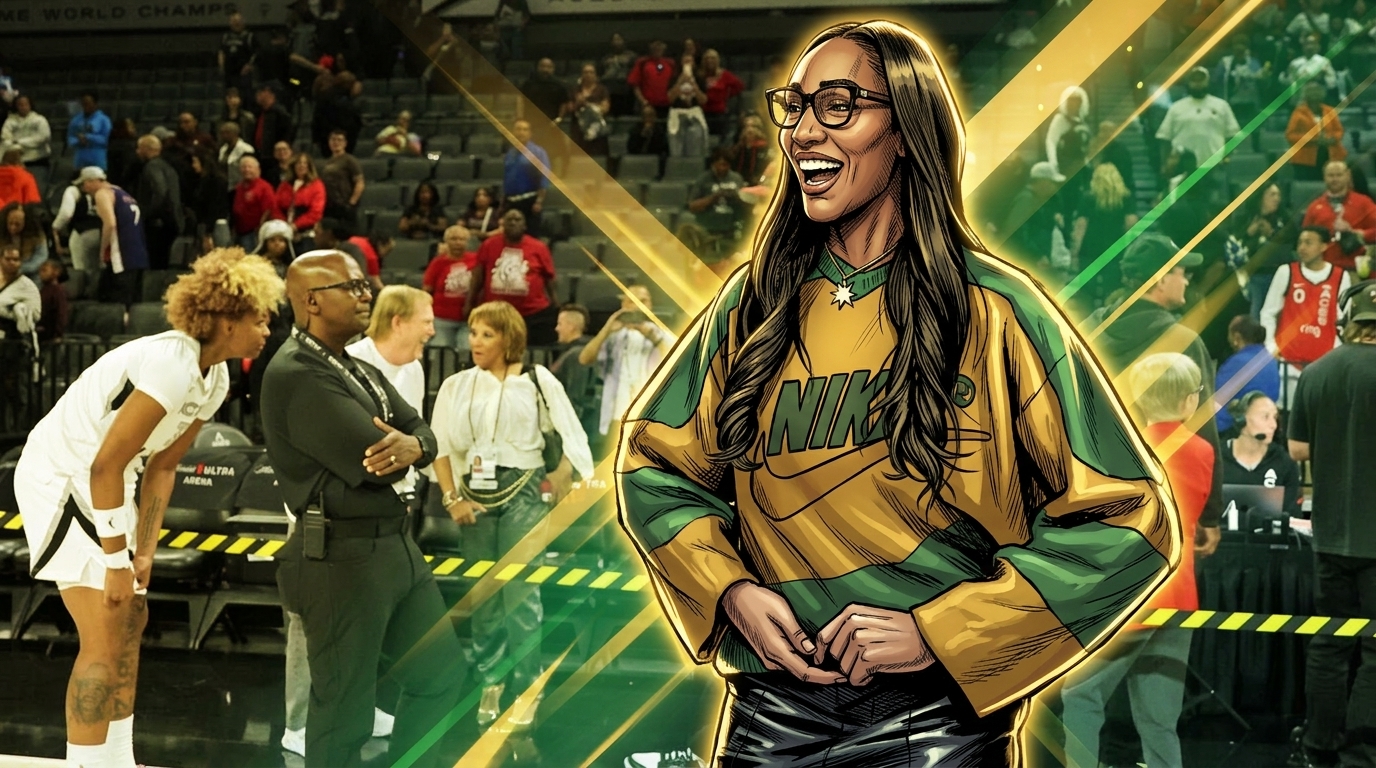
I should say something about the image on this page, because it’s Caitlin Clark shooting a jumper in a Fever jersey, and she has nothing to do with any of this. She’s not quoted, she’s not implicated, she didn’t customize a jersey. She’s here because the discourse machine that follows her has made her face the default visual shorthand for “WNBA story,” even a story that’s really about a piece of software nobody at the league ever specifically approved. That’s its own small, honest joke about how these controversies get told.
Nobody knows what the filter’s actual logic is right now, not me and not anyone currently arguing about it online, because the only two entities who could explain it haven’t said a word. What I do know is that an algorithm just made a values judgment nobody signed off on, and the silence afterward did more to define the story than the filter itself did.