Los Angeles Lakers
The definitive history of the Los Angeles Lakers, a 17-time NBA champion — from George Mikan's Minneapolis dynasty and Showtime to Kobe, LeBron and Luka.
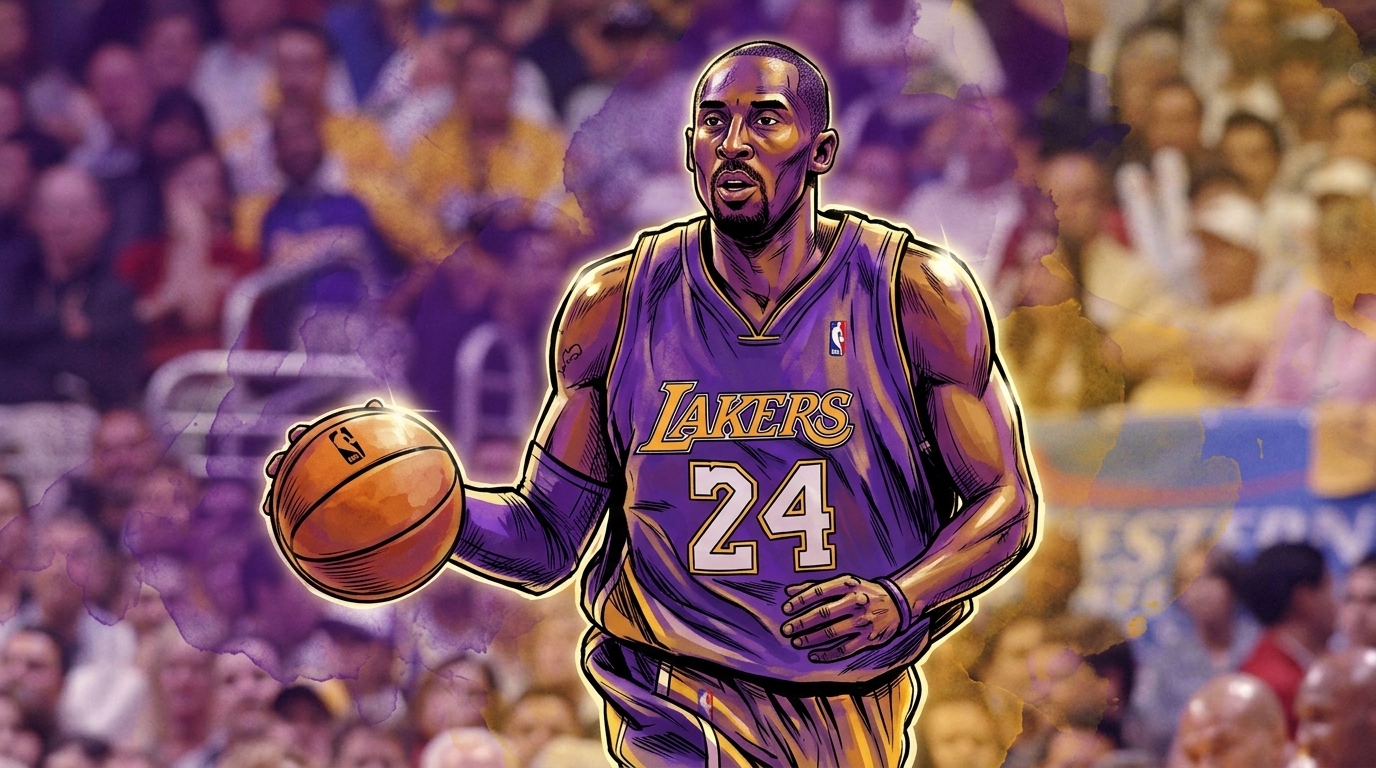
The Los Angeles Lakers are the co-authors, with the Boston Celtics, of professional basketball’s central rivalry and one of the most decorated franchises in North American sports. Across 79 seasons in Minneapolis and Los Angeles the Lakers have won 3,653 games and 17 championships, a total second only to Boston, and reached a record 32 NBA Finals. The uniform has been worn by George Mikan, Elgin Baylor, Jerry West, Wilt Chamberlain, Kareem Abdul-Jabbar, Magic Johnson, Shaquille O’Neal, Kobe Bryant and LeBron James — a lineage of centerpiece superstars unmatched by any other club. The franchise’s identity is glamour and winning in roughly equal measure: “Showtime” basketball, courtside celebrity, and a purple-and-gold banner count that defines the standard other franchises chase.
| Vitals | |
|---|---|
| Founded | 1947 (as the Minneapolis Lakers) |
| League / conf. / div. | NBA — Western Conference, Pacific Division |
| Arena | Crypto.com Arena, Los Angeles |
| Owner | Mark Walter (TWG Global), controlling owner since Oct. 30, 2025 |
| Head coach | JJ Redick (as of Sep. 25, 2026) |
| Titles | 17 — 1949, 1950, 1952, 1953, 1954, 1972, 1980, 1982, 1985, 1987, 1988, 2000, 2001, 2002, 2009, 2010, 2020 |
Minneapolis and the Mikan dynasty (1947–1960)
The franchise’s roots are in the upper Midwest, not California. It began as the Detroit Gems of the National Basketball League, a team that went 4–40 in 1946–47 before being bought and moved to Minnesota, where it was renamed the Lakers for the state’s ten thousand lakes. Under coach John Kundla the Minneapolis Lakers immediately became a superpower behind George Mikan, the bespectacled 6-foot-10 center who was the sport’s first dominant big man.
Mikan’s Lakers won titles in three different leagues. They took the NBL championship in 1948, then the BAA title in 1949 over the Washington Capitols, and after the BAA and NBL merged into the NBA they won it all in 1950 (over the Syracuse Nationals), 1952 and 1953 (both over the New York Knicks) and 1954 (Syracuse again). With Mikan, Jim Pollard, Vern Mikkelsen and Slater Martin, they were the NBA’s first dynasty.
When Mikan’s body gave out, so did the dynasty. A 19–53 collapse in 1957–58 gave Minneapolis the top pick, which it used on Seattle University’s Elgin Baylor in the 1958 draft. Baylor was Rookie of the Year and briefly revived the club, but declining attendance pushed owner Bob Short to move the team to Los Angeles for the 1960–61 season — the NBA’s first franchise on the West Coast.
Baylor, West and the Celtics wall (1960–1971)
In Los Angeles the Lakers built a glamorous, star-crossed contender. Baylor, a revolutionary aerial scorer, was joined by Jerry West, the West Virginia guard whose silhouette became the NBA’s logo. Together they made the Lakers a fixture in the Finals — and repeated victims of Bill Russell’s Boston Celtics, who beat them in 1962 (a Game 7 in overtime), 1963, 1965, 1966, 1968 and 1969, six Finals defeats in eight years.
The 1969 Finals produced the cruelest loss and one of the sport’s oddest honors. Owner Jack Kent Cooke stashed balloons in the Forum rafters for a celebration that never came; Boston won Game 7 in Los Angeles. West, who averaged 37.9 points for the series and posted a 42-point triple-double in the finale, was named the first NBA Finals MVP — the only player ever to win it from the losing team. By then Wilt Chamberlain had arrived, traded from Philadelphia in July 1968, but a title still eluded them.
The 1972 champions (1971–1975)
The breakthrough season is one of the greatest in NBA history. Coached by Bill Sharman and led by an aging Chamberlain, West and leading scorer Gail Goodrich, the 1971–72 Lakers went 69–13 and reeled off a 33-game winning streak from Nov. 5, 1971 to Jan. 7, 1972 — still the longest in league history more than five decades later.
It ended with West’s only ring. The Lakers beat the New York Knicks 4–1 in the 1972 Finals, with Chamberlain named Finals MVP, giving West a championship after eight prior Finals defeats. Chamberlain retired in 1973 and West in 1974, and the franchise briefly sagged — missing the playoffs in 1974–75 and 1975–76 — before a franchise-altering trade brought Kareem Abdul-Jabbar from Milwaukee in 1975 and set the stage for the next dynasty.
Showtime (1979–1991)
Everything changed with the No. 1 pick in 1979: Magic Johnson. Pairing the 6-foot-9 point guard with Abdul-Jabbar’s sky hook, and eventually with coach Pat Riley, the Lakers played a fast, joyous, star-studded brand of basketball that Los Angeles christened “Showtime.” As a rookie, Johnson started at center in place of the injured Abdul-Jabbar in the clinching Game 6 of the 1980 Finals and scored 42 points, winning Finals MVP as the Lakers beat Philadelphia 4–2.
The decade belonged to the Magic-vs-Bird Lakers-Celtics rivalry. Los Angeles won it all again in 1982, then finally beat Boston in the Finals in 1985 after eight previous Finals losses to the Celtics, again in 1987, and completed a rare repeat in 1988 over Detroit — fulfilling Riley’s guarantee of back-to-back titles. The era also had its heartbreaks: a 1983 sweep by the 76ers, a 1984 Finals loss to Boston, and a 1989 sweep by Detroit.
Two moments bookend the era. On April 5, 1984, Abdul-Jabbar’s sky hook passed Chamberlain as the NBA’s all-time leading scorer. And on Nov. 7, 1991, Magic Johnson announced he was retiring after testing positive for HIV — a stunning end to Showtime and a landmark moment in public health.
The lean years and Magic’s return (1991–1996)
Without Johnson, the Lakers slid into mediocrity. They missed the playoffs in 1993–94 for the first time in nearly two decades and cycled through fringe contenders built around James Worthy’s final years, Vlade Divac and Nick Van Exel. Johnson staged a brief comeback in January 1996 at age 36, playing 32 games before retiring for good that spring. The importance of the season lay less in the record than in what the front office did next.
Shaq, Kobe and the three-peat (1996–2004)
The summer of 1996 rebuilt the franchise in a single stroke. The Lakers signed free-agent center Shaquille O’Neal from Orlando and acquired Kobe Bryant, drafted 13th out of high school and traded to Los Angeles for Vlade Divac. The pairing took time to mature, but the 1999–2000 hiring of coach Phil Jackson and his triangle offense turned it into a dynasty.
Los Angeles won three straight titles. They beat Indiana in 2000, Philadelphia in 2001 and swept New Jersey in 2002, with O’Neal named Finals MVP all three times. But the O’Neal-Bryant partnership fractured. After a 2004 Finals loss to the Detroit Pistons, the Lakers traded O’Neal to Miami that July, keeping Bryant as the face of the franchise.
Kobe’s team (2004–2016)
Bryant carried the post-Shaq Lakers, at times single-handedly. On Jan. 22, 2006 he scored 81 points against the Toronto Raptors, the second-highest single-game total in NBA history. A dip followed until the February 2008 trade for Pau Gasol reloaded the roster.
Two more titles followed. The Lakers beat Orlando in the 2009 Finals and edged Boston in a Game 7 in 2010, Bryant winning Finals MVP both years. His career closed with a signature flourish: 60 points in his final game on April 13, 2016. The Lakers retired both of his numbers, 8 and 24, on Dec. 18, 2017.
Rebuild and the bubble title (2016–2020)
A long rebuild bottomed out before the stars returned. The Lakers missed the playoffs six straight years, including a franchise-worst 17–65 in 2015–16, before signing LeBron James in July 2018 and trading for Anthony Davis in the summer of 2019.
The 2019–20 championship arrived amid tragedy and a pandemic. On Jan. 26, 2020, Bryant died in a helicopter crash in Calabasas alongside his daughter Gianna and seven others. Months later, in the isolated Orlando “bubble,” the Lakers beat the Miami Heat 4–2 for the franchise’s 17th title, with James named Finals MVP. The core could not sustain it — a 2021 first-round loss to Phoenix, a missed postseason in 2021–22, and a 2023 run to the Western Conference finals that ended in a sweep by Denver.
Luka, the sale and a new order (2024–2026)
The most shocking trade in recent NBA history reshaped the roster. On Feb. 2, 2025 the Lakers acquired Luka Doncic from Dallas in a three-team deal, sending Anthony Davis, Max Christie and an unprotected 2029 first-round pick to the Mavericks (Maxi Kleber and Markieff Morris also came to Los Angeles; Utah took on Jalen Hood-Schifino and second-round picks). Trading a top-tier defensive big for a 25-year-old perennial MVP candidate was, and remains, fiercely debated.
Ownership changed hands at record valuations. In June 2025 the Buss family agreed to sell majority control to Mark Walter — the Dodgers’ controlling owner — at a roughly $10 billion valuation described as the largest for a U.S. sports franchise; the NBA approved the sale, which closed on Oct. 30, 2025, with the family retaining a minority stake and Jeanie Buss remaining team governor. In August 2026, ESPN and other outlets reported a further agreement to sell the team to Josh Kushner and Bob Iger at a $12.5 billion valuation; as of Sep. 25, 2026 that deal had not been approved or closed and was being contested in court by Jeanie Buss.
On the floor, the Doncic era began under coach JJ Redick. The 2025–26 Lakers went 53–29, took the No. 4 seed, and beat Houston 4–2 in the first round before being swept by the Oklahoma City Thunder in the Western Conference semifinals. Doncic, James — who at 40 remained on the roster — and Austin Reaves formed the core of a team retooling around its new franchise player.
Retired numbers
The Lakers raise banners only for Naismith Hall of Fame figures, and they hang at Crypto.com Arena. Fourteen jersey banners honor thirteen men — Kobe Bryant is honored twice, for both the No. 8 of his early career and the No. 24 of his later years — and a microphone banner honors broadcaster Chick Hearn. Retired dates are per the Lakers’ official history.
| No. | Player | Pos. | Team tenure | Retired |
|---|---|---|---|---|
| 8 | Kobe Bryant | G | 1996–2016 | Dec. 18, 2017 |
| 13 | Wilt Chamberlain | C | 1968–1973 | Nov. 9, 1983 |
| 16 | Pau Gasol | F | 2008–2014 | Mar. 7, 2023 |
| 21 | Michael Cooper | G | 1978–1990 | Jan. 13, 2025 |
| 22 | Elgin Baylor | F | 1958–1971 | Nov. 9, 1983 |
| 24 | Kobe Bryant | G | 1996–2016 | Dec. 18, 2017 |
| 25 | Gail Goodrich | G | 1965–1976 | Nov. 20, 1996 |
| 32 | Magic Johnson | G | 1979–1991, 1996 | Feb. 16, 1992 |
| 33 | Kareem Abdul-Jabbar | C | 1975–1989 | Mar. 20, 1990 |
| 34 | Shaquille O’Neal | C | 1996–2004 | Apr. 2, 2013 |
| 42 | James Worthy | F | 1982–1994 | Dec. 10, 1995 |
| 44 | Jerry West | G | 1960–1974 | Nov. 19, 1983 |
| 52 | Jamaal Wilkes | F | 1976–1985 | Dec. 28, 2012 |
| 99 | George Mikan | C | 1947–1956 | Oct. 30, 2022 |
| Mic | Chick Hearn (broadcaster) | — | 1961–2002 | — |
Season by season
Every season the franchise has played, folded by decade, newest first.
The 2020s 268–214 · 5 playoff berths · 1 conference finals
| Season | W–L | Result |
|---|---|---|
| 2025-26 | 53-29 | Lost Conf. Semifinals |
| 2024-25 | 50-32 | Lost 1st Round |
| 2023-24 | 47-35 | Lost 1st Round |
| 2022-23 | 43-39 | Lost Conf. Finals |
| 2021-22 | 33-49 | Missed playoffs |
| 2020-21 | 42-30 | Lost 1st Round |
The 2010s 358–435 · 4 playoff berths · 2020 champions
| Season | W–L | Result |
|---|---|---|
| 2019-20 | 52-19 | Won NBA Finals |
| 2018-19 | 37-45 | Missed playoffs |
| 2017-18 | 35-47 | Missed playoffs |
| 2016-17 | 26-56 | Missed playoffs |
| 2015-16 | 17-65 | Missed playoffs |
| 2014-15 | 21-61 | Missed playoffs |
| 2013-14 | 27-55 | Missed playoffs |
| 2012-13 | 45-37 | Lost 1st Round |
| 2011-12 | 41-25 | Lost Conf. Semifinals |
| 2010-11 | 57-25 | Lost Conf. Semifinals |
The 2000s 520–300 · 9 playoff berths · 4 titles, 6 Finals
| Season | W–L | Result |
|---|---|---|
| 2009-10 | 57-25 | Won NBA Finals |
| 2008-09 | 65-17 | Won NBA Finals |
| 2007-08 | 57-25 | Lost NBA Finals |
| 2006-07 | 42-40 | Lost 1st Round |
| 2005-06 | 45-37 | Lost 1st Round |
| 2004-05 | 34-48 | Missed playoffs |
| 2003-04 | 56-26 | Lost NBA Finals |
| 2002-03 | 50-32 | Lost Conf. Semifinals |
| 2001-02 | 58-24 | Won NBA Finals |
| 2000-01 | 56-26 | Won NBA Finals |
The 1990s 489–299 · 9 playoff berths · 2000 champions
| Season | W–L | Result |
|---|---|---|
| 1999-00 | 67-15 | Won NBA Finals |
| 1998-99 | 31-19 | Lost Conf. Semifinals |
| 1997-98 | 61-21 | Lost Conf. Finals |
| 1996-97 | 56-26 | Lost Conf. Semifinals |
| 1995-96 | 53-29 | Lost 1st Round |
| 1994-95 | 48-34 | Lost Conf. Semifinals |
| 1993-94 | 33-49 | Missed playoffs |
| 1992-93 | 39-43 | Lost 1st Round |
| 1991-92 | 43-39 | Lost 1st Round |
| 1990-91 | 58-24 | Lost NBA Finals |
The 1980s 594–226 · 10 playoff berths · 4 titles, 7 Finals
| Season | W–L | Result |
|---|---|---|
| 1989-90 | 63-19 | Lost Conf. Semifinals |
| 1988-89 | 57-25 | Lost NBA Finals |
| 1987-88 | 62-20 | Won NBA Finals |
| 1986-87 | 65-17 | Won NBA Finals |
| 1985-86 | 62-20 | Lost Conf. Finals |
| 1984-85 | 62-20 | Won NBA Finals |
| 1983-84 | 54-28 | Lost NBA Finals |
| 1982-83 | 58-24 | Lost NBA Finals |
| 1981-82 | 57-25 | Won NBA Finals |
| 1980-81 | 54-28 | Lost 1st Round |
The 1970s 499–321 · 8 playoff berths · 2 titles (1972, 1980)
| Season | W–L | Result |
|---|---|---|
| 1979-80 | 60-22 | Won NBA Finals |
| 1978-79 | 47-35 | Lost Conf. Semifinals |
| 1977-78 | 45-37 | Lost 1st Round |
| 1976-77 | 53-29 | Lost Conf. Finals |
| 1975-76 | 40-42 | Missed playoffs |
| 1974-75 | 30-52 | Missed playoffs |
| 1973-74 | 47-35 | Lost Conf. Semifinals |
| 1972-73 | 60-22 | Lost NBA Finals |
| 1971-72 | 69-13 | Won NBA Finals |
| 1970-71 | 48-34 | Lost Conf. Finals |
The 1960s 468–338 · 10 playoff berths · 7 Finals, 0 titles
| Season | W–L | Result |
|---|---|---|
| 1969-70 | 46-36 | Lost NBA Finals |
| 1968-69 | 55-27 | Lost NBA Finals |
| 1967-68 | 52-30 | Lost NBA Finals |
| 1966-67 | 36-45 | Lost Div. Semifinals |
| 1965-66 | 45-35 | Lost NBA Finals |
| 1964-65 | 49-31 | Lost NBA Finals |
| 1963-64 | 42-38 | Lost Div. Semifinals |
| 1962-63 | 53-27 | Lost NBA Finals |
| 1961-62 | 54-26 | Lost NBA Finals |
| 1960-61 | 36-43 | Lost Div. Finals |
The 1950s 362–349 · 9 playoff berths · 3 titles (1952–54)
| Season | W–L | Result |
|---|---|---|
| 1959-60 | 25-50 | Lost Div. Finals |
| 1958-59 | 33-39 | Lost NBA Finals |
| 1957-58 | 19-53 | Missed playoffs |
| 1956-57 | 34-38 | Lost Div. Finals |
| 1955-56 | 33-39 | Lost Div. Semifinals |
| 1954-55 | 40-32 | Lost Div. Finals |
| 1953-54 | 46-26 | Won NBA Finals |
| 1952-53 | 48-22 | Won NBA Finals |
| 1951-52 | 40-26 | Won NBA Finals |
| 1950-51 | 44-24 | Lost Div. Finals |
The 1940s 95–33 · 2 playoff berths · 2 titles (1949, 1950)
| Season | W–L | Result |
|---|---|---|
| 1949-50 | 51-17 | Won NBA Finals |
| 1948-49 | 44-16 | Won BAA Finals |
By the numbers
Franchise marks
Ranks
- 1st NBA Finals appearances, all-time (32)
- 2nd NBA championships, all-time (17, behind Boston's 18)
- 1st Largest U.S. pro sports franchise sale at the time ($10B, 2025)
Honors
- 17× NBA champion (1949–2020)
- Most NBA Finals appearances, all-time (32)
- Shaquille O'Neal — 3× Finals MVP (2000, 2001, 2002)
- Magic Johnson — 3× NBA MVP (1987, 1989, 1990)
- Kobe Bryant — 2008 NBA MVP; franchise scoring leader (33,643 pts)
- Kareem Abdul-Jabbar — set NBA all-time scoring record as a Laker (1984)
- Jerry West — 1969 Finals MVP, the only one from a losing team
Per Basketball-Reference, team career leaders, the 2025 sale reporting and the all-time title standings, through Sep. 25, 2026.
The arguments
Lakers or Celtics as the NBA’s greatest franchise? Boston supporters point to the ledger: the Celtics won their record 18th title in 2024 to move one clear of the Lakers, and Boston won the first eight Finals meetings between the two. Lakers backers counter that Los Angeles has reached a record 32 Finals, won championships across more distinct eras and produced the broader constellation of transcendent stars. The debate is unsettled by design; the two clubs’ fortunes have been intertwined since 1959.
Was the Doncic trade a triumph or a gamble? The Lakers’ front office framed acquiring a 25-year-old MVP-caliber talent as a generational coup that resets the franchise’s timeline. Skeptics, and many in Dallas, argued the price — an All-NBA defender in Anthony Davis and an unprotected first-round pick — was steep, and Mavericks management drew heavy criticism for dealing a homegrown superstar at all. Both readings remain in play.
Do the early titles count the same? Some historians note that five of the franchise’s championships came in Minneapolis in the pre-shot-clock 1940s and ’50s against a smaller league, and treat them as a different order of achievement than the modern rings. Others hold that a title is a title, and that Mikan’s dominance was as complete in its era as any that followed. The franchise counts all 17.
Why it matters
More than any franchise, the Lakers fused winning with spectacle and made professional basketball a marquee entertainment. From Mikan’s Minneapolis dynasty to West’s logo silhouette, from Showtime’s fast breaks to the Shaq-and-Kobe three-peat and the bubble title mourning Bryant, the purple and gold have been present at nearly every hinge point in the sport’s history. Their banner count is the benchmark, their rivalry with Boston is the league’s oldest argument, and their willingness — as with the Doncic trade and a record-setting change in ownership — to remake themselves keeps them at the center of the conversation. To tell the story of the NBA is, unavoidably, to tell the story of the Lakers.