Boston Red Sox
The Boston Red Sox are a nine-time World Series champion of MLB whose 86-year title drought, four 21st-century crowns and Yankees rivalry define them.
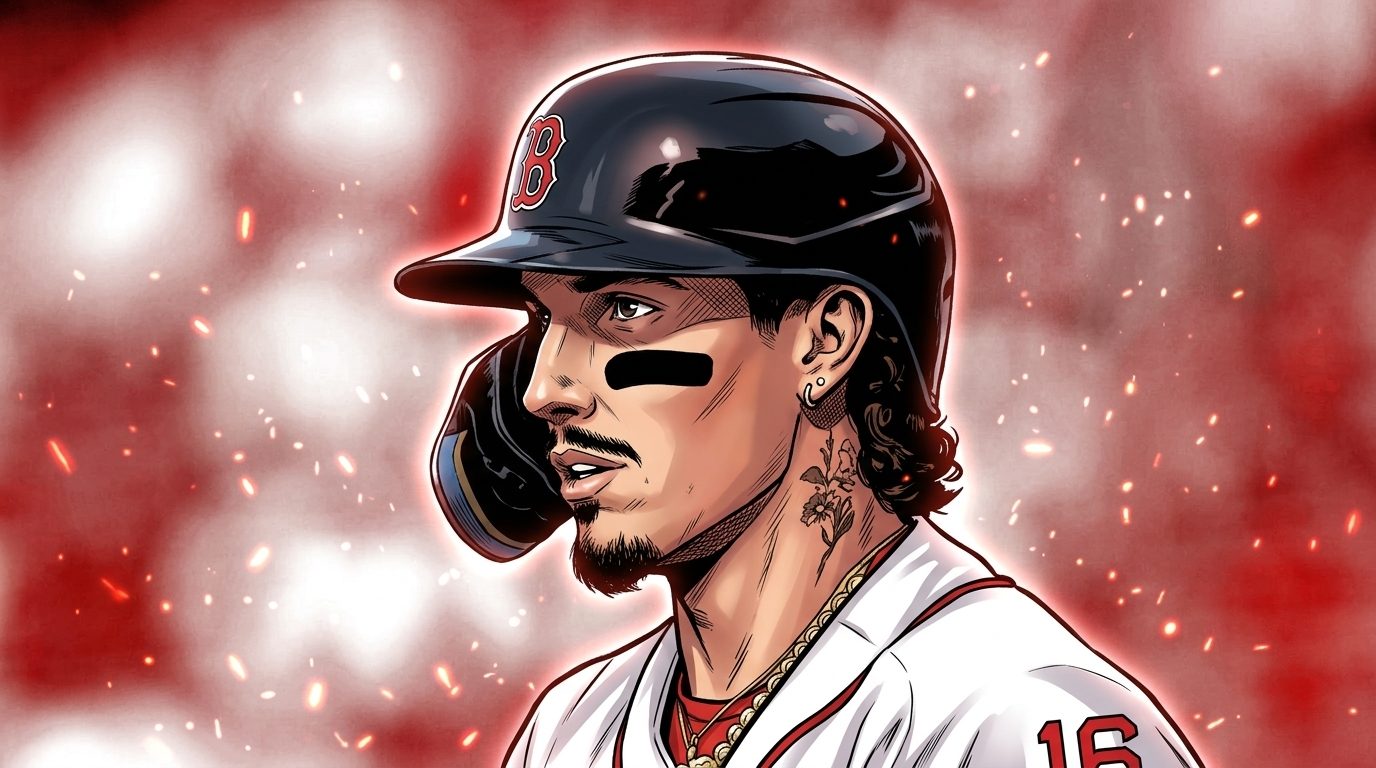
The Boston Red Sox are one of Major League Baseball’s charter American League franchises and among its most storied, a club that won five of the first fifteen World Series, then went 86 years without another before a 21st-century run of four titles reset the whole story. They have played at Fenway Park since 1912 — the oldest ballpark in the majors — and carry a franchise record of 10,131–9,411 (.518) through the 2026 season, nine World Series championships and 14 American League pennants. Their rivalry with the New York Yankees, born of the sale of Babe Ruth and the “Curse of the Bambino,” is the defining feud in American team sport, and Boston’s identity — the Green Monster, Ted Williams, Carl Yastrzemski, David Ortiz — is woven into the city itself.
| Vitals | |
|---|---|
| Founded | 1901 (as the Boston Americans) |
| League / division | MLB — American League (AL) East |
| Stadium | Fenway Park (opened 1912), Boston, Mass. |
| Owner | John W. Henry / Fenway Sports Group (since 2002) |
| Manager | Chad Tracy (permanent since Sept. 22, 2026) |
| World Series titles | 9 — 1903, 1912, 1915, 1916, 1918, 2004, 2007, 2013, 2018 |
Origins and the first dynasty (1901–1918)
The franchise was born with the American League itself. Boston was one of the eight charter members of the AL in 1901, playing as the Boston Americans out of the Huntington Avenue Grounds. In October 1903 the Americans beat the Pittsburgh Pirates five games to three in the first modern World Series, behind Cy Young and Bill Dinneen, who won the decisive Game 8 with a shutout. Owner John I. Taylor rechristened the club the Red Sox for the 1908 season, reviving Boston’s old “Red Stockings” identity.
Fenway Park opened in 1912, and so did a golden age. The ballpark’s first regular-season game came on April 20, 1912, and that fall Boston won 105 games and took the World Series from the New York Giants four games to three (with one tie), clinching Game 8 in ten innings on the night Giants outfielder Fred Snodgrass muffed a fly ball. Smoky Joe Wood, a 34-game winner that season, and center fielder Tris Speaker were the stars.
Three more titles followed in four years. The Red Sox beat the Philadelphia Phillies 4–1 in 1915 and the Brooklyn Robins 4–1 in 1916, the latter featuring a 14-inning Game 2 complete game by a young left-hander named Babe Ruth. Ruth was by then both an ace and an emerging slugger when Boston won again in 1918, topping the Chicago Cubs 4–2 in a September Series shortened by World War I. It was the franchise’s fifth championship — and its last for 86 years.
The sale of Babe Ruth and the long drought (1919–1932)
Owner Harry Frazee sold the greatest player in the game. A Broadway producer who had bought the club largely on borrowed money, Frazee agreed to send Ruth to the Yankees in late December 1919; the deal was announced in early January 1920 for roughly $100,000 plus a loan secured by a mortgage on Fenway Park. Ruth rewrote the record book in New York, the Yankees built a dynasty, and the narrative that Boston had been doomed — the “Curse of the Bambino,” a phrase popularized decades later by Dan Shaughnessy’s 1990 book — attached itself to every subsequent failure.
The on-field collapse was immediate and prolonged. Frazee continued to strip the roster for cash, and the Red Sox sank to the bottom of the American League for more than a decade, finishing last nine times between 1922 and 1932, including a 43–111 nadir in 1932. The proud charter franchise had become the AL’s doormat.
Tom Yawkey and the Ted Williams era (1933–1960)
A wealthy new owner spent the team back into relevance. Tom Yawkey purchased the club in 1933 and bought established stars — player-manager Joe Cronin, sluggers Jimmie Foxx and left-hander Lefty Grove — to make Boston a contender again by the late 1930s. But the era belonged to one man.
Ted Williams was the greatest hitter the franchise ever produced. In 1941 he hit .406, going 6-for-8 in a season-ending doubleheader rather than sit on .400 — no major leaguer has hit .400 since. Williams won two Triple Crowns (1942 and 1947) and two AL MVP awards, and he did it while losing nearly five prime seasons to military service as a Marine aviator in World War II and Korea.
The one title chance slipped away in 1946. Williams’s only World Series ended in a Game 7 loss to the St. Louis Cardinals, decided when Enos Slaughter scored from first on a single — the “Mad Dash.” Boston was a frequent contender in the late 1940s and early 1950s but never broke through, and the club slid toward the second division by the time Williams retired in 1960.
The Impossible Dream and the Yaz years (1961–1974)
Carl Yastrzemski inherited left field and, eventually, the franchise on his back. After a 72–90, ninth-place finish in 1966, the 1967 Red Sox staged the “Impossible Dream,” winning the pennant on the final day under manager Dick Williams. Yastrzemski won the AL Triple Crown and MVP — the last Triple Crown in baseball for 45 years — carrying the club with a torrid September.
The Series again ended in a Game 7 defeat. Boston pushed the Cardinals to the limit before losing the 1967 World Series 4–3, run over by Bob Gibson, who threw three complete-game victories. The near-miss, though, rebuilt Boston into a baseball town, and the Yaz-led teams of the late 1960s and early 1970s stayed in contention year after year.
Fisk, Lynn, and the 1975 Series (1975–1976)
A new generation produced one of the greatest World Series ever played. The 1975 Red Sox, with rookie sensation Fred Lynn — the first player to win Rookie of the Year and MVP in the same season — plus Jim Rice, Dwight Evans, Carlton Fisk and the theatrical Luis Tiant, reached the World Series against Cincinnati’s Big Red Machine.
Game 6 is the image the sport cannot forget. Trailing the series and the game, Boston won 7–6 in 12 innings when Fisk led off the bottom of the twelfth with a home run off the left-field foul pole, waving it fair as he hopped down the line. The Reds won Game 7 4–3 the next night, and the curse held, but the 1975 Series is widely cited as the moment that rescued baseball’s hold on the American imagination.
Bucky Dent, Buckner, and a curse that would not lift (1977–1993)
1978 added a new villain to the folklore. Boston and New York finished the regular season tied at 99–63, forcing a one-game playoff at Fenway on October 2, 1978. Light-hitting Yankees shortstop Bucky Dent lofted a three-run homer over the Green Monster, New York won 5–4, and the name entered Boston’s lexicon as a curse word. Jim Rice won the AL MVP that year with 46 home runs and 406 total bases.
1986 was the cruelest near-miss of all. Behind AL MVP and Cy Young winner Roger Clemens (24–4) and batting champion Wade Boggs, Boston reached the World Series and stood one strike from the title in Game 6 against the New York Mets. Then a slow roller went through first baseman Bill Buckner’s legs, the Mets rallied to win, and they took Game 7, 8–5. Division titles in 1988 and 1990 both ended in ALCS sweeps, and the drought ground on.
Pedro, Nomar, Manny, and the 2003 heartbreak (1994–2003)
The late 1990s brought a run of transcendent talent. The Red Sox acquired Pedro Martínez before the 1998 season, and he delivered perhaps the greatest stretch of pitching in franchise history — a 1999 line of 23–4 with a 2.07 ERA and 313 strikeouts, back-to-back AL Cy Young Awards in 1999 and 2000, and a 1.74 ERA in 2000. Homegrown shortstop Nomar Garciaparra was a batting champion and matinee idol, and Boston signed slugger Manny Ramírez to an eight-year, $160 million deal after the 2000 season. A group led by John W. Henry bought the club in 2002 for a then-record sum from the Yawkey Trust.
2003 ended in the most agonizing way the rivalry could devise. In Game 7 of the ALCS at Yankee Stadium on October 16, 2003, manager Grady Little left a tiring Pedro Martínez in with a 5–2 lead; the Yankees tied it in the eighth, and Aaron Boone led off the eleventh with a walk-off home run off Tim Wakefield. Little was dismissed, and Boston’s winter was spent one win from the World Series.
2004: the Curse is broken
No team had ever done what the 2004 Red Sox did. Down three games to none to the Yankees in the ALCS, Boston became the first team in MLB history to win a best-of-seven series after trailing 0–3. Dave Roberts’s stolen base ignited a Game 4 comeback capped by a David Ortiz walk-off homer; Ortiz won Game 5 in the fourteenth; Curt Schilling pitched Game 6 on a surgically sutured ankle — the “bloody sock”; and Boston routed New York in Game 7.
Then came the exorcism. The Red Sox swept the St. Louis Cardinals 4–0 in the World Series, clinching on October 27, 2004, under a lunar eclipse, with Manny Ramírez named MVP. It was Boston’s first title since 1918. Manager Terry Francona, Ortiz, Ramírez, Schilling, Pedro Martínez, Johnny Damon and Jason Varitek had ended the 86-year wait and buried the Curse of the Bambino for good.
A new dynasty: 2007 and 2013
A second title confirmed Boston as a model franchise. The 2007 Red Sox, again managed by Francona, swept the Colorado Rockies 4–0, with Mike Lowell taking Series MVP, Josh Beckett dominating the postseason, closer Jonathan Papelbon locking down the ninth, and rookie Dustin Pedroia sparking the lineup.
2013 was the most emotional of all. After a last-place 2012, Boston went worst-to-first and beat the Cardinals 4–2, clinching Game 6 at Fenway — the first title sealed at home since 1918 — with David Ortiz hitting .688 to win MVP, Koji Uehara untouchable in the ninth and Jon Lester winning twice. The run became the sporting heart of a city’s recovery from the April 15, 2013 Boston Marathon bombing and its “Boston Strong” rallying cry.
The 2018 juggernaut
The franchise’s best regular-season team won it all. The 2018 Red Sox won a franchise-record 108 games and a third straight AL East title before beating the Los Angeles Dodgers 4–1 in the World Series. Utilityman Steve Pearce was the unlikely Series MVP; Mookie Betts won the AL MVP and batting title; J.D. Martinez, Chris Sale, David Price, Xander Bogaerts and Rafael Devers rounded out the roster. First-year manager Alex Cora became the first manager born in Puerto Rico to win a World Series.
Teardown, transition, and the current era (2019–2026)
The championship core was dismantled with startling speed. In February 2020 Boston traded Mookie Betts and David Price to the Dodgers rather than pay a long-term extension, a move that still divides the fan base. Cora, suspended for the 2020 season over his role in Houston’s 2017 sign-stealing scheme, returned in 2021 and guided a surprise team to the ALCS, where it lost to the Houston Astros 4–2. Shortstop Xander Bogaerts then left for an 11-year, $280 million deal with the San Diego Padres ahead of the 2023 season.
The last link to 2018 was severed in 2025. Despite signing Rafael Devers to an 11-year extension in January 2023, Boston traded him to the San Francisco Giants on June 15, 2025. The 2025 club still reached the postseason at 89–73 before losing the AL Wild Card Series to the Yankees, two games to one.
The 2026 season was defined by upheaval and a young core. Alex Cora was fired on April 25, 2026 after a 10–17 start; Chad Tracy took over as interim manager and was named permanent manager on September 22, 2026. Powered by outfielder Roman Anthony, Jarren Duran and ace Garrett Crochet — and a mid-season winning streak that tied the 1946 franchise record of 15 — Boston recovered to finish 87–75, third in the AL East, and reached a second straight Wild Card Series. There the Yankees swept them in two games, a rivalry chapter written in a familiar hand.
Retired numbers
Boston displays its retired numbers along the right-field façade at Fenway Park. Ten belong to franchise greats and one, Jackie Robinson’s 42, is retired throughout Major League Baseball. For decades the club required Hall of Fame induction and a career largely in Boston; it later relaxed the standard, honoring Wade Boggs, David Ortiz and Pedro Martínez.
| No. | Player | Pos. | Team tenure | Retired |
|---|---|---|---|---|
| 1 | Bobby Doerr | 2B | 1937–1951 | May 21, 1988 |
| 4 | Joe Cronin | SS | 1935–1945 | May 29, 1984 |
| 6 | Johnny Pesky | SS/3B | 1942–1952 | Sept. 28, 2008 |
| 8 | Carl Yastrzemski | LF/1B | 1961–1983 | Aug. 6, 1989 |
| 9 | Ted Williams | LF | 1939–1960 | May 29, 1984 |
| 14 | Jim Rice | LF/DH | 1974–1989 | July 28, 2009 |
| 26 | Wade Boggs | 3B | 1982–1992 | May 26, 2016 |
| 27 | Carlton Fisk | C | 1969–1980 | Sept. 4, 2000 |
| 34 | David Ortiz | DH | 2003–2016 | June 23, 2017 |
| 42 | Jackie Robinson | 2B | — (MLB-wide) | 1997 |
| 45 | Pedro Martínez | SP | 1998–2004 | July 28, 2015 |
Season by season
Every season the franchise has played, folded by decade, newest first.
The 2020s 529–503 · 3 postseason berths · 1 ALCS (through 2026)
| Season | W–L | Finish | Playoffs |
|---|---|---|---|
| 2026 | 87-75 | 3rd (East) | Lost ALWC (NYY 0–2) |
| 2025 | 89-73 | 3rd (East) | Lost ALWC (NYY 1–2) |
| 2024 | 81-81 | 3rd (East) | — |
| 2023 | 78-84 | 5th (East) | — |
| 2022 | 78-84 | 5th (East) | — |
| 2021 | 92-70 | 2nd (East) | Lost ALCS |
| 2020 | 24-36 | 5th (East) | — |
The 2010s 872–748 · 4 postseason berths · 2 World Series (2013, 2018)
| Season | W–L | Finish | Playoffs |
|---|---|---|---|
| 2019 | 84-78 | 3rd (East) | — |
| 2018 | 108-54 | 1st (East) | Won World Series |
| 2017 | 93-69 | 1st (East) | Lost ALDS |
| 2016 | 93-69 | 1st (East) | Lost ALDS |
| 2015 | 78-84 | 5th (East) | — |
| 2014 | 71-91 | 5th (East) | — |
| 2013 | 97-65 | 1st (East) | Won World Series |
| 2012 | 69-93 | 5th (East) | — |
| 2011 | 90-72 | 3rd (East) | — |
| 2010 | 89-73 | 3rd (East) | — |
The 2000s 920–699 · 6 postseason berths · 2 World Series (2004, 2007)
| Season | W–L | Finish | Playoffs |
|---|---|---|---|
| 2009 | 95-67 | 2nd (East) | Lost ALDS |
| 2008 | 95-67 | 2nd (East) | Lost ALCS |
| 2007 | 96-66 | 1st (East) | Won World Series |
| 2006 | 86-76 | 3rd (East) | — |
| 2005 | 95-67 | 2nd (East) | Lost ALDS |
| 2004 | 98-64 | 2nd (East) | Won World Series |
| 2003 | 95-67 | 2nd (East) | Lost ALCS |
| 2002 | 93-69 | 2nd (East) | — |
| 2001 | 82-79 | 2nd (East) | — |
| 2000 | 85-77 | 2nd (East) | — |
The 1990s 814–741 · 4 postseason berths · 2 ALCS
| Season | W–L | Finish | Playoffs |
|---|---|---|---|
| 1999 | 94-68 | 2nd (East) | Lost ALCS |
| 1998 | 92-70 | 2nd (East) | Lost ALDS |
| 1997 | 78-84 | 4th (East) | — |
| 1996 | 85-77 | 3rd (East) | — |
| 1995 | 86-58 | 1st (East) | Lost ALDS |
| 1994 | 54-61 | 4th (East) | — (strike) |
| 1993 | 80-82 | 5th (East) | — |
| 1992 | 73-89 | 7th (East) | — |
| 1991 | 84-78 | 2nd (East) | — |
| 1990 | 88-74 | 1st (East) | Lost ALCS |
The 1980s 821–742 · 2 postseason berths · 1 pennant (1986)
| Season | W–L | Finish | Playoffs |
|---|---|---|---|
| 1989 | 83-79 | 3rd (East) | — |
| 1988 | 89-73 | 1st (East) | Lost ALCS |
| 1987 | 78-84 | 5th (East) | — |
| 1986 | 95-66 | 1st (East) | Lost World Series |
| 1985 | 81-81 | 5th (East) | — |
| 1984 | 86-76 | 4th (East) | — |
| 1983 | 78-84 | 6th (East) | — |
| 1982 | 89-73 | 3rd (East) | — |
| 1981 | 59-49 | 5th (East) | — |
| 1980 | 83-77 | 4th (East) | — |
The 1970s 895–714 · 1 pennant · 1975 World Series
| Season | W–L | Finish | Playoffs |
|---|---|---|---|
| 1979 | 91-69 | 3rd (East) | — |
| 1978 | 99-64 | 2nd (East) | Lost AL East tiebreaker |
| 1977 | 97-64 | 2nd (East) | — |
| 1976 | 83-79 | 3rd (East) | — |
| 1975 | 95-65 | 1st (East) | Lost World Series |
| 1974 | 84-78 | 3rd (East) | — |
| 1973 | 89-73 | 2nd (East) | — |
| 1972 | 85-70 | 2nd (East) | — |
| 1971 | 85-77 | 3rd (East) | — |
| 1970 | 87-75 | 3rd (East) | — |
The 1960s 764–845 · 1 pennant · 1967 World Series
| Season | W–L | Finish | Playoffs |
|---|---|---|---|
| 1969 | 87-75 | 3rd (East) | — |
| 1968 | 86-76 | 4th | — |
| 1967 | 92-70 | 1st | Lost World Series |
| 1966 | 72-90 | 9th | — |
| 1965 | 62-100 | 9th | — |
| 1964 | 72-90 | 8th | — |
| 1963 | 76-85 | 7th | — |
| 1962 | 76-84 | 8th | — |
| 1961 | 76-86 | 6th | — |
| 1960 | 65-89 | 7th | — |
The 1950s 814–725 · no postseason berths
| Season | W–L | Finish | Playoffs |
|---|---|---|---|
| 1959 | 75-79 | 5th | — |
| 1958 | 79-75 | 3rd | — |
| 1957 | 82-72 | 3rd | — |
| 1956 | 84-70 | 4th | — |
| 1955 | 84-70 | 4th | — |
| 1954 | 69-85 | 4th | — |
| 1953 | 84-69 | 4th | — |
| 1952 | 76-78 | 6th | — |
| 1951 | 87-67 | 3rd | — |
| 1950 | 94-60 | 3rd | — |
The 1940s 854–683 · 1 pennant · 1946 World Series
| Season | W–L | Finish | Playoffs |
|---|---|---|---|
| 1949 | 96-58 | 2nd | — |
| 1948 | 96-59 | 2nd | Lost AL tiebreaker |
| 1947 | 83-71 | 3rd | — |
| 1946 | 104-50 | 1st | Lost World Series |
| 1945 | 71-83 | 7th | — |
| 1944 | 77-77 | 4th | — |
| 1943 | 68-84 | 7th | — |
| 1942 | 93-59 | 2nd | — |
| 1941 | 84-70 | 2nd | — |
| 1940 | 82-72 | 4th | — |
The 1930s 705–815 · no postseason berths
| Season | W–L | Finish | Playoffs |
|---|---|---|---|
| 1939 | 89-62 | 2nd | — |
| 1938 | 88-61 | 2nd | — |
| 1937 | 80-72 | 5th | — |
| 1936 | 74-80 | 6th | — |
| 1935 | 78-75 | 4th | — |
| 1934 | 76-76 | 4th | — |
| 1933 | 63-86 | 7th | — |
| 1932 | 43-111 | 8th | — |
| 1931 | 62-90 | 6th | — |
| 1930 | 52-102 | 8th | — |
The 1920s 595–938 · no postseason berths
| Season | W–L | Finish | Playoffs |
|---|---|---|---|
| 1929 | 58-96 | 8th | — |
| 1928 | 57-96 | 8th | — |
| 1927 | 51-103 | 8th | — |
| 1926 | 46-107 | 8th | — |
| 1925 | 47-105 | 8th | — |
| 1924 | 67-87 | 7th | — |
| 1923 | 61-91 | 8th | — |
| 1922 | 61-93 | 8th | — |
| 1921 | 75-79 | 5th | — |
| 1920 | 72-81 | 5th | — |
The 1910s 857–624 · 4 World Series (1912, 1915, 1916, 1918)
| Season | W–L | Finish | Playoffs |
|---|---|---|---|
| 1919 | 66-71 | 6th | — |
| 1918 | 75-51 | 1st | Won World Series |
| 1917 | 90-62 | 2nd | — |
| 1916 | 91-63 | 1st | Won World Series |
| 1915 | 101-50 | 1st | Won World Series |
| 1914 | 91-62 | 2nd | — |
| 1913 | 79-71 | 4th | — |
| 1912 | 105-47 | 1st | Won World Series |
| 1911 | 78-75 | 5th | — |
| 1910 | 81-72 | 4th | — |
The 1900s 691–634 · 1 World Series (1903) · 2 pennants
| Season | W–L | Finish | Playoffs |
|---|---|---|---|
| 1909 | 88-63 | 3rd | — |
| 1908 | 75-79 | 5th | — |
| 1907 | 59-90 | 7th | — |
| 1906 | 49-105 | 8th | — |
| 1905 | 78-74 | 4th | — |
| 1904 | 95-59 | 1st | Won AL pennant (no WS) |
| 1903 | 91-47 | 1st | Won World Series |
| 1902 | 77-60 | 3rd | — |
| 1901 | 79-57 | 2nd | — |
By the numbers
Franchise marks
Ranks
- 1st Oldest ballpark in MLB still in use (Fenway Park, since 1912)
- T-3rd World Series titles, MLB history (9)
- T-2nd World Series titles among American League clubs (9)
Honors
- 9× World Series champion (1903–2018)
- 14× American League pennant
- Ted Williams — 2× Triple Crown (1942, 1947), 2× AL MVP
- Carl Yastrzemski — 1967 AL Triple Crown & MVP
- Roger Clemens — 1986 AL MVP & Cy Young
- Fred Lynn — 1975 AL MVP & Rookie of the Year
- Pedro Martínez — back-to-back AL Cy Young (1999, 2000)
- Mookie Betts — 2018 AL MVP
Per Baseball-Reference and franchise records, through the 2026 season.
The arguments
Was there ever really a curse? One camp holds that the 86-year drought was pure narrative — a story Dan Shaughnessy’s 1990 book stamped onto a franchise undone by ordinary causes: Harry Frazee’s debts, Tom Yawkey’s uneven stewardship, and a long reluctance to modernize. The other camp argues the pattern was too specific to dismiss, pointing to 1946, 1967, 1975, 1978, 1986 and 2003, each a Game 7 or a single swing short. The 2004 title ended the debate by ending the drought; whether the curse was real or only felt real is still argued in Boston bars.
Tom Yawkey’s legacy remains contested. Defenders credit the owner’s four decades of investment and his charitable foundation for sustaining the franchise through lean years. Critics note that under Yawkey the Red Sox were the last team in the majors to integrate, not fielding a Black player until Pumpsie Green in 1959 — a dozen years after Jackie Robinson — and that the club passed on both Robinson and Willie Mays. In 2018 the team and city renamed Yawkey Way back to Jersey Street, a decision supporters called overdue and detractors called erasure.
The 2020 Mookie Betts trade still splits the fan base. The front office framed dealing a generational, soon-to-be-free-agent star as financial discipline that reset the payroll and brought back usable talent. Much of the fan base, and many former players, saw it as an owner unwilling to pay to keep a homegrown MVP — a reading sharpened when Betts promptly won a title in Los Angeles. Both arguments have evidence; neither has been settled.
Why it matters
The Boston Red Sox are the rare franchise whose history reads as a single, century-long story — triumph, hubris, punishment, and redemption — and whose every chapter the city can recite. They gave baseball its oldest ballpark, its most famous curse, the last .400 hitter, one of its greatest World Series games, and the only team ever to erase a 3–0 postseason deficit. To follow the Red Sox is to inherit all of it: the five early crowns, the long dark middle, and the four modern titles that turned the most tortured fan base in American sport into one of its most satisfied.