Chicago Cubs
The Chicago Cubs, National League charter members since 1876, won the 1907, 1908 and 2016 World Series, ending a record 108-year title drought at Wrigley Field.
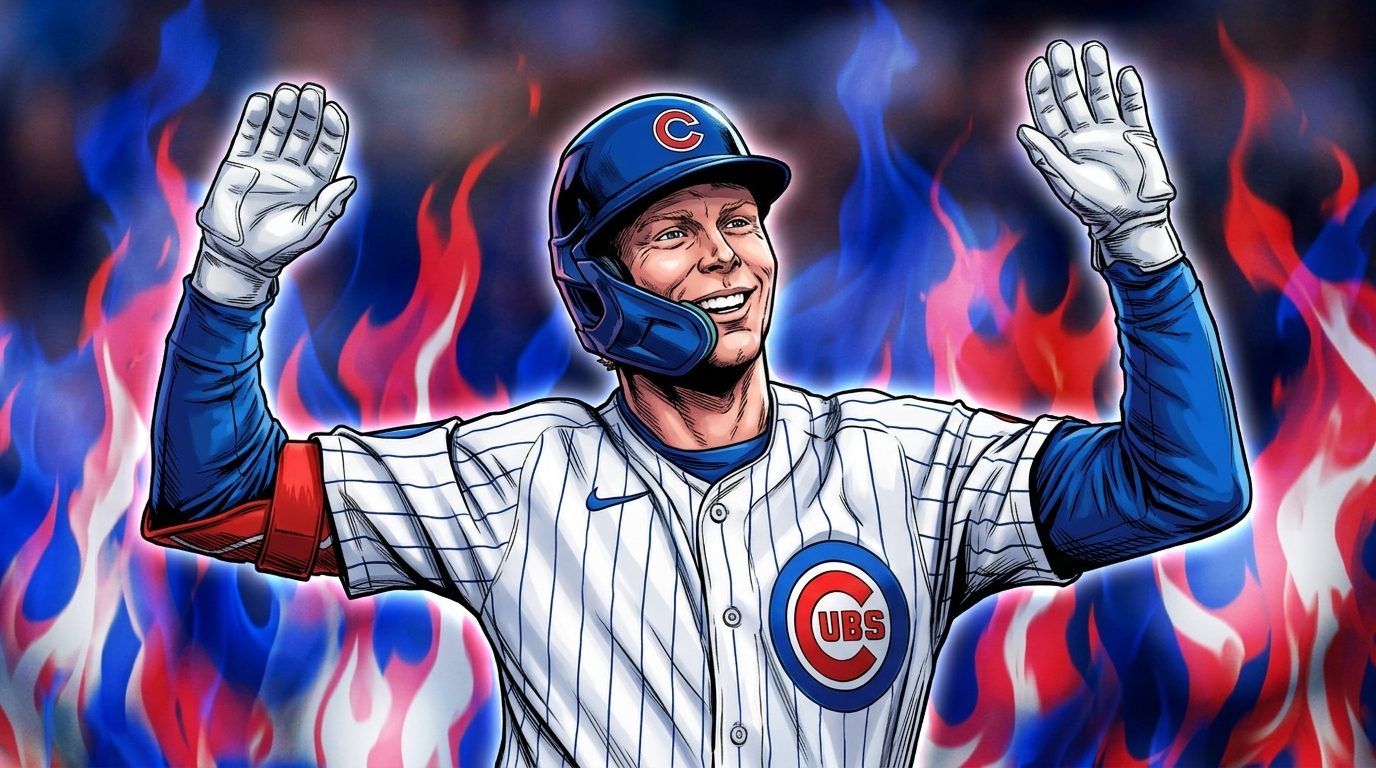
The Chicago Cubs are one of the two oldest franchises in Major League Baseball, a charter member of the National League in 1876 and the sport’s enduring emblem of hope deferred. Through a century and a half under four names they have won three World Series, raised seventeen National League pennants, and compiled the third-most wins in big-league history, yet they are defined as much by a 108-year title drought — the longest in North American major professional sports — as by the championships that bookended it. Their home, Wrigley Field, is a national landmark, and their 2016 title, which ended the drought, ranks among the most-watched and most-cherished moments in the game’s modern history.
| Vitals | |
|---|---|
| Founded | 1876 (as the Chicago White Stockings) |
| League / division | MLB — National League, NL Central |
| Stadium | Wrigley Field (opened 1914; capacity 41,649) |
| Owner | Ricketts family (Tom Ricketts, chairman), since 2009 |
| Manager | Craig Counsell (as of Oct. 20, 2026) |
| World Series titles | 3 — 1907, 1908, 2016 |
Origins: the White Stockings and Cap Anson (1876–1902)
The franchise is as old as the National League itself. Organized by businessman William Hulbert and star pitcher Albert Spalding, the Chicago White Stockings won the NL’s first pennant in 1876 at 52–14, Spalding winning 47 games that summer before leaving the field to build his sporting-goods empire.
Cap Anson made the club the game’s first dynasty. The player-manager and first baseman led Chicago from 1879 through 1897 and anchored five pennant winners in the 1880s — 1880 (67–17), 1881, 1882, 1885 and 1886 — the 1885 and 1886 teams meeting the American Association’s St. Louis Browns in the era’s pre-modern “World Series.” Anson’s roughly 3,000 hits made him the 19th century’s defining hitter and a 1939 Hall of Famer.
Three names preceded the current one. The White Stockings became the Colts in 1890 as Anson rebuilt around young players, then the Orphans in 1898 after he departed. The nickname “Cubs” appeared in print in 1902 and became official by 1903, the name that would outlast every other.
Tinker to Evers to Chance: the first dynasty (1903–1912)
Chicago’s answer to the dead-ball era was the greatest team baseball had yet seen. The infield of shortstop Joe Tinker, second baseman Johnny Evers and player-manager Frank Chance — immortalized in Franklin Pierce Adams’s verse — and ace Mordecai “Three Finger” Brown made the Cubs nearly unbeatable. The 1906 club went 116–36 (.763), still the best winning percentage in modern major-league history, only to lose the World Series to the crosstown White Sox.
The titles came the next two autumns. The Cubs won the 1907 World Series 4–0 (with one tie) over Detroit and repeated in 1908, beating the Tigers 4–1. No one knew the 1908 crown would stand alone for 108 years.
The 1908 pennant turned on “Merkle’s Boner.” On Sept. 23, with the Giants’ Fred Merkle failing to touch second on an apparent game-winning hit, umpire Hank O’Day ruled a force out and the game a tie, forcing a replay the Cubs won 4–2 on Oct. 8. A 1910 pennant followed before the dynasty faded.
Seven pennants, no title (1918–1945)
For nearly three decades the Cubs were perennial contenders who could not finish. They reached the World Series in 1918 (losing to Babe Ruth’s Red Sox), 1929 (blowing an 8–0 Game 4 lead to the Athletics), and 1932, when they were swept by the Yankees in the series of Ruth’s disputed “called shot” at Wrigley Field.
The hitting was historic even when the October results were not. Outfielder Hack Wilson drove in 191 runs in 1930, a single-season record that still stands, and catcher Gabby Hartnett won the 1935 NL MVP for a 100-win team that lost the Series to Detroit. In 1938 Hartnett’s walk-off “Homer in the Gloamin’” on Sept. 28, struck in near-darkness, keyed the pennant before another Yankee sweep.
The 1945 pennant birthed the curse. During the World Series loss to Detroit, tavern owner William Sianis and his goat were ejected from Wrigley; per legend he decreed the Cubs would never win again, launching the Curse of the Billy Goat. It was the franchise’s last pennant for 71 years.
Mr. Cub and the mid-century wilderness (1946–1965)
The losing years produced the most beloved Cub of all. Ernie Banks, “Mr. Cub,” debuted in 1953 and became the first Black player in Cubs history, winning back-to-back NL MVPs in 1958 and 1959 for teams that finished nowhere near contention. His 512 home runs, his shortstop-to-first-base career and his “Let’s play two” summed up a franchise that kept its charm through losing.
The era’s experiments only deepened the gloom. Owner P.K. Wrigley replaced the manager’s job with a rotating “College of Coaches” in 1961–62, and the Cubs lost 103 games twice in the decade. Not until the arrival of Banks’s supporting cast — Billy Williams, Ron Santo and Ferguson Jenkins — did contention return.
The 1969 collapse (1966–1972)
Leo Durocher’s Cubs were the best team the franchise had fielded in a generation — and still a byword for heartbreak. Built around Banks, Santo, Williams and Jenkins, the 1969 club led the NL East by as much as nine games in mid-August.
Then it all came apart. A September swoon — punctuated by a black cat crossing in front of the Cubs’ dugout at Shea Stadium — handed the division to the “Miracle” Mets, who passed Chicago and won the World Series. The Cubs finished 92–70 and in second, and the heartbreak hardened into identity.
The lovable losers: 1984 to the Bartman game (1984–2008)
The “lovable losers” era delivered thrilling teams and fresh wounds. The 1984 Cubs won 96 games and their first title of any kind since 1945, second baseman Ryne Sandberg winning NL MVP, before a two-games-to-none NLCS lead evaporated against the Padres. The 1989 “Boys of Zimmer” took the NL East, then fell to the Giants in five.
The late 1990s belonged to Sammy Sosa and Kerry Wood. Sosa hit 66 home runs and won the 1998 MVP during the McGwire home-run chase; rookie Wood struck out 20 Astros on May 6, 1998. The wild-card team was swept by Atlanta in the division series.
2003 remains the cruelest near-miss. Leading the NLCS 3–2 and up 3–0 in Game 6, five outs from the pennant, the Cubs collapsed amid the Steve Bartman foul-ball incident and an Alex Gonzalez error, then lost Game 7. Lou Piniella’s back-to-back NL Central winners in 2007 and 2008 were swept in the division round both years.
The Epstein rebuild and the 2016 title (2011–2016)
Theo Epstein was hired as president of baseball operations in October 2011 to end it all. With GM Jed Hoyer he tore the roster down and rebuilt through the draft and trades: Anthony Rizzo (from San Diego, 2012), Kris Bryant (second overall in 2013, Rookie of the Year in 2015 and MVP in 2016), Javier Báez, Kyle Schwarber and Willson Contreras. Jake Arrieta won the 2015 Cy Young, Jon Lester signed for six years and $155 million, and Joe Maddon took over as manager in November 2014.
2016 was the best Cubs season in eight decades. The club went 103–58, its first 100-win season since 1935, beat the Giants and Dodgers in the playoffs, and faced Cleveland in the World Series.
Game 7 ended 108 years of waiting. Down 3–1 in the series, the Cubs forced a decider and won it 8–7 in 10 innings on Nov. 2, 2016, Rajai Davis’s tying homer answered after a rain delay by Ben Zobrist’s go-ahead double; the series MVP, Zobrist, and a final out from Bryant to Rizzo finished the longest drought in North American sports.
After the drought: the breakup and the Counsell core (2017–2026)
The championship window stayed open, then closed hard. The Cubs returned to the 2017 NLCS, lost a 163rd-game tiebreaker and wild-card game in 2018, and won the NL Central in the shortened 2020 season. Epstein departed that November; at the 2021 deadline the front office traded Bryant, Báez and Rizzo, dismantling the title core. The Báez deal to the Mets returned center fielder Pete Crow-Armstrong.
Craig Counsell was hired in November 2023 to build the next contender. Lured from division-rival Milwaukee on a five-year deal that made him the game’s highest-paid manager, he inherited a core of Dansby Swanson (signed for seven years and $177 million in December 2022), Nico Hoerner, Ian Happ, Seiya Suzuki and left-hander Shota Imanaga.
By 2026 the Cubs were a playoff team again. They went 92–70 in 2025, beat the Padres in the wild-card round and pushed Milwaukee to a fifth game in the division series, with Kyle Tucker (acquired from Houston) a one-year rental who left in free agency. The club replaced him with Alex Bregman and went 89–73 in 2026, finishing second in the NL Central and losing a wild-card series to San Diego; Crow-Armstrong had a 45-homer, 41-steal season to become the first Cub in the 40–40 club.
Wrigley Field
The Cubs’ home is as central to the franchise as any player. Wrigley Field opened in 1914 as Weeghman Park for the Federal League’s Chicago Whales; the Cubs moved in during 1916, and the park was renamed for chewing-gum magnate William Wrigley Jr. in 1927. Its outfield ivy was planted in 1937, the same year the hand-turned center-field scoreboard went up, and both survive today.
It was the last major-league park to install lights. The first scheduled night game, on Aug. 8, 1988, was rained out after three and a half innings; the first completed night game came the next evening. At Clark and Addison on the North Side, nicknamed “the Friendly Confines” by Ernie Banks and ringed by rooftop bleachers on Waveland and Sheffield, the 41,649-seat park was modernized in the 2014–2019 “1060 Project” and is a National Historic Landmark.
Retired numbers
The Cubs have retired six numbers, one of them shared by two Hall of Fame pitchers, along with Jackie Robinson’s 42, retired across all of baseball. Every honoree below is enshrined in Cooperstown.
| No. | Player | Pos. | Team tenure | Retired |
|---|---|---|---|---|
| 10 | Ron Santo | 3B | 1960–1973 | Sept. 28, 2003 |
| 14 | Ernie Banks | SS/1B | 1953–1971 | Aug. 22, 1982 |
| 23 | Ryne Sandberg | 2B | 1982–1994, 1996–1997 | Aug. 28, 2005 |
| 26 | Billy Williams | OF | 1959–1974 | Aug. 13, 1987 |
| 31 | Ferguson Jenkins | P | 1966–1973, 1982–1983 | May 3, 2009 |
| 31 | Greg Maddux | P | 1986–1992, 2004–2006 | May 3, 2009 |
| 42 | Jackie Robinson | — | (league-wide) | Apr. 15, 1997 |
Season by season
Every season in franchise history, folded by decade, newest first.
The 2020s 526–506 · 3 playoff berths · 0 pennants
| Season | W–L | Finish | Playoffs |
|---|---|---|---|
| 2020 | 34–26 | 1st (NL Central) | Lost Wild Card (MIA 0-2) |
| 2021 | 71–91 | 4th | — |
| 2022 | 74–88 | 3rd | — |
| 2023 | 83–79 | 2nd | — |
| 2024 | 83–79 | 2nd | — |
| 2025 | 92–70 | 2nd | Won Wild Card (SD); lost NLDS (MIL 2-3) |
| 2026 | 89–73 | 2nd | Lost Wild Card (SD 0-2) |
The 2010s 817–803 · 4 playoff berths · 1 pennant · 1 World Series
| Season | W–L | Finish | Playoffs |
|---|---|---|---|
| 2010 | 75–87 | 5th | — |
| 2011 | 71–91 | 5th | — |
| 2012 | 61–101 | 5th | — |
| 2013 | 66–96 | 5th | — |
| 2014 | 73–89 | 5th | — |
| 2015 | 97–65 | 3rd | Lost NLCS (NYM 0-4) |
| 2016 | 103–58 | 1st | World Series champion (CLE 4-3) |
| 2017 | 92–70 | 1st | Lost NLCS (LAD 1-4) |
| 2018 | 95–68 | 2nd | Lost Wild Card Game (COL) |
| 2019 | 84–78 | 3rd | — |
The 2000s 807–811 · 3 playoff berths · 0 pennants
| Season | W–L | Finish | Playoffs |
|---|---|---|---|
| 2000 | 65–97 | 6th | — |
| 2001 | 88–74 | 3rd | — |
| 2002 | 67–95 | 5th | — |
| 2003 | 88–74 | 1st | Lost NLCS (FLA 3-4) |
| 2004 | 89–73 | 3rd | — |
| 2005 | 79–83 | 4th | — |
| 2006 | 66–96 | 6th | — |
| 2007 | 85–77 | 1st | Lost NLDS (ARI 0-3) |
| 2008 | 97–64 | 1st | Lost NLDS (LAD 0-3) |
| 2009 | 83–78 | 2nd | — |
The 1990s 739–813 · 1 playoff berth · 0 pennants
| Season | W–L | Finish | Playoffs |
|---|---|---|---|
| 1990 | 77–85 | 4th | — |
| 1991 | 77–83 | 4th | — |
| 1992 | 78–84 | 4th | — |
| 1993 | 84–78 | 4th | — |
| 1994 | 49–64 | 5th | — |
| 1995 | 73–71 | 3rd | — |
| 1996 | 76–86 | 4th | — |
| 1997 | 68–94 | 5th | — |
| 1998 | 90–73 | 2nd | Lost NLDS (ATL 0-3) |
| 1999 | 67–95 | 6th | — |
The 1980s 735–821 · 2 playoff berths · 0 pennants
| Season | W–L | Finish | Playoffs |
|---|---|---|---|
| 1980 | 64–98 | 6th | — |
| 1981 | 38–65 | 6th | — |
| 1982 | 73–89 | 5th | — |
| 1983 | 71–91 | 5th | — |
| 1984 | 96–65 | 1st | Lost NLCS (SD 2-3) |
| 1985 | 77–84 | 4th | — |
| 1986 | 70–90 | 5th | — |
| 1987 | 76–85 | 6th | — |
| 1988 | 77–85 | 4th | — |
| 1989 | 93–69 | 1st | Lost NLCS (SF 1-4) |
The 1970s 785–827 · 0 playoff berths
| Season | W–L | Finish | Playoffs |
|---|---|---|---|
| 1970 | 84–78 | 2nd | — |
| 1971 | 83–79 | 3rd | — |
| 1972 | 85–70 | 2nd | — |
| 1973 | 77–84 | 5th | — |
| 1974 | 66–96 | 6th | — |
| 1975 | 75–87 | 5th | — |
| 1976 | 75–87 | 4th | — |
| 1977 | 81–81 | 4th | — |
| 1978 | 79–83 | 3rd | — |
| 1979 | 80–82 | 5th | — |
The 1960s 735–868 · 0 playoff berths
| Season | W–L | Finish | Playoffs |
|---|---|---|---|
| 1960 | 60–94 | 7th | — |
| 1961 | 64–90 | 7th | — |
| 1962 | 59–103 | 9th | — |
| 1963 | 82–80 | 7th | — |
| 1964 | 76–86 | 8th | — |
| 1965 | 72–90 | 8th | — |
| 1966 | 59–103 | 10th | — |
| 1967 | 87–74 | 3rd | — |
| 1968 | 84–78 | 3rd | — |
| 1969 | 92–70 | 2nd | — |
The 1950s 672–866 · 0 playoff berths
| Season | W–L | Finish | Playoffs |
|---|---|---|---|
| 1950 | 64–89 | 7th | — |
| 1951 | 62–92 | 8th | — |
| 1952 | 77–77 | 5th | — |
| 1953 | 65–89 | 7th | — |
| 1954 | 64–90 | 7th | — |
| 1955 | 72–81 | 6th | — |
| 1956 | 60–94 | 8th | — |
| 1957 | 62–92 | 7th | — |
| 1958 | 72–82 | 5th | — |
| 1959 | 74–80 | 5th | — |
The 1940s 736–802 · 1 pennant
| Season | W–L | Finish | Playoffs |
|---|---|---|---|
| 1940 | 75–79 | 5th | — |
| 1941 | 70–84 | 6th | — |
| 1942 | 68–86 | 6th | — |
| 1943 | 74–79 | 5th | — |
| 1944 | 75–79 | 4th | — |
| 1945 | 98–56 | 1st | Lost World Series (DET 3-4) |
| 1946 | 82–71 | 3rd | — |
| 1947 | 69–85 | 6th | — |
| 1948 | 64–90 | 8th | — |
| 1949 | 61–93 | 8th | — |
The 1930s 889–646 · 3 pennants
| Season | W–L | Finish | Playoffs |
|---|---|---|---|
| 1930 | 90–64 | 2nd | — |
| 1931 | 84–70 | 3rd | — |
| 1932 | 90–64 | 1st | Lost World Series (NYY 0-4) |
| 1933 | 86–68 | 3rd | — |
| 1934 | 86–65 | 3rd | — |
| 1935 | 100–54 | 1st | Lost World Series (DET 2-4) |
| 1936 | 87–67 | 2nd | — |
| 1937 | 93–61 | 2nd | — |
| 1938 | 89–63 | 1st | Lost World Series (NYY 0-4) |
| 1939 | 84–70 | 4th | — |
The 1920s 807–728 · 1 pennant
| Season | W–L | Finish | Playoffs |
|---|---|---|---|
| 1920 | 75–79 | 5th | — |
| 1921 | 64–89 | 7th | — |
| 1922 | 80–74 | 5th | — |
| 1923 | 83–71 | 4th | — |
| 1924 | 81–72 | 5th | — |
| 1925 | 68–86 | 8th | — |
| 1926 | 82–72 | 4th | — |
| 1927 | 85–68 | 4th | — |
| 1928 | 91–63 | 3rd | — |
| 1929 | 98–54 | 1st | Lost World Series (PHA 1-4) |
The 1910s 826–668 · 2 pennants
| Season | W–L | Finish | Playoffs |
|---|---|---|---|
| 1910 | 104–50 | 1st | Lost World Series (PHA 1-4) |
| 1911 | 92–62 | 2nd | — |
| 1912 | 91–59 | 3rd | — |
| 1913 | 88–65 | 3rd | — |
| 1914 | 78–76 | 4th | — |
| 1915 | 73–80 | 4th | — |
| 1916 | 67–86 | 5th | — |
| 1917 | 74–80 | 5th | — |
| 1918 | 84–45 | 1st | Lost World Series (BOS 2-4) |
| 1919 | 75–65 | 3rd | — |
The 1900s 879–592 · 3 pennants · 2 World Series
| Season | W–L | Finish | Playoffs |
|---|---|---|---|
| 1900 | 65–75 | 6th | — |
| 1901 | 53–86 | 6th | — |
| 1902 | 68–69 | 5th | — |
| 1903 | 82–56 | 3rd | — |
| 1904 | 93–60 | 2nd | — |
| 1905 | 92–61 | 3rd | — |
| 1906 | 116–36 | 1st | Lost World Series (CHW 2-4) |
| 1907 | 107–45 | 1st | World Series champion (DET 4-0-1) |
| 1908 | 99–55 | 1st | World Series champion (DET 4-1) |
| 1909 | 104–49 | 2nd | — |
The 1890s 710–654 · 0 pennants
| Season | W–L | Finish | Playoffs |
|---|---|---|---|
| 1890 | 83–53 | 2nd | — |
| 1891 | 82–53 | 2nd | — |
| 1892 | 70–76 | 7th | — |
| 1893 | 56–71 | 9th | — |
| 1894 | 57–75 | 8th | — |
| 1895 | 72–58 | 4th | — |
| 1896 | 71–57 | 5th | — |
| 1897 | 59–73 | 9th | — |
| 1898 | 85–65 | 4th | — |
| 1899 | 75–73 | 8th | — |
The 1880s 691–395 · 5 NL pennants
| Season | W–L | Finish | Playoffs |
|---|---|---|---|
| 1880 | 67–17 | 1st | NL pennant |
| 1881 | 56–28 | 1st | NL pennant |
| 1882 | 55–29 | 1st | NL pennant |
| 1883 | 59–39 | 2nd | — |
| 1884 | 62–50 | 5th | — |
| 1885 | 87–25 | 1st | NL pennant; 19th-c. WS tied (3-3-1) |
| 1886 | 90–34 | 1st | NL pennant; lost 19th-c. WS (4-2) |
| 1887 | 71–50 | 3rd | — |
| 1888 | 77–58 | 2nd | — |
| 1889 | 67–65 | 3rd | — |
The 1870s 154–110 · 1 NL pennant
| Season | W–L | Finish | Playoffs |
|---|---|---|---|
| 1876 | 52–14 | 1st | NL pennant (first NL champion) |
| 1877 | 26–33 | 5th | — |
| 1878 | 30–30 | 4th | — |
| 1879 | 46–33 | 4th | — |
By the numbers
Franchise marks
Ranks
- 1st Single-season RBI, MLB history (Hack Wilson, 191, 1930)
- 3rd Wins, MLB history (11,508)
- 4th Franchise valuation (Forbes, $4.6B, 2025)
- 6th Home attendance, MLB (2024)
Honors
- 2016 World Series champion
- 1907 & 1908 World Series champion
- 17× National League pennant
- 9× NL Most Valuable Player
- 5× NL Cy Young Award
- 6× NL Rookie of the Year
Per Baseball-Reference and Forbes, through the 2026 season.
The arguments
Was it ever really a curse? The Billy Goat legend gave fans a story for a drought that spanned the Depression, the war and the television age, and the media leaned on it through 1969’s black cat and 2003’s foul ball. Skeptics counter that the explanation was prosaic: decades of thin rosters and limited investment under the Wrigley and Tribune ownerships, not a goat, kept Chicago out of the World Series.
Did Steve Bartman cost the Cubs the 2003 pennant? In the immediate aftermath many fans blamed the fan who deflected a foul ball with the Cubs five outs from the pennant. Others, including reporting at the time and in the years since, noted the Cubs still led 3–0 when it happened and that a shortstop error and bullpen collapse followed; the organization gave Bartman a World Series ring in 2017.
Was the title core broken up too soon? When the front office traded Kris Bryant, Javier Báez and Anthony Rizzo at the 2021 deadline, critics argued a beloved, still-young championship group was abandoned prematurely. The team’s position was that the competitive window had closed, with the core’s free agencies and declining production arguing for a reset rather than a last stand.
Why it matters
The Cubs are baseball’s longest-running story: a charter franchise that has outlasted every ballpark but one, won more games than all but two rivals, and turned a century of futility into a national identity rather than an embarrassment. Their 2016 title was watched and wept over far beyond Chicago precisely because the 108-year wait had become part of American sports folklore, and Wrigley Field remains a destination in its own right. For a club whose history runs from Cap Anson to Pete Crow-Armstrong — chronicled in Swipe Sports’ running Cubs coverage — the next chapter is simply the latest in the oldest book in the game.