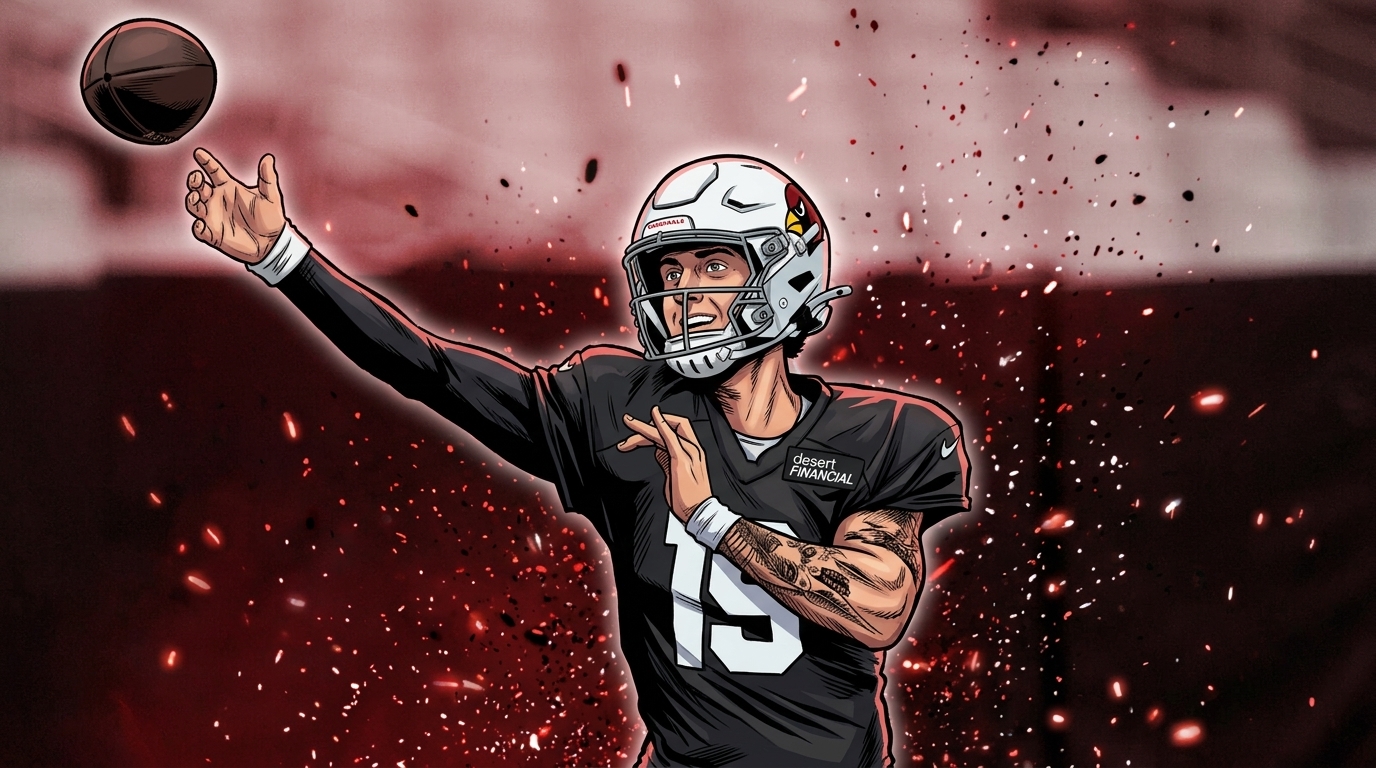

There’s a detail buried in Chicago’s 59-37 win over Carolina that matters more than the final score, and it has nothing to do with the number 59. This was not Ben Johnson’s coaching debut. Johnson already has a full season on his resume, an NFC North title and 11 regular-season wins in it, which means Week 1 of 2026 is a second data point on Williams and his head coach, and the shape of that data point is worth more than the total.
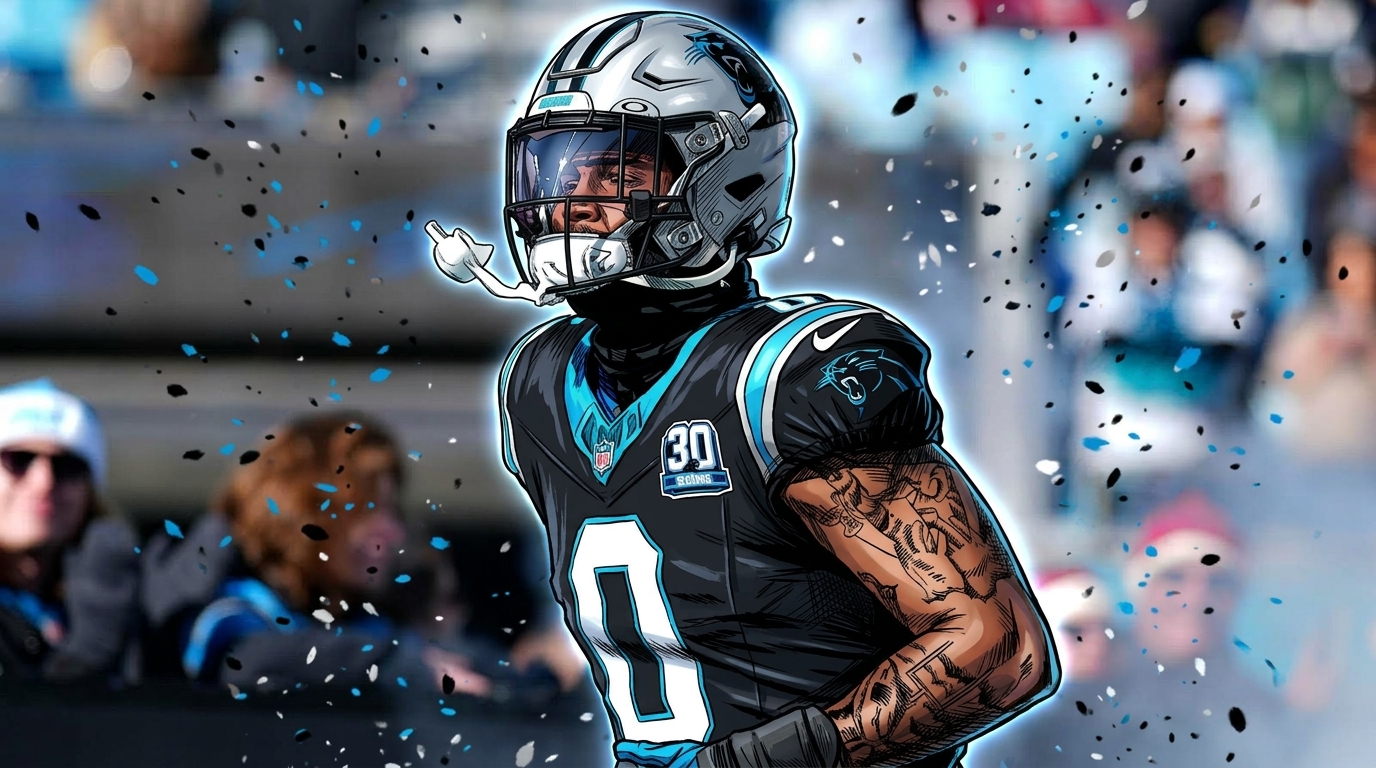
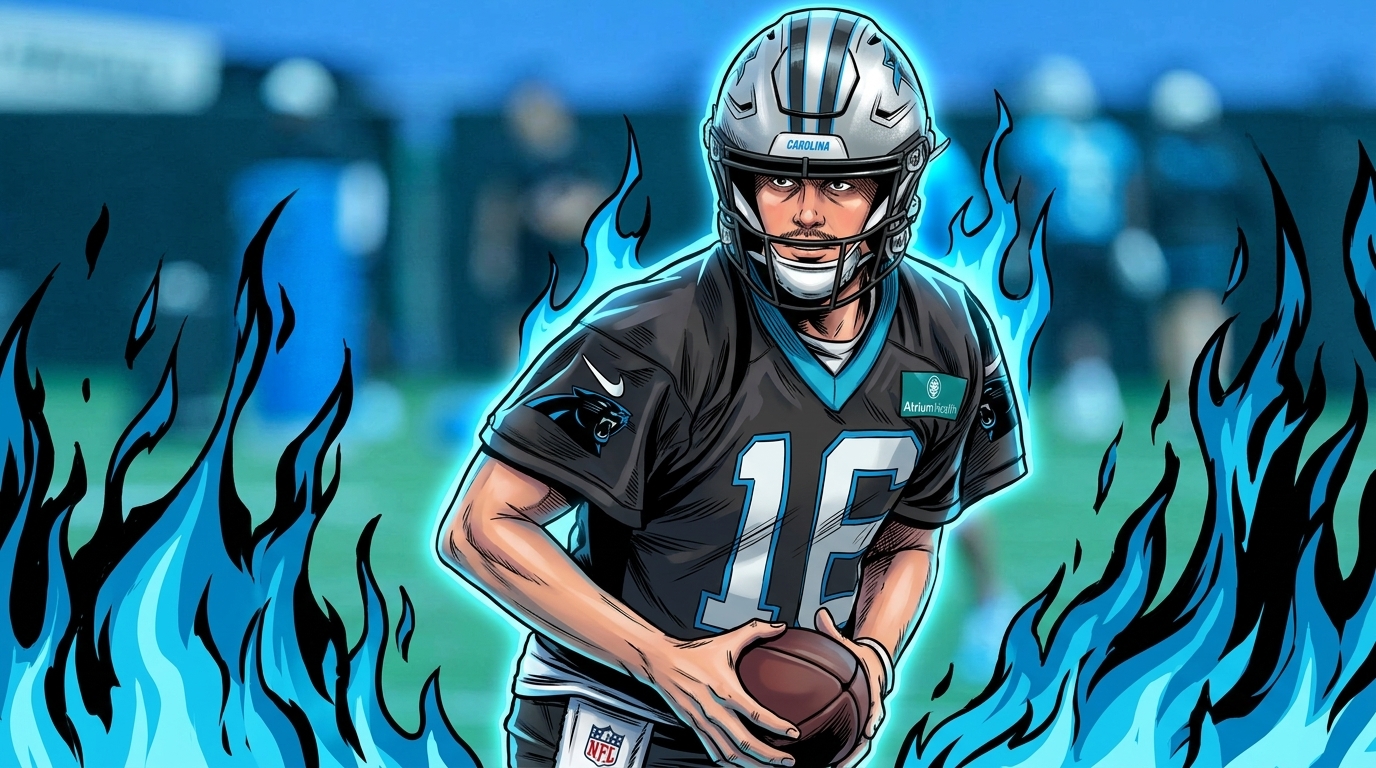
Start with what actually happened, because the score alone undersells it. The Bears and Panthers combined for 96 points at Bank of America Stadium, the highest-scoring Week 1 game in NFL history, beating a record that had stood since the Buccaneers and Saints combined for 88 in 2018. Chicago piled up 552 total yards and scored more points than it has ever scored in a season opener. This game arrived with plenty of pre-game noise around Bryce Young and the Panthers offense, and the buildup around that exact matchup mostly missed what Chicago was about to do to its own record book.
So Is Caleb Williams Actually Good Now?
Start with the numbers: 334 total yards, four touchdowns, a 124.1 passer rating. None of that settles anything by itself. It extends a Year 1 under Ben Johnson that already produced a 90.1 rating and rising accuracy on intermediate throws, which makes this Week 1 performance look like a continuation of a real trend rather than a one-week outlier.
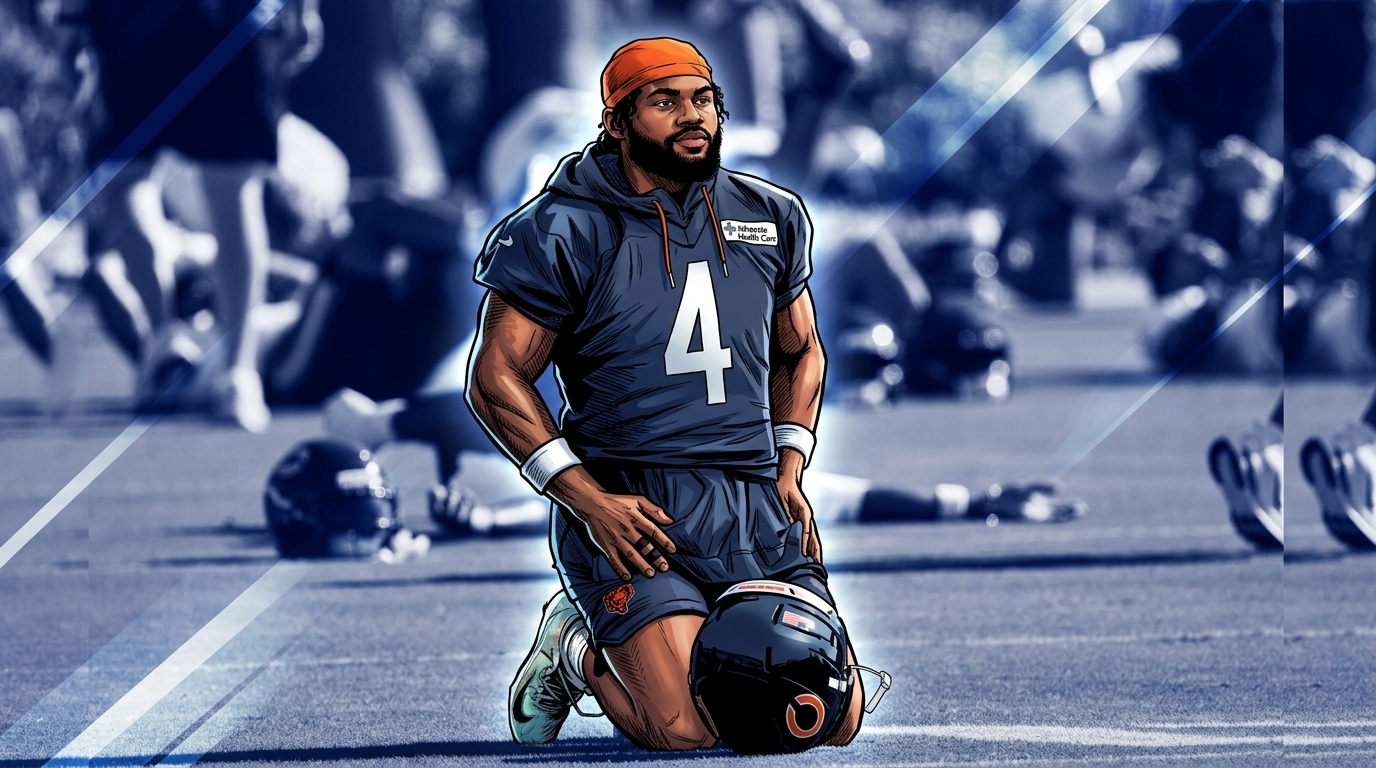
That distinction matters because Williams isn’t a rookie riding a hot debut. He’s entering his third NFL season, his second with this coaching staff, and the version of him that showed up in Charlotte looked exactly like the guy Johnson’s offense had been building toward since last September.
The Stat Line Everyone Skimmed Past
Williams went 21-of-29 for 269 yards and two touchdowns, finding Cole Kmet and Jahdae Walker through the air, then added 65 yards and two more scores on 10 carries. That’s 334 total yards and four touchdowns split almost evenly between his arm and his legs, the kind of line that requires a passing offense functional enough to stress a defense and a quarterback comfortable enough to punish it with his legs once that defense tilts.
The part that jumps off the tape is where those completions landed. Intermediate throws, the 10-to-20-yard range that gave Williams real trouble for stretches of 2025, were the area he hit cleanly on Saturday. He finished well above his expected completion rate for the day, which is a different claim than “he threw a lot of touchdowns.” It means the ball was landing exactly where the route said it should.
None of this happened in a vacuum, and the league noticed the scale of it before the game was even over.
https://x.com/ScorigamiGuy/status/2099236057086599267
A 59-37 final is rare air. It was the 1,096th unique score in NFL history and the first scorigami of the season, which tells you exactly how rare it is for two offenses to collide this hard in Week 1 and both walk away having scored 37 or more.
What’s Actually Different From 2025
Ben Johnson took over as Chicago’s head coach on January 21, 2025, after running the Lions’ offense, and his first year delivered the NFC North and the first playoff win by a first-year Bears head coach in franchise history. Williams’ half of that season was the uneven part: 330-of-568 passing for 3,942 yards, a franchise record, 27 touchdowns, and a 90.1 rating. Pro Football Focus graded him 75.4 overall, 16th among 43 qualifying quarterbacks, with a 71.1 passing grade that ranked 19th. Good. Not decisive.
One number from that season explains why Johnson’s staff stuck with the plan instead of scrapping it. Williams held the ball for 3.25 seconds on average in 2025, longer than almost every other starter in the league, because he was hunting for the big play down the field rather than bailing early. The tradeoff for holding on that long is usually sacks and turnovers, and Williams still protected himself well enough in the pocket to avoid the kind of negative plays that wrecked stretches of his rookie tape. A quarterback who can hunt for a chunk play and still get himself out of trouble when it doesn’t come open is exactly the piece you build an offense around while everything else catches up.
The improvement wasn’t a straight line. Two brutal weeks to open the year gave way to incremental gains as the season went on. Then came the playoffs. Down 21-3 at halftime to Green Bay in the Wild Card round, Williams led Chicago on a furious fourth-quarter comeback, capped by a go-ahead touchdown pass to DJ Moore with 1:43 left, for a 31-27 win and the Bears’ first playoff victory in 15 seasons. Williams finished with six big-time throws, third-most by any quarterback in a playoff game. That comeback was the first real proof that the processing speed and pocket composure Johnson’s system demands were starting to show up when the pressure was highest. Week 1 in Charlotte reads like the second piece of that same proof.
The Run Game Made the Passing Game Easy
Chicago ran for 291 yards on 39 carries and scored six rushing touchdowns, and that number is doing more work here than it gets credit for. D’Andre Swift carried 18 times for 124 yards and three scores, including a 28-yard touchdown run, on the extension Chicago just gave him. Kyle Monangai added 100 yards on just 10 carries, capped by a 61-yard touchdown that had nothing to do with Williams at all.
That’s the part of this offense that made everything else easier. When a defense has to respect two backs who can both break a long run on any given snap, the boxes get lighter, the safeties creep closer to the line, and the intermediate window Williams exploited all afternoon gets wider. The passing numbers look like a breakout. A lot of them were a product of a run game that put Carolina in a position where it had to guess wrong somewhere.
Carolina wasn’t a punching bag, either, which matters for how much stock to put in any of this. Bryce Young threw for 361 yards on 23-of-37 passing with one interception, and Jalen Coker caught eight passes for 138 yards. This was a shootout between two offenses that both moved the ball, and Carolina’s defense was competent enough to make Chicago work for every possession. That context makes the 552 total yards and the six rushing touchdowns mean more. The Bears won a track meet against a defense that was good enough to make it one.
Even Williams Isn’t Buying the Hype
Williams himself doesn’t think this was a clean performance, and that should stop anyone from overreacting to 59 points. “That’s who we want to be this week. We got to go clean up. We want to be truthers,” he said after the game. “Obviously, this is going to be our kind of worst game. I know the points don’t necessarily show that, but execution, the blocking, the penalties, all these different things.” Swift told ESPN’s Courtney Cronin the offense could have looked even more lopsided if not for penalties.
It reads like a quarterback who watched the same tape I did and noticed that a 59-point win covered for mistakes a tighter opponent would have punished. Ben Johnson isn’t hiding his ambition either, reiterating after the game that his goal is to build “the highest scoring” offense in the league, a nod to his stated chase of the 2013 Broncos’ all-time single-season scoring record. I track my own shooting percentages every weekend at the Berkeley rec center, and even I know the difference between a hot shooting night and an actual change in shot selection. Williams and his coach both sound like they know which one Saturday was, and they’re choosing to treat it as the floor rather than the ceiling.
That’s the bet worth making on this offense. A team that can score 59 points while its quarterback is still complaining about execution has more room to grow than the box score admits, and Chicago’s 2026 season is going to look a lot more like Charlotte than like anything from Williams’ rookie year.