NIL (Name, Image, Likeness)
NIL lets college athletes earn money from their name, image and likeness; a 2021 NCAA policy opened it and the 2025 House settlement added revenue sharing.
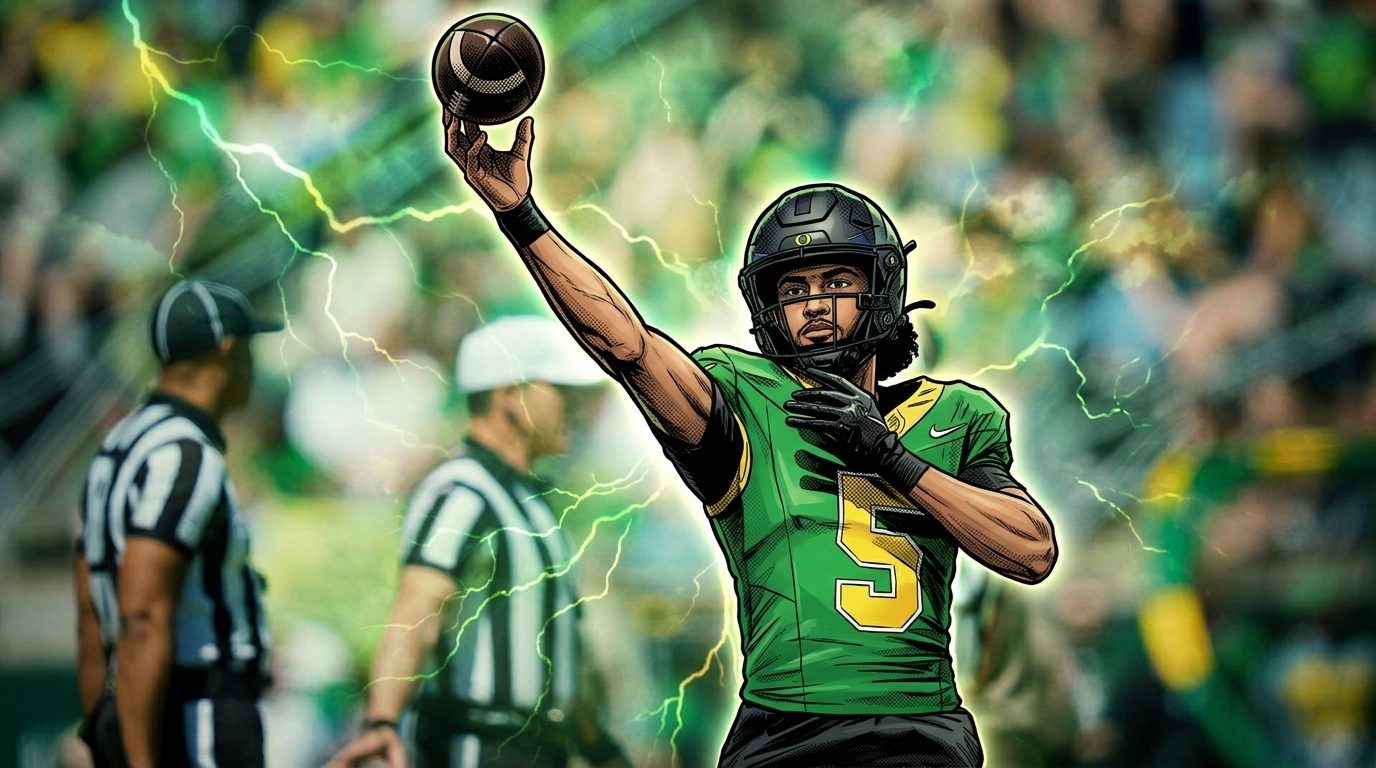
Name, Image and Likeness (NIL) is the right of a college athlete to earn money from the commercial use of their own identity — endorsements, autographs, social-media promotions, merchandise, camps and personal appearances — without forfeiting NCAA eligibility. It has applied to every NCAA athlete in every sport since the association’s interim policy took effect on July 1, 2021, and in football it has become the defining force of the modern recruiting and roster-building era. The term covers two distinct money streams that are often conflated: third-party NIL deals paid by outside businesses and booster-funded collectives, and — since the 2025-26 academic year — direct revenue-sharing payments from schools themselves.
Per CBS Sports and the NCAA, as of Oct. 14, 2026.
How it works
An NIL arrangement is a commercial transaction, not a salary for playing. An athlete licenses their identity and performs a deliverable — a sponsored post, an autograph session, an appearance — and is paid for it. Under the interim policy, athletes are permitted to hire agents and attorneys to negotiate these deals, provided the activity complies with any applicable state law and with school rules.
In practice, most high-value football NIL money has flowed through collectives: privately funded organizations, independent of the university, that pool contributions from boosters, donors and local businesses and then route them to athletes as NIL payments. As On3 and CBS Sports have documented, collectives quickly became the mechanism by which programs retained and recruited rosters, with estimates placing total collective spending in the range of a billion dollars across the 2024-25 cycle.
The House v. NCAA settlement added a second, regulated channel. Beginning July 1, 2025, Division I schools that opt in may pay athletes directly, subject to an annual per-school cap set at roughly 22 percent of the average athletic revenue at the wealthiest conferences — about $20.5 million for 2025-26 — and scheduled to rise at least four percent per year over the ten-year agreement.
| Rule | Detail |
|---|---|
| Direct revenue sharing begins | July 1, 2025 |
| Per-school cap, 2025-26 | ~$20.5 million |
| Cap basis | ~22% of average power-conference athletic revenue |
| Annual cap growth | at least 4% |
| Third-party deal review | deals of $600+ with boosters/collectives |
To keep collective money from simply replacing the old under-the-table booster economy, the settlement created the College Sports Commission and a Deloitte-run clearinghouse called NIL Go. As outlined by Jackson Lewis, any third-party NIL deal of $600 or more involving a booster or collective must be reported and reviewed against a “fair market value” and “valid business purpose” standard drawn from a database of past deals.
Where it came from
The legal ground shifted on June 21, 2021, when the U.S. Supreme Court ruled unanimously in NCAA v. Alston that the association’s limits on education-related benefits violated antitrust law. The decision did not itself legalize NIL — it concerned education benefits — but Justice Brett Kavanaugh’s concurrence openly questioned whether the NCAA’s broader amateurism rules could survive scrutiny, and it arrived as a wave of state NIL statutes were about to take effect.
Facing those laws, the NCAA’s Board of Directors adopted an interim NIL policy on June 30, 2021, effective the next day. Rather than build a national rulebook, the policy instructed schools to follow their own state’s law or, absent one, to set “reasonable” local rules — a deliberately light touch that left a near-vacuum quickly filled by collectives. The era of open athlete compensation ran on that patchwork for three years until the NCAA and its power conferences agreed to settle the House antitrust case in May 2024. Judge Claudia Wilken granted final approval on June 6, 2025, clearing nearly $2.8 billion in back damages for athletes who competed from 2016 through 2024 and authorizing the direct-pay system that opened weeks later.
Why it matters
NIL rewired how football rosters are assembled. Recruiting pitches now routinely include a program’s collective capacity and projected revenue-share allocation, and the transfer portal has become a free-agency market where established players move for better NIL terms. The clearest single illustration came in the spring of 2025 with Tennessee quarterback Nico Iamaleava. As ESPN reported, Iamaleava — playing on a collective deal valued at a reported $2.4 million — and his representatives sought a substantial raise heading into spring practice; when talks stalled, he missed practice, and Tennessee parted ways with its starting quarterback rather than renegotiate. He committed to UCLA on April 20, 2025. Iamaleava later said the move was about returning home to California rather than money, but the episode crystallized a new reality: a Power Four program and its franchise quarterback could split over an NIL figure in April, something that would have been unthinkable before 2021.
The arguments
Supporters argue NIL corrected a decades-long injustice. Athletes whose performances generate billions in television and ticket revenue can finally share in it, and the Alston court’s skepticism of amateurism — voiced most sharply by Justice Kavanaugh — gave the position legal weight. Advocates note that athletes bear real injury risk and short windows of marketability, and that forbidding them from monetizing their own names while coaches and administrators earned seven- and eight-figure salaries was never defensible.
Critics, including many coaches and athletic directors, counter that the system has drifted from endorsement value toward disguised pay-for-play, concentrating talent at the schools with the deepest collectives and eroding competitive balance and roster stability. Reporting by the Chronicle of Higher Education has detailed the scrutiny collectives face over whether their “deals” reflect genuine market value. A third strand of the debate centers on equity and Title IX — whether revenue-sharing dollars, concentrated in football and men’s basketball, can be distributed without disadvantaging women’s sports — and on the legal durability of the House cap itself, which several observers expect to face fresh antitrust challenges.
Positions summarized from reporting by the Chronicle of Higher Education, CBS Sports and Sportico.
The bottom line
In the span of four years, NIL turned college football from a nominally amateur enterprise into an openly professionalized market, first through booster collectives operating in a regulatory vacuum and then through a capped, school-administered revenue-sharing system born of the House settlement. The guardrails — NIL Go review, a per-school cap, the College Sports Commission — are new and largely untested as of the 2026-27 season, and the central questions of competitive balance, Title IX equity and the cap’s legal survival remain unresolved. What is settled is the premise: college athletes can be paid for who they are, and the sport is still rebuilding itself around that fact.