Philadelphia Phillies
Founded in 1883, the Philadelphia Phillies are MLB's National League East club, winners of the World Series in 1980 and 2008 and eight NL pennants.
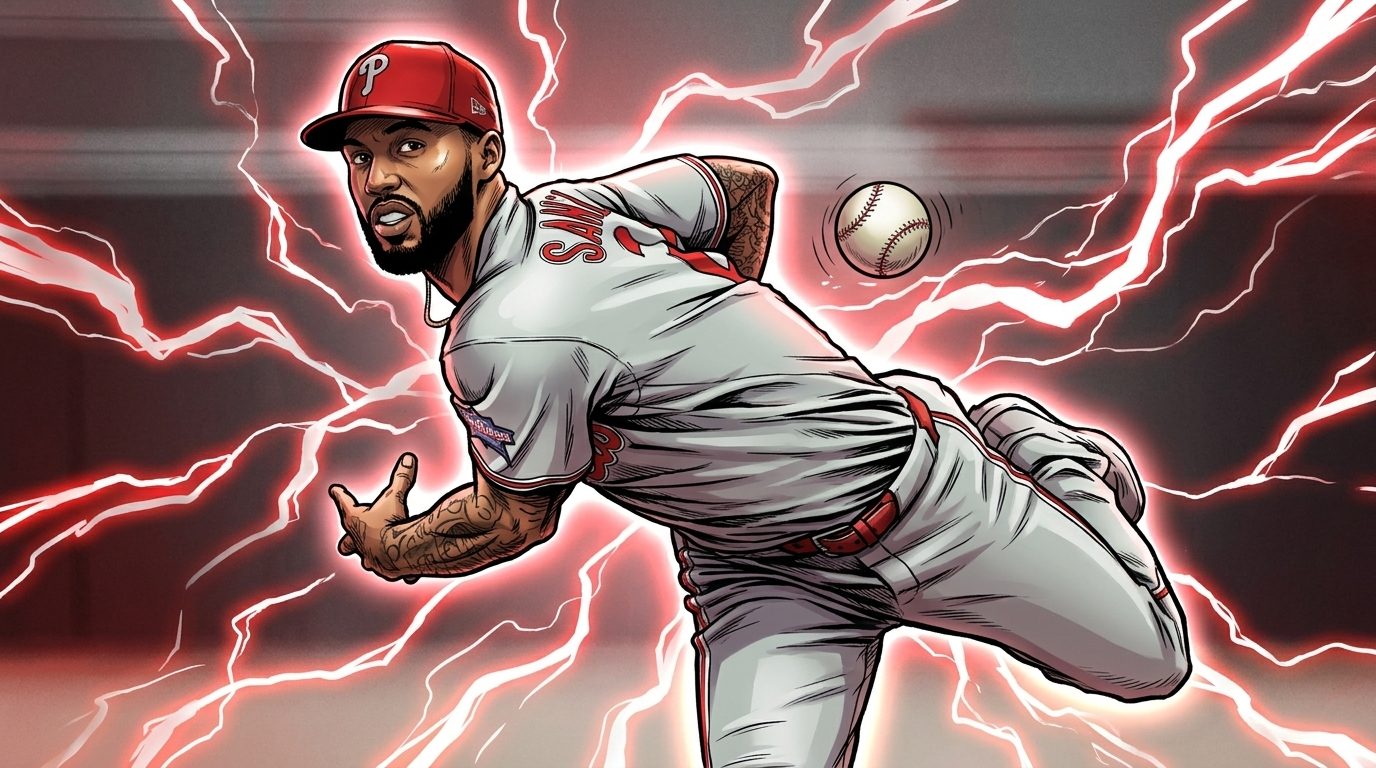
The Philadelphia Phillies are one of the oldest continuously operating franchises in American professional sports, playing in the same city under essentially the same name since 1883. They are also its most-losing team: through the 2026 season the franchise had compiled a 10,391–11,466 all-time record, the most defeats any club in North American pro sports has ever absorbed. That long futility is only half the story. The Phillies also own two of the most beloved championship teams in Philadelphia memory — the 1980 and 2008 World Series winners — eight National League pennants, and the generational greatness of Mike Schmidt and Steve Carlton. No franchise better embodies the distance between a city’s suffering and its joy.
| Vitals | |
|---|---|
| Founded | 1883 (as the Philadelphia Quakers/Phillies) |
| League / division | National League (NL) East |
| Stadium | Citizens Bank Park (opened 2004) |
| Owner | John S. Middleton (managing partner) |
| Manager (on Oct. 20, 2026) | Don Mattingly |
| World Series titles | 2 (1980, 2008) |
Origins and the Baker Bowl years (1883–1917)
The club was born in 1883 when owner Al Reach moved a defunct franchise to Philadelphia, christening it the Quakers before the Phillies name took hold. The early teams were undistinguished, but the 1890s produced some of the deadliest hitters of the dead-ball era. Outfielder Ed Delahanty — who hit four home runs in a single game in 1896 — together with Billy Hamilton, Sam Thompson and the young Nap Lajoie gave the Phillies a fearsome lineup even as pennants stayed out of reach.
The first flag came in 1915. Behind the pitching of Grover Cleveland Alexander, the Phillies went 90–62 and won the franchise’s first National League pennant, then lost the World Series to the Boston Red Sox four games to one. The home park through this period was the Baker Bowl, a cramped, oddly shaped ground in North Philadelphia whose short right-field wall flattered sluggers and tormented pitchers for decades.
The long descent (1918–1948)
Then came the collapse into a generation of losing. After trading Alexander away in 1917, the Phillies fell into the National League cellar and effectively stayed there for thirty years. They lost 100 or more games in 1921, 1923, 1927, 1928, 1930, 1936, 1938, 1939, 1941, 1942 and 1945 — a stretch of institutional futility with few parallels in the sport.
The nadir was the early 1940s. The 1941 club went 43–111 and the 1942 team 42–109; the franchise finished last in the NL seven times in eight years. The era’s one bright light was outfielder Chuck Klein, whose Baker Bowl power numbers in the early 1930s eventually carried him to the Hall of Fame, and who is honored today with a “P” on the Phillies’ retired-number wall.
The Whiz Kids (1949–1950)
In 1950 the youngest team in baseball ended thirty-five years of pennant drought. Nicknamed the “Whiz Kids” for their average age, the Phillies went 91–63 and clinched the National League on the final day of the season, when Dick Sisler hit a tenth-inning three-run homer in Brooklyn. The team’s foundation was pitching: right-hander Robin Roberts, who would win 20 games six straight years, and center fielder Richie Ashburn, a slap-hitting leadoff man and defensive marvel.
The storybook ended against the Yankees. New York swept the 1950 World Series four games to none, three of the four losses by a single run. It would be the Phillies’ only pennant for the next three decades, and a reminder that even their best teams of the era ran into something better in October.
Drought and the 1964 collapse (1951–1975)
The defining heartbreak of the period was 1964. Managed by Gene Mauch, the Phillies led the National League by six and a half games with twelve to play, then lost ten in a row and finished a game behind St. Louis — a collapse so complete that “the Phold” entered the city’s vocabulary. The season had produced one perfect night: on June 21, 1964, Jim Bunning threw a perfect game against the Mets, the first in modern National League history and the first Father’s Day perfecto.
The rest of the stretch was mostly lean. The 1961 team lost 23 games in a row on its way to 47–107. But the arrival of a slugging third baseman named Mike Schmidt in 1972 and slugger Dick Allen before him — Allen’s No. 15 is now retired — signaled that the franchise was assembling the pieces of something durable at last.
Schmidt, Carlton, and the 1980 title (1976–1983)
The late 1970s brought the first sustained winner in franchise history. The Phillies won 101 games in both 1976 and 1977 and a third straight NL East title in 1978, but lost in the National League Championship Series each year. The core was overwhelming: Mike Schmidt, who would retire with 548 home runs and three NL MVP awards (1980, 1981, 1986), and left-hander Steve Carlton, the first pitcher to win four Cy Young Awards (1972, 1977, 1980, 1982).
In 1980 they finally broke through. Managed by Dallas Green, the Phillies went 91–71 and won the World Series over the Kansas City Royals four games to two — the franchise’s first title in its 98th season, the last of the original 16 clubs to win one. The final out came on October 21, 1980, when closer Tug McGraw struck out Willie Wilson; Schmidt was named Series MVP.
The window stayed open through 1983. An aging roster dubbed the “Wheeze Kids” won another pennant before losing the World Series to the Baltimore Orioles four games to one, closing out the most successful era the Phillies had ever known.
Macho Row and the 1993 pennant (1984–2000)
After Schmidt retired in 1989 the team receded, then produced one unforgettable outlier. The 1993 Phillies — a scruffy, hard-living group known as “Macho Row” and built around John Kruk, Lenny Dykstra, Curt Schilling and closer Mitch Williams — went 97–65, upset the Atlanta Braves in the NLCS and reached the World Series.
It ended on one swing. In Game 6 against the Toronto Blue Jays, Joe Carter hit a walk-off home run off Williams to win the Series for Toronto — one of only two times a World Series has ended on a home run. The rest of the 1990s was grim, with five straight losing seasons to close the decade.
The golden era: 2008 and back-to-back pennants (2001–2011)
The 2000s produced the best sustained run in franchise history. After years of near-misses the Phillies won the NL East in 2007, the first of five consecutive division titles under manager Charlie Manuel. The homegrown core was special: shortstop Jimmy Rollins (2007 NL MVP), second baseman Chase Utley, first baseman Ryan Howard (2006 NL MVP on the strength of 58 home runs) and left-hander Cole Hamels.
In 2008 the city got its championship. The Phillies went 92–70 and won the World Series over the Tampa Bay Rays four games to one, with closer Brad Lidge finishing a perfect 48-for-48 in save chances and Hamels taking Series MVP. The clinching Game 5 was suspended by rain and completed two days later, on October 29, 2008 — the only mid-game suspension in World Series history.
They stayed elite for three more years. Philadelphia won the 2009 pennant before losing the World Series to the Yankees, then added ace Roy Halladay, who threw a perfect game on May 29, 2010, a postseason no-hitter on October 6, 2010, and won a unanimous NL Cy Young. The 2011 “Four Aces” team won a franchise-record 102 games but lost the Division Series to St. Louis in five.
The rebuild (2012–2018)
The dynasty aged out quickly. As the championship core broke down, the Phillies traded away Hamels, Cliff Lee and others and slid into a full rebuild, posting seven straight non-winning seasons. The low point was 2015’s 63–99, the franchise’s worst record since the 1960s. The years were spent accumulating draft capital and payroll flexibility for the spending spree that would follow.
The Harper era and Red October (2019–present)
The turn came in March 2019 with a record contract. The Phillies signed free agent Bryce Harper to a 13-year, $330 million deal, then the largest total-value contract in North American sports history. Harper delivered a 2021 NL MVP, and the front office kept spending, adding slugger Kyle Schwarber, ace Zack Wheeler, catcher J.T. Realmuto, and later shortstop Trea Turner on an 11-year, $300 million contract.
“Red October” arrived in 2022. Despite a middling 87–75 record, the Phillies seized the final wild card, then beat the Cardinals, the Braves and the Padres to win the pennant. The clincher came on October 23, 2022, when Harper hit a go-ahead two-run homer in the eighth inning of NLCS Game 5 and was named series MVP. The run ended in a World Series loss to the Houston Astros four games to two.
The team became a perennial contender without closing the deal. The 2023 Phillies returned to the NLCS and lost to the Arizona Diamondbacks in seven games. In 2024 they won 95 games and the NL East but were upset in the Division Series by the Mets. In 2025 they went 96–66 and repeated as division champions — Schwarber hit 56 home runs — but lost ace Wheeler for the stretch run and postseason to a blood clot requiring thoracic-outlet surgery, and fell to the Dodgers in the Division Series.
2026 brought upheaval. After a 9–19 start, manager Rob Thomson was fired on April 28, 2026 and Don Mattingly took over, steadying the club to an 88–74 finish and a fifth straight playoff berth before a Wild Card Series loss to Atlanta. Philadelphia hosted the All-Star Game at Citizens Bank Park that July; in October the club kept Mattingly through 2028.
Retired numbers
The Phillies honor seven uniform numbers plus Jackie Robinson’s league-wide No. 42 and a “P” for two stars who played before the franchise wore numbers. The figures span the whole history, from the Whiz Kids battery of Roberts and Ashburn to the 1980 champions Schmidt and Carlton to the modern ace Roy Halladay, whose number was retired after his death in a 2017 plane crash.
| No. | Player | Pos. | Team tenure | Retired |
|---|---|---|---|---|
| 1 | Richie Ashburn | CF | 1948–1959 | 1979 |
| 14 | Jim Bunning | P | 1964–1967, 1970–1971 | Apr. 6, 2001 |
| 15 | Dick Allen | 3B/1B | 1963–1969, 1975–1976 | Sept. 3, 2020 |
| 20 | Mike Schmidt | 3B | 1972–1989 | 1990 |
| 32 | Steve Carlton | P | 1972–1986 | 1989 |
| 34 | Roy Halladay | P | 2010–2013 | Aug. 8, 2021 |
| 36 | Robin Roberts | P | 1948–1961 | 1962 |
| 42 | Jackie Robinson | 2B | — | 1997 (MLB-wide) |
| P | Grover Cleveland Alexander | P | 1911–1917, 1930 | Honored (pre-number era) |
| P | Chuck Klein | OF | 1928–1933, 1936–1944 | Honored (pre-number era) |
Season by season
Every season in franchise history, folded by decade, newest first.
The 2020s 566–466 · 5 playoff berths · 1 pennant
| Season | W–L | Finish | Playoffs |
|---|---|---|---|
| 2026 | 88–74 | 2nd (NL East) | Lost WC Series (ATL 1–2) |
| 2025 | 96–66 | 1st (NL East) | Lost NLDS (LAD 1–3) |
| 2024 | 95–67 | 1st (NL East) | Lost NLDS (NYM 1–3) |
| 2023 | 90–72 | 2nd (NL East) | Lost NLCS (ARI 3–4) |
| 2022 | 87–75 | 3rd (NL East) | Lost WS (HOU 2–4) |
| 2021 | 82–80 | 2nd (NL East) | — |
| 2020 | 28–32 | 3rd (NL East) | — |
The 2010s 787–833 · 2 playoff berths · 0 pennants
| Season | W–L | Finish | Playoffs |
|---|---|---|---|
| 2019 | 81–81 | 4th (NL East) | — |
| 2018 | 80–82 | 3rd (NL East) | — |
| 2017 | 66–96 | 5th (NL East) | — |
| 2016 | 71–91 | 4th (NL East) | — |
| 2015 | 63–99 | 5th (NL East) | — |
| 2014 | 73–89 | 5th (NL East) | — |
| 2013 | 73–89 | 4th (NL East) | — |
| 2012 | 81–81 | 3rd (NL East) | — |
| 2011 | 102–60 | 1st (NL East) | Lost NLDS (STL 2–3) |
| 2010 | 97–65 | 1st (NL East) | Lost NLCS (SF 2–4) |
The 2000s 850–769 · 3 playoff berths · 2 pennants · 1 title
| Season | W–L | Finish | Playoffs |
|---|---|---|---|
| 2009 | 93–69 | 1st (NL East) | Lost WS (NYY 2–4) |
| 2008 | 92–70 | 1st (NL East) | Won World Series (TB 4–1) |
| 2007 | 89–73 | 1st (NL East) | Lost NLDS (COL 0–3) |
| 2006 | 85–77 | 2nd (NL East) | — |
| 2005 | 88–74 | 2nd (NL East) | — |
| 2004 | 86–76 | 2nd (NL East) | — |
| 2003 | 86–76 | 3rd (NL East) | — |
| 2002 | 80–81 | 3rd (NL East) | — |
| 2001 | 86–76 | 2nd (NL East) | — |
| 2000 | 65–97 | 5th (NL East) | — |
The 1990s 732–823 · 1 playoff berth · 1 pennant
| Season | W–L | Finish | Playoffs |
|---|---|---|---|
| 1999 | 77–85 | 3rd (NL East) | — |
| 1998 | 75–87 | 3rd (NL East) | — |
| 1997 | 68–94 | 5th (NL East) | — |
| 1996 | 67–95 | 5th (NL East) | — |
| 1995 | 69–75 | 2nd (NL East) | — |
| 1994 | 54–61 | 4th (NL East) | — (strike) |
| 1993 | 97–65 | 1st (NL East) | Lost WS (TOR 2–4) |
| 1992 | 70–92 | 6th (NL East) | — |
| 1991 | 78–84 | 3rd (NL East) | — |
| 1990 | 77–85 | 4th (NL East) | — |
The 1980s 783–780 · 3 playoff berths · 2 pennants · 1 title
| Season | W–L | Finish | Playoffs |
|---|---|---|---|
| 1989 | 67–95 | 6th (NL East) | — |
| 1988 | 65–96 | 6th (NL East) | — |
| 1987 | 80–82 | 4th (NL East) | — |
| 1986 | 86–75 | 2nd (NL East) | — |
| 1985 | 75–87 | 5th (NL East) | — |
| 1984 | 81–81 | 4th (NL East) | — |
| 1983 | 90–72 | 1st (NL East) | Lost WS (BAL 1–4) |
| 1982 | 89–73 | 2nd (NL East) | — |
| 1981 | 59–48 | 1st / 3rd (split) | Lost NLDS (MON 2–3) |
| 1980 | 91–71 | 1st (NL East) | Won World Series (KC 4–2) |
The 1970s 812–801 · 3 playoff berths · 0 pennants
| Season | W–L | Finish | Playoffs |
|---|---|---|---|
| 1979 | 84–78 | 4th (NL East) | — |
| 1978 | 90–72 | 1st (NL East) | Lost NLCS (LAD 1–3) |
| 1977 | 101–61 | 1st (NL East) | Lost NLCS (LAD 1–3) |
| 1976 | 101–61 | 1st (NL East) | Lost NLCS (CIN 0–3) |
| 1975 | 86–76 | 2nd (NL East) | — |
| 1974 | 80–82 | 3rd (NL East) | — |
| 1973 | 71–91 | 6th (NL East) | — |
| 1972 | 59–97 | 6th (NL East) | — |
| 1971 | 67–95 | 6th (NL East) | — |
| 1970 | 73–88 | 5th (NL East) | — |
The 1960s 759–843 · 0 playoff berths · 0 pennants
| Season | W–L | Finish | Playoffs |
|---|---|---|---|
| 1969 | 63–99 | 5th (NL East) | — |
| 1968 | 76–86 | 7th (NL) | — |
| 1967 | 82–80 | 5th (NL) | — |
| 1966 | 87–75 | 4th (NL) | — |
| 1965 | 85–76 | 6th (NL) | — |
| 1964 | 92–70 | 2nd (NL) | — |
| 1963 | 87–75 | 4th (NL) | — |
| 1962 | 81–80 | 7th (NL) | — |
| 1961 | 47–107 | 8th (NL) | — |
| 1960 | 59–95 | 8th (NL) | — |
The 1950s 767–773 · 1 playoff berth · 1 pennant
| Season | W–L | Finish | Playoffs |
|---|---|---|---|
| 1959 | 64–90 | 8th (NL) | — |
| 1958 | 69–85 | 8th (NL) | — |
| 1957 | 77–77 | 5th (NL) | — |
| 1956 | 71–83 | 5th (NL) | — |
| 1955 | 77–77 | 4th (NL) | — |
| 1954 | 75–79 | 4th (NL) | — |
| 1953 | 83–71 | 3rd (NL) | — |
| 1952 | 87–67 | 4th (NL) | — |
| 1951 | 73–81 | 5th (NL) | — |
| 1950 | 91–63 | 1st (NL) | Lost WS (NYY 0–4) |
The 1940s 584–951 · 0 playoff berths · 0 pennants
| Season | W–L | Finish | Playoffs |
|---|---|---|---|
| 1949 | 81–73 | 3rd (NL) | — |
| 1948 | 66–88 | 6th (NL) | — |
| 1947 | 62–92 | 7th (NL) | — |
| 1946 | 69–85 | 5th (NL) | — |
| 1945 | 46–108 | 8th (NL) | — |
| 1944 | 61–92 | 8th (NL) | — |
| 1943 | 64–90 | 7th (NL) | — |
| 1942 | 42–109 | 8th (NL) | — |
| 1941 | 43–111 | 8th (NL) | — |
| 1940 | 50–103 | 8th (NL) | — |
The 1930s 581–943 · 0 playoff berths · 0 pennants
| Season | W–L | Finish | Playoffs |
|---|---|---|---|
| 1939 | 45–106 | 8th (NL) | — |
| 1938 | 45–105 | 8th (NL) | — |
| 1937 | 61–92 | 7th (NL) | — |
| 1936 | 54–100 | 8th (NL) | — |
| 1935 | 64–89 | 7th (NL) | — |
| 1934 | 56–93 | 7th (NL) | — |
| 1933 | 60–92 | 7th (NL) | — |
| 1932 | 78–76 | 4th (NL) | — |
| 1931 | 66–88 | 6th (NL) | — |
| 1930 | 52–102 | 8th (NL) | — |
The 1920s 566–962 · 0 playoff berths · 0 pennants
| Season | W–L | Finish | Playoffs |
|---|---|---|---|
| 1929 | 71–82 | 5th (NL) | — |
| 1928 | 43–109 | 8th (NL) | — |
| 1927 | 51–103 | 8th (NL) | — |
| 1926 | 58–93 | 8th (NL) | — |
| 1925 | 68–85 | 6th (NL) | — |
| 1924 | 55–96 | 7th (NL) | — |
| 1923 | 50–104 | 8th (NL) | — |
| 1922 | 57–96 | 7th (NL) | — |
| 1921 | 51–103 | 8th (NL) | — |
| 1920 | 62–91 | 8th (NL) | — |
The 1910s 762–717 · 1 playoff berth · 1 pennant
| Season | W–L | Finish | Playoffs |
|---|---|---|---|
| 1919 | 47–90 | 8th (NL) | — |
| 1918 | 55–68 | 6th (NL) | — |
| 1917 | 87–65 | 2nd (NL) | — |
| 1916 | 91–62 | 2nd (NL) | — |
| 1915 | 90–62 | 1st (NL) | Lost WS (BOS 1–4) |
| 1914 | 74–80 | 6th (NL) | — |
| 1913 | 88–63 | 2nd (NL) | — |
| 1912 | 73–79 | 5th (NL) | — |
| 1911 | 79–73 | 4th (NL) | — |
| 1910 | 78–75 | 4th (NL) | — |
The 1900s 709–752 · 0 playoff berths · 0 pennants
| Season | W–L | Finish | Playoffs |
|---|---|---|---|
| 1909 | 74–79 | 5th (NL) | — |
| 1908 | 83–71 | 4th (NL) | — |
| 1907 | 83–64 | 3rd (NL) | — |
| 1906 | 71–82 | 4th (NL) | — |
| 1905 | 83–69 | 4th (NL) | — |
| 1904 | 52–100 | 8th (NL) | — |
| 1903 | 49–86 | 7th (NL) | — |
| 1902 | 56–81 | 7th (NL) | — |
| 1901 | 83–57 | 2nd (NL) | — |
| 1900 | 75–63 | 3rd (NL) | — |
The 1890s 743–629 · 0 playoff berths · 0 pennants
| Season | W–L | Finish | Playoffs |
|---|---|---|---|
| 1899 | 94–58 | 3rd (NL) | — |
| 1898 | 78–71 | 6th (NL) | — |
| 1897 | 55–77 | 10th (NL) | — |
| 1896 | 62–68 | 8th (NL) | — |
| 1895 | 78–53 | 3rd (NL) | — |
| 1894 | 71–57 | 4th (NL) | — |
| 1893 | 72–57 | 4th (NL) | — |
| 1892 | 87–66 | 4th (NL) | — |
| 1891 | 68–69 | 4th (NL) | — |
| 1890 | 78–53 | 3rd (NL) | — |
The 1880s 390–424 · 0 playoff berths · 0 pennants
| Season | W–L | Finish | Playoffs |
|---|---|---|---|
| 1889 | 63–64 | 4th (NL) | — |
| 1888 | 69–61 | 3rd (NL) | — |
| 1887 | 75–48 | 2nd (NL) | — |
| 1886 | 71–43 | 4th (NL) | — |
| 1885 | 56–54 | 3rd (NL) | — |
| 1884 | 39–73 | 6th (NL) | — |
| 1883 | 17–81 | 8th (NL) | — |
By the numbers
Franchise marks
Ranks
- 1st Most losses, MLB history (11,466)
- 4th Home attendance, MLB (2025, avg. 41,672)
- 7th Franchise value, MLB (Forbes 2026, $3.4B)
Honors
- 2× World Series champion (1980, 2008)
- 8× National League pennant
- Mike Schmidt — 3× NL MVP (1980, 1981, 1986)
- Steve Carlton — 4× Cy Young Award (1972, 1977, 1980, 1982)
- Ryan Howard — 2006 NL MVP
- Jimmy Rollins — 2007 NL MVP
- Bryce Harper — 2021 NL MVP
- Roy Halladay — 2010 NL Cy Young (unanimous)
Per Baseball-Reference, through the 2026 season; valuation per Forbes.
The arguments
Is the 1964 collapse or the 1993 World Series loss the franchise’s deepest wound? Older fans point to the “Phold” — blowing a six-and-a-half-game lead with twelve to play remains, by lead size and timing, one of the worst September collapses in baseball history. Others argue 1993 cut deeper because the team actually reached the World Series and lost it on Joe Carter’s walk-off, a single swing that ended a season many thought destined for a title.
Was the 2007–2011 core underachieving or simply unlucky? One side notes that a roster with multiple MVPs, a perfect-game pitcher and the best rotation in baseball won only one championship in five straight postseason trips, falling in 2009, 2010 and 2011 as a favorite. The other holds that winning any World Series is rare, that the 2008 title validates the group, and that October baseball is too small a sample to label a 102-win team a disappointment.
Does the “most losses in history” label define the franchise or merely reflect its longevity? Critics use the 11,466 figure as shorthand for a cursed, mismanaged club. Defenders counter that only a franchise that has existed continuously since 1883 — never relocating, never folding — could accumulate that many games in the first place, and that the two titles and recent sustained contention are the truer measure.
Why it matters
The Philadelphia Phillies are the franchise that proves a team can be both the sport’s most-losing club and one of its most cherished. For most of a century they were a byword for futility, and then, twice in a generation, they gave one of America’s most demanding sports cities a championship it has never stopped celebrating. From Ed Delahanty to Mike Schmidt to Bryce Harper, the throughline is endurance — a club that has outlasted everything, carried the weight of 11,000 losses, and still shows up every October expecting Red to turn the city upside down.