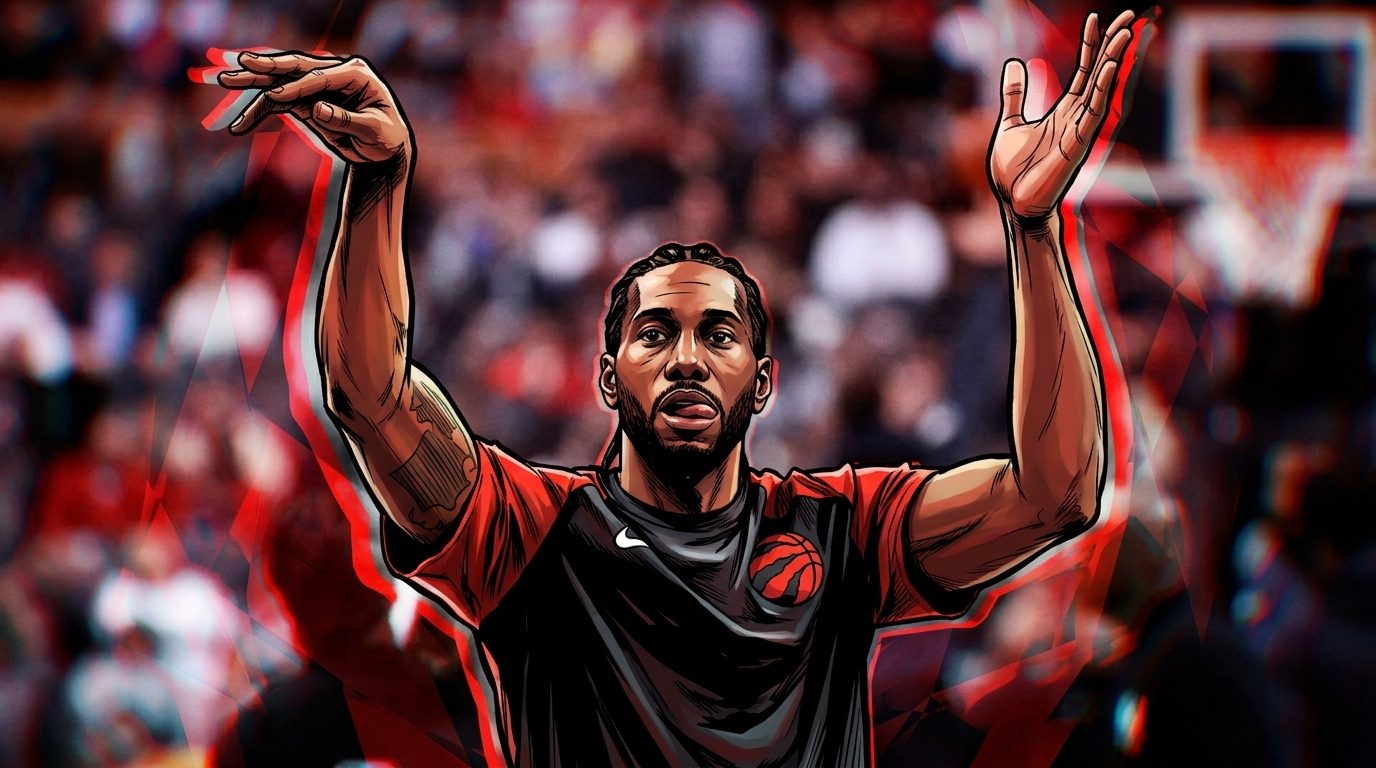

There’s a number buried in Kawhi Leonard’s last three seasons that explains Sunday’s scratch better than any MRI result, and it has nothing to do with his age. It’s 170, the number of games he’s actually played out of a possible 246 since the start of 2023-24. Toronto had that number in full view this offseason when it gave him an extension signed below the max, two years and $115 million guaranteed, after the trade that brought him back to Toronto. Two games into the new deal, his left knee is swelling again, and the number just got worse.
Stephen A. Smith called this the work of “the worst superstar in the history of sports” on First Take, and the internet did what it always does with a Stephen A. line: argued about the hyperbole instead of the math underneath it. The hyperbole isn’t the interesting part. The math is.
What Toronto Actually Bought in This Extension
The Raptors didn’t extend a healthy player on a cold streak. They extended a 35-year-old who has played 68, 37, and 65 games across his last three full seasons, missing 76 games total, close to a third of the schedule in an average year. Spread that evenly and it’s roughly one missed game out of every three, every season, for three straight years. That’s the record on file before anyone put a pen to the $115 million. Per ESPN, Leonard played exactly two games this season, averaging 19.5 points, 7.5 rebounds and 3.5 steals, before Sunday’s late scratch against Minnesota with left knee swelling.
Translate the money: $115 million over two years works out to about $57.5 million a season, an annual number usually reserved for a top-five player who’s actually on the floor for 70-plus games most years. Leonard hasn’t come close to that workload recently, and the extension locks Toronto into betting he will again. Yahoo Sports reports the deal can run through 2028-29 at his option, which means Toronto isn’t just absorbing this season’s risk. It’s underwriting it for three more.
Why Stephen A. Smith’s Outrage Is the Easy Part
Stephen A. Smith is right that something galling happened here, he’s just arguing the wrong part of it. He called Leonard the worst superstar in sports history for cashing a $115 million deal and missing more time right after signing it. The real outrage is that Toronto had three years of that exact pattern on tape before it wrote the check.
This isn’t even Smith’s first run at the line. He first called Leonard the worst superstar in sports back in October 2024, then revived a version of it during the Clippers’ salary-cap-circumvention scandal tied to Leonard’s since-dissolved Aspiration sponsorship. It’s become a recurring bit for him, not a reaction to new information. He went back to it again this week, aimed at the same pattern:
https://x.com/FirstTake/status/2115116475463737487
Smith’s framing treats the swelling like a new data point. It isn’t. It’s the same data point Toronto already had, showing up on schedule.
Is Kawhi Leonard’s Injury History a Dealbreaker?
Not by itself, and the MRI actually makes that case for Toronto. The scan showed no structural damage to the left knee, meaning there’s no new injury to point to, no fresh tear or ligament issue driving the absence. NBC Sports reports Shams Charania’s update that Leonard is expected out “a period of weeks” with a re-evaluation in about a week, which is a swelling-management timeline, not a surgical one.
A clean MRI usually reads as good news. Here it reads as confirmation: there’s no outlier event to blame, just the same 35-year-old body that already cost him 76 games across three seasons doing what it tends to do. Ja’Kobe Walter has stepped into the starting lineup in the meantime and dropped 22 points on five made threes in his first start of the season, which tells you the roster already has practice reps at life without Leonard. That matters more than it sounds like it should. Toronto isn’t scrambling for answers the way a team usually does when its best player goes down; it’s already run the simulation.
Whether he’s back for the November 2 game against the Clippers, his first meeting with the franchise that traded him, is still unresolved. It’s the type of appointment the league circles on the calendar, and Leonard watching it in a suit instead of playing in it would be its own statement, independent of anything Stephen A. says about it.
I run a version of this gut check every fantasy basketball season on injury-prone keepers, and the answer is almost always the same: the number of seasons without a red flag matters more than the severity of any single one. Leonard hasn’t had a red-flag-free season in years.
The Bill Comes Due Either Way
Give me the version of this story that actually holds up: Toronto’s front office looked at 170 games over three years, decided the two-way ceiling was worth the floor risk, and signed anyway. That’s a real basketball bet, not a scandal. Teams pay for talent they can’t replace, and when Leonard plays, he’s still a top-10 two-way player in this league. The problem is that “when Leonard plays” has become a qualifier, not an exception, and a qualifier attached to $57.5 million a year changes how you’re supposed to build the rest of the roster around him.
Stephen A.’s line gets the attention because it’s loud. The actual story is quieter and more damning: a front office with every number it needed signed the deal anyway, and the first bill came due in game two. Expect the pattern to keep billing Toronto on this schedule, a handful of healthy weeks followed by a maintenance scratch, right through whatever’s left of the $115 million. The Raptors didn’t get fooled by Kawhi Leonard’s knee. They just decided it was a cost worth paying, and they’re about to find out how often the invoice arrives.