Los Angeles Clippers
The Los Angeles Clippers' full history runs from the Buffalo Braves and Donald Sterling to Steve Ballmer, Kawhi Leonard and the NBA's 2026 cap penalty.
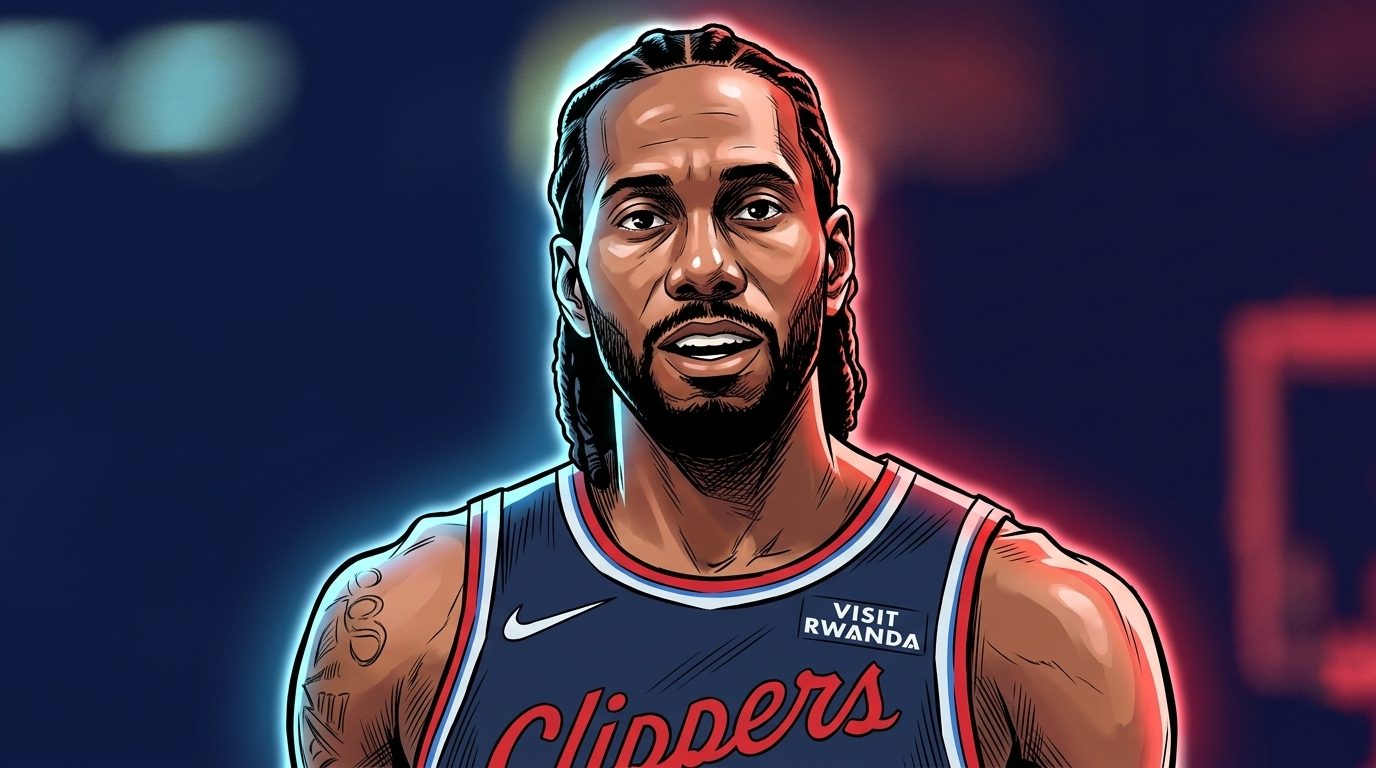
The Los Angeles Clippers are a National Basketball Association franchise based in Inglewood, California, competing in the Western Conference’s Pacific Division. Founded in 1970 as the Buffalo Braves, the club has carried three identities across three cities and, through the 2025-26 season, remains the oldest franchise in North American major professional sports never to reach its league’s championship round. For four decades it was a byword for dysfunction; since Steve Ballmer bought it in 2014 for a then-record $2 billion it has become one of the sport’s richest and most ambitious organizations — a reinvention shadowed in 2026 by the most severe salary-cap penalty the NBA has ever handed down.
| Vitals | |
|---|---|
| Founded | 1970 (as the Buffalo Braves) |
| League / conf. / div. | NBA / Western Conference / Pacific |
| Arena | Intuit Dome, Inglewood, CA (opened Aug. 15, 2024) |
| Owner | Steve Ballmer (2014–present; suspended one year on Sept. 2, 2026) |
| Head coach | Tyronn Lue (as of Oct. 19, 2026) |
| Titles | None (0 NBA championships) |
The Buffalo Braves (1970–1978)
The franchise was born in western New York. Buffalo entered the NBA in 1970 as one of three expansion teams, alongside Cleveland and Portland, for a $3.5 million fee. Under first coach Dolph Schayes the Braves went 22–60 in 1970-71 and repeated that record the following year, the slow start typical of expansion.
Bob McAdoo made Buffalo briefly dangerous. Drafted second overall out of North Carolina in 1972, McAdoo was named Rookie of the Year for 1972-73, then won three straight scoring titles and the 1974-75 NBA Most Valuable Player award while leading the league at 34.5 points per game. He remains the only MVP in franchise history. Around him, Ernie DiGregorio took Rookie of the Year honors in 1974 and local product Randy Smith became an All-Star and the 1978 All-Star Game MVP. The Braves reached the playoffs three straight springs — 1974, 1975 and 1976 — each run ending in the conference semifinals against Boston or Washington.
Then ownership traded the team itself. In 1978 owner John Y. Brown Jr. swapped franchises with Boston Celtics owner Irv Levin; Brown took over the Celtics, and Levin moved the Braves to his native Southern California, rechristening them the Clippers.
San Diego Clippers (1978–1984)
The name came from the harbor. Chosen by a local contest, “Clippers” honored the great sailing ships that passed through San Diego Bay. The team acquired high-scoring guard World B. Free for its first San Diego season in 1978-79, and in 1979 signed hometown free agent Bill Walton, the former champion and MVP. Injuries wrecked the gamble: Walton played only 14 games in 1979-80, missed the next two seasons entirely, and appeared in just 169 games across six Clippers years. San Diego never made the playoffs.
Donald Sterling bought the team in 1981. The Los Angeles real-estate magnate purchased the Clippers for $12.5 million, beginning an ownership defined by frugality and losing — including a 17–65 collapse in 1981-82. In 1984 Sterling moved the club to Los Angeles without league approval, drawing lawsuits from the NBA before the relocation was settled.
Sterling’s Los Angeles (1984–2011)
For most of a quarter-century the Clippers were the NBA’s cautionary tale. Playing at the aging Los Angeles Memorial Sports Arena and later sharing Staples Center with the Lakers, they posted a franchise-worst 12–70 in 1986-87 and strung together losing season after losing season. Prize draft pick Danny Manning, taken first overall in 1988, tore his ACL as a rookie; brief playoff cameos in 1992 and 1993 were the rare highlights.
Elton Brand gave the team its first real identity in Los Angeles. Acquired before 2001-02, the power forward made the 2002 All-Star team and anchored the 2005-06 club that went 47–35. That spring the Clippers won their first playoff series since the Buffalo era, beating Denver before pushing Phoenix to seven games in the conference semifinals — the deepest run the Los Angeles franchise had managed to that point. The breakthrough proved fleeting; by 2007-08 the team was back below .500, and Sterling’s reputation for low payrolls and off-court controversy continued to define the organization.
Lob City (2011–2017)
A vetoed trade accidentally built a contender. In December 2011 commissioner David Stern blocked a deal that would have sent Chris Paul to the Lakers, citing “basketball reasons” — the only vetoed trade in league history. Days later, on Dec. 14, 2011, Paul was dealt to the Clippers for a package headlined by Eric Gordon and Chris Kaman. Paired with 2011 Rookie of the Year Blake Griffin and rim-running center DeAndre Jordan, Paul turned the Clippers into the league’s most electric highlight act. The nickname came from Griffin himself: told of the trade, he chest-bumped Jordan and blurted “lob city,” a two-word exclamation that caught on instantly with fans — though Griffin later said he wished he hadn’t, and neither he nor Paul embraced the name.
The division titles came under two coaches. Vinny Del Negro’s 2012-13 team went 56–26 and captured the first Pacific Division championship in franchise history, but Sterling declined to extend him after the season. On June 25, 2013, the Clippers hired Doc Rivers as head coach and senior vice president of basketball operations, sending Boston a first-round pick as compensation. Rivers’s debut season produced a 57–25 record in 2013-14, the best in franchise history, and a second straight division title. The alley-oop offense sold out arenas and sold jerseys, but the postseason kept ending early.
The defining wound came in 2015. Holding a 3–1 lead over Houston in the Western Conference Semifinals, the Clippers blew a 19-point second-half lead in a 119–107 Game 6 loss on May 14, 2015 and fell in Game 7 — the closest Lob City ever came to a conference finals it never reached. The core was dismantled when Paul was traded to Houston on June 28, 2017.
The Sterling scandal and the Ballmer era (2014)
A recording ended Sterling’s ownership overnight. On April 25, 2014, TMZ released audio of Sterling making racist remarks; four days later, on April 29, new commissioner Adam Silver banned Sterling from the NBA for life and fined him $2.5 million, the maximum allowed under the league constitution, and moved to force a sale.
Steve Ballmer paid a record price to take over. The former Microsoft chief executive’s $2 billion purchase closed on Aug. 12, 2014, then the largest sum ever paid for a North American sports team. Ballmer’s spending reshaped the franchise’s ambitions on and off the court, culminating in the Intuit Dome, which opened in Inglewood on Aug. 15, 2024 as a roughly $2 billion, privately financed arena built to end the Clippers’ decades as a tenant in another team’s building. By October 2026 Forbes valued the club at $7.8 billion, fourth among the NBA’s 30 teams.
The Kawhi Leonard and Paul George years (2019–2025)
In the summer of 2019 the Clippers went all in. On July 6 they signed free agent Kawhi Leonard to a three-year, $103 million maximum contract with a player option on the third season and acquired Paul George from Oklahoma City, surrendering Shai Gilgeous-Alexander, Danilo Gallinari, four unprotected first-round picks, a protected first-rounder and two pick swaps — one of the steepest hauls ever paid for a player. Leonard’s short-term structure, with its third-year option, was designed to let him and George reach free agency together in 2021.
The first two years ended in collapse and milestone. In the 2020 Orlando bubble the Clippers blew a 3–1 lead to Denver, losing Game 7 104–89 on Sept. 15, 2020. Rivers departed and Tyronn Lue was hired as head coach. In 2021 the franchise reached its first-ever Western Conference Finals — but without Leonard, who tore his right ACL in the second round, and lost to Phoenix in six games.
The supporting cast kept changing. The Clippers traded for James Harden from Philadelphia in November 2023, then watched George leave in July 2024 to sign a four-year, $212 million contract with the 76ers. The 2024-25 team went 50–32 and lost in the first round to Denver, extending a five-year run of deep investment that never produced a Finals berth.
The cap investigation (2026)
The reckoning began with an endorsement deal. Reporting in September 2025 alleged that Leonard had signed a lucrative endorsement arrangement with Aspiration, a Clippers corporate partner, that required little or no actual work — raising the question of whether the team had funneled off-court income to a player to circumvent the salary cap.
On Sept. 2, 2026, the NBA announced the penalties. Following an independent investigation by the law firm Wachtell, Lipton, Rosen & Katz, the league found that the Clippers had affirmatively initiated off-court income opportunities between Leonard and four companies doing business with the team — Aspiration Partners, Boingo Wireless, Daktronics and Lockton Insurance. The team was fined $30 million and ordered to forfeit five first-round draft picks, one in each of the 2029, 2030, 2031, 2032 and 2033 drafts. Ballmer was suspended from all league and team activities for one year; president of business operations Gillian Zucker was suspended without pay for one year and president of basketball operations Lawrence Frank for six months. Leonard was ordered to pay the league $700,000, and his business manager Dennis Robertson was barred from dealing with NBA teams for five years. Widely described in the reporting as the harshest cap-circumvention penalty in league history, it landed on a franchise the NBA noted was already a prior offender.
Current roster
As of Oct. 19, 2026, Tyronn Lue remains head coach with Ballmer serving his suspension. The 2025-26 Clippers finished 42–40, ninth in the Western Conference, and missed the playoffs. Leonard led the team at 27.9 points per game and James Harden added 25.4, with center Ivica Zubac, forward John Collins, center Brook Lopez, guard Kris Dunn and wings Derrick Jones Jr. and Jordan Miller filling out the rotation. The 2025 offseason also added veterans Bradley Beal and a returning Chris Paul, reuniting Paul with the franchise he once made famous.
Retired numbers
The Clippers hold a distinction no other NBA club shares: as of 2026 they are the only franchise never to have retired a player’s number, honoring neither a Buffalo Braves great such as Bob McAdoo nor any San Diego or Los Angeles figure. The only banner hanging in their arena is the league-wide retirement of Bill Russell’s No. 6, honored across all 30 teams on Aug. 11, 2022.
| No. | Player | Pos. | Team tenure | Retired |
|---|---|---|---|---|
| 6 | Bill Russell | — | (never played for franchise) | Aug. 11, 2022 (league-wide, all NBA teams) |
| — | None (franchise) | — | — | No player’s number has ever been retired by the Clippers |
Season by season
The full franchise record, from the 1970-71 Buffalo Braves through 2025-26, folded by decade with the newest first.
The 2020s 276–206 · 4 playoff berths · 1 conference finals · 1 division title
| Season | W–L | Finish | Playoffs |
|---|---|---|---|
| 2020-21 | 47–25 | 2nd of 5 | Lost Conf. Finals |
| 2021-22 | 42–40 | 3rd of 5 | Lost play-in |
| 2022-23 | 44–38 | 3rd of 5 | Lost 1st Round |
| 2023-24 | 51–31 | 1st of 5 (division title) | Lost 1st Round |
| 2024-25 | 50–32 | 2nd of 5 | Lost 1st Round |
| 2025-26 | 42–40 | 3rd of 5 | Missed playoffs |
The 2010s 484–310 · 8 playoff berths · 2 division titles
| Season | W–L | Finish | Playoffs |
|---|---|---|---|
| 2010-11 | 32–50 | 4th of 5 | — |
| 2011-12 | 40–26 | 2nd of 5 | Lost Conf. Semis |
| 2012-13 | 56–26 | 1st of 5 (division title) | Lost 1st Round |
| 2013-14 | 57–25 | 1st of 5 (division title) | Lost Conf. Semis |
| 2014-15 | 56–26 | 2nd of 5 | Lost Conf. Semis |
| 2015-16 | 53–29 | 2nd of 5 | Lost 1st Round |
| 2016-17 | 51–31 | 2nd of 5 | Lost 1st Round |
| 2017-18 | 42–40 | 2nd of 5 | — |
| 2018-19 | 48–34 | 2nd of 5 | Lost 1st Round |
| 2019-20 | 49–23 | 2nd of 5 | Lost Conf. Semis |
The 2000s 320–500 · 1 playoff berth
| Season | W–L | Finish | Playoffs |
|---|---|---|---|
| 2000-01 | 31–51 | 6th of 7 | — |
| 2001-02 | 39–43 | 5th of 7 | — |
| 2002-03 | 27–55 | 7th of 7 | — |
| 2003-04 | 28–54 | 7th of 7 | — |
| 2004-05 | 37–45 | 3rd of 5 | — |
| 2005-06 | 47–35 | 2nd of 5 | Lost Conf. Semis |
| 2006-07 | 40–42 | 4th of 5 | — |
| 2007-08 | 23–59 | 5th of 5 | — |
| 2008-09 | 19–63 | 4th of 5 | — |
| 2009-10 | 29–53 | 3rd of 5 | — |
The 1990s 267–521 · 3 playoff berths
| Season | W–L | Finish | Playoffs |
|---|---|---|---|
| 1990-91 | 31–51 | 6th of 7 | — |
| 1991-92 | 45–37 | 5th of 7 | Lost 1st Round |
| 1992-93 | 41–41 | 4th of 7 | Lost 1st Round |
| 1993-94 | 27–55 | 7th of 7 | — |
| 1994-95 | 17–65 | 7th of 7 | — |
| 1995-96 | 29–53 | 7th of 7 | — |
| 1996-97 | 36–46 | 5th of 7 | Lost 1st Round |
| 1997-98 | 17–65 | 7th of 7 | — |
| 1998-99 | 9–41 | 7th of 7 | — |
| 1999-00 | 15–67 | 7th of 7 | — |
The 1980s 251–569 · no playoff berths
| Season | W–L | Finish | Playoffs |
|---|---|---|---|
| 1980-81 | 36–46 | 5th of 6 | — |
| 1981-82 | 17–65 | 6th of 6 | — |
| 1982-83 | 25–57 | 6th of 6 | — |
| 1983-84 | 30–52 | 6th of 6 | — |
| 1984-85 | 31–51 | 5th of 6 | — |
| 1985-86 | 32–50 | 4th of 6 | — |
| 1986-87 | 12–70 | 6th of 6 | — |
| 1987-88 | 17–65 | 6th of 6 | — |
| 1988-89 | 21–61 | 7th of 7 | — |
| 1989-90 | 30–52 | 6th of 7 | — |
The 1970s 337–483 · 3 playoff berths · as Buffalo Braves, then San Diego
| Season | W–L | Finish | Playoffs |
|---|---|---|---|
| 1970-71 | 22–60 | 4th of 4 | — |
| 1971-72 | 22–60 | 4th of 4 | — |
| 1972-73 | 21–61 | 3rd of 4 | — |
| 1973-74 | 42–40 | 3rd of 4 | Lost Conf. Semis |
| 1974-75 | 49–33 | 2nd of 4 | Lost Conf. Semis |
| 1975-76 | 46–36 | 3rd of 4 | Lost Conf. Semis |
| 1976-77 | 30–52 | 4th of 5 | — |
| 1977-78 | 27–55 | 4th of 5 | — |
| 1978-79 | 43–39 | 5th of 6 | — |
| 1979-80 | 35–47 | 5th of 6 | — |
By the numbers
Franchise marks
Ranks
- 4th Franchise valuation, NBA — $7.8 billion (Oct. 2026)
- Longest Active NBA Finals drought — 0 appearances in 56 seasons
- Bottom 3 All-time winning percentage among current NBA franchises (.428)
Honors
- 1974-75 NBA MVP — Bob McAdoo
- 2021 Western Conference finalist (first in franchise history)
- 3× Pacific Division champion (2013, 2014, 2024)
- 3× NBA scoring champion — Bob McAdoo (1974, 1975, 1976)
- 3× NBA Rookie of the Year (1973, 1974, 2011)
- 1978 All-Star Game MVP — Randy Smith
Per Basketball-Reference, Forbes and NBA.com, through the 2025-26 season.
The arguments
Was the Paul George trade the mistake that defined the franchise? Critics point out that Shai Gilgeous-Alexander, one of the players surrendered in 2019, developed into an MVP-caliber star in Oklahoma City while the Clippers never advanced past the conference finals; defenders counter that the win-now move was the price of relevance for a team that had never contended for a title, and that Leonard’s injuries, not the trade, sank the project.
Is the franchise cursed or simply mismanaged? A long tradition treats the Clippers as snakebitten — the vetoed trades, the blown 3–1 leads in 2015 and 2020, Leonard’s ACL. The competing view is unsentimental: decades of Sterling-era frugality and poor drafting, not fate, produced the NBA’s worst all-time winning percentage among established franchises.
And was the 2026 cap penalty proportionate? The league presented it as a necessary deterrent against a repeat offender who undermined the salary cap; others in the reporting argued the forfeiture of five first-round picks and a year-long suspension of the owner was unprecedented in its severity relative to prior cap cases. The league’s findings and the penalties are a matter of record; their fairness remains contested.
Why it matters
The Clippers are the rare franchise whose story is defined less by what it won than by what it endured and became — half a century without a Finals, an owner banned in disgrace, a billionaire’s reinvention, a glittering new arena, and a record penalty all stacked onto the same ledger. That arc, from the Buffalo Braves to the Intuit Dome, makes the Clippers one of the most improbable and instructive case studies in American sports: proof that money and ambition can transform an organization’s standing without, so far, delivering the one thing it has never had.