
Major League Baseball let a piece of stadium infrastructure help decide Game 1 of the NLDS, and the funniest part is nobody gets to argue with a cable. The Brewers beat the Padres 3-2 at American Family Field to take a 1-0 series lead, and the game turned, in its final inning, on a roof truss that has no stake in October baseball and no opinion about who wins it.
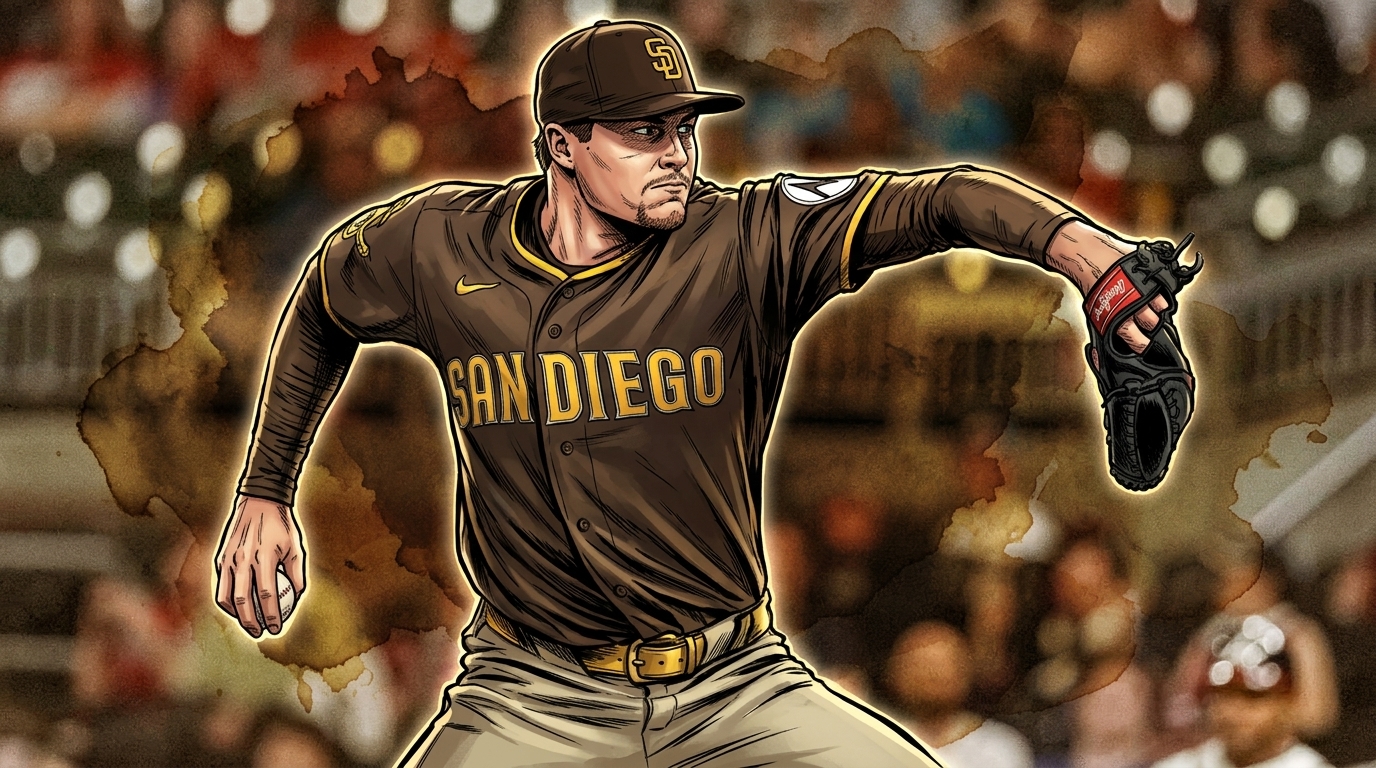
Ty France supplied the moment everyone will be replaying. Down 3-2 in the ninth, he got all of a Trevor Megill pitch, 105.3 mph off the bat on a 49-degree launch angle that carried 325 feet. The ball struck the roof cable hanging over fair territory, dropped straight down, and settled into Jackson Chourio’s glove for the out that ended the Padres’ rally. Chourio was the same player who’d tied the game with a home run six innings earlier. Baseball has a written rule for this. That’s almost the problem.
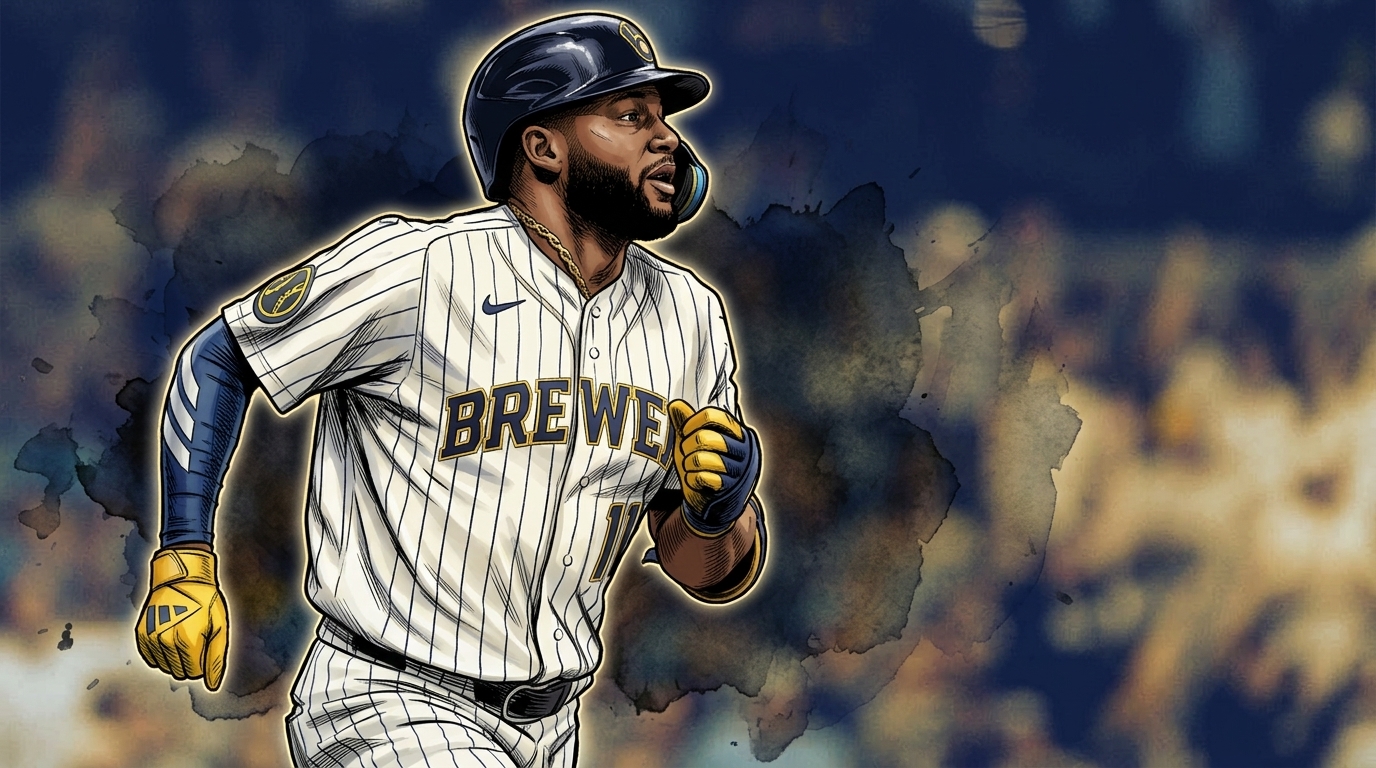
The Brewers trailed 2-0 before Chourio’s third-inning blast — 420 feet, 113.3 mph off the bat, the hardest ball he’s hit in his career — tied it at two. It was his fifth postseason homer before turning 23, which broke a tie with Orlando Arcia and Prince Fielder for the franchise’s postseason record and pulled him level with Kyle Schwarber and Juan Soto for the most postseason homers by anyone that young, per SI’s rundown. William Contreras put Milwaukee ahead for good with a solo shot in the seventh. That kind of production doesn’t happen by accident; it’s the same pipeline that’s carried the Brewers’ depth model through a full season, and for six innings it looked like the actual story of the game.
MLB’s own account framed the ninth as pure chaos, which is one way to describe a truss getting a defensive assist:
https://twitter.com/MLB/status/2106599089538548133
The ground rule that saved Milwaukee’s lead reads with the dry precision of a lease agreement: “Batted ball striking roof, roof truss or roof cable over fair territory: In Play. If caught by fielder, batter is out and runners advance at own risk.” Over foul territory, by contrast, it’s a dead ball. Whoever wrote that sentence, posted on the Brewers’ own ground-rules page, was solving an engineering problem, not a competitive one; the clause exists because the Brewers built a roof with cables running through fair territory, and at some point an operations staffer decided those cables needed a batting average instead of a relocation plan.
Highlight shows skip the part that actually matters: nobody knows for certain France’s ball clears the fence even without the roof in the way. Only ten home runs in the Statcast era have left the yard at a launch angle of 49 degrees or higher, and no ball hit at American Family Field has ever gone out above 46, a detail CBS Sports flagged. Call it a stolen home run and you’re giving the ball credit it never earned; the honest version is that France hit something that would have ranked among the rarest home runs in Statcast history, and a support beam intercepted it before anyone found out for sure.
Every park keeps a few pieces of equipment that are supposed to stay out of the action: foul poles, the netting that protects people in forty-dollar seats from liners hit by forty-million-dollar outfielders, the roof itself when it’s doing its actual job of keeping rain off the infield. American Family Field’s roof cable did the opposite. It walked into the scene, took a line that belonged to Ty France, and nobody could even boo it off the field, because it doesn’t wear a number and it’s never going to face live pitching.
That’s the part baseball’s review system was never built to handle. Padres manager Craig Stammen challenged the ruling anyway, because standing there and accepting it wasn’t an option; replay confirmed the ball struck the roof over fair territory, the challenge failed, and the inning ended exactly where the rulebook says it should. That’s not a blown call. It’s the review apparatus working exactly as designed to certify an outcome that had nothing to do with anything a player did. The same league that reviews collisions at the plate, checks swings, and re-litigates neighborhood plays at second base has no mechanism whatsoever for asking whether a team should get to hang a cable over live fair territory in the first place. Baseball built an entire infrastructure to chase precision and left the one genuinely arbitrary variable, where somebody decided to bolt the wire, completely outside of it.
Brewers manager Pat Murphy had more fun with the explanation than anyone. “I’m telling you, ‘Ueck’ reached up there and knocked that ball down,” he told reporters afterward, invoking Bob Uecker, the team’s late and beloved broadcaster, before admitting what everyone already suspected: it was just the cable. Even the manager who benefited needed a ghost story first, because the real explanation is a hell of a thing to say out loud in a series this tight. William Contreras, who’d delivered the actual go-ahead run with his bat, said afterward that “these are the types of games that I like…it gives me more energy,” an easier sentiment to reach for when the margin holds up because of what you did and not what the ceiling did.
Padres fans were not in a Bob Uecker mood about any of it.
https://twitter.com/Padrefangirl/status/2106596812337582414
She’s not wrong, and that’s the whole dispute in one sentence: a team that scraped its way through the Padres’ path into October just watched a stadium fixture cast a vote in a series opener, and there’s no commissioner’s office you can appeal to about it. Brewers fans get to call their roof a character. Padres fans just found out, down 1-0 in a series they now have to win three of the next four to take, that in Milwaukee the ceiling plays defense too.