Milwaukee Brewers
The definitive history of the Milwaukee Brewers: the 1969 Seattle Pilots, the 1982 pennant, Robin Yount, the small-market model, and the 2026 NL pennant.
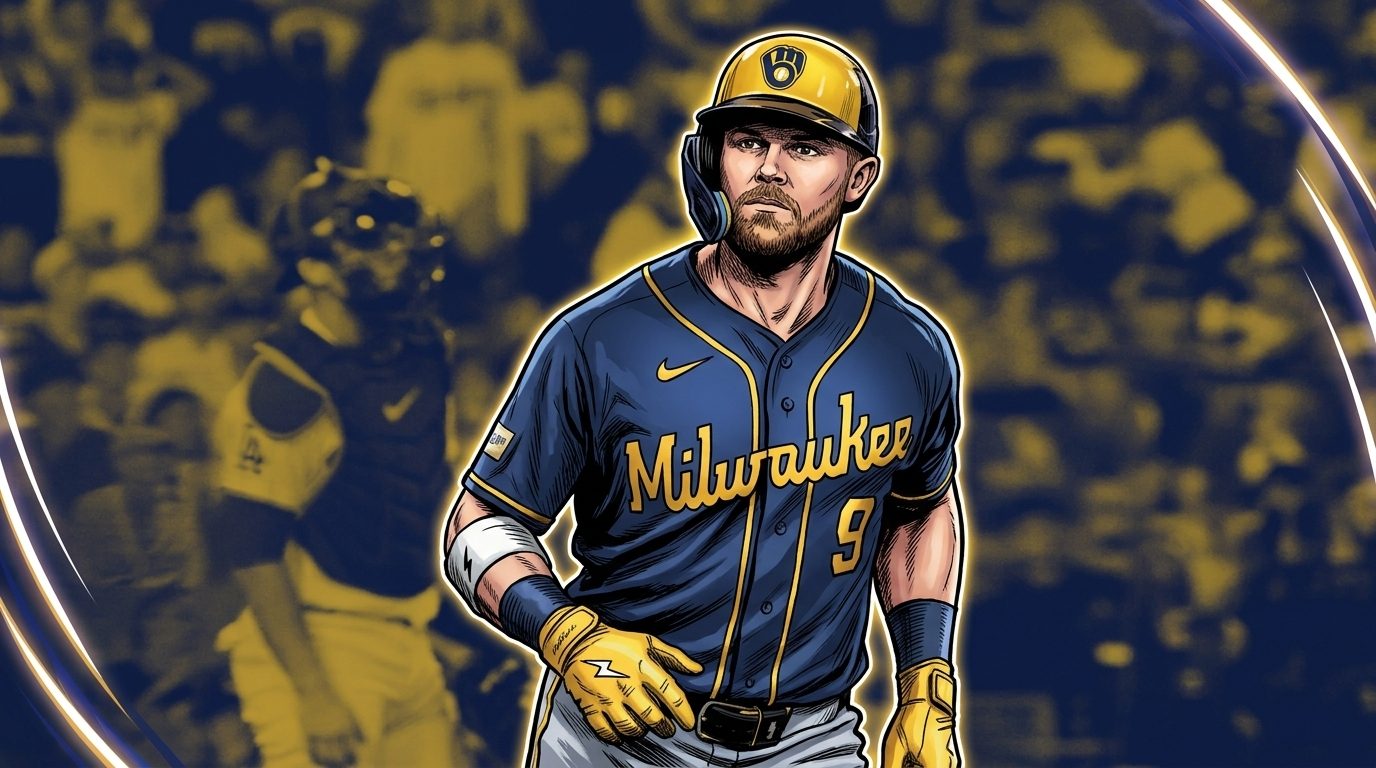
The Milwaukee Brewers are a Major League Baseball franchise based in Milwaukee, Wisconsin, and members of the National League Central. Born as the one-season Seattle Pilots in 1969 and reborn in Milwaukee in 1970 under future commissioner Bud Selig, the Brewers hold a distinction shared by only one other club, the Houston Astros: pennants in both leagues, the 1982 American League pennant and the 2026 National League pennant. Yet they entered the 2026 World Series still chasing the first championship in franchise history. For most of their existence a small-market survivor, they became, across the 2020s, one of the sport’s most consistent winners on one of its thinnest budgets.
| Vitals | |
|---|---|
| Founded | 1969 (as the Seattle Pilots); relocated to Milwaukee 1970 |
| League / division | MLB — National League, NL Central |
| Stadium | American Family Field (opened 2001 as Miller Park), Milwaukee |
| Owner | Mark Attanasio (principal owner since 2005) |
| Manager | Pat Murphy (as of Oct. 19, 2026) |
| Pennants | 2 — AL 1982, NL 2026 |
| World Series titles | None |
From Seattle to Milwaukee (1969–1977)
The franchise opened as the Seattle Pilots, an American League expansion team that played a single 1969 season, finishing 64–98 and last in the AL West at aging Sick’s Stadium. Starved of cash, the Pilots entered bankruptcy, and in the spring of 1970 a Milwaukee car dealer named Bud Selig — who had lost the Braves to Atlanta in 1966 — bought the club out of bankruptcy court and moved it to Wisconsin days before Opening Day.
The renamed Brewers settled into Milwaukee County Stadium and spent their first decade losing. They went 65–97 in 1970 and did not reach .500 until a 76–86 near-miss. Shifted from the AL West to the AL East in 1972, they bottomed out at 66–95 in 1976, the same year the franchise retired its first number for a returning native son: Hank Aaron, No. 44, who closed his career as a Brewers designated hitter in 1975–1976.
The rise and Harvey’s Wallbangers (1978–1981)
A young core turned the Brewers into contenders. Shortstop Robin Yount, signed as an 18-year-old and in the majors by 1974, matured alongside infielder Paul Molitor, who debuted in 1978, plus sluggers Cecil Cooper, Gorman Thomas, Ben Oglivie and Don Money. The 1978 club jumped to 93–69 and the 1979 team to 95–66, the franchise’s first winning seasons.
The 1981 strike season delivered the first playoff berth in team history. Milwaukee won the second half of the split AL East and met the Yankees in a special Division Series, losing 3–2. That year reliever Rollie Fingers, acquired in a blockbuster with Ted Simmons and Pete Vuckovich, became the first Brewer to win the AL MVP and Cy Young in the same season, anchoring a bullpen that defined the era.
1982: the pennant and the seven-game Series
The 1982 Brewers remain the high-water mark of the first half-century. Managed by Buck Rodgers and then hitting coach Harvey Kuenn, whose midseason promotion gave the lineup its nickname, Harvey’s Wallbangers went 95–67 and led MLB with 216 home runs, taking the AL East by one game over Baltimore. Yount won the AL MVP as a shortstop; Vuckovich won the AL Cy Young.
The pennant came the hard way. In the ALCS the Brewers dropped the first two games to the California Angels, then became the first AL team to win a best-of-five after an 0–2 hole, taking it 3–2. The World Series against the St. Louis Cardinals swung on a Game 7 in St. Louis; Milwaukee led the series 3–2 but fell 4–3, with Fingers lost to an arm injury. It is the only World Series the Brewers reached for 44 years. Catcher Ted Simmons, the starter behind the plate, was elected to the Hall of Fame in 2020.
Yount, Molitor, and the long decline (1983–1997)
The Wallbangers aged, but their stars endured. After a 1983 playoff miss the franchise sank, losing 94 games in 1984 and never again reaching the postseason in the AL. The one great individual season came in 1989, when Yount won a second MVP — this time in center field, a feat matched by few players — and in 1992 he collected his 3,000th hit, finishing his 20-year, 3,142-hit career entirely in Milwaukee.
The roster slowly emptied. Molitor left for Toronto after 1992 and finished with 3,319 career hits and Hall of Fame election in 2004; Yount retired after 1993 and entered Cooperstown in 1999. The franchise honored them in turn — Molitor’s No. 4 in 1999, Yount’s No. 19 in 1994, Fingers’ No. 34 in 1992. A move to the new AL Central in 1994 produced no revival, and the late-1990s teams hovered in the 70s in wins.
The move to the National League (1998–2007)
In 1998 the Brewers changed leagues. When MLB expanded, Milwaukee shifted from the American League to the National League Central, the first modern franchise to switch leagues, and the losing continued — a franchise-worst 56–106 in 2002. The decade’s lasting change was in the owner’s box: in January 2005, Selig’s family sold the club for $223 million to a group led by Los Angeles investor Mark Attanasio, ending a 35-year ownership and committing to a win-now rebuild.
New talent arrived in bulk. The system produced first baseman Prince Fielder, who on Sept. 25, 2007 became the youngest player to reach 50 home runs in a season, and outfielder Ryan Braun, the 2007 NL Rookie of the Year. The 2007 team went 83–79, the first winning record in 15 years and a signal the drought was ending.
Braun, Fielder, and the return to October (2008–2014)
The 2008 Brewers ended a 26-year postseason absence. A midseason trade for ace CC Sabathia carried a 90–72 club to the NL wild card under interim manager Dale Sveum, though Philadelphia won the Division Series 3–1. Braun kept building toward a franchise-record 352 home runs — the most in team history, ahead of Yount’s 251.
The 2011 team won the first division title in 29 years. Behind NL MVP Braun, Fielder, Zack Greinke and Nyjer Morgan, Milwaukee went 96–66, beat Arizona in the NLDS 3–2 and lost the NLCS to St. Louis 4–2. Fielder left in free agency afterward, and Braun’s 2013 season was cut short by a 65-game suspension in MLB’s Biogenesis investigation, which he accepted. The window closed, and the club fell back below .500 by 2013.
The Counsell years and the small-market model (2015–2023)
Craig Counsell’s hiring in 2015 reshaped the franchise. Paired with the front office that became general manager Matt Arnold’s, Counsell went 707–625 across nine seasons, the winningest manager in team history. The 2018 club, powered by MVP Christian Yelich — a near-unanimous winner acquired that January from Miami — won a Game 163 tiebreaker over the Cubs, swept Colorado in the NLDS and pushed the Dodgers to a seventh game in the NLCS before falling 4–3.
The model became the identity. On a payroll near the bottom of the sport, Milwaukee reached the playoffs in 2018, 2019, 2020, 2021 and 2023, developing and trading arms rather than buying them. Corbin Burnes won the 2021 NL Cy Young Award with a 2.43 ERA before being dealt to Baltimore, and relievers Josh Hader and Devin Williams followed the same path out. The approach drew both admiration and frustration: contender after contender, but only early-round playoff exits, and Counsell himself left for the Cubs after the 2023 NL Central title.
Murphy and the 2026 pennant (2024–2026)
Pat Murphy inherited the job and did not miss a beat. Promoted from the bench in 2024, Murphy won back-to-back NL Manager of the Year awards in 2024 and 2025, guiding 93- and then a franchise-best 97-win season that reached the NLCS before a sweep by the Dodgers. The budget stayed small; the winning did not.
The 2026 season produced the pennant that had eluded the club since 1982. Milwaukee went 103–59 for its first 100-win season and a fourth straight NL Central title, behind pitchers Brandon Woodruff, Aaron Ashby and Jacob Misiorowski and closer Trevor Megill’s 30 saves. The Brewers beat San Diego 3–1 in the NLDS and swept the two-time defending champion Dodgers 4–0 in the NLCS to win the franchise’s first National League pennant. As of Oct. 19, 2026, they awaited the American League champion, with Game 1 of the World Series set for American Family Field on Oct. 23 and the AL Championship Series still unresolved.
Retired numbers
The Brewers have retired four numbers for players and one for their founder, in addition to the league-wide retirement of Jackie Robinson’s No. 42. Broadcaster Bob Uecker’s No. 50 hangs in the club’s Ring of Honor but is not a retired number.
| No. | Player | Pos. | Team tenure | Retired |
|---|---|---|---|---|
| 1 | Bud Selig (owner/founder) | — | 1970–1998 | 2015 |
| 4 | Paul Molitor | 3B/DH | 1978–1992 | June 11, 1999 |
| 19 | Robin Yount | SS/CF | 1974–1993 | May 29, 1994 |
| 34 | Rollie Fingers | RHP | 1981–1985 | Aug. 9, 1992 |
| 44 | Hank Aaron | DH/OF | 1975–1976 | Oct. 3, 1976 |
| 42 | Jackie Robinson | 2B | — | Leaguewide, 1997 |
Season by season
Every season from the 1969 Seattle Pilots through 2026, folded by decade, newest first.
The 2020s 595–437 · 6 playoff berths · 1 pennant
| Season | W–L | Finish | Playoffs |
|---|---|---|---|
| 2026 | 103–59 | 1st (NL Central) | Won NLDS (SD 3–1), won NLCS (LAD 4–0), World Series pending |
| 2025 | 97–65 | 1st (NL Central) | Won NLDS (CHC 3–2), lost NLCS (LAD 0–4) |
| 2024 | 93–69 | 1st (NL Central) | Lost WC Series (NYM 1–2) |
| 2023 | 92–70 | 1st (NL Central) | Lost WC Series (ARI 0–2) |
| 2022 | 86–76 | 2nd (NL Central) | — |
| 2021 | 95–67 | 1st (NL Central) | Lost NLDS (ATL 1–3) |
| 2020 | 29–31 | 4th (NL Central) | Lost WC Series (LAD 0–2) |
The 2010s 824–797 · 3 playoff berths
| Season | W–L | Finish | Playoffs |
|---|---|---|---|
| 2019 | 89–73 | 2nd (NL Central) | Lost Wild Card Game (WSH) |
| 2018 | 96–67 | 1st (NL Central) | Won NLDS (COL 3–0), lost NLCS (LAD 3–4) |
| 2017 | 86–76 | 2nd (NL Central) | — |
| 2016 | 73–89 | 4th (NL Central) | — |
| 2015 | 68–94 | 4th (NL Central) | — |
| 2014 | 82–80 | 3rd (NL Central) | — |
| 2013 | 74–88 | 4th (NL Central) | — |
| 2012 | 83–79 | 3rd (NL Central) | — |
| 2011 | 96–66 | 1st (NL Central) | Won NLDS (ARI 3–2), lost NLCS (STL 2–4) |
| 2010 | 77–85 | 3rd (NL Central) | — |
The 2000s 741–878 · 1 playoff berth
| Season | W–L | Finish | Playoffs |
|---|---|---|---|
| 2009 | 80–82 | 3rd (NL Central) | — |
| 2008 | 90–72 | 2nd (NL Central, WC) | Lost NLDS (PHI 1–3) |
| 2007 | 83–79 | 2nd (NL Central) | — |
| 2006 | 75–87 | 4th (NL Central) | — |
| 2005 | 81–81 | 3rd (NL Central) | — |
| 2004 | 67–94 | 6th (NL Central) | — |
| 2003 | 68–94 | 6th (NL Central) | — |
| 2002 | 56–106 | 6th (NL Central) | — |
| 2001 | 68–94 | 4th (NL Central) | — |
| 2000 | 73–89 | 3rd (NL Central) | — |
The 1990s 742–811 · 0 playoff berths
| Season | W–L | Finish | Playoffs |
|---|---|---|---|
| 1999 | 74–87 | 5th (NL Central) | — |
| 1998 | 74–88 | 5th (NL Central) | — |
| 1997 | 78–83 | 3rd (AL Central) | — |
| 1996 | 80–82 | 3rd (AL Central) | — |
| 1995 | 65–79 | 4th (AL Central) | — |
| 1994 | 53–62 | 5th (AL Central) | — (strike) |
| 1993 | 69–93 | 7th (AL East) | — |
| 1992 | 92–70 | 2nd (AL East) | — |
| 1991 | 83–79 | 4th (AL East) | — |
| 1990 | 74–88 | 6th (AL East) | — |
The 1980s 804–760 · 2 playoff berths · 1 pennant
| Season | W–L | Finish | Playoffs |
|---|---|---|---|
| 1989 | 81–81 | 4th (AL East) | — |
| 1988 | 87–75 | 3rd (AL East) | — |
| 1987 | 91–71 | 3rd (AL East) | — |
| 1986 | 77–84 | 6th (AL East) | — |
| 1985 | 71–90 | 6th (AL East) | — |
| 1984 | 67–94 | 7th (AL East) | — |
| 1983 | 87–75 | 5th (AL East) | — |
| 1982 | 95–67 | 1st (AL East) | Won ALCS (CAL 3–2), lost World Series (STL 3–4) |
| 1981 | 62–47 | 1st (AL East, 2nd half) | Lost ALDS (NYY 2–3) |
| 1980 | 86–76 | 3rd (AL East) | — |
The 1970s 738–873 · 0 playoff berths
| Season | W–L | Finish | Playoffs |
|---|---|---|---|
| 1979 | 95–66 | 2nd (AL East) | — |
| 1978 | 93–69 | 3rd (AL East) | — |
| 1977 | 67–95 | 6th (AL East) | — |
| 1976 | 66–95 | 6th (AL East) | — |
| 1975 | 68–94 | 5th (AL East) | — |
| 1974 | 76–86 | 5th (AL East) | — |
| 1973 | 74–88 | 5th (AL East) | — |
| 1972 | 65–91 | 6th (AL East) | — |
| 1971 | 69–92 | 6th (AL West) | — |
| 1970 | 65–97 | 4th (AL West) | — |
The 1960s 64–98 · Seattle Pilots, 1 season
| Season | W–L | Finish | Playoffs |
|---|---|---|---|
| 1969 | 64–98 | 6th (AL West) | — (as Seattle Pilots) |
By the numbers
Franchise marks
Per Baseball-Reference, through the 2026 regular season.
Ranks
- 1st Home runs, franchise history — Ryan Braun (352)
- 1st Hits, franchise history — Robin Yount (3,142)
- 2nd Home runs, franchise history — Robin Yount (251)
Per Baseball-Reference, franchise career leaders.
Honors
- 2026 National League champion
- 1982 American League champion
- 5× League MVP (1981, 1982, 1989, 2011, 2018)
- 3× Cy Young Award (1981, 1982, 2021)
- 2× NL Manager of the Year (2024, 2025)
- NL Rookie of the Year (2007)
Per Wikipedia and Baseball-Reference.
The arguments
Does the small-market model work? Supporters point to the record: the Brewers reached the playoffs in six of seven seasons from 2018 through 2024 and won the 2026 pennant while running one of the sport’s smallest payrolls, a case that smart drafting and pitching development beat spending. Critics counter that the same model repeatedly traded away its best arms — Burnes, Hader, Williams — and that before 2026 it produced only early exits, arguing that refusing to spend capped the ceiling.
Was trading Counsell’s successor model vindicated or lucky? When Craig Counsell left for the Cubs after 2023, some framed it as proof the franchise would not pay to keep its best people. Others note that Pat Murphy then won consecutive Manager of the Year awards and the pennant Counsell never reached, suggesting the system, not any one manager, was the engine.
Where does the Braun era sit? Braun remains the franchise home-run leader and its 2011 MVP, and he returned the Brewers to contention. His 2013 Biogenesis suspension, which he accepted after earlier denials, left his standing disputed among the club’s own supporters — franchise cornerstone to some, cautionary tale to others.
Why it matters
The Brewers are the rare franchise defined less by titles than by endurance and ingenuity: a bankrupt expansion team salvaged overnight, a 1982 lineup that came within a game of a championship, and a modern front office that turned the smallest-market disadvantage into a competitive identity. The 2026 pennant, their first in the National League and only their second ever, reframed a half-century of near-misses — and left the oldest question in Milwaukee baseball, a World Series title, still waiting to be answered.