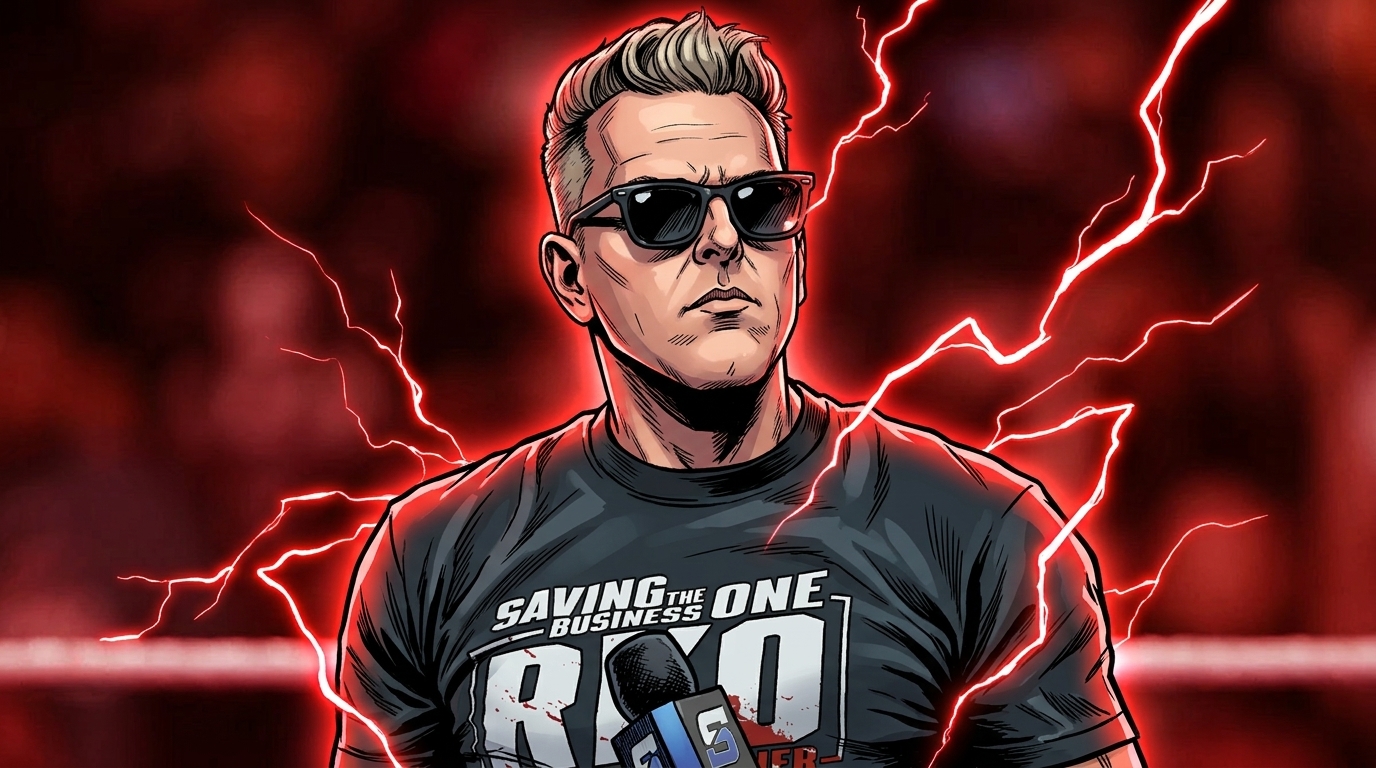

ESPN spent two months manufacturing a problem it apparently could not wait to have, and on September 21, ahead of a Week 2 game between the Giants and the Rams, it finally got what it engineered: Stephen A. Smith sitting next to Pat McAfee on Monday Night Countdown, and a fanbase furious about it within the hour.
Think of a pregame desk as a compound, not a cast; every analyst on it is an element chosen because of how predictably it reacts with the others. Ryan Clark was the stabilizer — thirteen years in an NFL uniform, a Super Bowl ring, the guy who could explain why a blitz worked without sounding like he’d Googled it an hour before air. ESPN fired Ryan Clark live, on air in July, notifying him mid-broadcast during NFL Live, which is its own chemistry lesson about how the network treats the people who make its most technical show watchable.
Jason McCourty took the actual seat Clark vacated on Monday Night Countdown, a quieter, more traditional replacement for a quieter, more traditional analyst. But the network wasn’t done rearranging the elements. Pat McAfee, who joined a desk ESPN had already gutted as a full-time 2026 analyst, debuted on the show September 14 while somehow also keeping The Pat McAfee Show, his College GameDay seat, and a contract extension conversation reportedly worth $60 to $65 million a year; ESPN was not, in other words, short on loud, and a network mid-negotiation with its most expensive personality tends to keep finding him more screen time, not less.
That’s the compound ESPN had already built when it sent Stephen A. Smith onto the desk for Giants-Rams on September 21 — a guest appearance, Yahoo Sports reported, not a hire, though the distinction didn’t make the noise any quieter. Smith has been at ESPN since 2003, built his name on NBA studio shows and First Take; he has never been a regular member of the Monday Night Countdown crew. None of that stopped the network from using him anyway, not even Smith’s own mixed feelings about how Clark left. If you were building a lineup to reassure a football audience that had just lost its most credentialed voice, Smith is a strange first call. If you were building a lineup to guarantee attention regardless of what the audience wanted, he’s close to the only call.
The credentials complaint arrived almost immediately. Bobby Burack of OutKick argued Smith has no business anchoring an NFL pregame show:
https://twitter.com/burackbobby_/status/2102175748043710667
Burack isn’t wrong that Smith’s ESPN career started on NBA Shootaround, but the credentials complaint was only half the outrage; Pro Football Network catalogued a broader revolt that had less to do with football IQ than with decibel level. “Using mute on the TV is not enough to silence these two loudmouths,” one fan wrote. Another: “It’s so BAD Stephen A and McAfee are just unwatchable!!!! Damm it hurts my ears.” A third just asked, flatly, who in the hell asked for this. Nobody had a good answer, because the honest one is that ESPN asked for it, on the network’s own behalf, and assumed the audience would come around.
Some of those fans said they’d rather be watching Ryan Clark’s new outfit, Pivot Sports, than the desk that replaced him, which is the kind of feedback a network usually pays a research firm to discover. ESPN didn’t need one. It ran the experiment itself, on live television, and now it gets to act baffled that pairing an ousted fanbase’s grief with the loudest personality still on the payroll produced exactly the noise anyone with a working periodic table could have predicted.