Denver Broncos
Denver Broncos history from the 1960 AFL charter season through three Super Bowl titles under John Elway and Peyton Manning to the Bo Nix era.
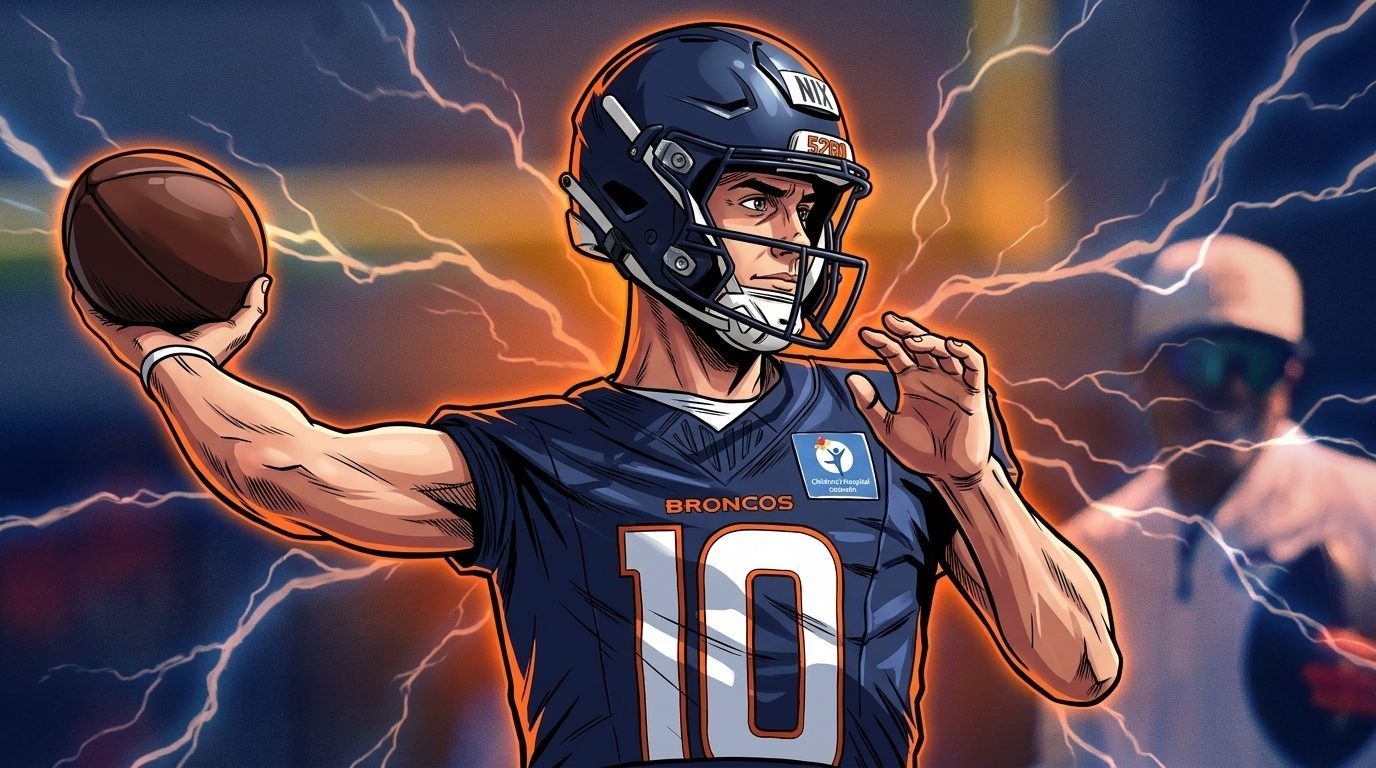
The Denver Broncos are a charter member of the American Football League. The franchise was granted on Aug. 14, 1959, and its first game was a 13–10 win over the Boston Patriots on Sept. 9, 1960. Denver went 13 seasons without a winning record, then became one of the NFL’s defining franchises. It has played in eight Super Bowls and won three: XXXII and XXXIII behind John Elway, and Super Bowl 50 behind Peyton Manning and a defense built around Von Miller. Under head coach Sean Payton, Bo Nix had Denver at 6–2 and first in the AFC West on Nov. 6, 2026.
| Vitals | |
|---|---|
| Founded | Aug. 14, 1959 (AFL charter franchise); first season 1960 |
| League / conference / division | NFL / AFC / West |
| Stadium | Empower Field at Mile High (2001–); Mile High Stadium (1960–2000) |
| Owner | Walton-Penner Family Ownership Group (since 2022) |
| Head coach (Nov. 6, 2026) | Sean Payton (since 2023) |
| Titles | Super Bowl XXXII (1997 season), XXXIII (1998), 50 (2015); AFC champions 1977, 1986, 1987, 1989, 1997, 1998, 2013, 2015 |
The AFL years (1960–1969)
A shoestring start. Bob Howsam founded the Broncos as an original AFL club and sold control to Gerald Phipps in May 1961, according to the franchise’s ownership history. The early teams were short on everything except quarterback Frank Tripucka. He came to Denver as a quarterbacks coach under the first head coach, Frank Filchock, and ended up taking the starting job. Tripucka threw the franchise’s first regular-season touchdown, a 59-yard pass to Al Carmichael in the opener, and on Sept. 15, 1962, he became its first 400-yard passer with 447 yards against Buffalo.
A decade at the bottom. The 1960 team went 4–9–1. Jack Faulkner’s 1962 team reached 7–7, the best record of the AFL decade, and it was followed by back-to-back 2–11–1 seasons. Denver finished fourth in the AFL West in eight of its 10 AFL seasons and never reached the postseason. Its combined AFL record was 39–97–4.
“The Franchise.” Lou Saban arrived in 1967, and so did Syracuse running back Floyd Little, the player the team’s own history calls “The Franchise.” In 1971 he became the club’s first 1,000-yard rusher with 1,133 yards, and his number was retired when his nine-season career ended in 1975.
Orange Crush (1972–1982)
The first winning season. John Ralston took over in 1972, and in 1973 the Broncos went 7–5–2, the franchise’s first winning record. In 1976 they reached 9–5, which still did not earn a playoff berth.
1977. Red Miller replaced Ralston, and the defense known as the “Orange Crush” took over the league. Linebackers Randy Gradishar and Tom Jackson and defensive end Lyle Alzado led it, and veteran quarterback Craig Morton ran the offense. Denver went 12–2. On Dec. 24, 1977, it won its first playoff game, 34–21 over Pittsburgh, and then beat the defending champion Raiders 20–17 for the AFC title. The run ended in Super Bowl XII on Jan. 15, 1978, a 27–10 loss to Dallas.
Holding the standard. Denver won the AFC West again in 1978 and made the playoffs as a wild card in 1979, losing to Pittsburgh and Houston. Gradishar was the 1978 AP Defensive Player of the Year. Dan Reeves became head coach in 1981, and Edgar Kaiser Jr. owned the club from 1981 until Pat Bowlen bought it in 1984.
The Elway era: The Drive and three Super Bowl losses (1983–1994)
The trade. The Baltimore Colts drafted John Elway first overall in 1983. Elway said he would play baseball rather than football unless he was traded to one of a handful of teams, and Denver was on that list. The rookie team went 9–7 and lost a wild-card game in Seattle, and the 1984 Broncos went 13–3 and won the division.
The Drive. In the AFC Championship Game at Cleveland on Jan. 11, 1987, Denver started at its own 2-yard line, trailing by seven, and Elway took the Broncos 98 yards for the tying touchdown. Rich Karlis kicked the winning field goal in overtime for a 23–20 win. A year later Denver beat the Browns again for the AFC title, 38–33, in the game Cleveland remembers as “The Fumble.” Elway was the 1987 NFL MVP.
Three Super Bowl losses. In the 1980s Denver lost Super Bowl XXI to the Giants (39–20), Super Bowl XXII to Washington (42–10) and Super Bowl XXIV to San Francisco (55–10). Those 1986, 1987 and 1989 losses gave the franchise a reputation for falling short on the biggest stage. The 1991 team went 12–4 and lost the AFC Championship at Buffalo, 10–7. After the 1992 season Reeves was gone, and Wade Phillips coached the 1993 and 1994 teams.
Shanahan, Davis and back-to-back titles (1995–1998)
The new offense. Mike Shanahan was hired in 1995 and installed a zone-blocking running game. Its centerpiece was Terrell Davis, a sixth-round pick that year. Shannon Sharpe at tight end and Gary Zimmerman at left tackle both ended up in the Pro Football Hall of Fame. The 1996 team went 13–3 and lost at home in the divisional round to the second-year Jacksonville Jaguars, 30–27.
Super Bowl XXXII. The 1997 Broncos qualified as a wild card at 12–4. They beat Jacksonville 42–17, won 14–10 at Kansas City and 24–21 at Pittsburgh, and then faced the defending champion Packers in San Diego on Jan. 25, 1998. Denver won 31–24. Davis ran through a migraine to win Super Bowl MVP, and the spinning “helicopter” run by the 37-year-old Elway became the image of the game.
Super Bowl XXXIII. The 1998 team went 14–2, and Davis rushed for 2,008 yards. Denver beat Miami 38–3 and the Jets 23–10, then won Super Bowl XXXIII over Atlanta, 34–19. Elway was named the game’s MVP. It was his final game. He retired with 51,475 passing yards, the franchise record, and the Broncos retired No. 7 in 1999.
Between quarterbacks (1999–2011)
After Elway. The 1999 team fell to 6–10, and Davis’s career was shortened by a knee injury. Shanahan’s later teams were usually good but rarely contenders. Brian Griese and then Jake Plummer started at quarterback, wide receiver Rod Smith set the franchise record with 849 receptions, and Jason Elam became the club’s all-time scorer with 1,786 points. Denver lost wild-card games in 2000, 2003 and 2004. Champ Bailey arrived in 2004 and later joined the Hall of Fame. Denver has kept his No. 24 out of circulation (except for Adam Jones in 2018), though it is not officially retired, according to the team.
2005. Plummer’s 13–3 team beat the two-time defending champion Patriots 27–13 in the divisional round. Bailey’s interception return near the goal line was the play of that game. Denver then lost the AFC Championship at home to Pittsburgh, 34–17. Shanahan was dismissed after the 2008 season.
McDaniels and Tebow. Josh McDaniels’ tenure went from 8–8 in 2009 to 4–12 in 2010 and ended before the 2010 season was over. Under John Fox in 2011, Tim Tebow led a run of late comebacks to an 8–8 division title. In the wild-card round Denver beat Pittsburgh 29–23 in overtime on the first play of the extra period, a long touchdown pass to Demaryius Thomas, and then lost 45–10 at New England.
Peyton Manning and Super Bowl 50 (2012–2015)
The signing. Elway, by then the top football executive, signed Peyton Manning in March 2012 after the Colts released him following neck surgery. Tripucka gave his blessing for Manning to wear No. 18, which the club had kept out of use since 1963. Denver went 13–3 in 2012 but lost a double-overtime divisional game to Baltimore, 38–35.
2013. Manning threw for 5,477 yards and 55 touchdowns, both single-season records at the time. Denver went 13–3, beat San Diego and New England for the AFC title, and then lost Super Bowl XLVIII to Seattle, 43–8. Afterward Elway added veterans on defense, among them DeMarcus Ware, Aqib Talib and T.J. Ward. With Chris Harris Jr. and Bradley Roby, the secondary came to be called the “No Fly Zone.”
Super Bowl 50. Fox left after a 2014 divisional loss to Indianapolis, and Gary Kubiak took over in 2015. Manning was 39, his production had declined, and he missed time with a foot injury. Brock Osweiler started part of the season. The defense carried the 12–4 team. Denver beat Pittsburgh 23–16 and then beat Tom Brady’s Patriots 20–18 in the AFC Championship, which ended on a failed two-point conversion. In Super Bowl 50 the defense held Carolina’s MVP-season offense in check, and Miller’s pass rush was the story of the night in a 24–10 win. Manning retired as a champion, and No. 18 returned to retirement.
The long rebuild (2016–2023)
Eight years outside the playoffs. The 2016 team went 9–7 and missed the postseason. It was the start of a stretch with no playoff appearances from 2016 through 2023 that included seven straight losing seasons from 2017 to 2023. Trevor Siemian, Paxton Lynch, Case Keenum, Joe Flacco, Drew Lock and Teddy Bridgewater all started at quarterback. Coaches Vance Joseph and Vic Fangio both left after losing records.
The Wilson trade. On March 16, 2022, Denver traded for Seattle quarterback Russell Wilson. The Broncos sent Lock, Noah Fant, Shelby Harris, two first-round picks and two second-round picks, among other selections, per the team’s history. The deal did not work. Nathaniel Hackett was fired late in a 5–12 season. Wilson was released after 2023, and the team absorbed a reported $85 million in dead salary-cap money, the largest such charge in league history.
New ownership, new coach. The Bowlen family trust sold the team to the Walton-Penner group, led by Walmart heir Rob Walton, for $4.65 billion, a U.S. sports-franchise record at the time. NFL owners approved the sale in August 2022. Pat Bowlen, who bought the team in 1984, was inducted into the Hall of Fame in 2019; the sale ended 38 years of Bowlen family ownership. Sean Payton, who won a Super Bowl with New Orleans, accepted the Denver job on Jan. 31, 2023. His first team went 8–9.
Nix, Payton and the return to contention (2024–2026)
The pick. Denver drafted Oregon quarterback Bo Nix 12th overall in 2024. He was the first quarterback Payton had ever taken in the first round. The rookie started all season, and the 10–7 Broncos ended the playoff drought before losing 31–7 at Buffalo. Cornerback Patrick Surtain II was the 2024 AP Defensive Player of the Year, the second Bronco to win the award after Gradishar.
2025. Denver went 14–3 for its first AFC West title since 2015 and beat Buffalo 33–30 in overtime in the divisional round. Nix broke his right ankle late in that overtime. Jarrett Stidham started the AFC Championship in the snow at Empower Field on Jan. 25, 2026, and Denver lost to New England, 10–7.
The 2026 contender. Denver opened 2026 with a loss at Kansas City and won six of its next seven games. It beat Jacksonville 20–13 on Sept. 20, according to the team schedule. On Oct. 15 it beat Seattle 17–14 in overtime. The Seahawks were the defending champions after a 29–13 win over New England in Super Bowl LX. On Nov. 1, 2026, Denver trailed Kansas City 24–13 entering the fourth quarter and won 28–24. Nix hit rookie running back Jonah Coleman for a 51-yard gain to the Kansas City 5, and Coleman ran in the go-ahead touchdown on the next play with 1:56 left, according to the Associated Press. The win put the Broncos at 6–2 and in first place in the division. It was also Nix’s 15th fourth-quarter or overtime game-winning drive, the most by any quarterback in NFL history through his first three seasons.
Retired numbers
Three numbers, one shared. The Broncos have officially retired three numbers, as the Pro Football Hall of Fame also lists. No. 18 is the only one worn after its retirement: Manning wore it from 2012 to 2015 with Tripucka’s permission, and it has been retired again since.
Retired numbers
| No. | Player | Pos. | Team tenure | Retired |
|---|---|---|---|---|
| 18 | Frank Tripucka | QB | 1960–1963 | 1963 |
| 44 | Floyd Little | RB | 1967–1975 | 1975 |
| 7 | John Elway | QB | 1983–1998 | 1999 |
Season by season
The 2020s 55–54 through Nov. 1, 2026 · 2 playoff berths · 1 division title
| Season | W–L | Finish | Playoffs |
|---|---|---|---|
| 2026 | 6–2 (through Nov. 1) | 1st AFC West (Nov. 6) | Season in progress |
| 2025 | 14–3 | 1st AFC West | Won Divisional (BUF 33–30 OT); lost AFC Championship (NE 7–10) |
| 2024 | 10–7 | 3rd AFC West | Lost Wild Card (at BUF 7–31) |
| 2023 | 8–9 | 3rd AFC West | — |
| 2022 | 5–12 | 4th AFC West | — |
| 2021 | 7–10 | 4th AFC West | — |
| 2020 | 5–11 | 4th AFC West | — |
The 2010s 89–71 · 5 playoff berths · 2 Super Bowls · 1 title
| Season | W–L | Finish | Playoffs |
|---|---|---|---|
| 2019 | 7–9 | 2nd AFC West | — |
| 2018 | 6–10 | 3rd AFC West | — |
| 2017 | 5–11 | 4th AFC West | — |
| 2016 | 9–7 | 3rd AFC West | — |
| 2015 | 12–4 | 1st AFC West | Won Super Bowl 50 (CAR 24–10) |
| 2014 | 12–4 | 1st AFC West | Lost Divisional (IND 13–24) |
| 2013 | 13–3 | 1st AFC West | Lost Super Bowl XLVIII (SEA 8–43) |
| 2012 | 13–3 | 1st AFC West | Lost Divisional (BAL 35–38 2OT) |
| 2011 | 8–8 | 1st AFC West | Won Wild Card (PIT 29–23 OT); lost Divisional (at NE 10–45) |
| 2010 | 4–12 | 4th AFC West | — |
The 2000s 93–67 · 4 playoff berths · 1 AFC Championship Game
| Season | W–L | Finish | Playoffs |
|---|---|---|---|
| 2009 | 8–8 | 2nd AFC West | — |
| 2008 | 8–8 | 2nd AFC West | — |
| 2007 | 7–9 | 2nd AFC West | — |
| 2006 | 9–7 | 3rd AFC West | — |
| 2005 | 13–3 | 1st AFC West | Won Divisional (NE 27–13); lost AFC Championship (PIT 17–34) |
| 2004 | 10–6 | 2nd AFC West | Lost Wild Card (at IND 24–49) |
| 2003 | 10–6 | 2nd AFC West | Lost Wild Card (at IND 10–41) |
| 2002 | 9–7 | 2nd AFC West | — |
| 2001 | 8–8 | 3rd AFC West | — |
| 2000 | 11–5 | 2nd AFC West | Lost Wild Card (at BAL 3–21) |
The 1990s 94–66 · 5 playoff berths · 2 Super Bowl titles
| Season | W–L | Finish | Playoffs |
|---|---|---|---|
| 1999 | 6–10 | 5th AFC West | — |
| 1998 | 14–2 | 1st AFC West | Won Super Bowl XXXIII (ATL 34–19) |
| 1997 | 12–4 | 2nd AFC West | Won Super Bowl XXXII (GB 31–24) |
| 1996 | 13–3 | 1st AFC West | Lost Divisional (JAX 27–30) |
| 1995 | 8–8 | 3rd AFC West | — |
| 1994 | 7–9 | 4th AFC West | — |
| 1993 | 9–7 | 3rd AFC West | Lost Wild Card (at LA Raiders 24–42) |
| 1992 | 8–8 | 3rd AFC West | — |
| 1991 | 12–4 | 1st AFC West | Won Divisional (HOU 26–24); lost AFC Championship (at BUF 7–10) |
| 1990 | 5–11 | 5th AFC West | — |
The 1980s 93–58–1 · 5 playoff berths · 3 Super Bowls
| Season | W–L | Finish | Playoffs |
|---|---|---|---|
| 1989 | 11–5 | 1st AFC West | Lost Super Bowl XXIV (SF 10–55) |
| 1988 | 8–8 | 2nd AFC West | — |
| 1987 | 10–4–1 | 1st AFC West | Lost Super Bowl XXII (WAS 10–42) |
| 1986 | 11–5 | 1st AFC West | Lost Super Bowl XXI (NYG 20–39) |
| 1985 | 11–5 | 2nd AFC West | — |
| 1984 | 13–3 | 1st AFC West | Lost Divisional (PIT 17–24) |
| 1983 | 9–7 | 3rd AFC West | Lost Wild Card (at SEA 7–31) |
| 1982 | 2–7 | 12th AFC (strike) | — |
| 1981 | 10–6 | 2nd AFC West | — |
| 1980 | 8–8 | 4th AFC West | — |
The 1970s 75–64–5 · 3 playoff berths · 1 Super Bowl
| Season | W–L | Finish | Playoffs |
|---|---|---|---|
| 1979 | 10–6 | 2nd AFC West | Lost Wild Card (at HOU 7–13) |
| 1978 | 10–6 | 1st AFC West | Lost Divisional (at PIT 10–33) |
| 1977 | 12–2 | 1st AFC West | Lost Super Bowl XII (DAL 10–27) |
| 1976 | 9–5 | 2nd AFC West | — |
| 1975 | 6–8 | 2nd AFC West | — |
| 1974 | 7–6–1 | 2nd AFC West | — |
| 1973 | 7–5–2 | 3rd AFC West | — |
| 1972 | 5–9 | 3rd AFC West | — |
| 1971 | 4–9–1 | 4th AFC West | — |
| 1970 | 5–8–1 | 4th AFC West | — |
The 1960s 39–97–4 · 0 playoff berths · AFL charter decade
| Season | W–L | Finish | Playoffs |
|---|---|---|---|
| 1969 | 5–8–1 | 4th AFL West | — |
| 1968 | 5–9 | 4th AFL West | — |
| 1967 | 3–11 | 4th AFL West | — |
| 1966 | 4–10 | 4th AFL West | — |
| 1965 | 4–10 | 4th AFL West | — |
| 1964 | 2–11–1 | 4th AFL West | — |
| 1963 | 2–11–1 | 4th AFL West | — |
| 1962 | 7–7 | 2nd AFL West | — |
| 1961 | 3–11 | 3rd AFL West | — |
| 1960 | 4–9–1 | 4th AFL West | — |
By the numbers
Franchise marks
Per Pro Football Hall of Fame (532–475–10 entering 2026) and StatMuse, through Nov. 1, 2026.
Ranks
- 1st AFC West standings, Nov. 6, 2026 (6–2)
- 1st Passing yards, franchise history — John Elway (51,475)
- 1st Rushing yards, franchise history — Terrell Davis (7,607)
- 1st Receptions, franchise history — Rod Smith (849)
- 1st Points, franchise history — Jason Elam (1,786)
Per Pro Football Hall of Fame team facts and NFL.com, through Nov. 6, 2026.
Honors
- Super Bowl XXXII champion (1997 season)
- Super Bowl XXXIII champion (1998 season)
- Super Bowl 50 champion (2015 season)
- 8× AFC champion (1977, 1986, 1987, 1989, 1997, 1998, 2013, 2015)
- 16× AFC West champion
- NFL MVP — John Elway (1987)
- Super Bowl MVP — Terrell Davis (XXXII)
- Super Bowl MVP — John Elway (XXXIII)
- AP Defensive Player of the Year — Randy Gradishar (1978)
- AP Defensive Player of the Year — Patrick Surtain II (2024)
Per Pro Football Hall of Fame, StatMuse and DenverBroncos.com, through Nov. 6, 2026.
The arguments
Elway or Manning. Elway played 16 seasons in Denver, reached five Super Bowls and won the last two. Manning played four seasons, set the single-season touchdown record and won Super Bowl 50 despite his own decline that year. Supporters of Elway point to his longevity and the franchise he built. Supporters of Manning point to the most productive passing season the league had seen up to 2013. Both men are in the Hall of Fame, and both titles are on the banners.
The Nix bet. When Denver drafted Nix 12th overall in 2024, Denver Gazette columnist Paul Klee wrote that he fit Payton but was a reach. By 2026, late-game play had become central to his case. After the Nov. 1 comeback against Kansas City, Nix told CBS, “We went down by 11 in the fourth quarter, and we all could’ve quit,” per Denver Sports. Critics answer that a record built on comebacks says as much about slow starts as it does about clutch play.
The 2025 AFC Championship. After Nix’s injury, Payton started Stidham in the title game, and fans criticized both of them after the 10–7 loss. Others pointed to the snowstorm and to a defense that allowed only 10 points as evidence the outcome was closer to a coin flip than a coaching failure.
Why it matters
The Broncos played 13 seasons without a winning record, then went to eight Super Bowls and lost four of them before Elway, Davis and Shanahan won two in a row. Manning added a third, carried mostly by a defense, and the long rebuild that followed made Payton and Nix’s return to the top of the AFC West worth more to Denver fans.