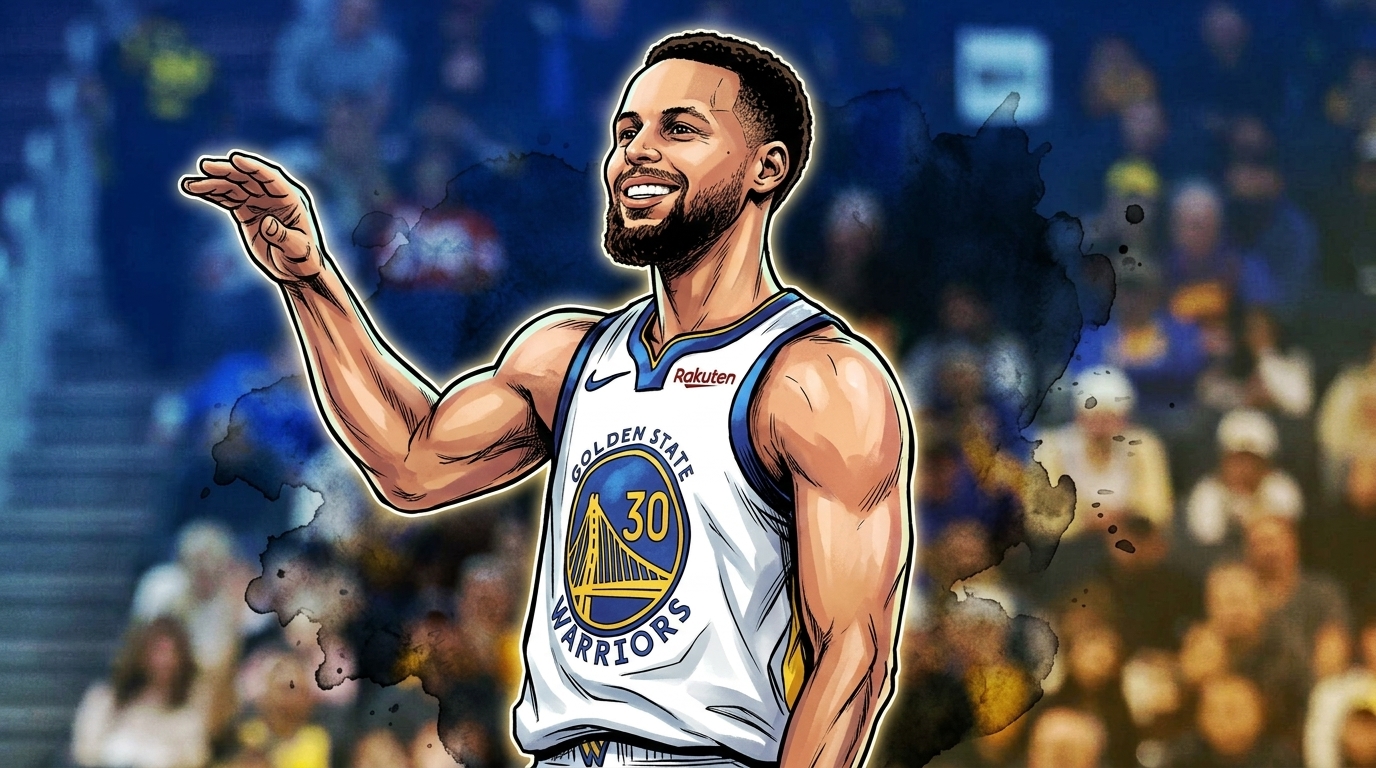

Eight players in NBA history have cleared $500 million in career on-court earnings. Six of them left a team to get there. Stephen Curry and Joel Embiid didn’t leave anybody. That’s the tidy version of this stat, the one that fits in a tweet. The real finding sits one layer down: of the two guys who never left, only one of them has ever paid an actual price to stay.
Who Is in the NBA’s $500 Million Club?
As of this week, eight players have crossed $500 million in career on-court earnings, in order: Curry ($652 million), Kevin Durant ($598 million), LeBron James ($592 million), Kawhi Leonard ($543 million), Paul George ($519 million), Embiid ($515 million), Donovan Mitchell ($514 million), and James Harden ($510 million).
Curry’s number moved this week for a reason. His new two-year extension with the Golden State Warriors is worth $116 million: $55.7 million for 2027-28, plus a $60.2 million player option the year after. That contract pushed his career earnings to $652 million, the first player in league history to clear $600 million. Shams Charania had it first:
https://twitter.com/ShamsCharania/status/2103670616280715635
Sources telling ESPN is the standard way this stuff leaks now, and it leaked exactly the way everyone expected: Curry stays, Curry gets paid; nobody blinks.
Six Guys Who Left to Get Here
Here’s the part that gets skipped when people quote the $500 million club like it’s one uniform group: getting into it almost always meant leaving somebody first. Durant went from Oklahoma City to Golden State in free agency, then to Brooklyn in free agency, then to Phoenix by trade, then to Houston in a 2025 blockbuster — and had already signed his own two-year extension with the Rockets within months of landing there. Four different jerseys chasing one number.
LeBron James did something similar on a longer clock: Cleveland, Miami as a free agent, back to Cleveland, the Lakers, and now a two-year, $8 million deal with the Philadelphia 76ers that he’s called his last decision. LeBron’s own pay-cut move to Philadelphia is worth sitting with. Even the guy with the most institutional power the league has ever handed one player still changed teams five times on his way to $592 million.
Kawhi Leonard and Paul George each needed one relocation apiece: Kawhi from San Antonio to Toronto by trade and then to the Clippers in free agency, George from Indiana to Oklahoma City and then to the Clippers, both by trade. James Harden needed five stops: Oklahoma City, Houston, Brooklyn, Philadelphia, the Clippers, and now Cleveland, acquired in a February trade for Darius Garland. Donovan Mitchell needed just one: Utah traded him to Cleveland in 2022, and this year he signed a four-year, $275.968 million max extension to stay there, the full number, no hometown discount attached.
Six players, six versions of the same conclusion: getting to $500 million meant going somewhere else at least once.
Why Did Only Two Never Leave?
Curry and Embiid are the outliers, and the “why” is almost boring. Embiid was drafted by Philadelphia in 2014 and has never worn another uniform. Curry has been with Golden State for his entire career, long enough that an entire generation of NBA offenses got rebuilt trying to answer the question he asks with a basketball. Two guys, one franchise apiece, a combined couple of decades of not going anywhere.
That’s the story everyone already knows. It’s also where most takes about the $500 million club stop, which is the actual problem with those takes.
What Separates Curry’s Loyalty From Embiid’s
Staying isn’t the interesting variable here. Cost is. Embiid’s 2021 supermax extension (four years, $196 million) was the largest contract Philadelphia could legally offer him. Full max, every dollar on the table, zero discount. Nothing wrong with that. It’s just not a sacrifice.
Curry’s deal this week is different by roughly $20 million. He was eligible for a two-year max worth $136.7 million and signed for $116 million instead, walking past real money so Golden State keeps more room to build around him. Twenty million dollars, give or take, left on the table for flexibility that isn’t guaranteed to produce anything.
Call it the Loyalty Discount — the actual price a superstar pays, in real dollars, for staying somewhere he could leave. Curry paid it. Embiid, through no fault of his own, never had to. Harden is the funny footnote here: a guy who changed teams five times and then, once he landed in Cleveland, declined a $42.3 million player option to take a team-friendly deal and stay alongside Mitchell. Even the league’s most restless star eventually found a Loyalty Discount of his own. He just needed five stops first to find the team worth paying it for.
What This Says About Curry’s Leverage
Leverage is supposed to mean taking the biggest number on the table. Curry has more of it than anyone in the sport not named LeBron, and he keeps declining to use it that way. That’s not sentimentality. The data here is unambiguous: Golden State’s front office gets a real roster around him instead of a maxed-out cap sheet, and Curry gets to keep deciding, year after year, that winning with this franchise is worth more than whatever the open market would pay to pry him loose.
Give me the version of the $500 million club that actually means something: not eight guys who got rich, but the one guy who keeps discounting his own value to stay somewhere he never had to leave. The real test comes the next time Golden State needs him to leave even more on the table, and nothing about this week suggests he says no.