Philadelphia 76ers
The Philadelphia 76ers are a storied NBA franchise, born as the Syracuse Nationals in 1946, with three championships and stars from Wilt to Embiid.
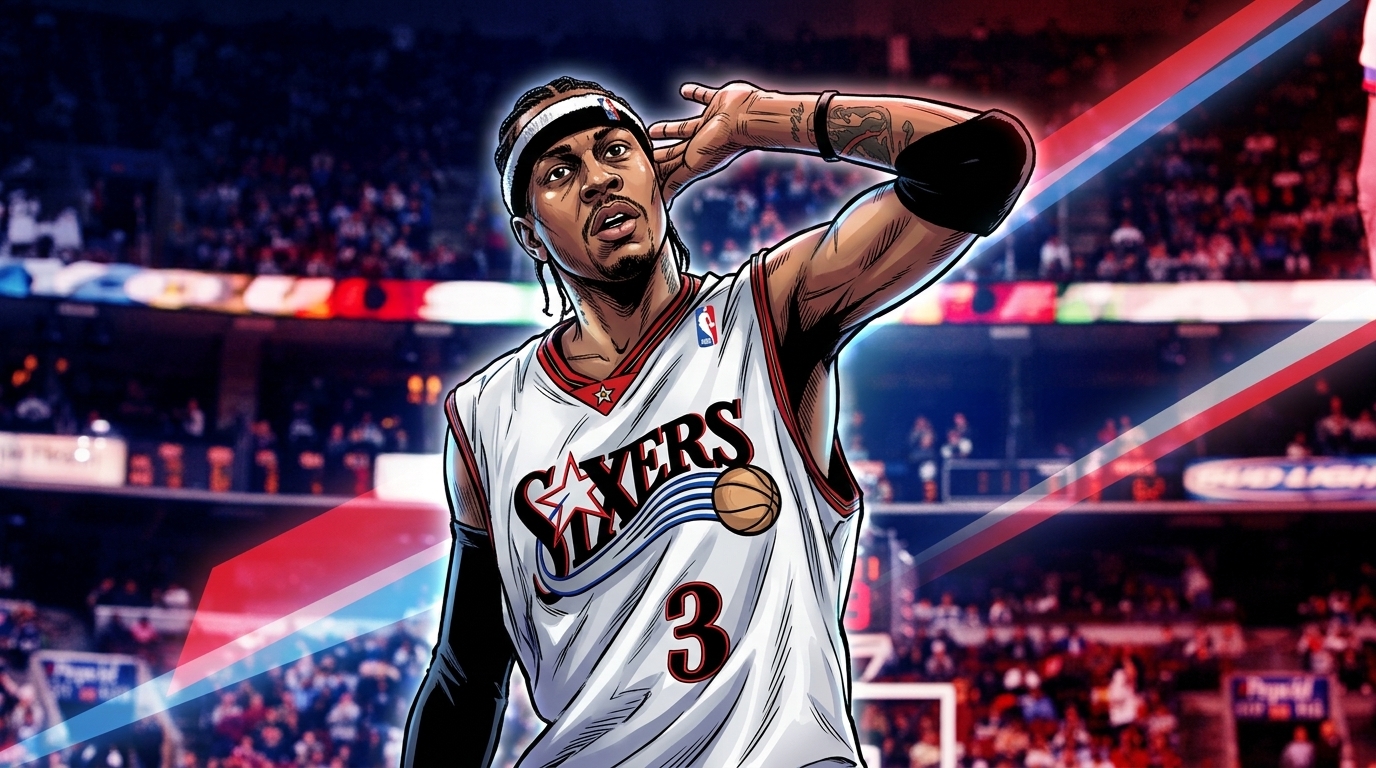
The Philadelphia 76ers are one of the National Basketball Association’s founding-era institutions, a franchise old enough to have invented the modern game’s clock and famous enough that its rebuilding slogan entered the language. Born in upstate New York as the Syracuse Nationals in 1946, relocated to Philadelphia in 1963 and rebranded around the city that signed the Declaration of Independence, the club has won three NBA championships — in 1955, 1967 and 1983 — and rostered a lineage of centerpiece stars unmatched for sheer wattage: Dolph Schayes, Wilt Chamberlain, Julius Erving, Moses Malone, Charles Barkley, Allen Iverson and Joel Embiid. Its all-time regular-season record of 3,170–2,935 ranks among the winningest in league history, even as the modern era has been defined as much by a radical teardown as by any banner.
| Vitals | |
|---|---|
| Founded | 1946 (as the Syracuse Nationals); joined the NBA in 1949; relocated to Philadelphia in 1963 |
| League / conference / division | NBA — Eastern Conference, Atlantic Division |
| Arena | Xfinity Mobile Arena, Philadelphia |
| Owner | Harris Blitzer Sports & Entertainment (Josh Harris, managing partner) |
| Head coach | Nick Nurse (as of Sep. 27, 2026) |
| Titles | 3 — 1955, 1967, 1983 |
The Syracuse Nationals (1946–1963)
The franchise was founded in 1946 by Danny Biasone as the Syracuse Nationals of the National Basketball League, then absorbed into the NBA in 1949 when the older league merged with the Basketball Association of America. In their first NBA season the Nationals went 51–13 and reached the Finals, establishing a small-market club that punched far above its weight.
Syracuse’s most lasting contribution was structural, not competitive. After the 1953–54 season, Biasone and general manager Leo Ferris devised the 24-second shot clock, adopted league-wide for 1954–55 to cure the stalling that had strangled pro basketball. The rule saved the sport, and the team that championed it promptly cashed in.
The 1954–55 Nationals won the franchise’s first title. Led by Hall of Fame forward Dolph Schayes, Syracuse beat the Fort Wayne Pistons 4–3 in the NBA Finals, clinching 92–91 in Game 7 on April 10, 1955. Schayes remained the cornerstone through a decade of contention before the team’s fortunes and geography changed.
In 1963 the Nationals moved to Philadelphia. Owners Irv Kosloff and Ike Richman purchased the club from Biasone and relocated it, then held a fan naming contest that produced “76ers,” a nod to 1776. The Syracuse chapter closed with the franchise having reached the postseason in every one of its NBA seasons.
Wilt Chamberlain and the 1967 champions (1963–1968)
The move to Philadelphia set up the acquisition of the most dominant player alive. On January 15, 1965, the 76ers traded to bring Wilt Chamberlain home from the San Francisco Warriors for Lee Shaffer, Connie Dierking, Paul Neumann and cash. Paired with Hall of Fame guard Hal Greer and forward Billy Cunningham, Chamberlain turned a good team into a juggernaut.
The 1966–67 76ers are regarded as one of the greatest teams ever assembled. Under coach Alex Hannum they went 68–13, then the best regular-season record in NBA history, ending the Boston Celtics’ string of championships in the Eastern Division Finals before beating the San Francisco Warriors 4–2 in the NBA Finals. Chamberlain, reshaped as a playmaker and rebounder, anchored the run.
The window shut faster than expected. In 1967–68 Philadelphia won 62 games but blew a 3–1 Eastern Division Finals lead to Boston, losing in seven. Chamberlain was traded to the Los Angeles Lakers that offseason, and the franchise’s first Philadelphia peak ended almost as quickly as it arrived.
Collapse and the 9–73 season (1968–1976)
The post-Chamberlain decline bottomed out in historic fashion. After competitive years to close the 1960s, the roster hollowed, and the 1972–73 76ers went 9–73 — the worst record in franchise history and one of the worst in the history of the league. The club posted three straight losing seasons and missed the playoffs four years running.
Recovery came through the front office and the draft. By 1975–76 Philadelphia was back in the postseason, and the ABA–NBA merger the following summer would hand the franchise the transformational star that defined its next decade.
Dr. J and the near-misses (1976–1982)
Julius Erving arrived in 1976 and made the 76ers must-see television. Acquired from the New York Nets after the merger, Dr. J played 11 seasons in Philadelphia, an aerial revolutionary who won the 1980–81 NBA MVP and dragged deep, talented rosters to the doorstep of a title again and again.
Three times in six years the 76ers reached the Finals and lost. In 1976–77 they led Portland 2–0 and dropped four straight. In 1979–80 the Lakers closed them out in six, rookie Magic Johnson playing center in the clincher for 42 points, 15 rebounds and 7 assists. In 1981–82 the Lakers beat them 4–2 again. The talent was undeniable; the final piece was missing.
Moses Malone and the 1983 title (1982–1986)
One trade solved everything. In September 1982 Philadelphia signed reigning MVP Moses Malone to an offer sheet; Houston matched and then dealt him for Caldwell Jones and a first-round pick. Asked to predict the playoffs, Malone offered “fo, fo, fo” — three straight sweeps.
The 1982–83 76ers came within one game of it. They went 65–17 under coach Billy Cunningham, then tore through the postseason 12–1, losing only a single game (to Milwaukee) before sweeping the Lakers 4–0 in the Finals. The lone playoff loss turned the boast into the championship rings’ inscription: “fo, fi, fo.” Malone won both regular-season and Finals MVP, outrebounding Kareem Abdul-Jabbar 72–30 in the series. Erving finally had his NBA ring; Maurice Cheeks, Andrew Toney and Sixth Man of the Year Bobby Jones filled out one of the era’s deepest teams.
The Barkley years (1984–1992)
Charles Barkley was drafted into the tail of a champion and inherited its decline. Taken fifth overall in 1984, Barkley became the franchise’s engine after Malone was traded in 1986 and Erving retired in 1987. Undersized at power forward but relentless on the glass, he made four straight All-NBA First Teams from 1988 to 1991 and averaged 23.3 points and 11.6 rebounds as a 76er.
The supporting cast never matched him. Philadelphia was bounced in the first round in 1987 and 1988 and fell in the semifinals to the rising Chicago Bulls. After a 35–47 season in 1991–92, Barkley forced his way out, traded to the Phoenix Suns in July 1992 for Jeff Hornacek, Tim Perry and Andrew Lang — a return that accelerated a slide rather than arresting it.
The lean years (1992–1996)
The mid-1990s were the franchise’s darkest sustained stretch. Philadelphia missed the playoffs for five consecutive seasons, bottoming out at 18–64 in 1995–96 — a stretch of four straight seasons winning no more than 26 games. The one dividend of the losing was draft position, and in 1996 it delivered the most electric player the city had seen since Dr. J.
Allen Iverson and the 2001 Finals (1996–2006)
Allen Iverson was the No. 1 overall pick in 1996 and the face of a generation. A six-foot guard who played with reckless nerve, “The Answer” won Rookie of the Year in 1997 and led the NBA in scoring four times — in 1999, 2001, 2002 and 2005 — despite giving up size to nearly everyone he faced.
His peak was the 2000–01 season. Iverson was named MVP and drove a 56–26 team under coach Larry Brown to the NBA Finals. Philadelphia stunned the heavily favored Lakers 107–101 in Game 1 — Iverson scoring 48 and famously stepping over Tyronn Lue — before Los Angeles won the next four. It remains the franchise’s most recent Finals appearance.
The Iverson era wound down amid roster churn. He was traded to Denver in December 2006 for Andre Miller, Joe Smith and two first-round picks, then returned briefly for 25 games in 2009–10 before leaving the NBA for good. His No. 3 hangs in the rafters.
After Iverson (2006–2013)
The years between stars were defined by the middle. Philadelphia cycled through play-in-caliber rosters, sneaking into the postseason as a low seed and exiting early. The high point was 2011–12, when an eighth-seeded team upset the injured top-seeded Bulls and pushed to the conference semifinals. Stuck without a franchise cornerstone and without a clear path to one, ownership chose a more drastic route.
The Process (2013–2016)
In 2013 general manager Sam Hinkie launched the most deliberate teardown in modern NBA history. Hinkie stripped the roster to accumulate draft assets and cap space, a strategy fans branded “Trust the Process.” The losing was staggering and intentional: 19–63 in 2013–14, 18–64 in 2014–15 and 10–72 in 2015–16, the second-worst record the franchise had ever posted.
The picks were the point. The Process delivered Joel Embiid third overall in 2014, Jahlil Okafor (2015), Ben Simmons first overall in 2016 and, via trade-up, Markelle Fultz first overall in 2017. Hinkie, undercut by the arrival of the Colangelos above him, resigned in April 2016 in a roughly 7,000-word letter that became a document of the era. His successor Bryan Colangelo resigned in June 2018 after a scandal linking anonymous social-media accounts critical of the team’s own players to his household.
The Embiid era (2016–2026)
Joel Embiid turned The Process into a contender. After foot injuries cost him his first two seasons, the center debuted in 2016–17 and grew into a two-time scoring champion — 30.6 points per game in 2021–22 and 33.1 in 2022–23 — before winning the 2022–23 NBA MVP. On January 22, 2024, he scored 70 points against San Antonio, the most in franchise history, surpassing Chamberlain’s 68.
The co-stars kept turning over. Ben Simmons, after a Game 7 collapse against Atlanta in 2021 and a season-long holdout, was traded to Brooklyn for James Harden in February 2022; Harden in turn was dealt to the Clippers in the fall of 2023. Homegrown guard Tyrese Maxey emerged as an All-Star and won Most Improved Player in 2023–24, and in July 2024 Philadelphia signed Paul George to a four-year, roughly $212 million contract.
Injuries then gutted the plan. Embiid, hampered by recurring left-knee problems that required a second surgery, played only 19 games in 2024–25 as George and Maxey also missed extended time, and the team collapsed to 24–58, missing the playoffs for the first time since 2017.
The 2025–26 season was a partial rebound with a jarring finish. Philadelphia went 45–37 under coach Nick Nurse and reached the postseason as the seventh seed, with Embiid limited to 38 regular-season games. In the first round the 76ers erased a 3–1 deficit to beat the Boston Celtics in seven — then were swept 4–0 by the New York Knicks in the conference semifinals, ending the season two rounds short of the Finals.
Off the court, the franchise settled its home. After proposing a downtown “76 Place at Market East” arena in 2022, the club reversed course in January 2025, abandoning the Center City plan and partnering with Comcast Spectacor on a 50-50 joint venture to build a new arena in the South Philadelphia Sports Complex. The current home, the former Wells Fargo Center, was renamed Xfinity Mobile Arena in September 2025. As of Sep. 27, 2026, the new privately funded arena — to be shared with the Flyers and a WNBA expansion team — was targeting a groundbreaking in 2027 and an opening around 2030.
Retired numbers
The 76ers have retired ten jersey numbers, spanning the Syracuse title team through the Iverson era, plus a banner honoring longtime public-address announcer Dave Zinkoff. No coach or executive number hangs in the rafters, and — contrary to common assumption — Dikembe Mutombo’s No. 55 was retired by Atlanta and Denver, not Philadelphia. Tenures follow Basketball-Reference’s season-end convention; retirement dates are per the club and the NBA.
| No. | Player | Pos. | Team tenure | Retired |
|---|---|---|---|---|
| 2 | Moses Malone | C | 1982–1986, 1993–1994 | Feb. 8, 2019 |
| 3 | Allen Iverson | G | 1996–2006, 2009–2010 | Mar. 1, 2014 |
| 4 | Dolph Schayes | F/C | 1949–1964 | Mar. 12, 2016 |
| 6 | Julius Erving | F | 1976–1987 | Apr. 18, 1988 |
| 10 | Maurice Cheeks | G | 1978–1989 | Feb. 6, 1995 |
| 13 | Wilt Chamberlain | C | 1965–1968 | Mar. 18, 1991 |
| 15 | Hal Greer | G | 1958–1973 | Nov. 19, 1976 |
| 24 | Bobby Jones | F | 1978–1986 | Nov. 7, 1986 |
| 32 | Billy Cunningham | F | 1965–1972, 1974–1976 | Dec. 17, 1976 |
| 34 | Charles Barkley | F | 1984–1992 | Mar. 30, 2001 |
| Mic | Dave Zinkoff (PA announcer) | — | 1963–1985 | banner honor |
Season by season
Every season the franchise has played, folded by decade, newest first.
The 2020s 270–212 · 5 playoff berths · no Finals
| Season | W–L | Result |
|---|---|---|
| 2025-26 | 45-37 | Lost Conf. Semifinals |
| 2024-25 | 24-58 | Missed playoffs |
| 2023-24 | 47-35 | Lost First Round |
| 2022-23 | 54-28 | Lost Conf. Semifinals |
| 2021-22 | 51-31 | Lost Conf. Semifinals |
| 2020-21 | 49-23 | Lost Conf. Semifinals |
The 2010s 331–464 · 5 playoff berths · The Process (10–72 in 2015-16)
| Season | W–L | Result |
|---|---|---|
| 2019-20 | 43-30 | Lost First Round |
| 2018-19 | 51-31 | Lost Conf. Semifinals |
| 2017-18 | 52-30 | Lost Conf. Semifinals |
| 2016-17 | 28-54 | Missed playoffs |
| 2015-16 | 10-72 | Missed playoffs |
| 2014-15 | 18-64 | Missed playoffs |
| 2013-14 | 19-63 | Missed playoffs |
| 2012-13 | 34-48 | Missed playoffs |
| 2011-12 | 35-31 | Lost Conf. Semifinals |
| 2010-11 | 41-41 | Lost First Round |
The 2000s 404–416 · 6 playoff berths · 1 Finals (2001)
| Season | W–L | Result |
|---|---|---|
| 2009-10 | 27-55 | Missed playoffs |
| 2008-09 | 41-41 | Lost First Round |
| 2007-08 | 40-42 | Lost First Round |
| 2006-07 | 35-47 | Missed playoffs |
| 2005-06 | 38-44 | Missed playoffs |
| 2004-05 | 43-39 | Lost First Round |
| 2003-04 | 33-49 | Missed playoffs |
| 2002-03 | 48-34 | Lost Conf. Semifinals |
| 2001-02 | 43-39 | Lost First Round |
| 2000-01 | 56-26 | Lost NBA Finals |
The 1990s 302–486 · 3 playoff berths · Iverson drafted 1996
| Season | W–L | Result |
|---|---|---|
| 1999-00 | 49-33 | Lost Conf. Semifinals |
| 1998-99 | 28-22 | Lost Conf. Semifinals |
| 1997-98 | 31-51 | Missed playoffs |
| 1996-97 | 22-60 | Missed playoffs |
| 1995-96 | 18-64 | Missed playoffs |
| 1994-95 | 24-58 | Missed playoffs |
| 1993-94 | 25-57 | Missed playoffs |
| 1992-93 | 26-56 | Missed playoffs |
| 1991-92 | 35-47 | Missed playoffs |
| 1990-91 | 44-38 | Lost Conf. Semifinals |
The 1980s 529–291 · 9 playoff berths · 1982-83 NBA champions
| Season | W–L | Result |
|---|---|---|
| 1989-90 | 53-29 | Lost Conf. Semifinals |
| 1988-89 | 46-36 | Lost First Round |
| 1987-88 | 36-46 | Missed playoffs |
| 1986-87 | 45-37 | Lost First Round |
| 1985-86 | 54-28 | Lost Conf. Semifinals |
| 1984-85 | 58-24 | Lost Conf. Finals |
| 1983-84 | 52-30 | Lost First Round |
| 1982-83 | 65-17 | Won NBA title |
| 1981-82 | 58-24 | Lost NBA Finals |
| 1980-81 | 62-20 | Lost Conf. Finals |
The 1970s 402–418 · 6 playoff berths · 2 Finals · 9–73 in 1972-73
| Season | W–L | Result |
|---|---|---|
| 1979-80 | 59-23 | Lost NBA Finals |
| 1978-79 | 47-35 | Lost Conf. Semifinals |
| 1977-78 | 55-27 | Lost Conf. Finals |
| 1976-77 | 50-32 | Lost NBA Finals |
| 1975-76 | 46-36 | Lost First Round |
| 1974-75 | 34-48 | Missed playoffs |
| 1973-74 | 25-57 | Missed playoffs |
| 1972-73 | 9-73 | Missed playoffs |
| 1971-72 | 30-52 | Missed playoffs |
| 1970-71 | 47-35 | Lost Conf. Semifinals |
The 1960s 483–323 · 10 playoff berths · 1966-67 NBA champions (68–13)
| Season | W–L | Result |
|---|---|---|
| 1969-70 | 42-40 | Lost Div. Semifinals |
| 1968-69 | 55-27 | Lost Div. Semifinals |
| 1967-68 | 62-20 | Lost Div. Finals |
| 1966-67 | 68-13 | Won NBA title |
| 1965-66 | 55-25 | Lost Div. Finals |
| 1964-65 | 40-40 | Lost Div. Finals |
| 1963-64 | 34-46 | Lost Div. Semifinals |
| 1962-63 | 48-32 | Lost Div. Semifinals |
| 1961-62 | 41-39 | Lost Div. Semifinals |
| 1960-61 | 38-41 | Lost Div. Finals |
The 1950s 398–312 · 10 playoff berths · 1954-55 NBA champions (Syracuse)
| Season | W–L | Result |
|---|---|---|
| 1959-60 | 45-30 | Lost Div. Semifinals |
| 1958-59 | 35-37 | Lost Div. Finals |
| 1957-58 | 41-31 | Lost Div. Semifinals |
| 1956-57 | 38-34 | Lost Div. Finals |
| 1955-56 | 35-37 | Lost Div. Finals |
| 1954-55 | 43-29 | Won NBA title |
| 1953-54 | 42-30 | Lost NBA Finals |
| 1952-53 | 47-24 | Lost Div. Semifinals |
| 1951-52 | 40-26 | Lost Div. Finals |
| 1950-51 | 32-34 | Lost Div. Finals |
The 1940s 51–13 · 1 playoff berth · lost 1950 Finals (Syracuse)
| Season | W–L | Result |
|---|---|---|
| 1949-50 | 51-13 | Lost NBA Finals |
By the numbers
Franchise marks
Ranks
- 3rd Regular-season wins, NBA history (3,170)
- T-6th NBA championships (3)
- 4th Franchise scoring leader — Hal Greer (21,586)
Honors
- 3× NBA champion (1955, 1967, 1983)
- 1982-83 NBA champions (65–17)
- MVPs in uniform: Chamberlain, Erving, Malone, Iverson, Embiid
- Wilt Chamberlain — 1966-67 title, 68–13
- Allen Iverson — 2001 MVP, 4 scoring titles
- Joel Embiid — 2023 MVP, back-to-back scoring titles
Per Basketball-Reference, through the 2025-26 season.
The arguments
Was The Process visionary or a disgrace to competition? Its defenders, and much of the fan base, argue that Sam Hinkie’s teardown was the only rational path for a mid-market team without a star — and that it produced Joel Embiid, an MVP. Critics, including league executives who pushed through anti-tanking lottery reforms, contend that years of deliberate losing insulted paying customers and the integrity of the sport; the Colangelos were installed above Hinkie in part to signal a break from it.
How good, really, was the 1966–67 team? Contemporaries and many historians rank the 68–13 Chamberlain club among the greatest ever, crediting it with breaking Boston’s dynasty. Skeptics note it won only a single title before disbanding, and that the 1983 Malone–Erving team — 12–1 through the playoffs — has a comparable claim as the franchise’s finest.
Did the Embiid-era win-now moves pay off? Reporting framed the Harden acquisition and the Paul George signing as aggressive bets on a title window; the results — no trip past the conference semifinals in the Embiid years and the 24–58 collapse of 2024–25 — left the question of whether the team spent wisely or chased a ceiling its stars’ health could not support. Both sides point to Embiid’s games-played record without agreeing on what it proves.
Why it matters
The Philadelphia 76ers are a franchise of firsts and extremes: the club that saved pro basketball with the shot clock, that fielded one of the greatest teams ever, that won three titles across three cities’ worth of eras, and that then staged the most audacious rebuild the league has seen. Its history runs through Schayes, Chamberlain, Erving, Malone, Barkley, Iverson and Embiid — a nearly unbroken chain of singular talent — and its story, from a 68–13 juggernaut to a 9–73 nadir to “Trust the Process,” is in many ways the story of how ambition, patience and heartbreak coexist in a single proud organization.