2008 NBA Finals
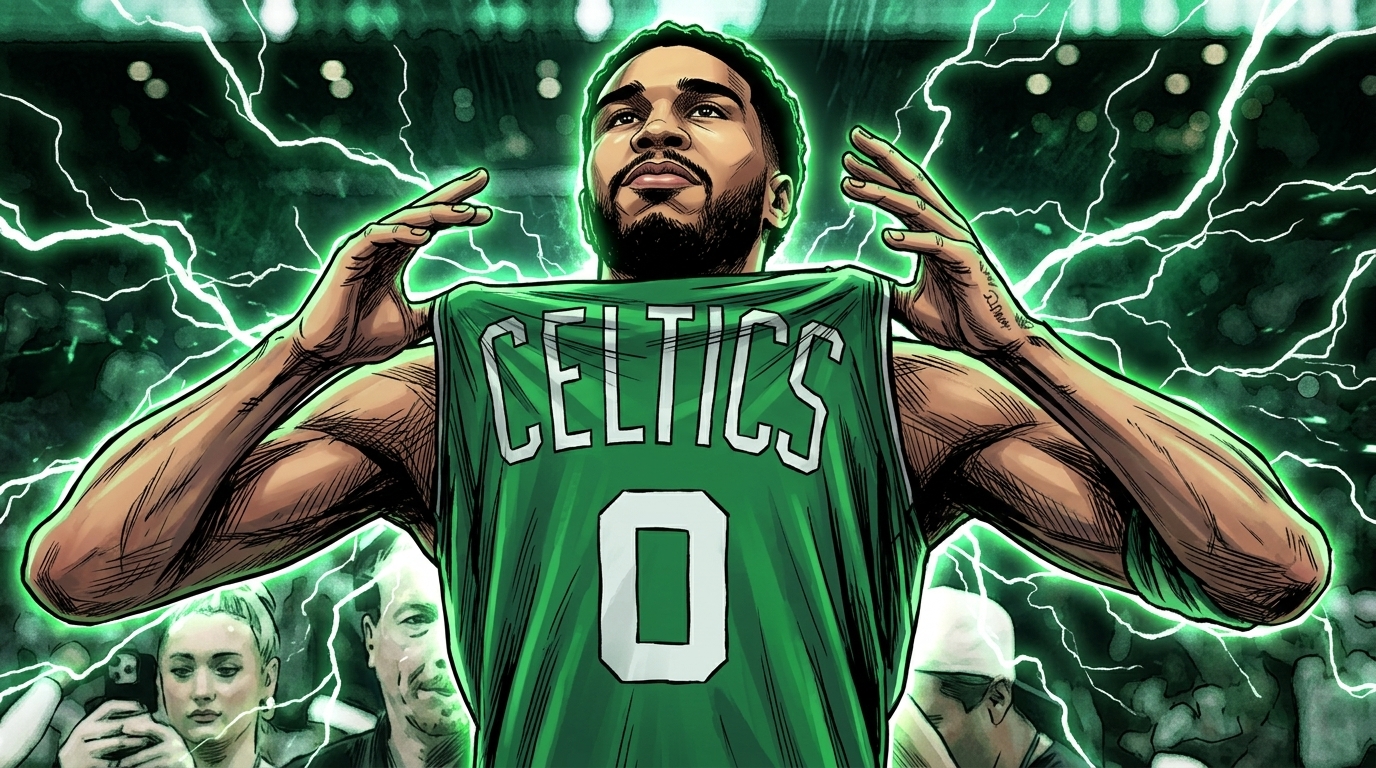
The Boston Celtics defeated the Los Angeles Lakers 4-2 in the 2008 NBA Finals to win their 17th championship, with Paul Pierce named Finals MVP.
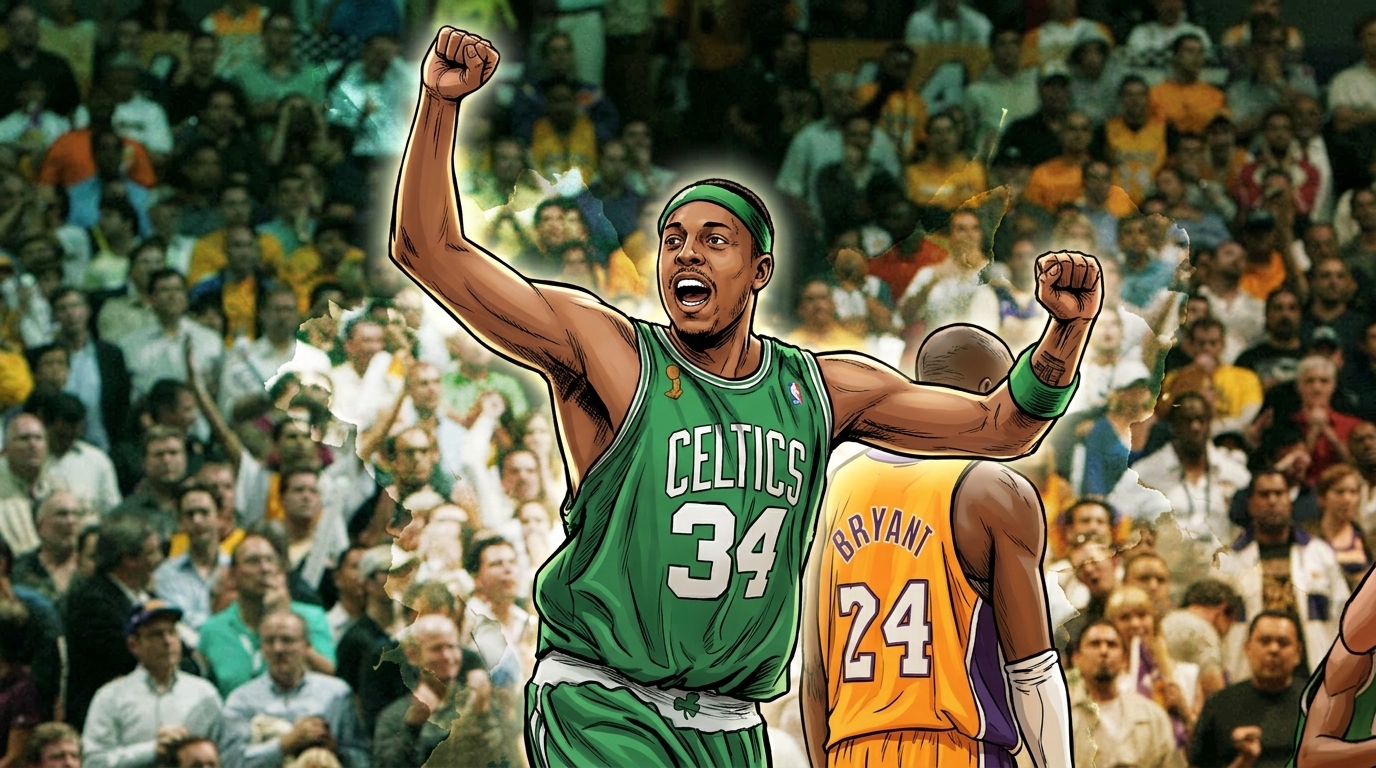
The Boston Celtics won the 2008 NBA title, beating the Los Angeles Lakers four games to two to claim the franchise’s 17th championship and its first since 1986. It was the payoff for a roster rebuilt in a single summer: three future Hall of Famers assembled in July 2007, welded into the league’s best defense, and pointed straight at the rival they had chased for three decades. Paul Pierce, the one star who had stayed through the losing years, was named Finals MVP after averaging 21.8 points across the series.
| Fast facts | |
|---|---|
| Champion | Boston Celtics (17th title) |
| Runner-up | Los Angeles Lakers |
| Dates | June 5–17, 2008 |
| Venues | TD Banknorth Garden (Boston); Staples Center (Los Angeles) |
| Series result | Boston won 4–2 |
| Finals MVP | Paul Pierce |
| Attendance | 18,624 per game in Boston; 18,997 per game in Los Angeles |
The setup
The Celtics arrived at the 2008 Finals a year removed from a 24–58 season, one of the worst records in the league. General manager Danny Ainge rebuilt the roster over three days in the summer of 2007. On draft night, June 28, Boston sent the fifth overall pick (Jeff Green), Delonte West, Wally Szczerbiak and a future selection to the Seattle SuperSonics for Ray Allen, a proven All-Star shooter. Three days later, on July 31, the Minnesota Timberwolves traded 2004 MVP Kevin Garnett to Boston for five players and two draft picks — the largest package for a single player in league history to that point.
Those two joined Pierce, the incumbent All-Star who had spent his prime on middling teams, to form a new “Big Three.” Around them, second-year guard Rajon Rondo ran the offense and Kendrick Perkins anchored the paint. The transformation was immediate: Boston went 66–16 in the 2007-08 regular season, a 42-win improvement, and posted the NBA’s best record. Garnett was named Defensive Player of the Year as the Celtics built the league’s stingiest defense.
The Lakers reached the Finals behind Kobe Bryant, the 2007-08 regular-season MVP, and a midseason trade for center Pau Gasol that reshaped their frontcourt. The matchup revived the sport’s defining rivalry: Boston and Los Angeles had met in the Finals ten times before 2008, and the Celtics had lost to the Lakers just twice in that history — in the 1985 and 1987 Finals — a memory that gave the series its charge.
How it happened
Boston seized home court immediately. In Game 1 on June 5, the Celtics won 98–88, a night remembered for Pierce leaving on a wheelchair with a knee injury and returning minutes later to hit two three-pointers. Game 2 followed the same script, Boston holding on 108–102 despite a furious late Lakers rally, to take a 2–0 lead west.
Los Angeles answered in Game 3 on June 10, winning 87–81 behind Bryant to climb back into the series. Game 4, on June 12, became the defining night. The Lakers led 35–14 after the first quarter — the largest first-quarter lead in Finals history — and pushed the margin to 24 points. Boston then mounted the largest comeback in NBA Finals history at the time — since surpassed by the New York Knicks’ 29-point comeback in the 2026 Finals — erasing the deficit and winning 97–91, with Ray Allen driving for the go-ahead layup in the closing seconds. Instead of a tied series, the Lakers trailed 3–1.
Los Angeles staved off elimination in Game 5 on June 15, winning 103–98 to send the series back to Boston. There would be no drama in Game 6. On June 17, the Celtics closed it out with a 131–92 rout — a 39-point margin that ranks among the most lopsided clinching wins in Finals history. Allen hit seven three-pointers to tie the then-record for a Finals game, Garnett dominated inside, and Pierce collected the MVP trophy on the parquet floor.
By the numbers
| Game | Date | Score | Note |
|---|---|---|---|
| 1 | June 5, 2008 | Boston 98, LA 88 | Pierce returns from knee scare |
| 2 | June 8, 2008 | Boston 108, LA 102 | Boston survives late rally, 2–0 |
| 3 | June 10, 2008 | LA 87, Boston 81 | Bryant pulls Lakers back |
| 4 | June 12, 2008 | Boston 97, LA 91 | 24-point comeback, largest in Finals history at the time |
| 5 | June 15, 2008 | LA 103, Boston 98 | Lakers force Game 6 |
| 6 | June 17, 2008 | Boston 131, LA 92 | Clincher; 17th title |
The record
- 1st NBA titles all-time — Boston's 17th, most in league history through June 2008
- 1st Largest comeback in NBA Finals history — 24 points, Game 4, largest through 2008 (surpassed by the 2026 Knicks, 29)
- 1st Three-pointers in a single Finals series — Ray Allen, 22, most at the time (record later broken by Danny Green, [27](https://www.nbcsports.com/nba/news/danny-green-sets-nba-finals-record-for-three-pointers-made-in-a-series-video), in 2013)
Honors
- 2008 NBA champion — Boston Celtics
- Finals MVP — Paul Pierce
- Defensive Player of the Year — Kevin Garnett (2008)
- All-NBA First Team & All-Defensive First Team — Kevin Garnett
- All-NBA Third Team — Paul Pierce
- All-Star — Ray Allen, Kevin Garnett, Paul Pierce
Per Basketball-Reference and the 2007-08 Celtics season page, records through June 2008.
The arguments
The lasting debate is whether 2008 Boston was the first modern “superteam” and, if so, what that means for the title. Critics point out that Ainge assembled three established All-Stars in a single summer rather than developing a core, a template later associated with the 2010 Miami Heat and the 2017 Golden State Warriors; by that view the banner was bought as much as built. Defenders counter that Pierce was homegrown, that Garnett and Allen cost genuine assets and draft capital, and that the roster still had to grind through a seven-game series in each of the first two playoff rounds before proving itself — a résumé no asterisk fits.
A second argument concerns the Lakers. Los Angeles played the Finals without injured center Andrew Bynum, and supporters of that team argue the frontcourt gap that Boston exploited would have narrowed with him available; the following two seasons, when the Lakers won consecutive titles, are offered as evidence. The counterpoint is that Boston’s defense throttled Bryant and that the series was not close on the whole — the two Boston blowouts, including the 39-point Game 6, left little room for hypotheticals.
Finally, observers still weigh where the 2008 team ranks among Celtics champions. The franchise’s dynasty banners of the 1960s and its 1980s teams carry more titles and more mythology, and some place 2008 below them as a one-summer construction. Others note that the 66-win regular season and a defense built around a reigning Defensive Player of the Year make it one of the most complete single-season Boston teams, regardless of how the roster was formed.
Why it matters
The 2008 Finals reset two of the sport’s oldest storylines at once. It returned the Celtics-Lakers rivalry to the center of the league after a generation dormant, setting up an immediate rematch in 2010, and it validated the roster-building model — trade for finished stars, win now — that would define the following decade of NBA contention. For Boston, it ended a 22-year title drought and gave Pierce, Garnett and Allen the championship that anchors each of their Hall of Fame cases.