Boston Celtics
The Boston Celtics are the NBA's most decorated franchise, winners of a record 18 championships from the 1960s Bill Russell dynasty to Banner 18 in 2024.
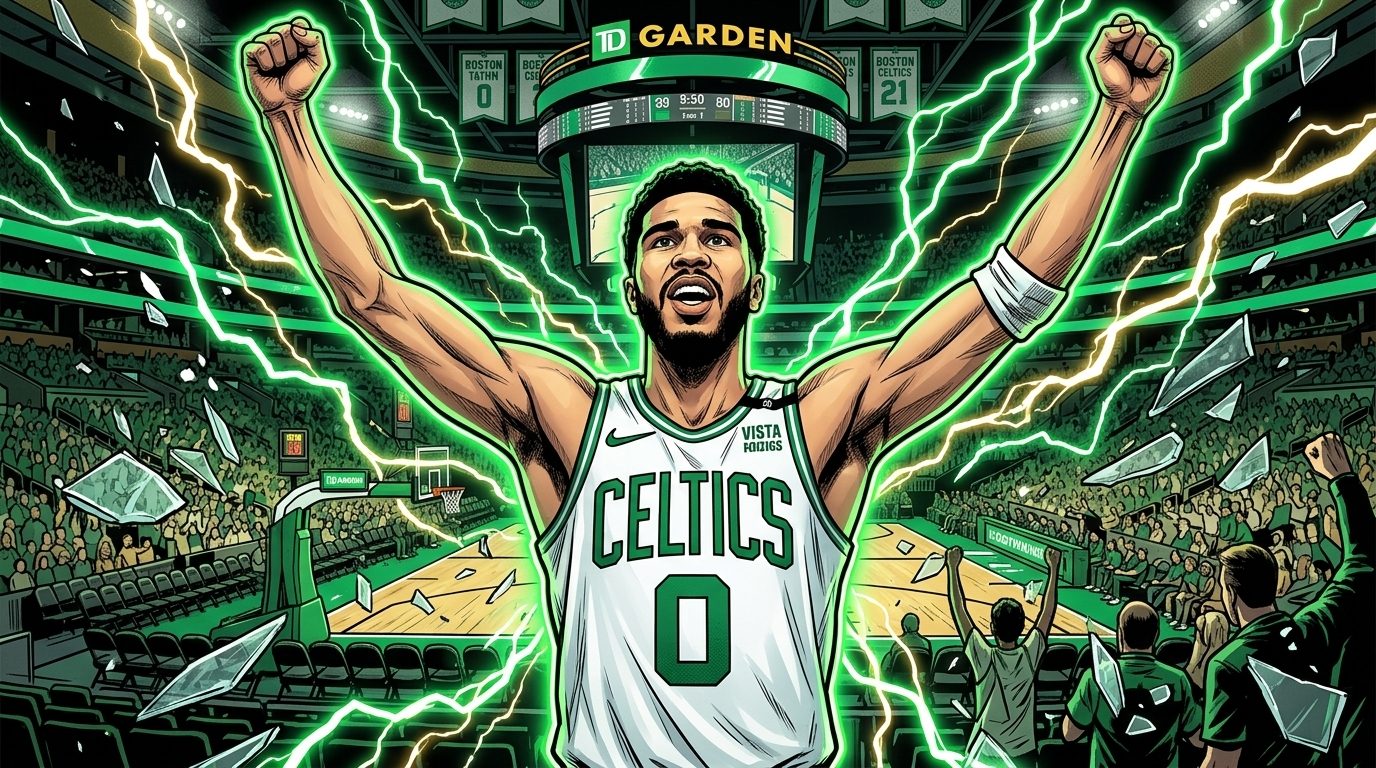
The Boston Celtics are the most decorated franchise in the National Basketball Association, winners of a league-record 18 championships across a history that began with the league itself in 1946. No team in North American professional sports has matched their peak — eight straight titles from 1959 to 1966 — and no team has won more often since. The Celtics are the green-and-white institution of the sport: Bill Russell’s defense, Bob Cousy’s passing, Larry Bird’s shotmaking, Kevin Garnett’s fury and Jayson Tatum’s rise all belong to the same unbroken line, hung as championship banners in the rafters of the old Boston Garden and now TD Garden. Through the 2025-26 season, the franchise carries an all-time regular-season record of 3,751–2,527 across 80 completed seasons, a .597 winning percentage that trails no franchise of comparable age.
| Vitals | |
|---|---|
| Founded | 1946 (charter member, Basketball Association of America) |
| League / conference / division | NBA — Eastern Conference, Atlantic Division |
| Arena | TD Garden, Boston, Mass. (opened 1995) |
| Owner | Bill Chisholm (controlling owner since Aug. 19, 2025); Wyc Grousbeck, CEO and alternate governor |
| Head coach (Oct. 11, 2026) | Joe Mazzulla |
| Titles | 18 — 1957, 1959, 1960, 1961, 1962, 1963, 1964, 1965, 1966, 1968, 1969, 1974, 1976, 1981, 1984, 1986, 2008, 2024 |
Origins: Walter Brown’s gamble (1946–1950)
The Celtics were founded on June 6, 1946, by Boston Garden-Arena president Walter A. Brown, who wanted basketball to fill his arena on the nights the Bruins were idle. Boston was a charter member of the Basketball Association of America, the circuit that merged into the NBA in 1949, and lost its first game 59–53 on the road to the Providence Steamrollers on Nov. 2, 1946. Honey Russell coached the inaugural team to a 22–38 finish.
The early years were lean and nearly fatal. The Celtics missed the playoffs in three of their first four seasons and bottomed out at 22–46 in 1949-50, losing money and searching for an identity. What survived that stretch was the name, the city and Walter Brown’s stubbornness — the foundation on which everything else would be built.
Cousy, Auerbach and the first contender (1950–1956)
Two 1950 decisions changed the franchise forever. Brown hired Red Auerbach as head coach and, in a quirk of a dispersal draft, landed Holy Cross guard Bob Cousy. Cousy’s behind-the-back theater and Bill Sharman’s shooting made Boston the NBA’s most entertaining team and a regular 40-win club, reaching the Eastern Division Finals three years running from 1952-53 to 1954-55.
But entertaining was not the same as winning. For all the offense — Cousy and center Ed Macauley were perennial All-Stars — the Celtics could not get past the division’s heavyweights. Auerbach concluded the team needed a defender and rebounder to finish what the offense started. In 1956 he went and got one.
The Russell dynasty (1956–1969)
Auerbach traded Macauley and the rights to Cliff Hagan to acquire the draft rights to Bill Russell, a San Francisco center fresh off an Olympic gold medal. Russell arrived midway through 1956-57, Tommy Heinsohn won Rookie of the Year, and that spring the Celtics won their first championship, beating the St. Louis Hawks in a seven-game Finals that ended in double overtime. It was the start of the most dominant run in the sport’s history.
Boston then won eight consecutive titles from 1959 to 1966, an NBA record that stands untouched. Russell, a five-time MVP in Boston, anchored a rotation of Hall of Famers — Cousy, Heinsohn, Sam Jones, K.C. Jones, Satch Sanders, Bill Sharman and, from 1962, John Havlicek. The era produced signature moments that still define Celtics lore: the 1962 Game 7 won in overtime over the Lakers, and Havlicek’s steal of Hal Greer’s inbound pass to clinch the 1965 Eastern Finals over Philadelphia, immortalized by broadcaster Johnny Most’s “Havlicek stole the ball!”
Russell made history off the floor as well. When Auerbach stepped up to the front office, Russell became player-coach in 1966, the first Black head coach in a major American professional league. He answered by winning two more titles as coach, in 1968 and 1969, the last an upset of a heavily favored Lakers team on their own floor in a Game 7 — Russell’s final game, and the famous night the Lakers’ celebration balloons stayed in the rafters. Eleven championships in thirteen seasons left when he did.
Cowens, Havlicek and the 1970s banners (1969–1979)
Boston reloaded around a red-headed tornado. With Russell retired, Auerbach drafted center Dave Cowens, who shared Rookie of the Year honors in 1971 and won MVP in 1973. Flanked by the ageless Havlicek and guard Jo Jo White, the Celtics won a franchise-best 68 games in 1972-73 before breaking through for banner No. 12 in 1974, beating Kareem Abdul-Jabbar and the Milwaukee Bucks in a seven-game Finals with Havlicek named MVP.
The 1976 title added one of the greatest games ever played. Boston beat the Phoenix Suns in six for its 13th championship, a series remembered for its triple-overtime Game 5 at the Garden, a 128–126 classic settled only after a phantom timeout and Jo Jo White’s 60 minutes of work earned him Finals MVP honors. The decade’s end was harsher: the post-title Celtics collapsed to 29–53 in 1978-79, setting up the most important draft pick in team history.
The Bird era and the Big Three (1979–1992)
Larry Bird arrived in 1979 and the franchise was reborn. Auerbach had drafted the Indiana State forward a year early, in 1978, and when Bird finally signed, Boston improved by 32 games and he was named Rookie of the Year. In 1980 Auerbach added centers in a draft-day heist that netted Robert Parish and the pick that became Kevin McHale — the frontcourt that, with Bird, became “the Big Three.”
They won three titles in six seasons. Boston beat the Houston Rockets for the 1981 crown with Cedric Maxwell named Finals MVP, outlasted the Lakers in a seven-game 1984 Finals that revived the Magic Johnson rivalry, and in 1985-86 fielded what many consider the greatest team ever — a 67–15 juggernaut with sixth man Bill Walton that dispatched Houston again, Bird winning his third straight MVP and a second Finals MVP.
Then the era’s momentum broke in two days. On June 19, 1986, two days after Boston drafted him second overall, Maryland star Len Bias died of a cocaine overdose, a tragedy that cost the Celtics a generational talent and, in hindsight, the chance to extend the dynasty. The Big Three aged, injuries wore at Bird’s back, and after a Finals defeat to the Lakers in 1987 the window closed. Bird retired in 1992.
The lost years (1992–2007)
The fall was long and, at times, tragic. Shooting guard Reggie Lewis, inheriting the franchise, collapsed and died of a heart ailment on July 27, 1993. The Celtics missed the playoffs repeatedly through the 1990s and cratered to a 15–67 record in 1996-97, their worst ever, in a season openly aimed at the draft lottery. Coach Rick Pitino’s tenure ended without a turnaround.
Paul Pierce became the one constant. Drafted 10th in 1998, Pierce carried mostly middling teams, with a high point in the 2001-02 run to the Eastern Conference Finals alongside Antoine Walker. By 2006-07 the roster had bottomed out again at 24–58 — a collapse that, as in 1979, set the table for a sudden return to the top.
The new Big Three and Banner 17 (2007–2013)
General manager Danny Ainge rebuilt a champion in a single summer. In 2007 he traded for Minnesota’s Kevin Garnett and Seattle’s Ray Allen, pairing them with Pierce under coach Doc Rivers. The “Ubuntu” Celtics improved by 42 wins to 66–16, the biggest single-season turnaround in NBA history, with Garnett named Defensive Player of the Year.
They finished the job against the oldest enemy. Boston beat the Lakers in the 2008 Finals for banner No. 17, clinching with a 131–92 rout in Game 6 — the largest margin in a title-clinching game — as Pierce was named Finals MVP. The group returned to the 2010 Finals but lost a seven-game rematch to the Lakers, 83–79 in the decider, and pushed LeBron James’s Heat to a Game 7 in the 2012 Eastern Finals before Ainge broke up the core, sending Garnett and Pierce to Brooklyn in 2013 for a trove of draft picks.
Rebuild under Stevens and Ainge (2013–2017)
Those Brooklyn picks became the next dynasty’s seed money. Boston hired 36-year-old Brad Stevens from Butler in July 2013 and spent the next several years converting the Nets’ picks and cap space into assets. Point guard Isaiah Thomas emerged as an MVP-level scorer, dragging the 2016-17 team to the Eastern Conference Finals and the East’s top seed.
The two picks that mattered most came in consecutive drafts. Boston took wing Jaylen Brown third overall in 2016 and, after trading down from No. 1, forward Jayson Tatum third overall in 2017. Within a year both were starting in a conference finals.
The Tatum–Brown era and Banner 18 (2017–2026)
Tatum and Brown delivered a decade of contention before they delivered the title. Boston reached four Eastern Conference Finals and, in 2021-22, the NBA Finals, where a 2–1 lead slipped away in a six-game loss to the Golden State Warriors. Joe Mazzulla took over as head coach in September 2022 after Ime Udoka was suspended, and the team kept knocking on the door.
The breakthrough came in 2024. A 64–18 regular season carried into a five-game Finals win over the Dallas Mavericks, clinched June 17, 2024 with a 106–88 Game 5, Tatum posting 31 points, 11 assists and eight rebounds and Brown named Finals MVP. Banner No. 18 moved Boston clear of the Lakers for the most titles in league history.
The defense of the title turned on a single injury. Boston went 61–21 in 2024-25 with Payton Pritchard winning Sixth Man of the Year, but Tatum ruptured his right Achilles tendon in a second-round loss to the New York Knicks. With Tatum limited to 16 games while recovering, the 2025-26 Celtics went 56–26 and fell to the Philadelphia 76ers in the first round.
The franchise then entered a new chapter on and off the court. A Grousbeck-led group that had bought the team in 2002 agreed to sell it, and the NBA approved the sale to an ownership group led by private-equity executive Bill Chisholm at a $6.1 billion valuation — then a record for a North American sports franchise — on Aug. 14, 2025; the transaction closed on Aug. 19, 2025, when Chisholm formally took over. In July 2026, Boston traded Jaylen Brown to Philadelphia for Paul George and draft picks, ending the Tatum–Brown pairing that had produced Banner 18 and leaving Tatum, as he recovered, the lone remaining star of the championship core.
Retired numbers
Few rafters in sports are as crowded as Boston’s. The Celtics have retired 23 numbers plus a banner reading “LOSCY” for Jim Loscutoff, who declined to have No. 18 retired so the number could be reissued — it later went up again for Dave Cowens. Bill Russell’s No. 6, first retired at the Boston Garden on March 12, 1972, was retired league-wide by the NBA in 2022.
| No. | Player | Pos. | Team tenure | Retired |
|---|---|---|---|---|
| 00 | Robert Parish | C | 1980–1994 | Jan. 18, 1998 |
| 1 | Walter A. Brown (owner) | — | founder–owner | Oct. 17, 1964 |
| 2 | Red Auerbach (coach/exec.) | — | 1950–1966 | Jan. 4, 1985 |
| 3 | Dennis Johnson | G | 1983–1990 | Dec. 13, 1991 |
| 5 | Kevin Garnett | F | 2007–2013 | Mar. 13, 2022 |
| 6 | Bill Russell | C | 1956–1969 | Mar. 12, 1972 |
| 10 | Jo Jo White | G | 1969–1979 | Apr. 9, 1982 |
| 14 | Bob Cousy | G | 1950–1963 | Oct. 26, 1963 |
| 15 | Tom Heinsohn | F | 1956–1965 | Oct. 15, 1966 |
| 16 | Tom “Satch” Sanders | F | 1960–1973 | Jan. 20, 1973 |
| 17 | John Havlicek | F/G | 1962–1978 | Oct. 13, 1978 |
| 18 | Dave Cowens | C | 1970–1980 | Feb. 8, 1981 |
| 18 | ”LOSCY” — Jim Loscutoff | F | 1955–1964 | Apr. 8, 1977 |
| 19 | Don Nelson | F | 1965–1976 | Dec. 15, 1976 |
| 21 | Bill Sharman | G | 1951–1961 | Oct. 15, 1966 |
| 22 | Ed Macauley | C/F | 1950–1956 | Oct. 26, 1963 |
| 23 | Frank Ramsey | G/F | 1954–1964 | 1966 |
| 24 | Sam Jones | G | 1957–1969 | Mar. 9, 1969 |
| 25 | K.C. Jones | G | 1958–1967 | Oct. 23, 1968 |
| 31 | Cedric Maxwell | F | 1977–1985 | Dec. 15, 2003 |
| 32 | Kevin McHale | F | 1980–1993 | Jan. 30, 1994 |
| 33 | Larry Bird | F | 1979–1992 | Feb. 4, 1993 |
| 34 | Paul Pierce | F | 2000–2013 | Feb. 11, 2018 |
| 35 | Reggie Lewis | G/F | 1987–1993 | Mar. 22, 1995 |
Season by season
The complete franchise record, folded by decade, newest first.
The 2020s 325–157 · 6 playoff berths · 2 Finals · 1 title
| Season | W–L | Result |
|---|---|---|
| 2025-26 | 56-26 | Lost E. Conf. 1st Round (PHI 3-4) |
| 2024-25 | 61-21 | Lost E. Conf. Semifinals |
| 2023-24 | 64-18 | Won NBA Finals |
| 2022-23 | 57-25 | Lost E. Conf. Finals |
| 2021-22 | 51-31 | Lost NBA Finals |
| 2020-21 | 36-36 | Lost E. Conf. 1st Round |
The 2010s 454–339 · 9 playoff berths · 4 Conf. Finals
| Season | W–L | Result |
|---|---|---|
| 2019-20 | 48-24 | Lost E. Conf. Finals |
| 2018-19 | 49-33 | Lost E. Conf. Semifinals |
| 2017-18 | 55-27 | Lost E. Conf. Finals |
| 2016-17 | 53-29 | Lost E. Conf. Finals |
| 2015-16 | 48-34 | Lost E. Conf. 1st Round |
| 2014-15 | 40-42 | Lost E. Conf. 1st Round |
| 2013-14 | 25-57 | Did not qualify |
| 2012-13 | 41-40 | Lost E. Conf. 1st Round |
| 2011-12 | 39-27 | Lost E. Conf. Finals |
| 2010-11 | 56-26 | Lost E. Conf. Semifinals |
The 2000s 445–375 · 7 playoff berths · 2 Finals · 1 title
| Season | W–L | Result |
|---|---|---|
| 2009-10 | 50-32 | Lost NBA Finals |
| 2008-09 | 62-20 | Lost E. Conf. Semifinals |
| 2007-08 | 66-16 | Won NBA Finals |
| 2006-07 | 24-58 | Did not qualify |
| 2005-06 | 33-49 | Did not qualify |
| 2004-05 | 45-37 | Lost E. Conf. 1st Round |
| 2003-04 | 36-46 | Lost E. Conf. 1st Round |
| 2002-03 | 44-38 | Lost E. Conf. Semifinals |
| 2001-02 | 49-33 | Lost E. Conf. Finals |
| 2000-01 | 36-46 | Did not qualify |
The 1990s 360–428 · 4 playoff berths · 0 Finals
| Season | W–L | Result |
|---|---|---|
| 1999-00 | 35-47 | Did not qualify |
| 1998-99 | 19-31 | Did not qualify |
| 1997-98 | 36-46 | Did not qualify |
| 1996-97 | 15-67 | Did not qualify |
| 1995-96 | 33-49 | Did not qualify |
| 1994-95 | 35-47 | Lost E. Conf. 1st Round |
| 1993-94 | 32-50 | Did not qualify |
| 1992-93 | 48-34 | Lost E. Conf. 1st Round |
| 1991-92 | 51-31 | Lost E. Conf. Semifinals |
| 1990-91 | 56-26 | Lost E. Conf. Semifinals |
The 1980s 583–237 · 10 playoff berths · 5 Finals · 3 titles
| Season | W–L | Result |
|---|---|---|
| 1989-90 | 52-30 | Lost E. Conf. 1st Round |
| 1988-89 | 42-40 | Lost E. Conf. 1st Round |
| 1987-88 | 57-25 | Lost E. Conf. Finals |
| 1986-87 | 59-23 | Lost NBA Finals |
| 1985-86 | 67-15 | Won NBA Finals |
| 1984-85 | 63-19 | Lost NBA Finals |
| 1983-84 | 62-20 | Won NBA Finals |
| 1982-83 | 56-26 | Lost E. Conf. Semifinals |
| 1981-82 | 63-19 | Lost E. Conf. Finals |
| 1980-81 | 62-20 | Won NBA Finals |
The 1970s 504–316 · 7 playoff berths · 2 Finals · 2 titles
| Season | W–L | Result |
|---|---|---|
| 1979-80 | 61-21 | Lost E. Conf. Finals |
| 1978-79 | 29-53 | Did not qualify |
| 1977-78 | 32-50 | Did not qualify |
| 1976-77 | 44-38 | Lost E. Conf. Semifinals |
| 1975-76 | 54-28 | Won NBA Finals |
| 1974-75 | 60-22 | Lost E. Conf. Finals |
| 1973-74 | 56-26 | Won NBA Finals |
| 1972-73 | 68-14 | Lost E. Conf. Finals |
| 1971-72 | 56-26 | Lost E. Conf. Finals |
| 1970-71 | 44-38 | Did not qualify |
The 1960s 546–260 · 9 playoff berths · 8 Finals · 8 titles
| Season | W–L | Result |
|---|---|---|
| 1969-70 | 34-48 | Did not qualify |
| 1968-69 | 48-34 | Won NBA Finals |
| 1967-68 | 54-28 | Won NBA Finals |
| 1966-67 | 60-21 | Lost E. Div. Finals |
| 1965-66 | 54-26 | Won NBA Finals |
| 1964-65 | 62-18 | Won NBA Finals |
| 1963-64 | 59-21 | Won NBA Finals |
| 1962-63 | 58-22 | Won NBA Finals |
| 1961-62 | 60-20 | Won NBA Finals |
| 1960-61 | 57-22 | Won NBA Finals |
The 1950s 445–268 · 10 playoff berths · 4 Finals · 3 titles
| Season | W–L | Result |
|---|---|---|
| 1959-60 | 59-16 | Won NBA Finals |
| 1958-59 | 52-20 | Won NBA Finals |
| 1957-58 | 49-23 | Lost NBA Finals |
| 1956-57 | 44-28 | Won NBA Finals |
| 1955-56 | 39-33 | Lost E. Div. Semifinals |
| 1954-55 | 36-36 | Lost E. Div. Finals |
| 1953-54 | 42-30 | Lost E. Div. Finals |
| 1952-53 | 46-25 | Lost E. Div. Finals |
| 1951-52 | 39-27 | Lost E. Div. Semifinals |
| 1950-51 | 39-30 | Lost E. Div. Semifinals |
The 1940s 89–147 · 1 playoff berth · 0 Finals
| Season | W–L | Result |
|---|---|---|
| 1949-50 | 22-46 | Did not qualify |
| 1948-49 | 25-35 | Did not qualify |
| 1947-48 | 20-28 | Lost Quarterfinals |
| 1946-47 | 22-38 | Did not qualify |
By the numbers
Franchise marks
Per Basketball-Reference, through the 2025-26 season.
Ranks
- 1st NBA championships, all-time (18)
- 1st Consecutive NBA titles (8, 1959–66)
- 2nd NBA Finals appearances, all-time (23, behind the Lakers)
Per Basketball-Reference and team records, through the 2025-26 season.
Honors
- 18× NBA champion (1957–2024)
- 8 straight titles, 1959–1966 (NBA record)
- Bill Russell — 5× NBA MVP as a Celtic
- Larry Bird — 3× NBA MVP (1984, 1985, 1986)
- Bob Cousy (1957) & Dave Cowens (1973) — NBA MVP
- Paul Pierce — 2008 Finals MVP
- Jaylen Brown — 2024 Finals MVP
Per Basketball-Reference and NBA.com.
The arguments
Was the Russell dynasty a product of a weaker, smaller league? Skeptics note that the NBA had as few as eight or nine teams during Boston’s run of eight straight titles, a shallower talent pool than the modern 30-team league, and argue the feat could not be repeated today. Defenders counter that dominating any era for a decade — winning eleven titles in thirteen years against the best competition available — is the point, and that no franchise in any era has come close since. Both sides agree the raw number stands alone.
Where does the 2024 team rank against Boston’s past champions? The Banner 18 team won with a modern, three-point-heavy, defensively versatile style and lost only three total games in the 2024 playoffs, which some argue makes it the most complete Celtics roster since the 1985-86 group. Others hold that the 1960s dynasties and the Bird-era peak faced deeper fields of contenders and should not be measured against a single dominant postseason. The debate is unresolved and, by design, a group-chat staple.
Did breaking up the championship core too soon cost a repeat? Tatum’s Achilles rupture forced hard roster math, and the July 2026 trade of Finals MVP Jaylen Brown drew sharp reactions — critics saw a title team dismantled a year after winning it, while the front office framed the deal around Tatum’s recovery timeline and long-term flexibility. The verdict will depend on what the returning assets become.
Why it matters
No franchise is more central to the story of professional basketball than the Boston Celtics. They were there at the league’s founding, they built its first and longest dynasty, they gave the sport its defining rivalry with the Lakers, and they own more championships than anyone else who has ever played the game. From Russell to Bird to Garnett to Tatum, the green jersey has been a through-line across eighty years of the NBA — the standard every other franchise measures itself against, and the banner count no one else has caught.