Washington Wizards
The Washington Wizards, from the 1961 Chicago Packers and the 1978 champion Bullets to the Wall-Beal years and AJ Dybantsa: history, records, retired numbers.
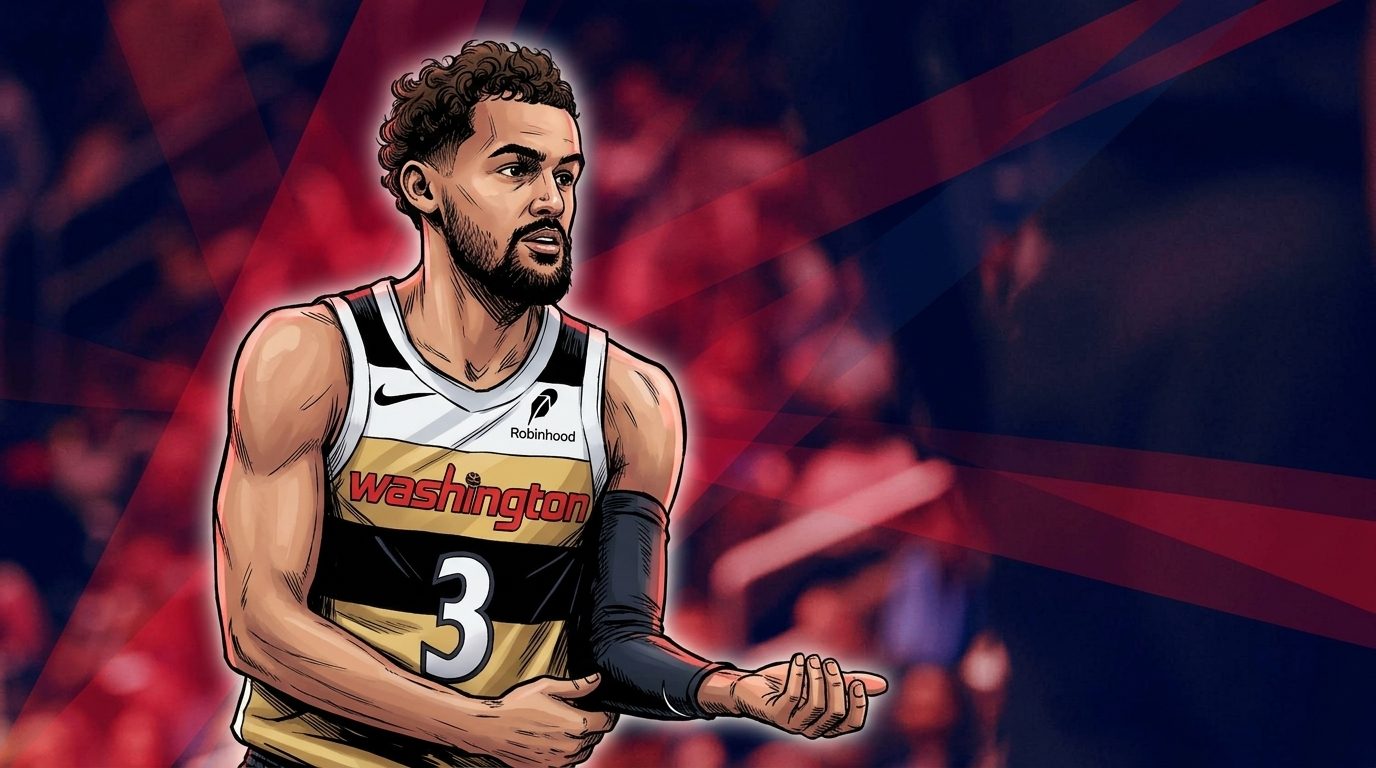
The Washington Wizards are one of the NBA’s most traveled franchises. They began as the Chicago Packers in 1961, became the Baltimore Bullets in 1963, crossed the Beltway as the Capital and then Washington Bullets in the 1970s, and have been the Wizards since 1997. The franchise’s peak was a 1970s run of four NBA Finals in nine seasons, built around Wes Unseld and Elvin Hayes, that produced the 1978 championship. After that came long stretches of rebuilding, broken up by the Gilbert Arenas years and the John Wall and Bradley Beal playoff teams of the 2010s. Through the 2025-26 season the franchise had a 2,307–2,944 regular-season record, 30 playoff appearances and one title. It has been the anchor of professional basketball in the nation’s capital for more than half a century.
| Vitals | |
|---|---|
| Founded | 1961 (Chicago Packers) |
| League / conference / division | NBA / Eastern Conference / Southeast Division |
| Arena | Capital One Arena, Washington, D.C. (opened 1997 as MCI Center) |
| Owner | Ted Leonsis (Monumental Sports & Entertainment) |
| Head coach (Nov. 9, 2026) | Brian Keefe |
| President, basketball operations (Nov. 9, 2026) | Michael Winger |
| Previous names | Chicago Packers (1961-62), Chicago Zephyrs (1962-63), Baltimore Bullets (1963-73), Capital Bullets (1973-74), Washington Bullets (1974-97) |
| NBA titles | 1 (1978) |
| Finals appearances | 4 (1971, 1975, 1978, 1979) |
| Record on Nov. 9, 2026 | 4–7 (2026-27) |
Origins: Chicago Packers and Zephyrs (1961–1963)
An expansion start. The franchise joined the NBA as the Chicago Packers for the 1961-62 season, the league’s first expansion team of the decade. It played at the International Amphitheatre. That first team, coached by Hall of Famer Jim Pollard, went 18–62 and finished fifth of five in the Western Division. Its rookie center Walt Bellamy became the franchise’s first star.
A new name, the same results. For 1962-63 the club became the Chicago Zephyrs and moved to the Chicago Coliseum. It went 25–55 under Jack McMahon and then Slick Leonard. Attendance was poor, and after two seasons in Chicago the franchise moved east.
The Baltimore Bullets (1963–1973)
Arrival in Baltimore. The team moved in 1963 and took the name of an earlier Baltimore NBA club, the Bullets. It played at the Baltimore Civic Center. In 1964-65, coached by Buddy Jeannette, the Bullets reached the Western Division Finals with a 37–43 record, their first deep playoff run. The front line of Bellamy and Gus Johnson drove those early Baltimore teams. Johnson was a high-flying forward who played for the club from 1963 to 1972 and is third on the franchise’s career rebounding list with 7,243.
Earl the Pearl. Baltimore drafted Earl Monroe second overall in 1967. His spin moves and improvised scoring made him one of the most exciting guards in the league and a fixture of Baltimore sports culture. After a 20–61 season in 1966-67 and a 36–46 season in 1967-68, the Bullets had another high draft selection in 1968, and the turnaround that followed changed the franchise.
Wes Unseld’s rookie year. Baltimore took Wes Unseld, a 6-foot-7 center from Louisville, second overall in 1968. His outlet passing, screens and rebounding turned the team around at once. The 1968-69 Bullets improved from 36 wins to 57–25 and first place in the East, and Unseld won both Rookie of the Year and MVP. He is one of only two players in NBA history to win both in the same season, the other being Wilt Chamberlain. Gene Shue’s teams made the playoffs in each of his remaining four seasons, through 1972-73.
The first Finals. In 1970-71 a 42–40 Baltimore team won the Central Division and reached the NBA Finals. There it was swept by Kareem Abdul-Jabbar, Oscar Robertson and the Milwaukee Bucks. Monroe was traded to the New York Knicks early in the 1971-72 season, ending an era of Baltimore basketball. In 1972 the Bullets traded with the Houston Rockets for forward Elvin Hayes, completing the frontcourt that would define the decade.
The Capital and Washington Bullets and the 1978 title (1973–1979)
Moving to the capital. Owner Abe Pollin moved the team to the Washington area for 1973-74. It played as the Capital Bullets at Cole Field House in College Park, Maryland, until the Capital Centre in Landover opened on Dec. 2, 1973. The name changed to the Washington Bullets in 1974.
The 60-win team. Under coach K.C. Jones, the 1974-75 Bullets went 60–22, still the best record in franchise history. With Hayes, Unseld and guard Phil Chenier, they reached the Finals, but the Golden State Warriors swept them. The result shadowed the core for three more years.
Dick Motta and 1978. Dick Motta took over in 1976-77. His 1977-78 team went only 44–38 and entered the playoffs with modest expectations. It still reached the Finals against the Seattle SuperSonics, and the series went the full seven games. Washington lost Game 3 93–92 and Game 5 98–94. It forced a seventh game with a 117–82 rout on June 4, then won Game 7 in Seattle 105–99 on June 7, 1978, for the franchise’s only championship. Unseld, the emotional center of the team, was named Finals MVP. Hayes, Bob Dandridge, Kevin Grevey and Mitch Kupchak filled out the core rotation.
The rematch. The 1978-79 Bullets won 54 games and the Atlantic Division and met Seattle again in the Finals. This time the SuperSonics won four games to one. That was the franchise’s fourth Finals appearance of the decade and, through the 2025-26 season, its last.
The long middle years (1979–1994)
The core breaks up. Washington fell to 39–43 in 1979-80 and missed the playoffs in 1980-81. Hayes left after the 1980-81 season, and Unseld retired after it, having played 984 games for the franchise, the most in its history. Both of their numbers were retired in November 1981.
Gene Shue’s second run. Shue came back to coach from 1980 to 1986. His teams, led by Jeff Ruland, Rick Mahorn, Greg Ballard and the guard Jeff Malone, made the playoffs four times in five seasons. The 1981-82 Bullets won a first-round series and reached the East semifinals. Malone finished with 11,083 points, third in franchise history. The rosters of the mid-1980s included 7-foot-7 shot blocker Manute Bol and a late-career Moses Malone.
Unseld on the bench. Wes Unseld became head coach during the 1987-88 season and took that team to the first round. It was the franchise’s last playoff trip for nine years. He coached through 1993-94 as the team bottomed out, including a 22–60 season in 1992-93. The 1990-91 season brought a late-career resurgence for Bernard King, but little team success.
Webber, Howard and the Wizards name (1994–2001)
The Fab Five reunion. In November 1994 Washington traded for Chris Webber, pairing him with his former Michigan teammate Juwan Howard. A 21–61 first season gave way to a 44–38 finish in 1996-97 under Bernie Bickerstaff and the franchise’s first playoff berth since 1988. The Chicago Bulls eliminated them in the first round, which was also the last postseason series the team played under the Bullets name.
Why the name changed. In November 1995 Pollin announced that the team would drop “Bullets.” He said the name had taken on violent overtones in a city struggling with gun crime in the early 1990s, and he cited the assassination of his friend, Israeli Prime Minister Yitzhak Rabin. After a public naming contest, the change to Wizards took effect May 15, 1997. The new name was criticized at the time, partly because “wizard” is a Ku Klux Klan title. The team also moved downtown to the new MCI Center in 1997.
A rough first stretch as the Wizards. The first Wizards team went 42–40 in 1997-98 but missed the playoffs. Webber was traded to Sacramento in 1998. The next three seasons ended 18–32 (the lockout-shortened 1998-99), 29–53 and 19–63.
The Michael Jordan years (2000–2003)
Front office to the floor. In January 2000 Michael Jordan became president of basketball operations and a minority owner. The Wizards won the 2001 draft lottery, and Jordan chose high school center Kwame Brown first overall, a selection widely criticized in hindsight. In September 2001, at 38, Jordan came out of retirement to play for the Wizards himself.
Two .500-adjacent seasons. Coached by Doug Collins, Jordan’s Wizards finished 37–45 in both 2001-02 and 2002-03 and missed the playoffs both times. After the 2002-03 season Pollin dismissed Jordan and hired Ernie Grunfeld to run the basketball operation.
The Gilbert Arenas era (2003–2010)
Agent Zero. Grunfeld signed guard Gilbert Arenas in 2003. Under coach Eddie Jordan, Arenas, Antawn Jamison and Caron Butler made up one of the league’s highest-scoring trios. The 2004-05 team went 45–37, the franchise’s best record in 26 years, and beat Chicago for its first playoff series win since 1982.
The Cleveland years. LeBron James’s Cleveland Cavaliers then eliminated Washington in three straight first rounds, 2006, 2007 and 2008, a rivalry that defined the era. On Dec. 17, 2006, Arenas scored 60 points against the Lakers in Los Angeles, the franchise’s single-game record. He is second in franchise history in made three-pointers with 868.
The collapse. Arenas had knee surgeries in 2007 and 2008, and the team fell to 19–63 in 2008-09. In December 2009 he admitted storing unloaded firearms in his locker at the arena. After a Dec. 21, 2009 locker-room confrontation involving Arenas and teammate Javaris Crittenton (first reported Dec. 24), the league suspended him in January 2010. Pollin died in November 2009, and Ted Leonsis completed his purchase of the franchise in 2010.
The John Wall and Bradley Beal era (2010–2023)
Two lottery foundations. Washington won the 2010 lottery and drafted Kentucky point guard John Wall first overall. Two years later it took Florida’s Bradley Beal third. Under Randy Wittman, the pair beat Chicago 4–1 in the 2014 first round, and the team then lost to Indiana in six. In 2015 the Wizards swept Toronto, the franchise’s first four-game playoff sweep. They then lost to Atlanta in six after Wall fractured his wrist.
The 2016-17 peak. Under Scott Brooks, the 2016-17 Wizards went 49–33 and won the Southeast Division, their first division title since 1979. They beat Atlanta in six games, with Wall and Beal combining for 73 points in the clincher, and then lost a seven-game East semifinal to Boston. That series is still the deepest playoff run of the Wizards era.
Wall’s departure. Wall ruptured his Achilles in 2019 and missed the entire 2019-20 season. In December 2020 he and a first-round draft selection were traded to Houston for Russell Westbrook. Wall left as the franchise leader in assists (5,282) and steals (976). Westbrook and Beal led a late push to the 2021 playoffs, where Philadelphia won the first-round series in five games.
Beal’s departure. Beal signed a supermax extension in 2022 but was traded to Phoenix in June 2023, with Chris Paul the centerpiece of Washington’s return. He left as the franchise leader in made three-pointers (1,514) and second in points with 15,391, 160 behind Hayes.
The rebuild (2023–2026)
New management. Leonsis replaced Grunfeld’s successor, Tommy Sheppard, in 2023 with president Michael Winger and general manager Will Dawkins, who began a full teardown. Coach Wes Unseld Jr., son of the franchise great, was replaced on Jan. 25, 2024, and moved into a front-office advisory role, with assistant Brian Keefe taking over as interim coach. Keefe was later named full-time head coach. Results bottomed out over three seasons: 15–67 in 2023-24, 18–64 in 2024-25 and 17–65 in 2025-26. In March 2024 a planned arena move to Alexandria, Virginia, collapsed, and the team agreed to stay in Washington.
Draft capital. The rebuild was built through the draft. Washington selected French center Alex Sarr second overall in 2024 and added wing prospects Bilal Coulibaly and Kyshawn George.
The veteran pivot. In the 2025-26 season Washington shifted toward veterans. In January 2026 it acquired four-time All-Star Trae Young from Atlanta for C.J. McCollum and Corey Kispert. The trade was agreed on Jan. 7, 2026, and became official on Jan. 9, 2026. The Wizards then completed a nine-player, three-team trade with Dallas and Charlotte, acquiring Anthony Davis, D’Angelo Russell, Jaden Hardy and Dante Exum and sending Dallas Khris Middleton, AJ Johnson, Marvin Bagley III and future draft selections. Davis was rehabbing a hand injury when he arrived. Washington lost 26 of its final 27 games and finished with the league’s worst record.
The Dybantsa era (2026– )
The lottery. On May 10, 2026, Washington won the draft lottery. It was the franchise’s third lottery win, after 2001 and 2010. The Wizards also became the first team since 2018 to finish with the league’s worst record and then win the lottery.
Draft night. On June 23, 2026, in Brooklyn, the Wizards selected BYU forward AJ Dybantsa first overall, ahead of Kansas’s Darryn Peterson (Utah) and Duke’s Cameron Boozer (Memphis). Dybantsa had led the nation in scoring at 25.5 points per game in his only college season.
The 2026-27 roster. The Wizards opened the 2026-27 season with a mix of veterans and recent draftees. Their roster included Young, Davis, Deandre Ayton, Sarr, George, Coulibaly, Bub Carrington, Tre Johnson and Dybantsa, with Keefe coaching and Winger running basketball operations. Washington won its opener 128–116 over Milwaukee on Oct. 21, 2026. A 111–122 loss at Detroit on Nov. 9, 2026, left it 4–7, a record confirmed by Basketball-Reference’s game log.
Retired numbers
The franchise has retired five numbers, all for players from its Baltimore and 1970s Bullets teams. No player from the Wizards era (1997 onward) had been honored as of Nov. 9, 2026. Unseld and Hayes, the two cornerstones of the 1978 champions, had their numbers retired weeks apart in November 1981. Phil Chenier, the guard on the 1975 Finals team and later a longtime team broadcaster, was the most recent, in 2018. Retirement dates follow the team’s official jersey retirements page.
Retired numbers
| No. | Player | Pos. | Team tenure | Retired |
|---|---|---|---|---|
| 10 | Earl Monroe | G | 1967–1971 | Dec. 1, 1997 |
| 11 | Elvin Hayes | F/C | 1972–1981 | Nov. 20, 1981 |
| 25 | Gus Johnson | F | 1963–1972 | Dec. 13, 1986 |
| 41 | Wes Unseld | C | 1968–1981 | Nov. 3, 1981 |
| 45 | Phil Chenier | G | 1971–1979 | Mar. 23, 2018 |
Season by season
Every season the franchise has played, from the 1961-62 Chicago Packers on, per Basketball-Reference.
The 2020s 154–328 through 2025-26 · 1 playoff berth · 0 Finals
| Season | W–L | Finish | Playoffs |
|---|---|---|---|
| 2026-27 | 4-7 (through Nov. 9, 2026) | In progress | — |
| 2025-26 | 17-65 | 5th (Southeast) | — |
| 2024-25 | 18-64 | 5th (Southeast) | — |
| 2023-24 | 15-67 | 5th (Southeast) | — |
| 2022-23 | 35-47 | 3rd (Southeast) | — |
| 2021-22 | 35-47 | 4th (Southeast) | — |
| 2020-21 | 34-38 | 3rd (Southeast) | Lost East First Round (PHI 1-4) |
The 2010s 352–442 · 4 playoff berths · 0 Finals
| Season | W–L | Finish | Playoffs |
|---|---|---|---|
| 2019-20 | 25-47 | 4th (Southeast) | — |
| 2018-19 | 32-50 | 4th (Southeast) | — |
| 2017-18 | 43-39 | 2nd (Southeast) | Lost East First Round |
| 2016-17 | 49-33 | 1st (Southeast) | Lost East Semifinals (BOS 3-4) |
| 2015-16 | 41-41 | 4th (Southeast) | — |
| 2014-15 | 46-36 | 2nd (Southeast) | Lost East Semifinals (ATL 2-4) |
| 2013-14 | 44-38 | 2nd (Southeast) | Lost East Semifinals (IND 2-4) |
| 2012-13 | 29-53 | 3rd (Southeast) | — |
| 2011-12 | 20-46 | 4th (Southeast) | — |
| 2010-11 | 23-59 | 5th (Southeast) | — |
The 2000s 334–486 · 4 playoff berths · 0 Finals
| Season | W–L | Finish | Playoffs |
|---|---|---|---|
| 2009-10 | 26-56 | 5th (Southeast) | — |
| 2008-09 | 19-63 | 5th (Southeast) | — |
| 2007-08 | 43-39 | 2nd (Southeast) | Lost East First Round (CLE 2-4) |
| 2006-07 | 41-41 | 2nd (Southeast) | Lost East First Round (CLE 0-4) |
| 2005-06 | 42-40 | 2nd (Southeast) | Lost East First Round (CLE) |
| 2004-05 | 45-37 | 2nd (Southeast) | Lost East Semifinals |
| 2003-04 | 25-57 | 6th (Atlantic) | — |
| 2002-03 | 37-45 | 5th (Atlantic) | — |
| 2001-02 | 37-45 | 5th (Atlantic) | — |
| 2000-01 | 19-63 | 7th (Atlantic) | — |
The 1990s 294–494 · 1 playoff berth · 0 Finals
| Season | W–L | Finish | Playoffs |
|---|---|---|---|
| 1999-00 | 29-53 | 7th (Atlantic) | — |
| 1998-99 | 18-32 | 6th (Atlantic) | — |
| 1997-98 | 42-40 | 4th (Atlantic) | — |
| 1996-97 | 44-38 | 4th (Atlantic) | Lost East First Round |
| 1995-96 | 39-43 | 4th (Atlantic) | — |
| 1994-95 | 21-61 | 7th (Atlantic) | — |
| 1993-94 | 24-58 | 7th (Atlantic) | — |
| 1992-93 | 22-60 | 7th (Atlantic) | — |
| 1991-92 | 25-57 | 6th (Atlantic) | — |
| 1990-91 | 30-52 | 4th (Atlantic) | — |
The 1980s 389–431 · 6 playoff berths · 0 Finals
| Season | W–L | Finish | Playoffs |
|---|---|---|---|
| 1989-90 | 31-51 | 4th (Atlantic) | — |
| 1988-89 | 40-42 | 4th (Atlantic) | — |
| 1987-88 | 38-44 | 2nd (Atlantic) | Lost East First Round |
| 1986-87 | 42-40 | 3rd (Atlantic) | Lost East First Round |
| 1985-86 | 39-43 | 3rd (Atlantic) | Lost East First Round |
| 1984-85 | 40-42 | 4th (Atlantic) | Lost East First Round |
| 1983-84 | 35-47 | 5th (Atlantic) | Lost East First Round |
| 1982-83 | 42-40 | 5th (Atlantic) | — |
| 1981-82 | 43-39 | 4th (Atlantic) | Lost East Semifinals |
| 1980-81 | 39-43 | 4th (Atlantic) | — |
The 1970s 472–348 · 10 playoff berths · 4 Finals · 1 title
| Season | W–L | Finish | Playoffs |
|---|---|---|---|
| 1979-80 | 39-43 | 3rd (Atlantic) | Lost East First Round |
| 1978-79 | 54-28 | 1st (Atlantic) | Lost NBA Finals (SEA 1-4) |
| 1977-78 | 44-38 | 2nd (Central) | Won NBA Finals (SEA 4-3) |
| 1976-77 | 48-34 | 2nd (Central) | Lost East Semifinals |
| 1975-76 | 48-34 | 2nd (Central) | Lost East Semifinals |
| 1974-75 | 60-22 | 1st (Central) | Lost NBA Finals (GSW 0-4) |
| 1973-74 | 47-35 | 1st (Central) | Lost East Semifinals |
| 1972-73 | 52-30 | 1st (Central) | Lost East Semifinals |
| 1971-72 | 38-44 | 1st (Central) | Lost East Semifinals |
| 1970-71 | 42-40 | 1st (Central) | Lost NBA Finals (MIL 0-4) |
The 1960s 312–415 · 4 playoff berths · 0 Finals
| Season | W–L | Finish | Playoffs |
|---|---|---|---|
| 1969-70 | 50-32 | 3rd (East) | Lost East Division Semifinals |
| 1968-69 | 57-25 | 1st (East) | Lost East Division Semifinals |
| 1967-68 | 36-46 | 6th (East) | — |
| 1966-67 | 20-61 | 5th (West) | — |
| 1965-66 | 38-42 | 2nd (West) | Lost West Division Semifinals |
| 1964-65 | 37-43 | 3rd (West) | Lost West Division Finals |
| 1963-64 | 31-49 | 4th (West) | — |
| 1962-63 | 25-55 | 5th (West) | — |
| 1961-62 | 18-62 | 5th (West) | — |
By the numbers
Franchise marks
Per Basketball-Reference, through the 2025-26 season.
Ranks
- 1st Points, franchise history: Elvin Hayes (15,551)
- 2nd Points, franchise history: Bradley Beal (15,391)
- 1st Rebounds, franchise history: Wes Unseld (13,769)
- 1st Assists, franchise history: John Wall (5,282)
- 1st Made threes, franchise history: Bradley Beal (1,514)
Per Basketball-Reference franchise career leaders, through Nov. 9, 2026.
Honors
- 1978 NBA champion
- 1968-69 NBA MVP (Wes Unseld)
- 1978 Finals MVP (Wes Unseld)
- 1968-69 Rookie of the Year (Wes Unseld)
- 4× NBA Finals (1971, 1975, 1978, 1979)
- First overall selection, 2026 NBA Draft (AJ Dybantsa)
Per Basketball-Reference and the 2026 draft page, through Nov. 9, 2026.
The arguments
Hayes or Unseld? Supporters of Elvin Hayes point to his place atop the franchise scoring list and his scoring and shot-blocking on the 1970s contenders. Supporters of Wes Unseld point to his MVP, his Finals MVP in 1978 and his record 984 games, and argue that his screens, passing and rebounding made the system work. The franchise has honored both with retired numbers in the same month.
The name change. Pollin presented the 1997 switch from Bullets to Wizards as a moral stand against gun violence. Critics, then and later, called the replacement name weak or noted its Klan associations. Some fans have campaigned for a return to “Bullets” because of the 1970s history, while others say the reasons for the change still hold.
Wall, Beal and the ceiling. One view of the 2010s holds that the Wall-Beal teams were a bench and a healthy Wall away from the conference finals, citing the 2017 seven-game series with Boston. The other view is that the front office never built enough around them and that Beal’s 2022 supermax extension delayed an inevitable rebuild.
Veterans in a rebuild. Adding Trae Young and Anthony Davis during the 2025-26 season divided observers. Some argued that proven players would speed up the development of Sarr, George and, eventually, Dybantsa. Others noted that the team still finished with the league’s worst record, and that the lottery, not the trades, delivered the first overall selection.
Why it matters
The Wizards carry the history of three cities and three arenas. They include the Baltimore teams of Monroe and Gus Johnson, the Landover teams that won the 1978 title, and the downtown teams of Jordan’s comeback, Arenas’s 60 points and Wall’s division title. For most of the decades after 1979 the franchise struggled to repeat its 1970s success. The 2026 lottery was Washington’s third draft-lottery win, and it produced the franchise’s fifth No. 1 overall pick (1961 Bellamy, 1962 McGill, 2001 Brown, 2010 Wall, 2026 Dybantsa). AJ Dybantsa became the latest player expected to revive the team that Unseld and Hayes once carried to a championship.