Indianapolis Colts
The complete history of the Indianapolis Colts, from the Baltimore Colts and Johnny Unitas to Peyton Manning's Super Bowl XLI title and the Daniel Jones era.
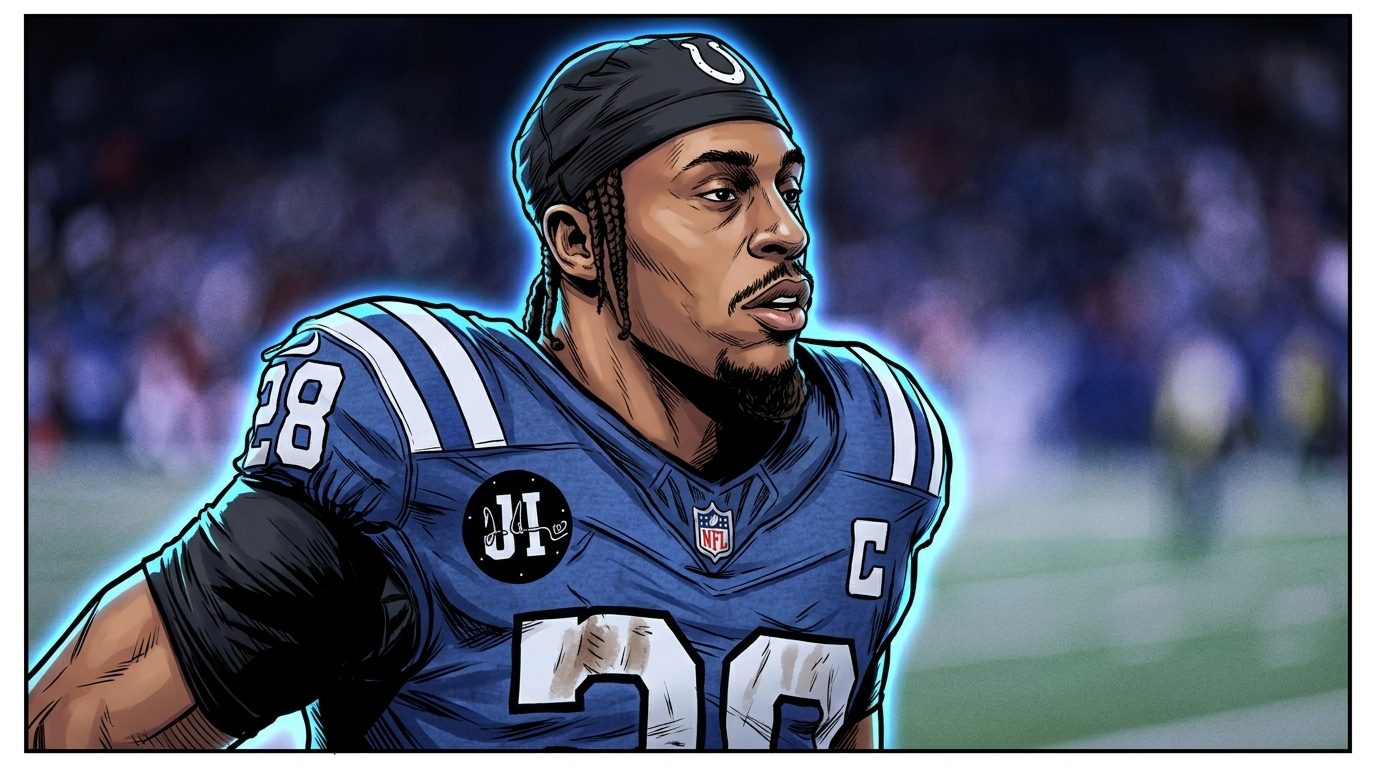
The Indianapolis Colts are one of the National Football League’s foundational postwar powers, a franchise whose story breaks cleanly into two cities and, more than any other team, into the eras of two transcendent quarterbacks. Founded in Baltimore in 1953, the Colts gave the sport Johnny Unitas and “the Greatest Game Ever Played,” were spirited out of Maryland in the middle of the night in 1984, and reinvented themselves in Indianapolis around Peyton Manning and a decade of January football. Through the 2025 season the club had played 73 seasons, won two Super Bowls and three pre-merger NFL Championships, and reached the postseason 29 times — a record that places it among the most decorated and most relocated franchises in the league.
| Vitals | |
|---|---|
| Founded | January 23, 1953 (as the Baltimore Colts) |
| League / Conference / Division | NFL / American Football Conference / AFC South |
| Stadium | Lucas Oil Stadium, Indianapolis (opened 2008) |
| Owner | Carlie Irsay-Gordon, principal owner and CEO (since June 9, 2025) |
| Head coach | Shane Steichen (as of Oct. 23, 2026) |
| Titles | Super Bowl champions (1970, 2006); NFL champions (1958, 1959, 1968) |
The Baltimore beginnings (1953–1955)
The franchise was born out of a failure. On January 23, 1953, the NFL awarded the assets of the defunct Dallas Texans — a one-year franchise that had itself been the New York Yanks — to a Baltimore ownership group led by Carroll Rosenbloom. The new club kept the Colts nickname that Baltimore had used in the old All-America Football Conference and adopted blue and white.
The inheritance mattered more than the record. Among the player rights that came from Dallas were two future Hall of Famers, defensive tackle Art Donovan and defensive end Gino Marchetti, who would anchor the championship teams to come. The early returns were grim — 3–9 in both 1953 and 1954 — but the pieces of a contender were being quietly assembled.
The Unitas dynasty and the Greatest Game Ever Played (1956–1968)
Everything changed when a cut quarterback arrived in 1956. Johnny Unitas, released by the Pittsburgh Steelers a year earlier and playing semipro ball for six dollars a game, signed with the Colts in 1956 and became the prototype of the modern field general. Under coach Weeb Ewbank and alongside receiver Raymond Berry, halfback Lenny Moore and guard Jim Parker, Unitas turned Baltimore into the best team in football.
The 1958 NFL Championship is the game credited with making the modern league. On December 28, 1958, at Yankee Stadium, the Colts beat the New York Giants 23–17 in sudden-death overtime — the first overtime game in NFL history — with Alan Ameche plunging in from a yard out to win it. Played before a national television audience, it is routinely called “the Greatest Game Ever Played.” Baltimore repeated as champions in 1959, again over the Giants, 31–16.
Unitas rewrote the record book. His streak of 47 consecutive games with a touchdown pass, built from 1956 to 1960, stood as the NFL record for 52 years. A three-time league MVP, he carried the franchise into a second wave under Don Shula, hired in 1963. Shula’s 1964 team went 12–2 before losing the NFL Championship, and the 1968 team went 13–1 and routed Cleveland for the title.
Then came the upset that defined an era. As heavy favorites representing the established NFL, the 1968 Colts lost Super Bowl III to the AFL’s New York Jets, 16–7, on January 12, 1969, after Joe Namath guaranteed the win. The result legitimized the AFL and remains one of the largest upsets in American sport.
Super Bowl V and the Robert Irsay years (1970–1983)
Redemption arrived in the merged league. Moved to the AFC in the 1970 realignment, the Colts went 11–2–1 and won Super Bowl V over the Dallas Cowboys, 16–13, on a 32-yard Jim O’Brien field goal with five seconds left. It was a turnover-plagued game remembered as the “Blunder Bowl,” and the only Super Bowl to name its MVP from the losing team.
Ownership changed hands in an unusual trade. In 1972, Robert Irsay bought the Los Angeles Rams and immediately swapped the entire franchise to Rosenbloom in exchange for the Colts. Baltimore stayed competitive on the arm of quarterback Bert Jones, the 1976 NFL MVP, winning three straight AFC East titles from 1975 to 1977.
The descent was steep. By the end of the 1970s the roster had aged out, and the early 1980s brought a 2–14 season in 1981 and a winless, strike-shortened 1982. Irsay’s deteriorating relationship with the city of Baltimore — over the aging Memorial Stadium and a stalled lease — set the stage for the most infamous night in franchise history.
The Mayflower move to Indianapolis (1984)
The team left in the dark. With the Maryland legislature advancing a bill to seize the franchise by eminent domain, Irsay struck first. In the early hours of March 29, 1984, a fleet of 15 Mayflower moving trucks loaded the team’s belongings in Owings Mills and drove out of Maryland on separate routes toward Indianapolis. The overnight relocation to the new Hoosier Dome — later renamed the RCA Dome — left Baltimore without football for a dozen years and made the Mayflower vans a permanent symbol of franchise free agency.
The Indianapolis wilderness (1984–1997)
Indianapolis inherited a losing team. The Colts bottomed out at 3–13 in 1986 before a blockbuster midseason trade reshaped them: on October 31, 1987, Indianapolis acquired running back Eric Dickerson in a three-team deal and rode him to a 9–6 finish and a division title. The good times were brief; a 1–15 collapse in 1991 marked the low point.
One magical January hinted at what was possible. Behind quarterback Jim Harbaugh, nicknamed “Captain Comeback,” the 1995 Colts reached the AFC Championship Game and lost 20–16 at Pittsburgh on January 14, 1996, when Harbaugh’s final-play Hail Mary toward Aaron Bailey fell incomplete in the end zone. It was the closest the pre-Manning Indianapolis era came to a Super Bowl.
The Peyton Manning era (1998–2011)
A single draft pick remade the franchise. Indianapolis selected Peyton Manning first overall in the 1998 NFL Draft, and he quickly became the engine of a perennial contender surrounded by Marvin Harrison, Reggie Wayne, Edgerrin James, Dallas Clark and pass rushers Dwight Freeney and Robert Mathis. The hiring of Tony Dungy as head coach in 2002 added the defensive and cultural steadiness the offense needed.
The Colts dominated the regular season like no team of their time. They became the only franchise in NFL history to win 12 or more games in seven consecutive seasons, from 2003 through 2009, and reached the playoffs nine straight years. The 2005 team went 14–2. Manning won four of his record five MVP awards in Indianapolis, in 2003, 2004, 2008 and 2009.
The title came in the rain. On February 4, 2007, the Colts beat the Chicago Bears 29–17 in Super Bowl XLI, with Manning named MVP and Dungy becoming the first Black head coach to win a Super Bowl. The team moved into Lucas Oil Stadium in 2008 and returned to the title game after a 14–2 season, losing Super Bowl XLIV to the New Orleans Saints, 31–17, on February 7, 2010.
The era ended with a neck injury. Multiple neck surgeries cost Manning the entire 2011 season; without him the Colts went 2–14, a collapse dubbed “Suck for Luck.” Manning was released in March 2012, and the franchise turned the page.
The Andrew Luck era (2012–2018)
The replacement was supposed to be seamless. Indianapolis used the 2–14 season’s reward to draft Andrew Luck first overall in 2012, and he delivered immediately: three straight 11–5 seasons and playoff berths from 2012 to 2014, capped by a run to the AFC Championship Game after the 2014 season. Luck led the league in touchdown passes in 2014 and looked like the quarterback who would carry the team for 15 years.
Injuries intervened. A lacerated kidney and torn abdominal muscles cost him time, and a shoulder problem wiped out his entire 2017 season. He returned to win AP Comeback Player of the Year in 2018 and dragged the Colts back to the playoffs, a revival that made what happened next all the more shocking.
The quarterback carousel (2019–2024)
Luck walked away at the top. On August 24, 2019, at age 29, Andrew Luck announced his retirement, citing a draining cycle of injury and rehabilitation that had “taken the joy out of this game.” The suddenness — days before the regular season — launched the most unstable quarterback stretch in modern franchise history.
A new starter arrived almost every year. Jacoby Brissett, Philip Rivers, Carson Wentz and Matt Ryan each opened a season under center between 2019 and 2022; only Rivers’s 2020 team reached the playoffs. Seeking a long-term answer, Indianapolis drafted Anthony Richardson fourth overall in the 2023 NFL Draft out of Florida. A dynamic but raw runner-passer, Richardson suffered a season-ending shoulder injury in Week 5 of his rookie year and was benched during an inconsistent 2024.
Richardson, Jones and the 2025 collapse
The front office hedged its bet. In the 2025 offseason the Colts signed Daniel Jones, the former New York Giants first-round pick, who then beat out Richardson for the starting job under coach Shane Steichen. The move looked inspired early: Jones spearheaded an 8–2 start, the team’s best since 2009.
Then the season fell apart. Jones suffered a season-ending Achilles injury in Week 14 against Jacksonville, and the Colts lost their final seven games to finish 8–9, third in the AFC South and out of the playoffs. They became the first team in NFL history to finish with a losing record after an 8–2 start — a distinction that turned a promising year into one of the franchise’s most painful.
The 2026 season
Jones returned behind center. Recovered from the Achilles tear, Daniel Jones opened the 2026 season as the Colts’ starting quarterback with Steichen still in charge. Through the game of October 18, 2026, Indianapolis stood 2–4 and second in the AFC South behind a 4–2 Jacksonville, having split its first two divisional games after losses to Baltimore, Kansas City, Pittsburgh and Tennessee around wins over Houston and Washington.
Retired numbers
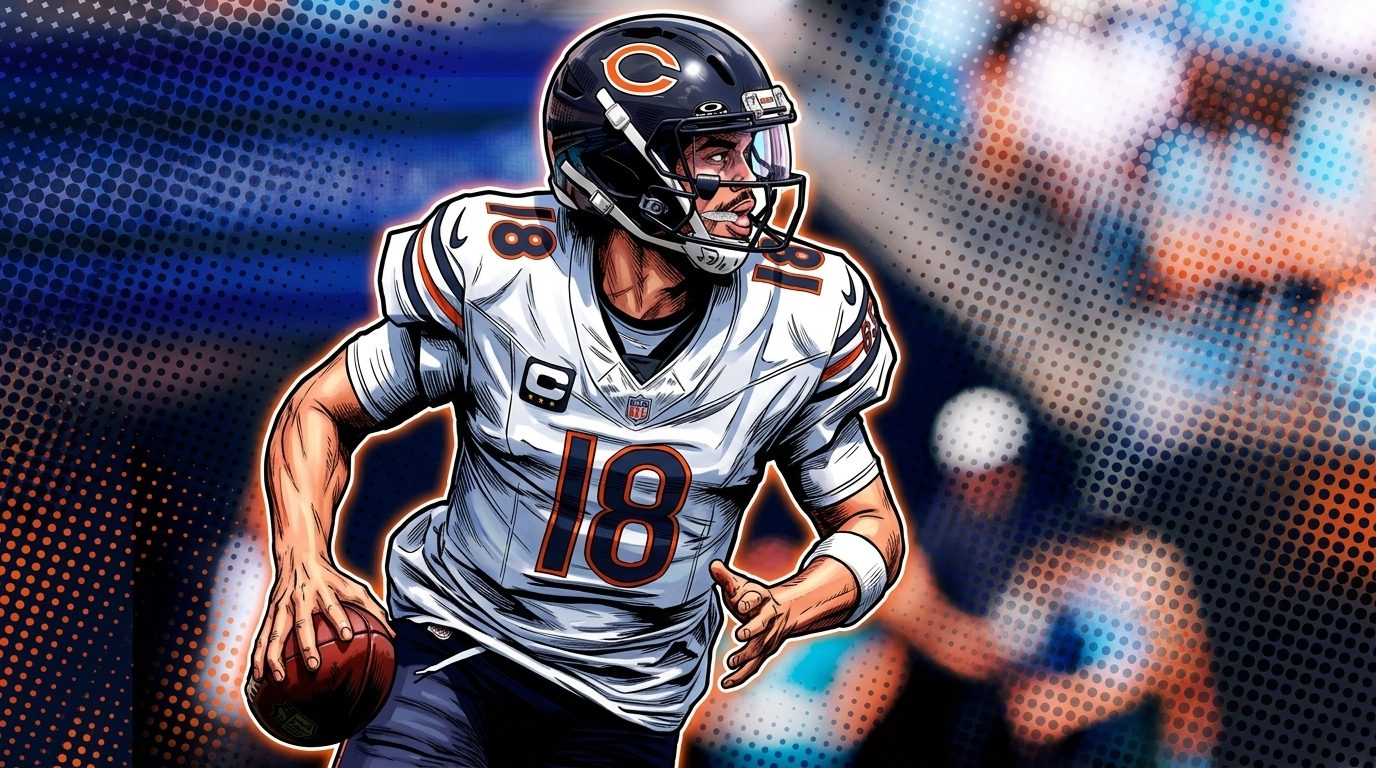
The Colts have retired eight numbers. Seven honor the Baltimore championship teams of the Unitas era, and one belongs to the Indianapolis dynasty: Peyton Manning’s No. 18, retired in a ceremony on October 8, 2017, the only Indianapolis-era number so honored.
| No. | Player | Pos. | Team tenure | Retired |
|---|---|---|---|---|
| 18 | Peyton Manning | QB | 1998–2011 | Oct. 8, 2017 |
| 19 | Johnny Unitas | QB | 1956–1972 | Baltimore era |
| 22 | Buddy Young | HB | 1953–1955 | Baltimore era |
| 24 | Lenny Moore | HB | 1956–1967 | Baltimore era |
| 70 | Art Donovan | DT | 1953–1961 | Baltimore era |
| 77 | Jim Parker | OT/OG | 1957–1967 | Baltimore era |
| 82 | Raymond Berry | WR | 1955–1967 | Baltimore era |
| 89 | Gino Marchetti | DE | 1953–1966 | Baltimore era |
Season by season
The full record below reflects completed seasons from the franchise’s Baltimore debut in 1953 through 2025, folded by decade with the newest first.
The 2020s 49–51–1 · 1 playoff berth (2020–2025)
| Season | W–L | Finish | Playoffs |
|---|---|---|---|
| 2025 | 8–9 | 3rd | Missed playoffs |
| 2024 | 8–9 | 2nd | Missed playoffs |
| 2023 | 9–8 | 3rd | Missed playoffs |
| 2022 | 4–12–1 | 3rd | Missed playoffs |
| 2021 | 9–8 | 2nd | Missed playoffs |
| 2020 | 11–5 | 2nd | Lost Wild Card |
The 2010s 82–78 · 5 playoff berths · 1 AFC title game
| Season | W–L | Finish | Playoffs |
|---|---|---|---|
| 2019 | 7–9 | 3rd | Missed playoffs |
| 2018 | 10–6 | 2nd | Lost Divisional |
| 2017 | 4–12 | 3rd | Missed playoffs |
| 2016 | 8–8 | 3rd | Missed playoffs |
| 2015 | 8–8 | 2nd | Missed playoffs |
| 2014 | 11–5 | 1st | Lost AFC Championship |
| 2013 | 11–5 | 1st | Lost Divisional |
| 2012 | 11–5 | 2nd | Lost Wild Card |
| 2011 | 2–14 | 4th | Missed playoffs |
| 2010 | 10–6 | 1st | Lost Wild Card |
The 2000s 115–45 · 9 playoff berths · Super Bowl XLI title
| Season | W–L | Finish | Playoffs |
|---|---|---|---|
| 2009 | 14–2 | 1st | Lost Super Bowl XLIV |
| 2008 | 12–4 | 2nd | Lost Wild Card |
| 2007 | 13–3 | 1st | Lost Divisional |
| 2006 | 12–4 | 1st | Won Super Bowl XLI |
| 2005 | 14–2 | 1st | Lost Divisional |
| 2004 | 12–4 | 1st | Lost Divisional |
| 2003 | 12–4 | 1st | Lost AFC Championship |
| 2002 | 10–6 | 2nd | Lost Wild Card |
| 2001 | 6–10 | 4th | Missed playoffs |
| 2000 | 10–6 | 2nd | Lost Wild Card |
The 1990s 66–94 · 3 playoff berths · 1 AFC title game
| Season | W–L | Finish | Playoffs |
|---|---|---|---|
| 1999 | 13–3 | 1st | Lost Divisional |
| 1998 | 3–13 | 5th | Missed playoffs |
| 1997 | 3–13 | 5th | Missed playoffs |
| 1996 | 9–7 | 3rd | Lost Wild Card |
| 1995 | 9–7 | 2nd | Lost AFC Championship |
| 1994 | 8–8 | 3rd | Missed playoffs |
| 1993 | 4–12 | 5th | Missed playoffs |
| 1992 | 9–7 | 3rd | Missed playoffs |
| 1991 | 1–15 | 5th | Missed playoffs |
| 1990 | 7–9 | 3rd | Missed playoffs |
The 1980s 54–97–1 · 1 playoff berth
| Season | W–L | Finish | Playoffs |
|---|---|---|---|
| 1989 | 8–8 | 3rd | Missed playoffs |
| 1988 | 9–7 | 3rd | Missed playoffs |
| 1987 | 9–6 | 1st | Lost Divisional |
| 1986 | 3–13 | 5th | Missed playoffs |
| 1985 | 5–11 | 4th | Missed playoffs |
| 1984 | 4–12 | 4th | Missed playoffs |
| 1983 | 7–9 | 4th | Missed playoffs |
| 1982 | 0–8–1 | 14th | Missed playoffs |
| 1981 | 2–14 | 4th | Missed playoffs |
| 1980 | 7–9 | 4th | Missed playoffs |
The 1970s 73–70–1 · 5 playoff berths · Super Bowl V title
| Season | W–L | Finish | Playoffs |
|---|---|---|---|
| 1979 | 5–11 | 5th | Missed playoffs |
| 1978 | 5–11 | 5th | Missed playoffs |
| 1977 | 10–4 | 1st | Lost Divisional |
| 1976 | 11–3 | 1st | Lost Divisional |
| 1975 | 10–4 | 1st | Lost Divisional |
| 1974 | 2–12 | 5th | Missed playoffs |
| 1973 | 4–10 | 5th | Missed playoffs |
| 1972 | 5–9 | 3rd | Missed playoffs |
| 1971 | 10–4 | 2nd | Lost AFC Championship |
| 1970 | 11–2–1 | 1st | Won Super Bowl V |
The 1960s 92–42–4 · 3 postseason berths · 1 NFL title · Super Bowl III
| Season | W–L | Finish | Playoffs |
|---|---|---|---|
| 1969 | 8–5–1 | 2nd | Missed playoffs |
| 1968 | 13–1 | 1st | Won NFL title, lost Super Bowl III |
| 1967 | 11–1–2 | 2nd | Missed playoffs |
| 1966 | 9–5 | 2nd | Missed playoffs |
| 1965 | 10–3–1 | 2nd | Lost Conference playoff |
| 1964 | 12–2 | 1st | Lost NFL Championship |
| 1963 | 8–6 | 3rd | Missed playoffs |
| 1962 | 7–7 | 4th | Missed playoffs |
| 1961 | 8–6 | 3rd | Missed playoffs |
| 1960 | 6–6 | 4th | Missed playoffs |
The 1950s 41–42–1 · 2 NFL Championships (1953–1959)
| Season | W–L | Finish | Playoffs |
|---|---|---|---|
| 1959 | 9–3 | 1st | Won NFL Championship |
| 1958 | 9–3 | 1st | Won NFL Championship |
| 1957 | 7–5 | 3rd | Missed playoffs |
| 1956 | 5–7 | 4th | Missed playoffs |
| 1955 | 5–6–1 | 4th | Missed playoffs |
| 1954 | 3–9 | 6th | Missed playoffs |
| 1953 | 3–9 | 5th | Missed playoffs |
By the numbers
Franchise marks
Ranks
- 1st Most regular-season wins in a decade, the 2000s (115, 2000–2009)
- Only Franchise to win 12+ games in seven straight seasons (2003–2009)
- 12th Regular-season wins, all-time NFL (572)
Honors
- Super Bowl XLI champion (2006 season)
- Super Bowl V champion (1970 season)
- 3× NFL champion (1958, 1959, 1968)
- 16 division titles
- Peyton Manning — 4× NFL MVP in Indianapolis (2003, 2004, 2008, 2009)
- Johnny Unitas — 3× NFL MVP
- 22 Pro Football Hall of Famers
Per Pro-Football-Reference, StatMuse, all-time NFL win–loss records, the Pro Football Hall of Fame and Colts.com, through the 2025 season.
The arguments
Was the 1984 move a theft or a survival? In Baltimore, Robert Irsay’s overnight exit remains an act of civic betrayal, and the city’s grief over losing a championship franchise is cited as the emotional template for every relocation since. Irsay’s defenders — and the franchise’s own retrospective accounts — frame it as a response to the Maryland legislature’s eminent-domain bill, arguing the team fled only because the state moved to seize it. Both readings draw on the same March 1984 timeline; they disagree only on who acted first.
Did the Manning Colts underachieve in January? Critics point to a single Super Bowl title from a team that won 12-plus games seven years running and reached the playoffs nine straight times, treating the one-and-done exits of 2005 and 2007 as evidence of a club built for the regular season. Defenders note that the Colts navigated an era that included multiple championship-caliber New England and Pittsburgh teams, and that one ring plus a second conference title is a résumé most franchises never approach.
Did Indianapolis give up on Anthony Richardson too soon? One camp holds that a fourth-overall pick with Richardson’s physical tools needed patience, and that signing Daniel Jones in 2025 and handing him the job short-circuited a developmental timeline. The other holds that the Colts could not keep waiting on a quarterback who had struggled to stay healthy and consistent, and that competition was overdue. Each side cites Richardson’s injury record and his uneven 2024; neither has been settled on the field.
Why it matters
The Colts are, in a sense, two franchises wearing the same horseshoe — the Baltimore club that helped invent the televised NFL spectacle and the Indianapolis club that perfected the modern passing offense — stitched together by a midnight convoy of moving trucks. Few teams can claim both “the Greatest Game Ever Played” and a quarterback who won four MVPs in their uniform, and fewer still carry a history that doubles as a cautionary tale about a city’s hold on its team. That combination of on-field greatness and off-field upheaval is what makes the Colts one of the NFL’s essential franchises, and why their story is argued over long after the final whistles.