Pittsburgh Steelers
The Pittsburgh Steelers are a six-time Super Bowl champion, founded in 1933 and owned by the Rooney family, tied with New England for the most NFL titles.
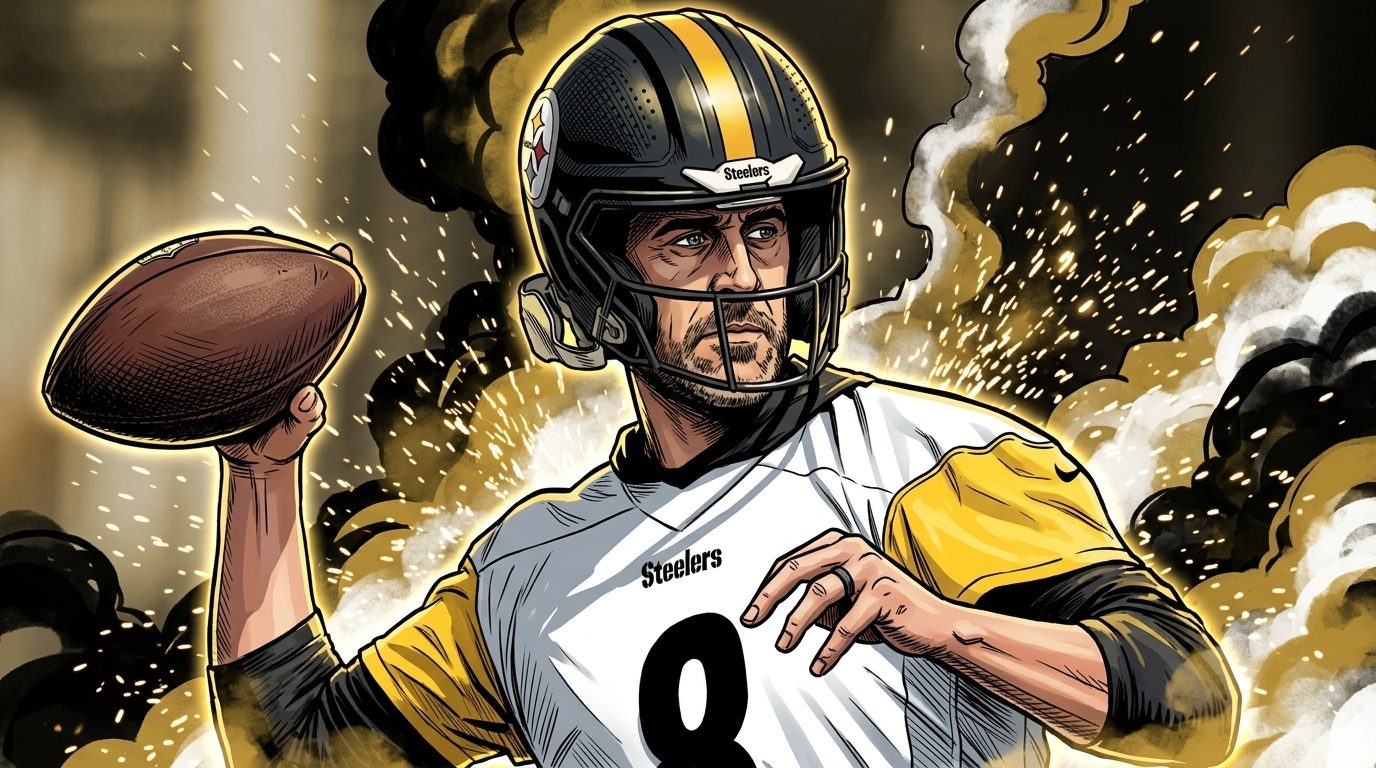
The Pittsburgh Steelers are a professional football franchise in the National Football League, founded in 1933 and owned by the Rooney family for the whole of their existence. For their first four decades they were among the least successful teams in the sport; across the next half-century they became one of its defining institutions. Their six Super Bowl championships are tied with the New England Patriots for the most in league history, and their 691 regular-season wins rank fourth all-time. The franchise is as closely identified with a style — black-and-gold, hard defense, coaching stability — as any in American sports, and plays its home games at Acrisure Stadium in the AFC North.
| Vitals | |
|---|---|
| Founded | 1933 (as the Pittsburgh Pirates; renamed Steelers in 1940) |
| League / conference / division | NFL — American Football Conference, AFC North |
| Stadium | Acrisure Stadium (opened 2001 as Heinz Field, renamed 2022); capacity ~68,400 |
| Owner | Art Rooney II and family (Rooney ownership since 1933) |
| Head coach | Mike McCarthy (hired Jan. 27, 2026), as of Nov. 2, 2026 |
| Titles | 6 Super Bowls: IX (1974), X (1975), XIII (1978), XIV (1979), XL (2005), XLIII (2008) |
Origins and the lean years (1933–1968)
A gambler’s franchise. Pittsburgh boxing promoter and horseplayer Art Rooney Sr. was awarded an NFL franchise in 1933, reportedly for a $2,500 fee, and named it the Pittsburgh Pirates after the city’s baseball club. The team played at Forbes Field and, prior to the 1940 season, took the name Steelers in tribute to the region’s steel industry. The Rooney family has controlled the club ever since, the longest continuous ownership in the league.
The worst years. For nearly four decades the Steelers were defined by losing. Their only postseason appearance before the 1970s came in 1947, when an 8-4 finish tied them with the Philadelphia Eagles atop the Eastern Division; the Eagles won the tiebreaker playoff 21-0 at Forbes Field on Dec. 21, 1947. Manpower shortages during World War II forced two emergency mergers: the 1943 “Phil-Pitt Steagles” (5-4-1) combined the roster with Philadelphia, and the 1944 “Card-Pitt” club with the Chicago Cardinals went 0-10, the only winless season in franchise history.
The faces of the drought. The era’s standout was Hall of Fame defensive tackle Ernie Stautner, whose No. 70 became the first number the franchise ever retired, on Oct. 25, 1964. Quarterback Bobby Layne and fullback John Henry Johnson gave the late-1950s teams a pulse under coach Buddy Parker, but the Steelers never translated flashes into contention. Their nadir, a 1-13 finish in 1969, proved to be the floor from which everything changed.
Chuck Noll and the Steel Curtain dynasty (1969–1979)
The architect arrives. The Steelers hired Chuck Noll as head coach on Jan. 27, 1969, and he immediately began building through the draft. His first pick was defensive tackle Joe Greene, taken fourth overall in 1969. Terry Bradshaw followed as the No. 1 overall pick in 1970, with cornerback Mel Blount later that spring, linebacker Jack Ham in 1971 and running back Franco Harris in 1972.
The greatest draft. The 1974 class alone produced four future Hall of Famers: wide receiver Lynn Swann (21st overall), linebacker Jack Lambert (46th), wide receiver John Stallworth (82nd) and center Mike Webster (125th). The defense’s front, built around Greene, L.C. Greenwood, Ernie Holmes and Dwight White, earned the nickname the “Steel Curtain” and became the standard by which championship defenses were measured.
The Immaculate Reception. The turn came on Dec. 23, 1972, when the Steelers beat the Oakland Raiders 13-7 in an AFC divisional playoff on Franco Harris’s shoestring catch of a deflected Bradshaw pass in the final seconds — the franchise’s first playoff win, and one of the most famous plays in NFL history.
Four titles in six seasons. No team in league history had done what Pittsburgh then did. The Steelers won Super Bowl IX over the Minnesota Vikings 16-6 on Jan. 12, 1975, Super Bowl X over the Dallas Cowboys 21-17 on Jan. 18, 1976, Super Bowl XIII over Dallas again 35-31 on Jan. 21, 1979, and Super Bowl XIV over the Los Angeles Rams 31-19 on Jan. 20, 1980. The 1978 team went 14-2. Bradshaw was named MVP of the last two; Harris and Swann of the first two. Noll was the first coach to win four Super Bowls and remains the only one with a perfect 4-0 Super Bowl record; Bill Belichick later won six as a head coach, all with New England, the most of any coach.
Decline and Noll’s final chapter (1980–1991)
The dynasty ages. As the great draftees retired, the Steelers slid into the league’s middle. They remained competitive enough to reach the playoffs in 1982, 1983, 1984 and 1989, but the deep runs grew rare. The 1984 team, 9-7 and AFC Central champion, upset Denver before falling in the AFC Championship Game at the Miami Dolphins, 45-28 on Jan. 6, 1985. The 1989 club, left for dead after lopsided early losses, won a wild-card thriller in overtime at Houston before losing by a point at Denver.
Noll steps away. Chuck Noll retired after the 1991 season, 23 years after his hiring, with a regular-season record of 193-148-1 and the four championship rings that defined the franchise. He was inducted into the Pro Football Hall of Fame in 1993, his first year of eligibility, having handed his successor a team that had already begun to turn.
The Cowher era (1992–2006)
The Chin. Bill Cowher, a Pittsburgh-area native, was hired on Jan. 21, 1992, and reached the playoffs in each of his first six seasons. His teams became perennial contenders built on a punishing running game and defense, reaching the AFC Championship Game six times and hosting five of them. Several of those home conference finals ended in heartbreak, including losses to San Diego after the 1994 season and to Denver after 1997.
So close, then a long wait. The 1995 team broke through to the conference title but lost Super Bowl XXX to the Dallas Cowboys 27-17 on Jan. 28, 1996. The 2004 Steelers, powered by rookie quarterback Ben Roethlisberger — the 11th overall pick, who won all 13 of his regular-season starts — finished 15-1 before losing the AFC Championship at home to New England.
The Bus gets his ring. Vindication came in the 2005 season. Seeded sixth, the Steelers won three road playoff games and then Super Bowl XL over the Seattle Seahawks 21-10 on Feb. 5, 2006, in Detroit. Wide receiver Hines Ward was named MVP, and running back Jerome Bettis, “The Bus,” played the final game of his career in his hometown. Cowher retired after the 2006 season with a 149-90-1 regular-season record and was elected to the Hall of Fame’s Centennial Class of 2020, with his enshrinement ceremony held in August 2021 after the 2020 ceremony was postponed because of COVID-19.
The Tomlin era (2007–2025)
A young coach, a sixth title. Mike Tomlin was hired in January 2007 at age 34. Two seasons later he delivered the franchise’s record-setting sixth championship, Super Bowl XLIII over the Arizona Cardinals 27-23 on Feb. 1, 2009. The game turned on James Harrison’s 100-yard interception return as the first half expired and Santonio Holmes’s 6-yard touchdown catch with 35 seconds left; Holmes was named MVP and Tomlin, at 36, was then the youngest coach to win a Super Bowl.
The one that got away. The 2010 Steelers returned to the title game but lost Super Bowl XLV to the Green Bay Packers 31-25 on Feb. 6, 2011. The Packers’ MVP that night was quarterback Aaron Rodgers, a name that would resurface in Pittsburgh a decade and a half later.
Stars and transition. Tomlin’s tenure featured Roethlisberger, safety Troy Polamalu (2010 Defensive Player of the Year), Harrison (2008), receiver Antonio Brown, running back Le’Veon Bell, lineman Cam Heyward, safety Minkah Fitzpatrick and edge rusher T.J. Watt, whose 2021 Defensive Player of the Year season included 22.5 sacks, tying the single-season record. Roethlisberger retired after the 2021 season, and the Steelers worked through a run of quarterbacks — Kenny Pickett, then Russell Wilson and Justin Fields — before signing Rodgers to a one-year deal in June 2025.
Nineteen years, never a loser. Rodgers’s lone Tomlin season, 2025, ended 10-7 with an AFC North title and a wild-card loss to the Houston Texans, 30-6. On Jan. 13, 2026, Tomlin stepped down after 19 seasons and a 193-114-2 record. He never once finished with a losing record, the longest such streak to open a head-coaching career in NFL history.
The McCarthy–Rodgers chapter (2026– )
A rare change at the top. The Steelers hired Mike McCarthy on Jan. 27, 2026, making him only the fourth head coach the franchise has employed since 1969, after Noll, Cowher and Tomlin. A Pittsburgh native, McCarthy had led the Green Bay Packers from 2006 to 2018 — winning Super Bowl XLV against these Steelers — and the Dallas Cowboys from 2020 to 2024.
One more year for Rodgers. The reunion drew Rodgers back for a 22nd season. Having weighed retirement after 2025, he returned on a one-year deal to play again for his former Green Bay coach, and at team workouts in late May 2026 he confirmed 2026 would be his final NFL season, saying flatly, “This is it.” Through eight games of the 2026 season, the Steelers stood 6-2 and atop the AFC North, as of Nov. 2, 2026.
Retired numbers
The Steelers are famous for almost never formally retiring a number, preferring instead to keep the jerseys of their greatest players quietly out of circulation. Only three numbers have been officially retired. Many others sit unissued by custom rather than decree, among them Terry Bradshaw’s 12, Jack Lambert’s 58, Jack Ham’s 59, Mike Webster’s 52, Mel Blount’s 47, Dermontti Dawson’s 63, L.C. Greenwood’s 68, Troy Polamalu’s 43, Hines Ward’s 86 and Jerome Bettis’s 36 — honored, but never formally retired.
| No. | Player | Pos. | Team tenure | Retired |
|---|---|---|---|---|
| 70 | Ernie Stautner | DT | 1950–1963 | Oct. 25, 1964 |
| 75 | Joe Greene | DT | 1969–1981 | Nov. 2, 2014 |
| 32 | Franco Harris | RB | 1972–1983 | Dec. 24, 2022 |
Season by season
The full franchise record, folded by decade, newest first. Totals are shown as played; the franchise’s official all-time mark of 691-592-22 attributes the 1943 and 1944 wartime-merger records to separate entries.
The 2020s 60–40–1 · 5 playoff berths · 2 division titles
| Season | W–L | Finish | Playoffs |
|---|---|---|---|
| 2020 | 12-4 | 1st (AFC North) | Lost Wild Card (CLE 37-48) |
| 2021 | 9-7-1 | 2nd | Lost Wild Card (KC 21-42) |
| 2022 | 9-8 | 3rd | — |
| 2023 | 10-7 | 3rd | Lost Wild Card (BUF 17-31) |
| 2024 | 10-7 | 2nd | Lost Wild Card (BAL 14-28) |
| 2025 | 10-7 | 1st (AFC North champs) | Lost Wild Card (HOU 6-30) |
The 2010s 102–57–1 · 6 playoff berths · 1 Super Bowl appearance (XLV)
| Season | W–L | Finish | Playoffs |
|---|---|---|---|
| 2010 | 12-4 | 1st | Lost Super Bowl XLV (GB 25-31) |
| 2011 | 12-4 | 2nd | Lost Wild Card (DEN 23-29 OT) |
| 2012 | 8-8 | 3rd | — |
| 2013 | 8-8 | 2nd | — |
| 2014 | 11-5 | 1st | Lost Wild Card (BAL 17-30) |
| 2015 | 10-6 | 2nd | Lost Divisional (DEN 16-23) |
| 2016 | 11-5 | 1st | Lost AFC Championship (NE 17-36) |
| 2017 | 13-3 | 1st | Lost Divisional (JAX 42-45) |
| 2018 | 9-6-1 | 2nd | — |
| 2019 | 8-8 | 2nd | — |
The 2000s 103–56–1 · 6 playoff berths · 2 Super Bowl titles (XL, XLIII)
| Season | W–L | Finish | Playoffs |
|---|---|---|---|
| 2000 | 9-7 | 3rd (AFC Central) | — |
| 2001 | 13-3 | 1st | Lost AFC Championship (NE 17-24) |
| 2002 | 10-5-1 | 1st (AFC North) | Lost Divisional (TEN 31-34 OT) |
| 2003 | 6-10 | 3rd | — |
| 2004 | 15-1 | 1st | Lost AFC Championship (NE 27-41) |
| 2005 | 11-5 | 2nd (Wild Card) | Won Super Bowl XL (SEA 21-10) |
| 2006 | 8-8 | 3rd | — |
| 2007 | 10-6 | 1st | Lost Wild Card (JAX 29-31) |
| 2008 | 12-4 | 1st | Won Super Bowl XLIII (ARI 27-23) |
| 2009 | 9-7 | 3rd | — |
The 1990s 93–67 · 6 playoff berths · 1 Super Bowl appearance (XXX)
| Season | W–L | Finish | Playoffs |
|---|---|---|---|
| 1990 | 9-7 | 3rd (AFC Central) | — |
| 1991 | 7-9 | 2nd | — |
| 1992 | 11-5 | 1st | Lost Divisional (BUF 3-24) |
| 1993 | 9-7 | 2nd | Lost Wild Card (KC 24-27 OT) |
| 1994 | 12-4 | 1st | Lost AFC Championship (SD 13-17) |
| 1995 | 11-5 | 1st | Lost Super Bowl XXX (DAL 17-27) |
| 1996 | 10-6 | 1st | Lost Divisional (NE 3-28) |
| 1997 | 11-5 | 1st | Lost AFC Championship (DEN 21-24) |
| 1998 | 7-9 | 3rd | — |
| 1999 | 6-10 | 4th | — |
The 1980s 77–75 · 4 playoff berths · 0 Super Bowls
| Season | W–L | Finish | Playoffs |
|---|---|---|---|
| 1980 | 9-7 | 3rd (AFC Central) | — |
| 1981 | 8-8 | 2nd | — |
| 1982 | 6-3 | 4th (strike season) | Lost First Round (SD 28-31) |
| 1983 | 10-6 | 1st | Lost Divisional (LAR 10-38) |
| 1984 | 9-7 | 1st | Lost AFC Championship (MIA 28-45) |
| 1985 | 7-9 | 3rd | — |
| 1986 | 6-10 | 3rd | — |
| 1987 | 8-7 | 3rd (strike season) | — |
| 1988 | 5-11 | 4th | — |
| 1989 | 9-7 | 3rd | Lost Divisional (DEN 23-24) |
The 1970s 99–44–1 · 8 playoff berths · 4 Super Bowl titles (IX, X, XIII, XIV)
| Season | W–L | Finish | Playoffs |
|---|---|---|---|
| 1970 | 5-9 | 3rd (AFC Central) | — |
| 1971 | 6-8 | 2nd | — |
| 1972 | 11-3 | 1st | Lost AFC Championship (MIA 17-21) |
| 1973 | 10-4 | 2nd | Lost Divisional (OAK 14-33) |
| 1974 | 10-3-1 | 1st | Won Super Bowl IX (MIN 16-6) |
| 1975 | 12-2 | 1st | Won Super Bowl X (DAL 21-17) |
| 1976 | 10-4 | 1st | Lost AFC Championship (OAK 7-24) |
| 1977 | 9-5 | 1st | Lost Divisional (DEN 21-34) |
| 1978 | 14-2 | 1st | Won Super Bowl XIII (DAL 35-31) |
| 1979 | 12-4 | 1st | Won Super Bowl XIV (LAR 31-19) |
The 1960s 46–85–7 · no playoff berths
| Season | W–L | Finish | Playoffs |
|---|---|---|---|
| 1960 | 5-6-1 | 5th (Eastern) | — |
| 1961 | 6-8 | 5th | — |
| 1962 | 9-5 | 2nd | — |
| 1963 | 7-4-3 | 4th | — |
| 1964 | 5-9 | 6th | — |
| 1965 | 2-12 | 7th | — |
| 1966 | 5-8-1 | 6th | — |
| 1967 | 4-9-1 | 4th (Century) | — |
| 1968 | 2-11-1 | 4th | — |
| 1969 | 1-13 | 4th | — |
The 1950s 54–63–3 · no playoff berths
| Season | W–L | Finish | Playoffs |
|---|---|---|---|
| 1950 | 6-6 | 3rd (American) | — |
| 1951 | 4-7-1 | 4th | — |
| 1952 | 5-7 | 4th | — |
| 1953 | 6-6 | 4th (Eastern) | — |
| 1954 | 5-7 | 4th | — |
| 1955 | 4-8 | 6th | — |
| 1956 | 5-7 | 4th | — |
| 1957 | 6-6 | 3rd | — |
| 1958 | 7-4-1 | 3rd | — |
| 1959 | 6-5-1 | 4th | — |
The 1940s 40–64–6 · 1 playoff berth · 2 wartime mergers
| Season | W–L | Finish | Playoffs |
|---|---|---|---|
| 1940 | 2-7-2 | 4th (Eastern) | — |
| 1941 | 1-9-1 | 5th | — |
| 1942 | 7-4 | 2nd | — |
| 1943 | 5-4-1 | 3rd | — (Phil-Pitt “Steagles”) |
| 1944 | 0-10 | 5th | — (Card-Pitt) |
| 1945 | 2-8 | 5th | — |
| 1946 | 5-5-1 | 3rd | — |
| 1947 | 8-4 | 2nd (tie 1st) | Lost Division playoff (PHI 0-21) |
| 1948 | 4-8 | 3rd | — |
| 1949 | 6-5-1 | 2nd | — |
The 1930s 22–55–3 · no playoff berths · as the Pittsburgh Pirates
| Season | W–L | Finish | Playoffs |
|---|---|---|---|
| 1933 | 3-6-2 | 5th (Eastern) | — |
| 1934 | 2-10 | 5th | — |
| 1935 | 4-8 | 3rd | — |
| 1936 | 6-6 | 2nd | — |
| 1937 | 4-7 | 3rd | — |
| 1938 | 2-9 | 5th | — |
| 1939 | 1-9-1 | 4th | — |
By the numbers
Franchise marks
Per Wikipedia and the franchise season list, through the 2025 season.
Ranks
- T-1st Super Bowl titles, NFL history (6, with New England)
- 4th Regular-season wins, all-time (691)
- T-2nd Super Bowl appearances, all-time (8)
Per StatMuse and ESPN, through the 2025 season.
Honors
- 6× Super Bowl champion (IX, X, XIII, XIV, XL, XLIII)
- Most Super Bowl titles in NFL history (tied, 6)
- 8× AFC champion
- 25× division champion
- 8× AP Defensive Player of the Year in a Steelers uniform
- 32 Pro Football Hall of Famers
Per Wikipedia, the AP award list, and the Pro Football Hall of Fame, through 2026.
The arguments
Whose dynasty was greater. The 1970s Steelers are routinely placed on the shortest of short lists for the greatest dynasty in NFL history, having won four Super Bowls in six years. Supporters point to the sheer density of Hall of Fame talent and a defense without peer. Skeptics counter that the New England Patriots won six titles across a longer span in a salary-cap era widely held to be harder to dominate, and that the Steelers never had to repeat under those constraints. Both franchises now stand level at six championships, which keeps the debate alive rather than settling it.
The stability question. Pittsburgh’s four head coaches since 1969 — Noll, Cowher, Tomlin and McCarthy — are cited as proof that patience builds winners. Critics note that stability also masked long title droughts: 26 years separated the fourth championship from the fifth, and Tomlin’s teams, for all their winning records, lost seven straight playoff games entering 2026. Defenders argue that sustained relevance is itself the rarer achievement, pointing to Tomlin’s 19 seasons without a losing record.
Was the coaching change overdue. Tomlin’s January 2026 departure after a one-sided wild-card loss divided observers. One camp held that a coach who never finished below .500 should have been able to stay as long as he wished. Another argued that the absence of a deep playoff run since the 2016 season justified a fresh voice, and that hiring a Pittsburgh native with a Super Bowl pedigree in Mike McCarthy was a measured, not reckless, response.
Why it matters
The Pittsburgh Steelers are the rare franchise whose identity reads the same across generations: black and gold, a defense that defines eras, and an ownership family that has outlasted the stadiums its teams have played in. They are the story of how the worst team of pro football’s first four decades became the measuring stick for its next five, tied for the most championships the sport has ever awarded. Whether the argument is about the greatest dynasty, the value of coaching stability, or the quarterback finishing his career in their colors, the Steelers are almost always at the center of it — which is the surest sign of a franchise that has mattered, and still does.