Washington Commanders
The Washington Commanders' full history: five league titles, Joe Gibbs' three Super Bowls, the 2020-22 renaming, the Harris sale and the Jayden Daniels era.
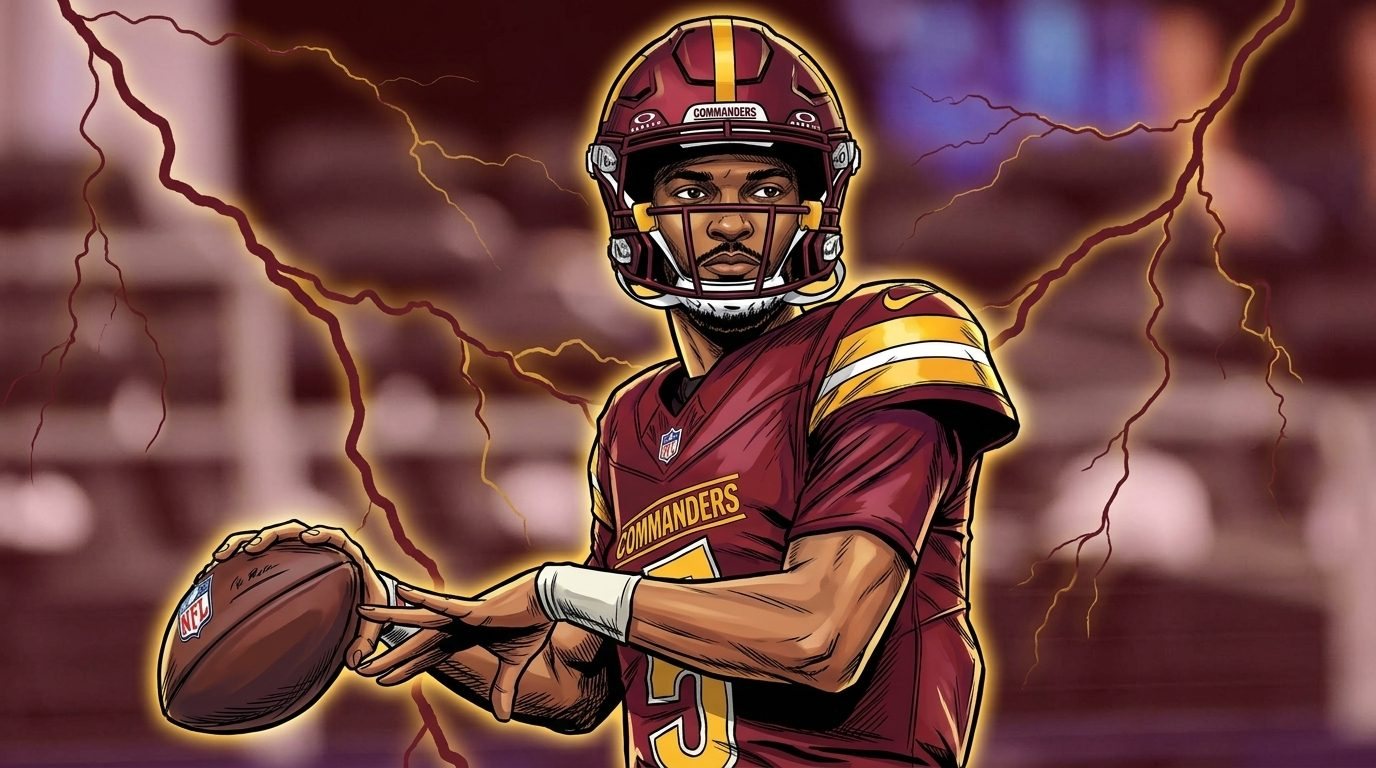
The Washington Commanders are one of the NFL’s oldest and most decorated franchises. The club was founded in Boston in 1932, moved to the nation’s capital in 1937 and has won five league championships: the NFL titles of 1937 and 1942, and Super Bowls XVII, XXII and XXVI under Joe Gibbs. It has played as the Braves, the Redskins, the Washington Football Team and, since 2022, the Commanders. Its history includes Sammy Baugh’s titles, the last all-white roster in the NFL, George Allen’s “Over-the-Hill Gang,” the Hogs, a quarter-century of decline and scandal under Daniel Snyder, a record $6.05 billion sale and a revival led by Jayden Daniels.
| Vitals | |
|---|---|
| Founded | July 9, 1932, in Boston (as the Boston Braves) |
| League / conference / division | NFL / NFC / East |
| Stadium | Northwest Stadium, Landover, Md. (since 1997); a new stadium on the RFK Stadium site is targeted for 2030 |
| Owner | Josh Harris-led group (approved July 20, 2023) |
| Head coach | Dan Quinn (as of Nov. 9, 2026) |
| Titles | NFL Championships: 1937, 1942 · Super Bowls: XVII (1982 season), XXII (1987), XXVI (1991) |
| 2026 record | 2–5–1, 3rd in the NFC East, through Nov. 8, 2026 |
Origins: Boston and George Preston Marshall (1932–1936)
A Boston beginning. George Preston Marshall founded the franchise on July 9, 1932, according to its Wikipedia history. He named it the Braves after the baseball club whose field it shared. The team went 4–4–2 in its first season. It became the Boston Redskins in 1933 and moved to Fenway Park, where it stayed through 1936.
The first title game. Ray Flaherty took over as coach in 1936 and led the team to a 7–5 record and its first Eastern Division title. Boston lost the NFL Championship Game 21–6 to the Green Bay Packers, per the franchise season ledger. Crowds in Boston were small, and Marshall moved the club to Washington for 1937.
Baugh and the championship years in Washington (1937–1945)
Slingin’ Sammy’s rookie title. Washington’s first season in the capital produced an 8–3 record and a championship. Rookie Sammy Baugh’s team beat the Chicago Bears 28–21 at Wrigley Field in the 1937 title game, per the season-by-season record. Baugh played offense, defense and special teams over a 16-year career, as the team’s retired-numbers page notes, and became the franchise’s first great star.
73–0 and the revenge. In the 1940 championship game Chicago beat Washington 73–0. Two years later Washington went 10–1 and beat the Bears 14–6 for the 1942 title. Washington reached the title game again in 1943, beating the Giants 28–0 in an Eastern playoff before losing 41–21 at Chicago. It reached it once more in 1945, losing 15–14 to the Cleveland Rams. From 1936 to 1945 the franchise played in six NFL Championship Games in ten seasons.
The lost decades (1946–1968)
A long drought. After 1945 Washington did not make the postseason again until 1971, a gap of 25 seasons. Coaches came and went: Turk Edwards, Curly Lambeau, Joe Kuharich, Mike Nixon, Bill McPeak and Otto Graham. From 1946 to 1968 the club had only three winning seasons: 7–5 in 1948, 6–5–1 in 1953 and 8–4 in 1955. The low point came in 1960–61, with records of 1–9–2 and 1–12–1 (season ledger). The team moved from Griffith Stadium to D.C. Stadium, later RFK Stadium, in 1961.
The last team to integrate. Marshall kept his roster all white longer than any other NFL owner. In March 1961, Interior Secretary Stewart Udall warned that the team would face federal action over its lease at the new, federally owned stadium unless it signed Black players (Wikipedia). In 1962 Washington drafted Ernie Davis first overall and traded his rights to Cleveland, a deal that brought Bobby Mitchell to Washington. Mitchell played receiver and halfback for the team through 1968 and later became a Hall of Famer. His No. 49 was retired in 2020.
Jurgensen arrives. Sonny Jurgensen joined in 1964 and gave the team one of the league’s best passers during losing seasons. In 1969 Vince Lombardi coached Washington to a 7–5–2 record, its first winning season since 1955. That was his only season with the club; he died before the 1970 season.
George Allen and the Over-the-Hill Gang (1969–1980)
“The Future Is Now.” George Allen arrived in 1971. He traded draft picks for veterans and won right away: a 9–4–1 record and the franchise’s first playoff berth in 26 years. He was named Coach of the Year (Wikipedia). His veteran-heavy rosters became known as the Over-the-Hill Gang.
Super Bowl VII. The 1972 team went 11–3 behind quarterback Billy Kilmer and running back Larry Brown. It beat Green Bay 16–3 and then Dallas 26–3 in the NFC Championship Game. Washington then lost Super Bowl VII 14–7 to the undefeated Miami Dolphins on Jan. 14, 1973, at the Los Angeles Memorial Coliseum (ESPN).
A playoff fixture. Allen’s teams made the playoffs in 1971, 1972, 1973, 1974 and 1976, and he never had a losing season in Washington. They did not win another playoff game after 1972. Jack Pardee followed in 1978, and his best team went 10–6 in 1979 without making the playoffs. Behind the scenes, Jack Kent Cooke, a minority owner since 1960 and majority owner since 1974, took operating control from Edward Bennett Williams in 1979 and became sole owner in 1985 after buying Williams’ remaining shares (Wikipedia).
The Joe Gibbs dynasty (1981–1992)
From 8–8 to a title. Cooke and general manager Bobby Beathard hired Joe Gibbs, a San Diego assistant coach, in 1981. Gibbs finished 8–8 in his first season. In the strike-shortened 1982 season his team went 8–1 and then won four playoff games: 31–7 over Detroit, 21–7 over Minnesota, 31–17 over Dallas in the NFC Championship Game and 27–17 over Miami in Super Bowl XVII. That Super Bowl was played at the Rose Bowl on Jan. 30, 1983 (ESPN). Trailing 17–13 in the fourth quarter, Washington went ahead on a John Riggins touchdown run, described in the team’s account of his career. Riggins rushed for 166 yards and was named MVP (ESPN).
The Hogs and the Fun Bunch. The early-1980s teams were built on an offensive line nicknamed the Hogs and a receiving corps called the Fun Bunch, led by Art Monk. The 1983 team went 14–2, routed the Rams 51–7 and beat San Francisco 24–21 for the NFC title. It then lost Super Bowl XVIII 38–9 to the Los Angeles Raiders on Jan. 22, 1984 (ESPN). Riggins finished his Washington career as the franchise’s all-time leading rusher, with 7,472 yards and 79 touchdowns.
Doug Williams and Super Bowl XXII. The 1986 team reached the NFC Championship Game and lost 17–0 at the Giants. The 1987 team went 11–4 in another strike-interrupted season, won at Chicago 21–17 and beat Minnesota 17–10. It then beat Denver 42–10 in Super Bowl XXII in San Diego on Jan. 31, 1988. Doug Williams, the first Black quarterback to start a Super Bowl, threw for 340 yards and four touchdowns and was named MVP (ESPN). Darrell Green, a cornerback drafted in 1983, played 20 seasons for the club.
1991: the masterpiece. The 1991 team went 14–2. It beat Atlanta 24–7 and Detroit 41–10, then beat Buffalo 37–24 in Super Bowl XXVI at the Metrodome on Jan. 26, 1992. Mark Rypien threw for 292 yards and two touchdowns and was named MVP (ESPN). After a 9–7 season and a playoff loss at San Francisco in 1992, Gibbs retired. He was inducted into the Pro Football Hall of Fame in 1996.
After Gibbs: Cooke’s final years (1993–1998)
A steep fall. Under Richie Petitbon the team went 4–12 in 1993. Norv Turner’s first team went 3–13 in 1994. Washington did not return to the playoffs during the rest of Jack Kent Cooke’s ownership. Cooke built the stadium in Landover, Md., that opened in 1997 as Jack Kent Cooke Stadium. He died that year, and the franchise passed to his son, John Kent Cooke, before it was sold.
The Snyder era (1999–2023)
A record purchase and a carousel. Daniel Snyder bought the team on May 25, 1999, for $800 million. His first season produced a 10–6 record, an NFC East title and a 27–13 playoff win over Detroit, followed by a 14–13 loss at Tampa Bay. Over the next two decades the team went through head coaches Turner, Terry Robiskie, Marty Schottenheimer, Steve Spurrier, Gibbs again (2004–2007), Jim Zorn, Mike Shanahan, Jay Gruden, Bill Callahan and Ron Rivera. Gibbs’ second stint produced playoff berths in 2005 and 2007. The 2005 team won 17–10 at Tampa Bay, Washington’s last playoff win until 2025 (season ledger).
Sean Taylor. Safety Sean Taylor, drafted in 2004, was killed in November 2007, during his fourth NFL season (Commanders). The 2007 team reached the playoffs and lost 35–14 at Seattle. Washington retired his No. 21 in 2021.
Brief peaks. Washington won the NFC East in 2012 at 10–6 and in 2015 at 9–7, and lost its first playoff game both times. In 2020 it won the division at 7–9 under Rivera and lost 31–23 to eventual champion Tampa Bay. Between 1999 and 2023 the club won a total of two playoff games.
The renaming. Facing pressure from corporate sponsors, the franchise retired the Redskins name and logo on July 13, 2020. It played as the Washington Football Team in 2020 and 2021 and announced the Commanders name on Feb. 2, 2022 (CBS Sports).
Investigations. In July 2021 the NFL fined the team $10 million after attorney Beth Wilkinson’s investigation found that sexual harassment, bullying and intimidation were common in the workplace. Snyder handed day-to-day operations to his wife, Tanya. A U.S. House Oversight Committee report later corroborated the claims. It also accused the team of withholding season-ticket holders’ security deposits (Wikipedia).
The Harris sale and the stadium plan (2023–present)
$6.05 billion. In May 2023 Snyder agreed to sell to a group led by Josh Harris for about $6.05 billion. At the time it was the highest price ever paid for a sports team. The NFL approved the sale on July 20, 2023. The group’s limited partners include Mitchell Rales, Magic Johnson and Mark Ein (Wikipedia). The team finished Harris’ first season 4–13. Rivera was fired, and the stadium in Landover was renamed Northwest Stadium.
Honoring the past. The new ownership retired more numbers in three years than the franchise had in its first 88: Darrell Green’s No. 28 in 2024, Art Monk’s No. 81 in 2025, and John Riggins’ No. 44, announced July 9, 2026, for halftime of the Nov. 8, 2026, game against the Rams (Fox Sports).
Back to RFK. In April 2025 the team and Washington, D.C., Mayor Muriel Bowser announced a plan for a new stadium on the old RFK Stadium site, targeted to open in 2030. The D.C. Council gave final approval on Sept. 17, 2025, by an 11–2 vote. Axios reported the project at $3.7 billion, with the team committing about $2.7 billion and the District about $1 billion.
The Daniels and Quinn era (2024–present)
An instant turnaround. Dan Quinn was hired as head coach in 2024, and Washington drafted LSU quarterback Jayden Daniels second overall. The 2024 team went 12–5. In the playoffs it won 23–20 at Tampa Bay and upset top-seeded Detroit 45–31. That put Washington in its first NFC Championship Game since the 1991 season, which it lost 55–23 at Philadelphia. Daniels was named the 2024 AP Offensive Rookie of the Year on Feb. 6, 2025. His 891 rushing yards set an NFL record for a rookie quarterback.
The 2025 setback. Washington fell to 5–12 in 2025. Daniels was slowed by knee, hamstring and elbow injuries, including a dislocated left elbow in a November loss to Seattle, and played seven games before he was shut down.
2026 through Nov. 9. Daniels dislocated his left (non-throwing) elbow again just before halftime of a 37–20 loss at Dallas on Sept. 20, 2026. It was the same elbow he had injured twice in 2025 (Commanders). He missed two games, a 33–31 win over Seattle and a loss to Indianapolis in London. He returned as the starter for the Week 5 game against the Giants (NFL.com), which ended in a 27–27 overtime tie. Washington beat Philadelphia 27–10 on Nov. 1 and lost 20–13 to the Rams on Nov. 8, which left the team 2–5–1 and third in the NFC East (NFL.com). The team’s account of the Rams game reported no new injury for Daniels (Commanders).
Retired numbers
Washington went decades with Sammy Baugh’s No. 33 as its only officially retired number. Several numbers, including Charley Taylor’s 42, Joe Theismann’s 7 and Larry Brown’s 43, were kept out of use without being formally retired. A run of ceremonies began in 2020, and Riggins became the seventh player honored (Commanders).
Retired numbers
| No. | Player | Pos. | Team tenure | Retired |
|---|---|---|---|---|
| 9 | Sonny Jurgensen | QB | 1964–1974 | Jan. 8, 2023 |
| 21 | Sean Taylor | S | 2004–2007 | Oct. 17, 2021 |
| 28 | Darrell Green | CB | 1983–2002 | Oct. 20, 2024 |
| 33 | Sammy Baugh | QB | 1937–1952 | 1953 |
| 44 | John Riggins | RB | 1976–1979, 1981–1985 | Nov. 8, 2026 (scheduled ceremony) |
| 49 | Bobby Mitchell | WR/HB | 1962–1968 | 2020 |
| 81 | Art Monk | WR | 1980–1993 | Nov. 2, 2025 |
Season by season
Every season from Boston in 1932 to Nov. 8, 2026, per the franchise season ledger, reconciled against StatMuse’s all-time record.
The 2020s 45–62–2 through Nov. 8, 2026 · 2 playoff berths · 1 NFC Championship Game
| Season | W–L | Finish | Playoffs |
|---|---|---|---|
| 2026 | 2–5–1 (through Nov. 8) | 3rd NFC East (in progress) | — |
| 2025 | 5–12 | 3rd NFC East | — |
| 2024 | 12–5 | 2nd NFC East | Won WC at TB 23–20; won Div. at DET 45–31; lost NFC Champ. at PHI 55–23 |
| 2023 | 4–13 | 4th NFC East | — |
| 2022 | 8–8–1 | 4th NFC East | — |
| 2021 | 7–10 | 3rd NFC East | — |
| 2020 | 7–9 | 1st NFC East | Lost WC vs TB 31–23 |
The 2010s 62–97–1 · 2 playoff berths · 2 NFC East titles
| Season | W–L | Finish | Playoffs |
|---|---|---|---|
| 2019 | 3–13 | 4th NFC East | — |
| 2018 | 7–9 | 3rd NFC East | — |
| 2017 | 7–9 | 3rd NFC East | — |
| 2016 | 8–7–1 | 3rd NFC East | — |
| 2015 | 9–7 | 1st NFC East | Lost WC vs GB 35–18 |
| 2014 | 4–12 | 4th NFC East | — |
| 2013 | 3–13 | 4th NFC East | — |
| 2012 | 10–6 | 1st NFC East | Lost WC vs SEA 24–14 |
| 2011 | 5–11 | 4th NFC East | — |
| 2010 | 6–10 | 4th NFC East | — |
The 2000s 70–90 · 2 playoff berths · 1 playoff win
| Season | W–L | Finish | Playoffs |
|---|---|---|---|
| 2009 | 4–12 | 4th NFC East | — |
| 2008 | 8–8 | 4th NFC East | — |
| 2007 | 9–7 | 3rd NFC East | Lost WC at SEA 35–14 |
| 2006 | 5–11 | 4th NFC East | — |
| 2005 | 10–6 | 2nd NFC East | Won WC at TB 17–10; lost Div. at SEA 20–10 |
| 2004 | 6–10 | 4th NFC East | — |
| 2003 | 5–11 | 3rd NFC East | — |
| 2002 | 7–9 | 3rd NFC East | — |
| 2001 | 8–8 | 2nd NFC East | — |
| 2000 | 8–8 | 3rd NFC East | — |
The 1990s 79–80–1 · 4 playoff berths · Super Bowl XXVI champions
| Season | W–L | Finish | Playoffs |
|---|---|---|---|
| 1999 | 10–6 | 1st NFC East | Won WC vs DET 27–13; lost Div. at TB 14–13 |
| 1998 | 6–10 | 4th NFC East | — |
| 1997 | 8–7–1 | 2nd NFC East | — |
| 1996 | 9–7 | 3rd NFC East | — |
| 1995 | 6–10 | 3rd NFC East | — |
| 1994 | 3–13 | 5th NFC East | — |
| 1993 | 4–12 | 5th NFC East | — |
| 1992 | 9–7 | 3rd NFC East | Won WC at MIN 24–7; lost Div. at SF 20–13 |
| 1991 | 14–2 | 1st NFC East | Won Super Bowl XXVI vs BUF 37–24 |
| 1990 | 10–6 | 3rd NFC East | Won WC at PHI 20–6; lost Div. at SF 28–10 |
The 1980s 97–55 · 5 playoff berths · 3 Super Bowls, 2 titles
| Season | W–L | Finish | Playoffs |
|---|---|---|---|
| 1989 | 10–6 | 3rd NFC East | — |
| 1988 | 7–9 | 3rd NFC East | — |
| 1987 | 11–4 | 1st NFC East | Won Super Bowl XXII vs DEN 42–10 |
| 1986 | 12–4 | 2nd NFC East | Won WC vs LAR 19–7; won Div. at CHI 27–13; lost NFC Champ. at NYG 17–0 |
| 1985 | 10–6 | 3rd NFC East | — |
| 1984 | 11–5 | 1st NFC East | Lost Div. vs CHI 23–19 |
| 1983 | 14–2 | 1st NFC East | Lost Super Bowl XVIII vs LA Raiders 38–9 |
| 1982 | 8–1 | 1st NFC East | Won Super Bowl XVII vs MIA 27–17 |
| 1981 | 8–8 | 4th NFC East | — |
| 1980 | 6–10 | 3rd NFC East | — |
The 1970s 91–52–1 · 5 playoff berths · 1 Super Bowl
| Season | W–L | Finish | Playoffs |
|---|---|---|---|
| 1979 | 10–6 | 3rd NFC East | — |
| 1978 | 8–8 | 3rd NFC East | — |
| 1977 | 9–5 | 2nd NFC East | — |
| 1976 | 10–4 | 2nd NFC East | Lost Div. at MIN 35–20 |
| 1975 | 8–6 | 3rd NFC East | — |
| 1974 | 10–4 | 2nd NFC East | Lost Div. at LAR 19–10 |
| 1973 | 10–4 | 2nd NFC East | Lost Div. at MIN 27–20 |
| 1972 | 11–3 | 1st NFC East | Won NFC Champ. vs DAL 26–3; lost Super Bowl VII vs MIA 14–7 |
| 1971 | 9–4–1 | 2nd NFC East | Lost Div. at SF 24–20 |
| 1970 | 6–8 | 4th NFC East | — |
The 1960s 46–82–10 · 0 playoff berths
| Season | W–L | Finish | Playoffs |
|---|---|---|---|
| 1969 | 7–5–2 | 2nd Capitol | — |
| 1968 | 5–9 | 3rd Capitol | — |
| 1967 | 5–6–3 | 3rd Capitol | — |
| 1966 | 7–7 | 5th Eastern | — |
| 1965 | 6–8 | 4th Eastern | — |
| 1964 | 6–8 | T-3rd Eastern | — |
| 1963 | 3–11 | 6th Eastern | — |
| 1962 | 5–7–2 | 4th Eastern | — |
| 1961 | 1–12–1 | 7th Eastern | — |
| 1960 | 1–9–2 | 6th Eastern | — |
The 1950s 47–70–3 · 0 playoff berths
| Season | W–L | Finish | Playoffs |
|---|---|---|---|
| 1959 | 3–9 | 5th Eastern | — |
| 1958 | 4–7–1 | 4th Eastern | — |
| 1957 | 5–6–1 | 4th Eastern | — |
| 1956 | 6–6 | 3rd Eastern | — |
| 1955 | 8–4 | 2nd Eastern | — |
| 1954 | 3–9 | 5th Eastern | — |
| 1953 | 6–5–1 | 3rd Eastern | — |
| 1952 | 4–8 | T-5th American | — |
| 1951 | 5–7 | 3rd American | — |
| 1950 | 3–9 | 6th American | — |
The 1940s 65–41–4 · 4 title-game berths · 1942 NFL champions
| Season | W–L | Finish | Playoffs |
|---|---|---|---|
| 1949 | 4–7–1 | 4th East | — |
| 1948 | 7–5 | 2nd East | — |
| 1947 | 4–8 | 4th East | — |
| 1946 | 5–5–1 | T-3rd East | — |
| 1945 | 8–2 | 1st East | Lost NFL Champ. at Cleveland Rams 15–14 |
| 1944 | 6–3–1 | 3rd East | — |
| 1943 | 6–3–1 | 1st East | Won East playoff at NYG 28–0; lost NFL Champ. at CHI 41–21 |
| 1942 | 10–1 | 1st East | Won NFL Champ. vs CHI 14–6 |
| 1941 | 6–5 | 3rd East | — |
| 1940 | 9–2 | 1st East | Lost NFL Champ. vs CHI 73–0 |
The 1930s 46–36–8 · 2 title-game berths · 1937 NFL champions
| Season | W–L | Finish | Playoffs |
|---|---|---|---|
| 1939 | 8–2–1 | 2nd East | — |
| 1938 | 6–3–2 | 2nd East | — |
| 1937 | 8–3 | 1st East | Won NFL Champ. at CHI 28–21 |
| 1936 | 7–5 | 1st East | Lost NFL Champ. vs GB 21–6 |
| 1935 | 2–8–1 | 4th East | — |
| 1934 | 6–6 | 2nd East | — |
| 1933 | 5–5–2 | 3rd East | — |
| 1932 | 4–4–2 | 4th | — |
By the numbers
Franchise marks
Per StatMuse (regular season, through Nov. 8, 2026) and StatMuse (playoffs); appearances per the season ledger, through the 2025 season.
Ranks
- 1st Rushing yards, franchise history: John Riggins (7,472)
- 1st Rushing yards by a rookie quarterback, NFL history: Jayden Daniels (891, 2024)
- 1st Price paid for a sports team at the time of sale: $6.05 billion (2023)
Per Commanders.com, NFL.com and Wikipedia, through Nov. 9, 2026.
Honors
- Super Bowl XVII champion (1982 season)
- Super Bowl XXII champion (1987 season)
- Super Bowl XXVI champion (1991 season)
- NFL champion (1937, 1942)
- 3× Super Bowl MVP (Riggins, Williams, Rypien)
- Joe Gibbs, Pro Football Hall of Fame (1996)
- George Allen, Coach of the Year (1971)
- Jayden Daniels, AP Offensive Rookie of the Year (2024)
Per ESPN and Wikipedia, through Nov. 9, 2026.
The arguments
The name. The 2020 decision to drop the Redskins name followed decades of objections from Native American advocates and pressure from sponsors including Nike and FedEx. Supporters of the change called the old name a slur. Many longtime fans saw it as part of the franchise’s identity. The Commanders name was unveiled in February 2022 after a roughly 18-month process (CBS Sports). Team officials wanted a name that reflected Washington as a place where leaders work, whether in government, nonprofits or the military, according to ESPN’s account of the search. Fans interviewed by NPR on the day of the reveal were divided: some disliked the name, and others said it would take some getting used to.
The Snyder record. Snyder’s defenders point to the record purchase, the investment in the club and the playoff teams of 1999, 2005, 2007, 2012, 2015 and 2020. His critics cite the Wilkinson findings, the $10 million fine, the House Oversight Committee report and two playoff wins in 24 years.
Public money at RFK. Mayor Bowser and other supporters argued that a return to the District would bring development to the RFK site. Opponents, including council members Robert White and Brianne Nadeau, who voted against the deal, objected to about $1 billion in public investment for a privately owned team (Axios).
Gibbs’ quarterbacks. Joe Gibbs is the only head coach to win three Super Bowls with three different quarterbacks: Theismann, Williams and Rypien, per the Pro Football Hall of Fame. Fans debate whether that shows Gibbs’ system mattered more than any single player, or whether Theismann, Williams and Rypien deserve more credit than that view gives them.
Why it matters
Washington’s history spans most of pro football’s. It played in six NFL Championship Games before 1946, fielded the league’s last segregated roster, won three Super Bowls in ten seasons with three different quarterbacks, went three decades without a title and changed its name and ownership in the 2020s. With the RFK stadium targeted for 2030 and Daniels as the starting quarterback on Nov. 9, 2026, the franchise’s next era is tied to a return to the site where its Super Bowl teams played.